A kids art table is a small table made for drawing, painting, cutting and sticking, and it changes the way a child makes things. Without one, art happens on the kitchen table or on the floor, and paint, glue and glitter end up everywhere. With one, a child has a place of their own, a surface at the right height, and a space where mess is expected and easy to clean. The best kids art tables of 2026 are the ones that survive daily use, hold the supplies a child actually reaches for, and still look good in a living room or bedroom when the painting is done.
What Makes a Kids Art Table Good
The first thing to judge is the height. A kids art table is only useful if a child can sit at it without hunching over it or stretching up to it, and the best tables are made for the age they are sold for. A table for a three year old should be low, with a seat to match, while a table for a seven year old can be taller and wider. If a child has to kneel on a chair to reach the paper, the table is too tall, and if their knees are up around their ears, it is too low. The right height lets a child sit upright, with feet flat on the floor.
The second thing is the surface. An art table will be painted on, glued on, and drawn on with markers that were supposed to wash out and did not, so the surface has to be easy to clean. A smooth, sealed top that wipes clean with a damp cloth is worth more than a pretty unfinished wood top that stains on the first day. Look for a top that resists water and marker, with rounded corners rather than sharp ones. A table that is easy to clean is a table that gets used.
The third thing is stability. A child will lean on an art table, climb on it, and push against it while reaching for a crayon, so a wobbly table is a table that will tip. The best tables have wide legs, a solid frame, and a weight that keeps them in place. A table that rocks, slides across the floor, or tips when a child leans on one corner is dangerous, and a dangerous table is worse than no table at all. Press down on one corner and push the table sideways: a table that stays put earns trust.
The Main Types of Kids Art Table
A plain wooden table with chairs is the classic choice. It has a flat top, two or four small chairs, and nothing to break, and it is the best choice for most families because it is simple, strong and easy to clean. It suits a bedroom or a playroom, and it works for drawing, colouring, puzzles and homework as a child grows. The trade-off is storage: a plain table has nowhere to put crayons and paper, so supplies end up in a box beside it. For a family that already has storage nearby, a plain wooden table is the one to buy.
A table with built-in storage is the tidy option. It has bins, trays or drawers under the top, or a lift-up lid with space inside, and it keeps crayons, paints and paper within reach without covering the work surface. It is the best choice for a small room, because it does away with a separate storage box, and it suits a child who likes to tidy up as much as a child who likes to make a mess. The downside is cleaning: bins collect dried paint, and a lift-up lid can pinch small fingers if it has no soft close.
A table with a paper roll is the endless-paper option. It has a roll of paper fixed at one end, so a child can pull out a fresh sheet, draw on it, and tear it off when it is done. It is the best choice for a child who draws all day, because there is never a moment when the paper runs out, and it suits a playroom where a long drawing can stay out for days. The downside is waste: a roll encourages long sheets for small drawings.
An easel table is the upright option. It has a tilted board on one side, or a board that stands up from the table, so a child can paint standing up as well as sitting down. It is the best choice for painting, because paint runs less on a tilted surface and a child can step back to see the whole picture, and it suits a child who likes to paint big. The downside is space: an easel table takes up more room than a flat table.
A foldable or adjustable table is the flexible option. It folds flat for storage, or its height can be changed as a child grows, and it is the best choice for a family that needs the table to disappear between art sessions. It suits a small flat, a shared bedroom, or a home where the art table lives in the living room and is put away before dinner. The downside is sturdiness: a folding table is rarely as solid as a fixed one.

Choosing the Right Size and Age
Age is the simplest guide to size, and it is worth following rather than guessing. A table for toddlers, from about two to four years old, should be low and small, with a top a child can reach across without standing up. A table for young children, from about four to six, can be a little taller and wider, with room for two children to sit side by side. A table for older children, from about seven upwards, should be closer to a small desk, with room for a larger sheet of paper. Buy for the age a child is now, not the age they will be in three years.
Room matters as much as age. Measure the space before buying, and leave room for chairs to pull out and for a child to walk around the table. A table that fills a corner so tightly that a chair cannot be pulled out is a table that will not be used, and a table in the middle of a walkway will be bumped into every day. A table near a window is better for drawing than one in a dark corner, and a table near a washable floor is better for painting than one on carpet.
Chairs deserve as much thought as the table. A table sold with chairs is usually the safer buy, because the chairs are made to match the table height, but check that a chair is wide enough, stable enough, and easy for a child to climb onto alone. A chair that tips when a child climbs on it will cause a fall. If a table is bought without chairs, measure the seat height carefully: a child should sit with feet flat on the floor and knees at a right angle.
Storage, Cleaning and Safety
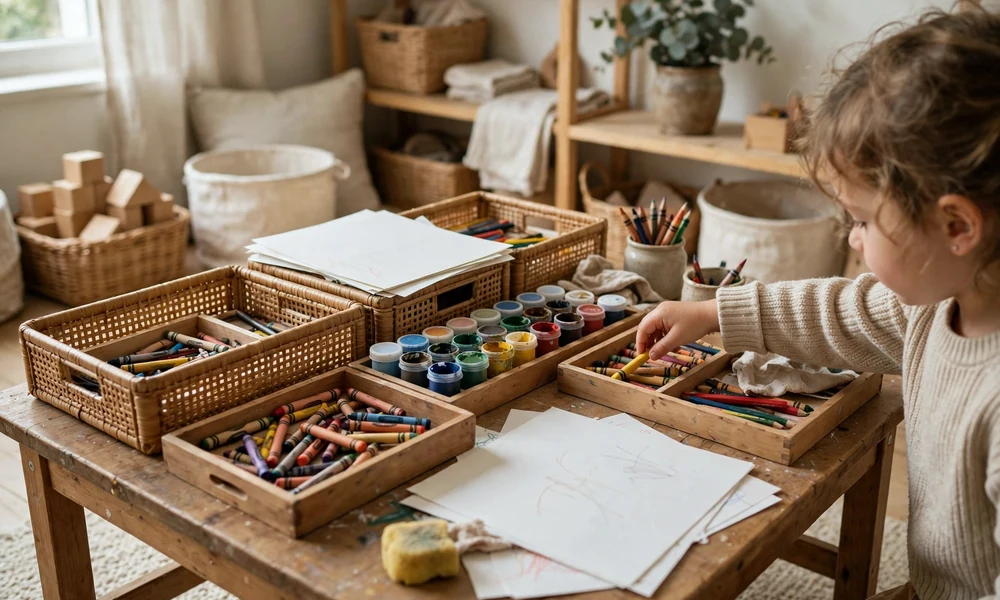
Storage is what keeps an art table usable. A child who can reach crayons, paper and scissors without asking for help will use the table far more than a child who has to wait for an adult to fetch supplies, so keep the everyday things on the table and the messy things, like paint and glue, on a shelf nearby. A cup for pencils, a tray for crayons and a drawer for paper are enough for most children. The best art supplies are the ones a child can reach, use and put away alone, and a table with a place for each of them is the table that stays tidy.
Cleaning should be quick, because it will be done every day. A table top that wipes clean with a damp cloth, chairs that can be wiped the same way, and bins that can be tipped out and rinsed will save more time than any clever feature. Avoid tables with fabric seats that stain, with unsealed wood that soaks up paint, and with narrow gaps where dried glue collects. A washable mat protects the floor, but the table itself should be the easiest thing in the room to clean.
Safety is mostly common sense, but it is worth checking before buying. Look for rounded corners, a finish that is free of splinters and sharp edges, and a table that does not tip when a child leans on it. Check that any lid has a soft close, that any folding part locks firmly, and that the table is made from materials safe for children. Avoid tables with small parts that can come loose, with glass tops, and with paint that flakes off.
What to Avoid
The worst kids art tables are the ones that look good in a photograph and fail in a real home. A table that is too tall for its chairs, a table with a pretty but unsealed top that stains on the first day, and a table with legs so narrow that it wobbles are all common mistakes. A table with storage too deep for a small child to reach is no better than one with no storage at all.
Price is not a reliable guide. A cheap table can be sturdy and easy to clean, and an expensive table can be flimsy and hard to wipe down, so judge a table by its height, its surface, its stability and its storage, not by its price tag. A table that is too small, too tall, or too wobbly is a bad buy at any price, and a table that fits a child, wipes clean, and stays put is a good buy at any price. The best craft kits are the same: the ones that suit a child’s age and interests matter far more than the ones with the biggest box or the highest price.
Setting Up and Getting the Most from the Table
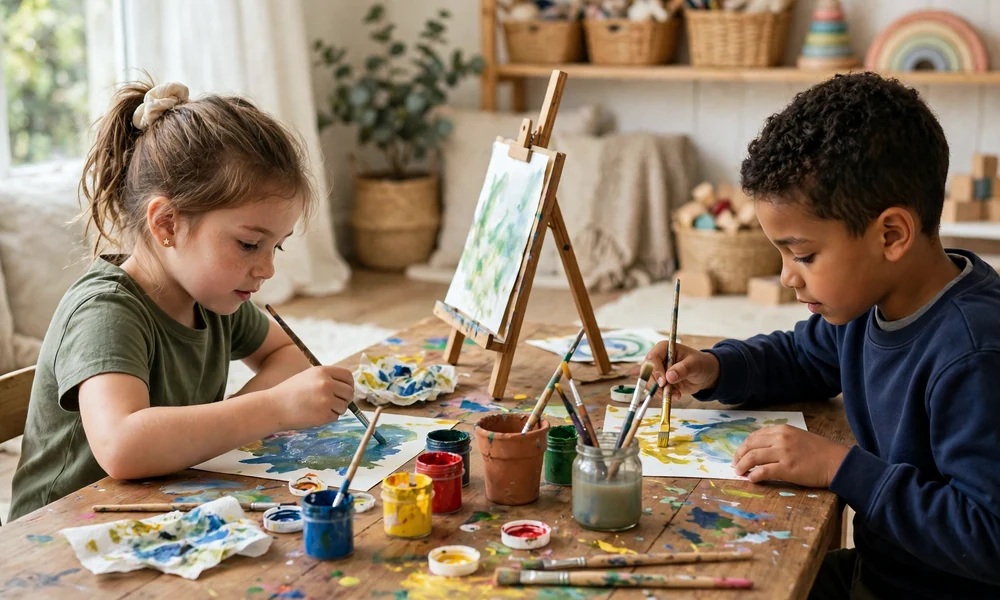
Setting up a kids art table is a small job that makes a big difference. Put the table where the light is good and the floor is easy to clean, and keep paper, crayons and pencils on the table so a child can start without asking. Keep paint, glue and scissors on a nearby shelf, within reach of an adult but out of reach of a toddler, and keep a damp cloth nearby so spills can be wiped up straight away. A small bin beside the table teaches a child to tidy as they go.
The best kids art tables of 2026 are the simple ones done well: the right height for the child, a surface that wipes clean, legs that do not wobble, and storage that a child can reach. A plain wooden table with matching chairs is the best choice for most families, a storage table is the best choice for a small room, and a paper-roll or easel table is the best choice for a keen young painter. Buy for the age a child is now, measure the space first, and judge a table by how it will be used. The best coloring books are a good standby for quiet time, and a fresh pad of paper is the simplest way to make an old table feel new again.