
A craft kit is a small promise: open the box, and everything you need to make something real is already there. No trip to three different shops, no guessing which glue works with which paper, no half-finished project stalled because one vital piece is missing. The best craft kits of 2026 keep that promise properly. They give you good materials, clear instructions and a finished object you are actually pleased with, whether that is a hand-painted pot, a beaded bracelet, a scented candle or a wooden model that stands up straight on the shelf.

What Makes a Good Craft Kit
The first thing to look at is what is actually in the box. A good kit is complete. It should include every material the project needs, in the right amounts, plus the tools you cannot be expected to own already. If a papercraft kit needs scissors and glue, they should be in there or the box should say so plainly on the front. The kits that disappoint are the ones that look generous in the photograph and then turn out to need a shopping trip before you can start. Check the contents list before you buy, and be suspicious of any kit that hides it in tiny print.
The second thing is the quality of the materials. Cheap paper tears when you fold it, thin paint needs four coats to cover, and brittle beads crack the first time you thread them. Good kits use materials that behave properly: paper with enough weight to hold a crease, paint that covers evenly, wax that melts cleanly and sets without sinking, and wood that fits together without forcing. You do not need professional-grade supplies, but you do need supplies that do the job they were bought for. A kit that fights you at every step is not relaxing, however pretty the box looks.
Instructions matter just as much as materials. The best kits explain each step in plain language, with photographs or clear drawings that show what the work should look like at that stage. They tell you how long each stage takes, including drying time, so you can plan an afternoon properly instead of discovering at step nine that the glue needs twelve hours to set. Kits aimed at children should use short steps and large pictures; kits aimed at adults can be more detailed, but they should never assume you already know the technique. If the instructions read like they were translated in a hurry, the kit was probably put together in a hurry too.
How to Choose the Right Kit
Start with the person who will make it. A kit for a seven-year-old needs big pieces, safe materials and a project that finishes in one sitting, because a child who has to wait three days for paint to dry will lose interest long before the end. A kit for an adult can be slower and more demanding, and the best adult kits are: they give you a real skill to practise rather than a single afternoon of colouring in. A kit for a family should have enough in it for everyone to take part, not one person doing the work while the others watch.
Next, think about the space you have. Papercraft and jewellery-making need little more than a table and good light. Candle-making needs a heatproof surface, ventilation and somewhere safe for hot wax. Model kits need a clear area where small pieces will not be knocked onto the floor and lost. Before you buy, check how messy the project is and whether you have somewhere to leave it while it dries. The most common reason a kit ends up unfinished in a cupboard is not that it was too hard; it is that there was nowhere to leave it halfway through.
Papercraft and Card-Making Kits
Papercraft is the friendliest place to start, and the best papercraft kits make it easy to get a beautiful result on the first try. Look for pre-cut shapes in thick card, so the cutting is done for you and the folding is the fun part. Good kits include scored fold lines, which make crisp edges without cracking the paper, and a range of colours that work together rather than clashing. The best ones also include envelopes and blank cards, so the thing you make becomes a card you can actually send.
Painting and Pottery-Painting Kits
Painting kits come in two kinds, and it helps to know which one you are buying. The first kind gives you paints, brushes and a surface to paint on, such as a canvas, a wooden board or a ceramic pot, and lets you paint whatever you like. The second kind is paint-by-numbers, where the picture is already drawn and you fill in the numbered sections. Neither is better than the other; they suit different moods. Free painting is relaxing and creative, while paint-by-numbers is satisfying in a different way, because the picture comes together step by step and the result looks finished even if you have never held a brush before.
Whatever kind you choose, the brushes matter more than most people expect. A brush that sheds hairs into wet paint will ruin a picture, and a brush that cannot hold a point cannot paint a straight line. Our guide to the best paint brushes of 2026 explains what to look for, but a good kit should already include brushes that work: one flat brush for covering large areas and one fine brush for details. The paints should be thick enough to cover in one or two coats, and the pots should seal properly so they do not dry out between sessions. Pottery-painting kits are especially good value, because the finished pot is useful as well as decorative, and a painted plant pot or mug gets used every day.
Jewellery-Making Kits
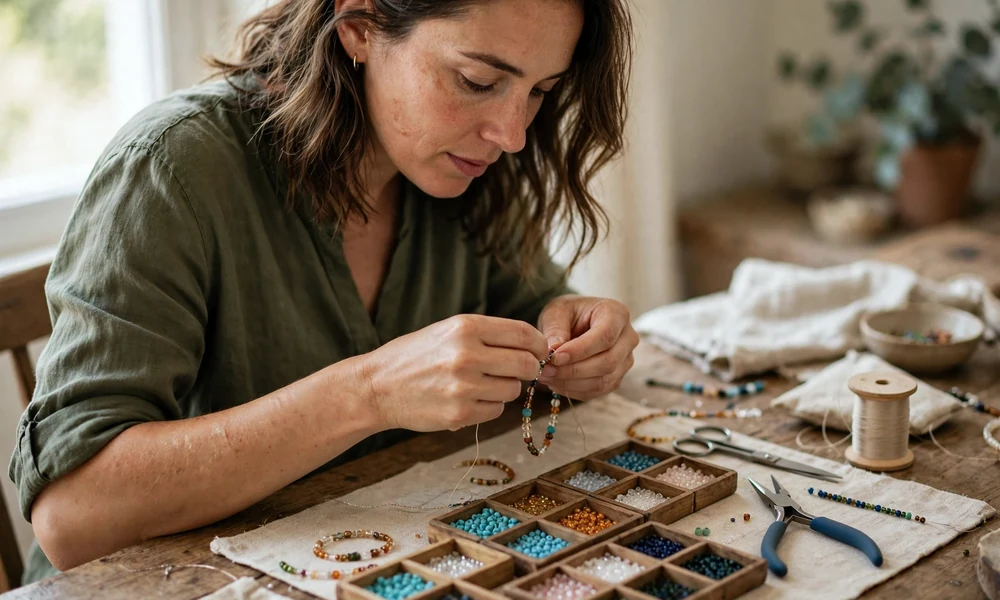
Jewellery-making is the craft kit most likely to become a lasting hobby, because the first bracelet you make is rarely the last. A good jewellery kit starts with the basics done properly: beads in colours that go together, strong thread or wire that does not fray, clasps that close firmly, and pliers that actually grip. The beads should be sorted by colour or size in separate compartments, because a mixed bag of beads is a frustrating way to start. Look for kits that include a bead board or a tray, which keeps the design laid out while you work and stops beads rolling across the table.
Candle-Making Kits
Candle-making looks complicated from the outside and is surprisingly straightforward once you have a kit that explains it properly. A good candle-making kit includes soy wax or beeswax, wicks, fragrance oil, containers and a thermometer, because temperature is the one thing you cannot guess. Wax that is poured too hot will sink in the middle; wax poured too cold will not set smoothly. The instructions should give exact temperatures and timings, and the kit should include enough wax for at least two candles, so the first one can be a practice run and the second one can be the one you keep.
Safety is the main thing to get right with candle-making. Work on a heatproof surface, keep the wax away from water, and never leave melting wax unattended. Children should only make candles with an adult beside them, and the pouring should always be the adult’s job. If you want to go deeper into this one craft, our guide to the best candle-making kits of 2026 covers the dedicated kits in detail, from beginner sets to the ones serious makers graduate to. A finished homemade candle, poured into a jar you chose yourself and scented the way you like it, is one of the most satisfying things any craft kit produces.

Model Kits
Model kits reward patience in a way few other crafts do. The pleasure is in the slow build: pieces slotting together, the shape emerging, and the finished model standing on its own at the end. Wooden model kits are the best starting point, because the pieces are large enough to handle, the glue is simple, and the finished model looks good without painting. Plastic kits need more care and often need paint as well, so they suit older children and adults who enjoy detail. Either way, the instructions should be clear about the order of assembly, because a piece glued in the wrong place early on can spoil the whole model.
Craft Kits for Kids and Families
The best family craft kits are the ones where everyone has something to do. That sounds obvious, but many kits are really designed for one person, and the rest of the family ends up watching. Look for kits with enough pieces for two or three makers, or with separate parts that can be worked on at the same time. A papercraft kit with several small projects is better for a family than one large project, because each person can finish something of their own and the table does not become a battleground over who holds the scissors.
For younger children, safety and simplicity come first. Pieces should be large enough not to be a choking hazard, paints and glues should be washable and non-toxic, and the project should finish in under an hour. A glue gun is useful for older children and adults, and our guide to the best glue guns of 2026 covers the ones that heat up quickly and drip least, but hot glue is an adult tool and should never be handed to a young child. The right family kit is the one that ends with everyone proud of what they made, and with the table only slightly messier than when you started.
What to Avoid
The worst craft kits share the same faults, and they are easy to spot once you know them. The box promises ten projects and contains enough material for two. The instructions are a single folded sheet with diagrams too small to read. The materials are the cheapest possible version of everything, so the paper tears, the paint is watery and the glue does not stick. And the finished object looks nothing like the photograph, because the photograph was taken with a professionally made version, not with the contents of the box. If a kit is far cheaper than every similar kit, there is usually a reason, and the reason is in the materials.
The Bottom Line
The best craft kits of 2026 are the ones that respect the maker. They include everything you need, they use materials that work properly, they explain each step clearly, and they leave you with something you are glad you made. Papercraft is the best place to begin, painting kits are the most relaxing, jewellery kits are the most likely to become a hobby, candle-making kits give the most useful result, and model kits are the most satisfying to build. Whichever one you choose, pick the kit that matches the person making it, clear the table, and give yourself an afternoon without rushing. The finished object matters, but the quiet hour spent making it is the real reason craft kits are worth buying.


