A colouring book is one of the simplest pleasures still on the shelf, and one of the easiest to buy badly. A good one opens flat, its lines are crisp and clear, and its paper is thick enough to take a pencil or a pen without the colour showing through on the page below. A bad one fights you at every turn: the pages tear at the spine, the lines blur into grey, and the ink bleeds through so badly that half the book is ruined before it is finished. The best colouring books of 2026 are not the thickest ones, and they are not the ones with the prettiest covers. They are the books whose pictures are worth colouring, whose paper holds up to real use, and whose pages you actually want to finish.
What Makes a Colouring Book Good
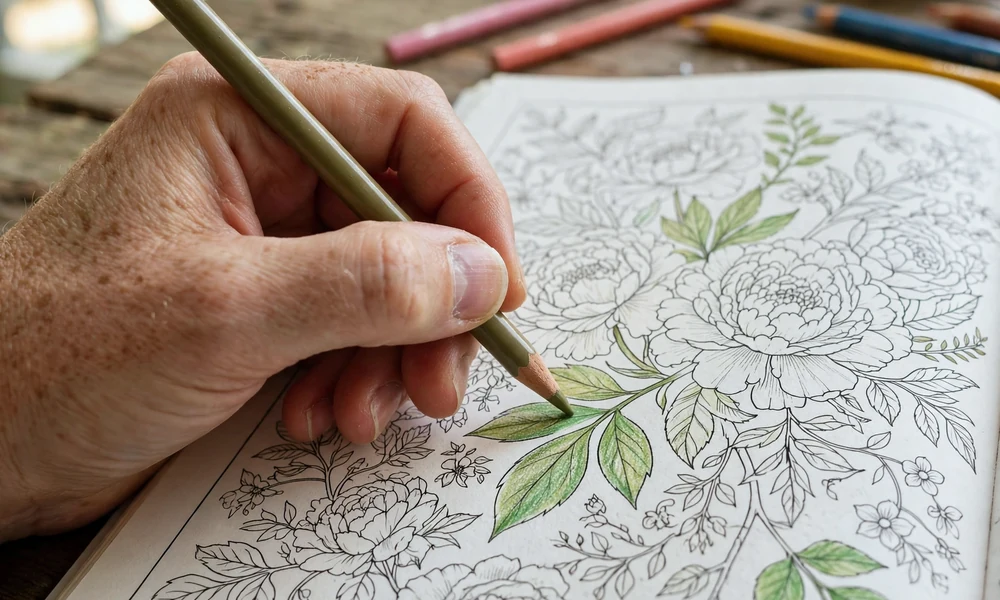
The first thing to judge is the paper. Thick, smooth paper is the difference between a book that survives a set of pencils and one that falls apart after a single page. Good paper takes layers of colour without pilling, holds a sharp pencil point, and stops marker ink from soaking straight through to the next picture. Single-sided pages are a blessing here, because even the best paper will show a little bleed with a wet marker, and a blank back means nothing is ever lost. If the paper feels thin and flimsy between your fingers in the shop, it will feel worse at home.
The second thing is the line work. A good colouring book has lines that are bold enough to follow and fine enough to feel detailed, with closed shapes that keep colour where it belongs and open spaces that leave room for shading. Lines that are too thin disappear under a pencil, and lines that are too thick and muddy make every page look the same. The best books vary their line weight, using heavier outlines for the main shapes and finer lines for the detail inside, so each page has depth before a single colour is added. That variety is what separates a book made by an artist from one assembled from clip art.
The Main Types of Colouring Book
Mandala books are the classic choice for adults, and they remain the most popular kind for a reason. A mandala is a circular, symmetrical pattern that rewards slow, steady work, and the repetition is genuinely calming: there is no picture to get wrong, no face to spoil, just pattern after pattern building toward the centre. The best mandala books vary the size of their designs, mixing large open shapes for a quick evening session with dense, intricate pages for a long weekend. They suit anyone who colours to unwind, and they are the safest first buy for an adult who is not sure where to start.
Nature and animal books are the next great family, covering everything from woodland birds and wildflowers to ocean scenes and farm animals. Their pictures have a natural logic that makes colour choices easy: leaves are green, skies are blue, and a fox is orange, so even a beginner finishes a page that looks right. The best of these books are drawn from real observation, with feathers, petals and fur rendered in fine, accurate detail, rather than cartoon versions that could be any animal at all. They suit colourists who like their finished pages to look like something, and they make lovely framed pictures when a page turns out especially well.
Children’s colouring books are a different craft altogether. The pictures need bold, simple outlines, large areas to fill, and subjects a child actually recognises: dinosaurs, cars, animals, fairy tales, and everyday scenes from home and school. The paper needs to be even tougher here, because children press hard, and the binding needs to survive being carried around, dropped, and opened a hundred times. The best children’s books also think about the age on the cover: a book for a four-year-old should not have the same fine detail as a book for a nine-year-old. Match the book to the child, and the crayons will do the rest.
Themed and fantasy books cover the rest of the shelf: castles and dragons, city skylines, famous landmarks, food, fashion, and seasonal scenes for Christmas, Halloween and spring. These books live or die on the quality of their drawing, because a dragon drawn badly is just a lizard, and a city skyline with the wrong buildings is just boxes. The best themed books are made by people who love their subject, and it shows in the small details: the right windows on a cathedral, the right scales on a dragon, the right icing on a cake. They make the best gifts, because a themed book says you thought about the person, not just the hobby.
How to Choose Paper and Line Work
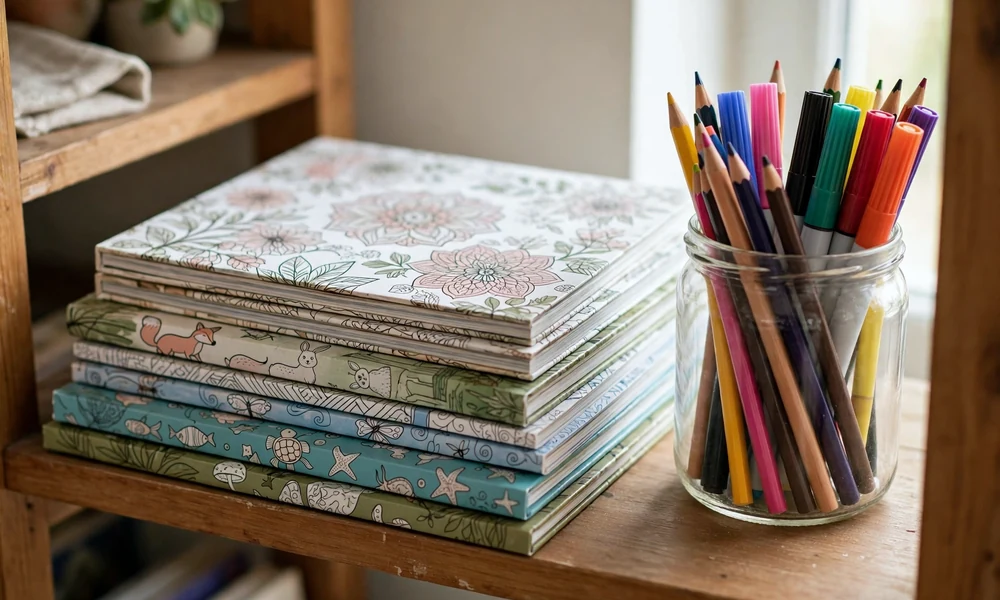
Choosing a colouring book starts with knowing how you like to colour. If you work in coloured pencils, almost any decent book will do, because pencils are gentle on paper and reward a smooth surface. If you prefer fine-tip pens or markers, paper weight matters far more, and single-sided pages become essential rather than nice to have. Think about where you colour, too: a spiral-bound book lies flat on a table and is easier on the wrist, while a perfect-bound book looks better on a shelf but fights you at the spine. Check the page count as well, because a book with twenty beautiful pages is a worse buy than a book with sixty good ones, however pretty its cover looks.
The Best Colouring Books of 2026
The best colouring book for most adults this year is a mandala collection with thick, single-sided pages and a wide range of designs, from open and simple to dense and detailed. It opens flat, the lines are clean and consistent, and the paper takes pencil, gel pen and light marker without complaint. The variety means it never gets boring: a quick page for a tired evening, a hard page for a slow Sunday, and enough pages to last for months. It is the book to buy first, the book to give as a gift, and the book that turns a curious beginner into a regular colourist.
The best colouring book for children is a sturdy, boldly drawn collection of animals and everyday scenes, with large shapes, thick lines and pages that can take heavy crayon pressure without tearing. It is printed on tough paper, bound to survive being carried everywhere, and filled with pictures a child will recognise and want to finish. The subjects are cheerful without being babyish, so the book lasts from the early years into the first years of school. It is not the book for fine detail, but it is the book that makes a child ask to colour again tomorrow, and that is worth more than any fancy cover.
The best nature colouring book of 2026 is a finely drawn collection of birds, flowers and woodland scenes, with accurate detail and a calm, uncluttered layout on every page. Each picture has room to breathe, with generous white space around the main subject and backgrounds that are simple enough not to distract. The paper is smooth and thick, which suits coloured pencils best, and the book rewards slow, careful work with finished pages that look genuinely beautiful. It suits the colourist who colours for the picture at the end, and it is the book most likely to end up framed on a wall.
The best book for relaxing evenings is a gentle collection of gardens, cottages and countryside scenes, drawn with soft lines and generous open spaces that never demand perfection. There are no tiny fiddly corners here, no patterns that punish a shaky hand, just calm pictures that fill in nicely with a few soft colours and a cup of tea. It is the book for the colourist who wants to switch off rather than show off, and its pages suit pencils, crayons and soft markers equally well. Keep it by the armchair, and it will get more use than any other book on the shelf.
What Else You Need
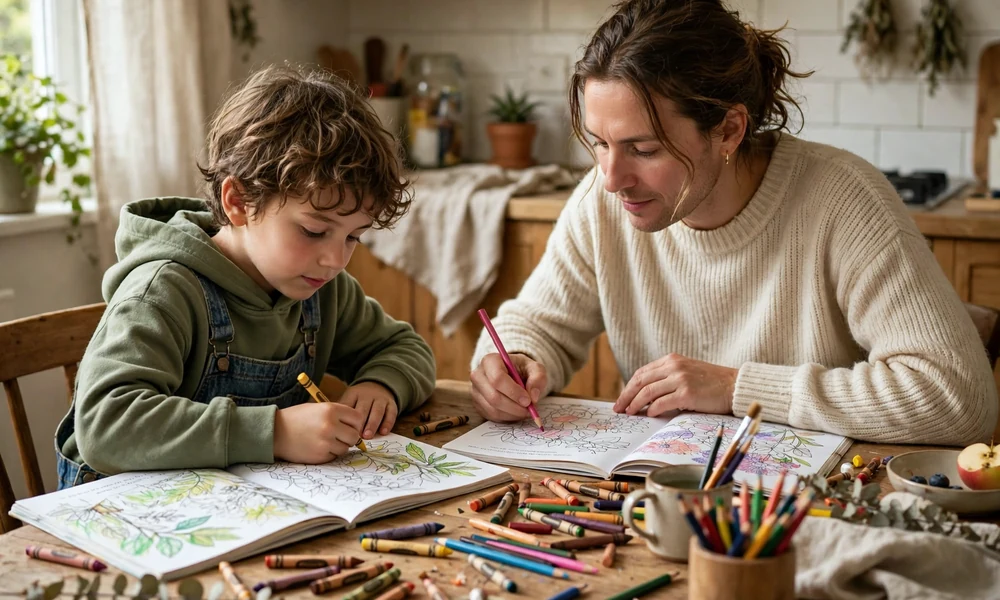
A colouring book on its own is only half the pleasure. Coloured pencils are the classic partner, and a good set with soft cores and a wide range of shades will transform even a plain book. Markers give bolder, flatter colour and suit simple designs, while gel pens add sparkle to mandalas and fine detail. Readers who want to choose their tools well will find the best markers guide useful, because the right marker makes the difference between a page that glows and a page that bleeds. A sharpener, a rubber, and a flat surface complete the kit, and none of it costs much.
Trying Other Media
Once the basics feel comfortable, it is worth trying other ways of colouring the same pages. Watercolour pencils can be brushed with water for soft washes, and they turn a simple nature scene into something that looks almost painted. Readers curious about that approach should look at the best watercolor sets guide, which covers the kits that suit paper best. Acrylic paint is bolder still, and it works beautifully on the thickest colouring paper, giving flat, vivid colour that pencils cannot match. The best acrylic paints guide covers the sets worth buying. Try new media on a spare page first, because every medium behaves differently on paper.
Common Mistakes to Avoid
The biggest mistake is buying a book for its cover and never checking the pages inside. A beautiful cover can hide thin paper, muddy lines and pictures that repeat with only tiny changes, so always flick through the book, or look at sample pages, before buying. The second mistake is choosing detail that does not match the colourist: a dense mandala for a child, or a babyish picture book for an adult who wants a challenge. The third is colouring with the wrong tool for the paper, pressing a wet marker into thin pages and ruining the picture underneath. A fourth mistake, easy to make, is buying several books at once and never starting any of them: one good book, finished slowly, brings far more pleasure than a shelf of untouched ones. Match the book to the person, match the tool to the paper, and every page will be better for it.
The Verdict
The best colouring book of 2026 is the one that gets finished, not the one that looks best on the shelf. For most adults that means a mandala collection with thick, single-sided pages and a good range of designs. For children, a sturdy book of bold animals and everyday scenes is the right pick. For the nature lover, a finely drawn book of birds and flowers is the most rewarding of all. Whatever the choice, check the paper, look at the lines, and pick pictures you actually want to spend an evening with. A book chosen this way will not sit unopened; it will be coloured, enjoyed, and remembered long after the last page is done.