
A good watercolor set is a small box of possibilities. Open the tin, add a little water, and you can paint a sky, a portrait, a garden, or a quick sketch from a cafe table. The best watercolor sets of 2026 make that first step easy: the colours are clean and bright, the pans last a long time, and the set itself is pleasant to carry and use. A poor set does the opposite. Its colours turn muddy, its pans crack or crumble, and painting starts to feel like a chore instead of a pleasure.
Choosing a set is simpler than it looks once you know what matters. The number of colours is less important than the quality of the pigment, the size of the pans, and the space you have for mixing. A well-chosen set of twelve colours will serve most painters better than a cheap set of ninety. This guide walks through the types of sets available in 2026, what to look for in each one, and how to pick the set that fits the way you actually paint.
Pan Sets, Tube Sets, and Liquid Watercolour
Most watercolor sets come in one of three forms. Pan sets hold dry blocks of paint in a metal or plastic tin. You wet the pan with a damp brush and lift the colour straight off the surface. Pans are tidy, portable, and easy to control, which is why they are the most popular choice for beginners and for painters who work outdoors. A pan set can last for years because you only use as much paint as you need.
Tube sets hold wet paint that you squeeze onto a palette. Tubes give you rich, strong colour quickly and are useful when you want to cover a large sheet or mix big washes. The trade-off is waste: squeezed paint dries on the palette if you do not use it, and tubes are messier to carry. Liquid watercolour, sold in small bottles, is the brightest and most fluid option, but it is harder to control and best left until you are comfortable with the basics. For most people, a pan set is the right place to start.
How Many Colours Do You Really Need?
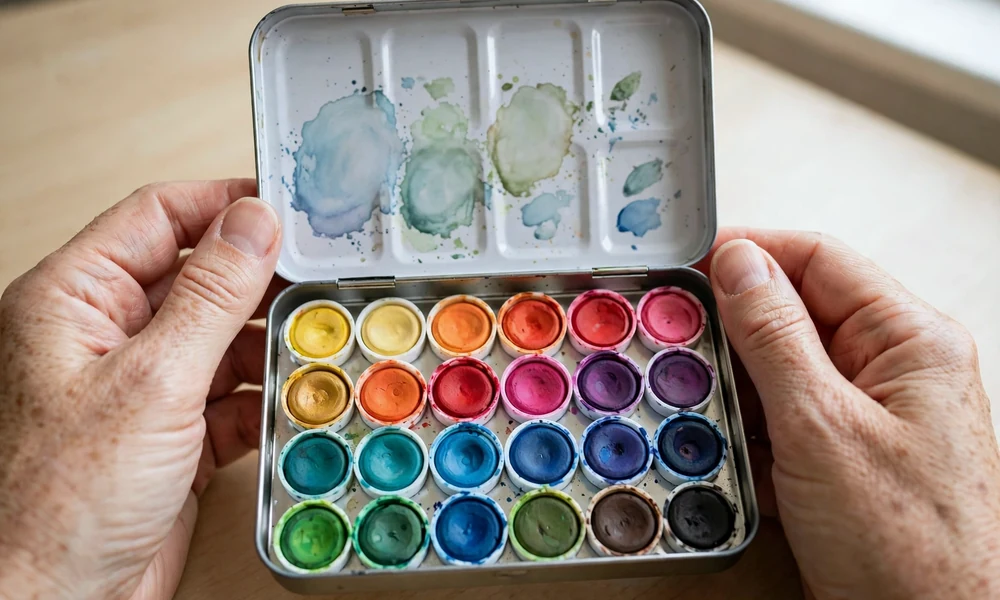
Twelve colours are enough to paint almost anything. With a warm and a cool version of each primary colour, plus a couple of earth tones and a dark neutral, you can mix greens, purples, oranges, and greys that look natural instead of flat. Small sets also teach you to mix, which is one of the most useful skills in watercolour. Painters who learn on twelve colours usually end up with a better eye for colour than those who start with forty-eight.
Pigment Quality Matters More Than Pan Count
The difference between a good set and a disappointing one is usually the pigment. Artist-grade paints use finely ground pigment that stays bright when diluted and layers cleanly on paper. Student-grade paints use more filler, so the colours look chalky when you add water and turn grey when you mix them. You do not need the most expensive paints to enjoy watercolour, but a mid-range set with honest pigment will give you far better results than a bargain set with dull, weak colour.
There are two simple checks you can do before you buy. First, look at the colour chart or swatches for the set: the colours should look clear and distinct, not muddy or washed out. Second, read whether the set lists its pigments. Sets that name their pigments, such as ultramarine blue or burnt sienna, are usually made with more care than sets that only list colour names like sky blue or leaf green. Transparency matters too. Watercolour works best when light passes through the paint, so look for sets described as transparent or semi-transparent rather than opaque.
Travel Sets for Painting on the Go
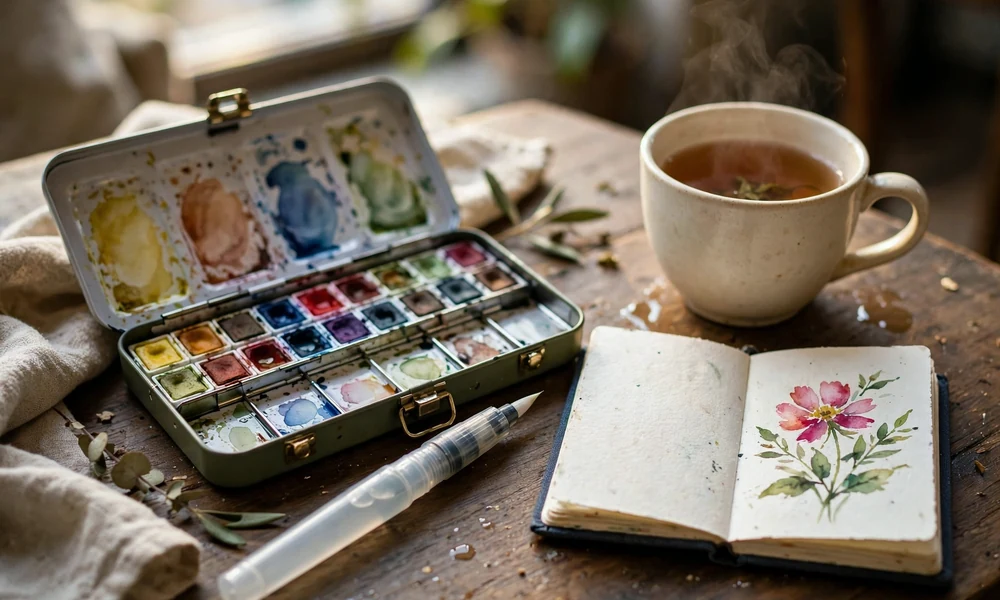
A travel watercolor set is small enough to fit in a coat pocket or a small bag, and it usually comes with a water brush that holds water in its handle. Squeeze the barrel gently and water flows to the tip, so you can paint anywhere without carrying a jar. Travel sets are perfect for holidays, sketching in parks, and drawing in cafes. The best ones hold twelve to eighteen half pans in a sturdy tin with a folding palette in the lid.
Sets for Beginners
If you are just starting, look for a set that removes obstacles. You want twelve to twenty-four colours, a tin that opens flat, a mixing area that is easy to reach, and at least one brush included so you can start painting straight away. A set with a colour chart printed inside the lid is a bonus, because it helps you learn which colours mix well together. Avoid sets that come with dozens of tiny accessories you will never use; they add clutter, not value.
Beginners should also think about the rest of their kit. Good paper matters as much as good paint: cheap paper buckles and pills when it gets wet, while proper watercolour paper holds washes beautifully. If you are building your first art kit from scratch, our guide to the best art supplies in 2026 covers the paper, brushes, and extras that pair well with a watercolor set. Start simple, paint often, and upgrade one thing at a time as your skills grow.
Sets for Serious Painters
Experienced painters usually want control. That means full pans rather than half pans, so the brush can pick up plenty of paint, and a tin with generous mixing wells. Many serious painters build their own set over time, buying individual pans and filling an empty tin with exactly the colours they use. This costs more up front but wastes nothing, and the set becomes personal: every pan earns its place.
Serious painters also pay attention to lightfastness, which is how well a colour resists fading in sunlight. Paintings meant to be framed and displayed need colours rated as lightfast, while sketchbook work is more forgiving. If you want to go deeper into individual paints and how they behave on paper, our guide to the best watercolour paints in 2026 looks at pigment behaviour in detail. A good set is the foundation; understanding your paints is what turns a good set into great paintings.
The Tin, the Palette, and the Brush
The box matters more than most people expect. A metal tin protects the pans, opens flat, and doubles as a palette. Plastic cases are lighter but can feel flimsy, and their lids sometimes warp. Look for a tin with a secure clasp so it does not spring open in your bag, and check that the pans sit snugly instead of rattling around. A ring or thumb hole in the lid is a small detail that makes holding the set much easier when you paint standing up.
Mixing space is just as important. A set with only a couple of tiny wells forces you to mix on a separate palette, which defeats the purpose of a portable set. The best tins give you several large wells in the lid plus a few smaller ones for testing colour. As for brushes, most sets include one or two, and they are usually basic. They are fine for starting out, but a single good round brush will quickly become your favourite tool. Buy the brush separately once you know which size you reach for most.
How to Test a New Set
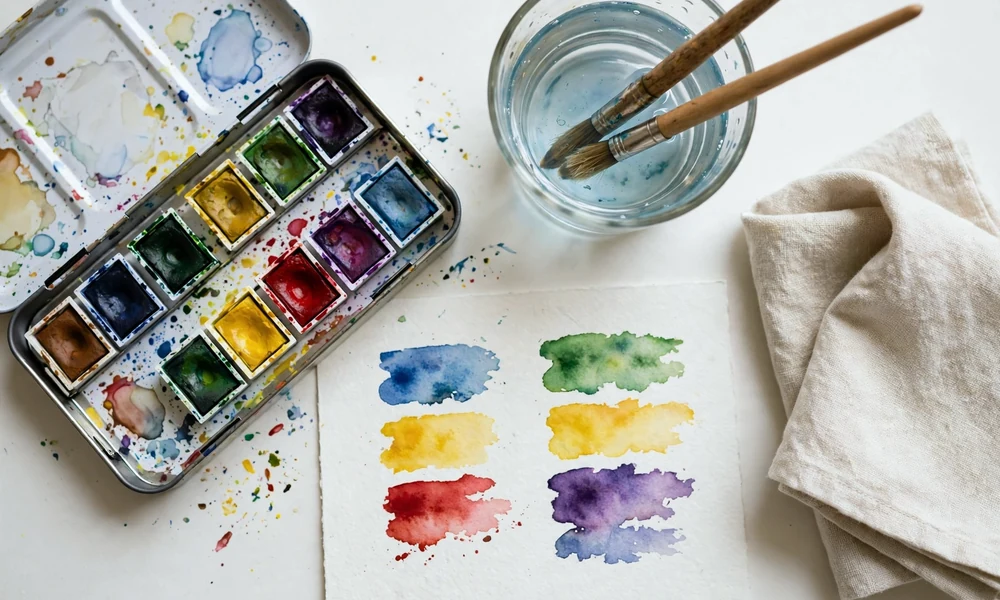
When a new set arrives, spend twenty minutes testing it before you start a painting. Paint a swatch of every colour on a strip of watercolour paper, label each one, and keep the strip as a reference. This tells you at a glance which colours are strong, which are weak, and which ones granulate into lovely textures. It also shows you the true colour of each pan, which is often different from how it looks in the tin.
Next, test the mixes. Try the primaries together, then try a green from blue and yellow, a purple from red and blue, and a grey from complementary colours. Clean mixes that stay bright are a sign of good pigment. Muddy mixes are not always a fault: some pigments are naturally earthy, and they are useful for landscapes. But if every mix turns grey, the set itself is the problem. A quick test like this saves hours of frustration later, and the swatch chart becomes a tool you will use again and again.
Caring for Your Watercolor Set
Watercolor sets are easy to look after. After painting, leave the tin open until the pans are dry, then close it. This stops moisture from getting trapped inside, which can soften the pans and loosen them from their wells. Wipe the mixing area clean with a damp cloth, and rinse your brushes well so no paint dries in the bristles. Store the set flat rather than on its side, so the pans stay in place.
One habit that helps is to keep a dedicated water jar for rinsing and a second one for clean water to mix with. Dirty rinse water is the most common cause of muddy colour, and it is entirely avoidable. Watercolour is a forgiving medium in many ways: pans can be rewetted years later and used again. If you enjoy working in other media too, the best acrylic paints in 2026 make a useful comparison, because acrylics dry fast and permanently, while watercolour stays reworkable and gentle. Treat your set kindly and it will last for years.
Common Mistakes to Avoid
The most common mistake is buying too big too soon. A huge set looks exciting, but it is heavy, confusing, and full of colours you will never use. Start small and add colours as you discover you need them. The second mistake is using too little water. Watercolour needs water to flow, and dry, scrubby strokes are the usual reason beginners think their paint is bad. Load the brush, let the water carry the pigment, and watch what happens.
The third mistake is judging a set by its first painting. Watercolour has a learning curve, and early results can be disappointing even with excellent paint. Give yourself a few sessions before you blame the set. The fourth mistake is storing the set wet or in a hot car, which can warp the tin and melt the pans. Keep it cool and dry, and it will serve you well. Patience is part of the craft: the paint rewards painters who slow down.
Our Verdict
The best watercolor set in 2026 is the one that fits your painting life. For most people, that means a pan set with twelve to twenty-four transparent, well-pigmented colours in a sturdy metal tin with good mixing space. Beginners should keep it simple and spend the savings on good paper. Travellers should pick a compact set with a water brush. Serious painters should look for full pans, named pigments, and lightfast colours they can build on over time.
Whatever you choose, remember that the set is only the beginning. The real pleasure of watercolour comes from using it: the first wash on clean paper, the surprise of two colours blending, the quiet focus of an hour spent painting. Buy a set you like holding, keep it where you can reach it easily, and paint something small every day. The best set is the one that gets opened.


