
Watercolour Paints That Blend Beautifully in 2026
Watercolour paints that blend beautifully stay wet long enough for colours to meet, melt and graduate into each other on the paper instead of drying into hard, separate edges. That slow blend is the magic of the medium: a wash of blue drifts into green, and a whole sky can be painted in a single pass. The best watercolour paints in 2026 rewet cleanly and keep their colour true as they dry.
Key Takeaways
- Transparency is the heart of watercolour: light passes through the paint and bounces off the white paper, so blends look luminous, not muddy.
- Finely ground pigment in good gum arabic flows further and blends more smoothly than coarse, chalky paint.
- Professional paints cost more per tube but use far less paint per wash, so a small set often outlasts a big one.
- Heavyweight 300 gsm (140 lb) cotton paper holds water long enough for colours to blend; thin paper buckles and dries too fast.
- Two thin glazed layers beat one heavy layer; patience with drying keeps blends clean, not cloudy.
What Makes a Watercolour Paint Blend Beautifully
A beautiful blend starts with paint staying workable: the longer a wash stays damp, the more time colours have to drift into each other. Paints that blend well use finely milled pigment in gum arabic, a binder that slows drying slightly and lets the brush carry paint in a smooth, even film. Fine, evenly dispersed pigment spreads without speckling, and a wash edge stays soft instead of drying into a dark tidemark.
The second factor is transparency. Transparent watercolour lets the white paper shine through, so two overlapping colours read as a third that glows from within. Opaque paints sit on the surface and cover what is underneath, so they blend into flat, chalky mixtures. This is the defining difference from its sibling medium: acrylic paint is opaque, fast-drying and built for bold coverage on canvas, while watercolour is transparent, water-soluble and built for layering and glazing on paper. A painter who wants luminous washes will always reach for watercolour first.
Finally, a good blending paint rewets well. In a pan set, a dried cake softens with a drop of water and gives up its colour without scrubbing. Poor paints dry into a hard crust that must be ground at with the brush, filling the wash with stray particles and ruining the blend before it starts.

Pan, Tube or Liquid: Which Format Blends Best
Pans are the classic choice for blending on the move. Each colour is a solid cake in a small metal half-pan, woken with water. Pans are tidy and portable, and mixing on the palette with a wet brush encourages the gentle, watery mixtures that blend so well. Their only weakness is that very large washes take longer to build, since you pick up a little paint at a time.
Tubes hold the same paint as a soft, concentrated paste. Squeeze a little onto the palette and you have plenty of colour for big skies, and tube paint is the easiest way to mix large volumes of one wash. The trade-off is portability: tubes are messier in a bag, and an open tube can dry out or leak if not capped properly.
Liquid watercolours come in dropper bottles and are the most fluid of all. They pour like ink, blend almost by themselves in wet paper, and give intensely bright, staining colours that are hard to lift once dry. They suit loose, expressive work but offer less control for glazing. For most painters, the answer is a pan set for everyday work, with a few tubes of the colours used most for larger paintings.
The Types of Watercolour Paint Worth Knowing
Professional-Grade Paints
Professional paints carry the highest pigment load, so a tiny amount colours a large wash. Colours are intense, blends stay clean because there is less filler to cloud them, and the lightfastness ratings are honest. They are the best choice if you sell or exhibit your work, or want colours that look the same in ten years as today. The price per tube is higher, but the cost per painting is often lower, because you use so much less paint.
Student-Grade Paints
Student paints use more filler and less pigment, so they are cheaper and a little less intense. They are an excellent way to learn: you can experiment freely and discover which colours you actually reach for before investing in professional tubes. Their blends are softer and sometimes slightly chalky, and some colours fade faster, but for practice they are more than good enough.
Granulating and Staining Paints
Some pigments are naturally granulating: as the wash dries, heavier particles settle into the paper’s texture and create a mottled effect flat paint cannot match, a favourite for landscapes on rough paper. Staining colours sink into the fibres and cannot be lifted once dry, which makes them perfect for bold underlayers and glazing. Non-staining colours sit on the surface and can be lifted with a damp brush even after drying. A good palette mixes both.
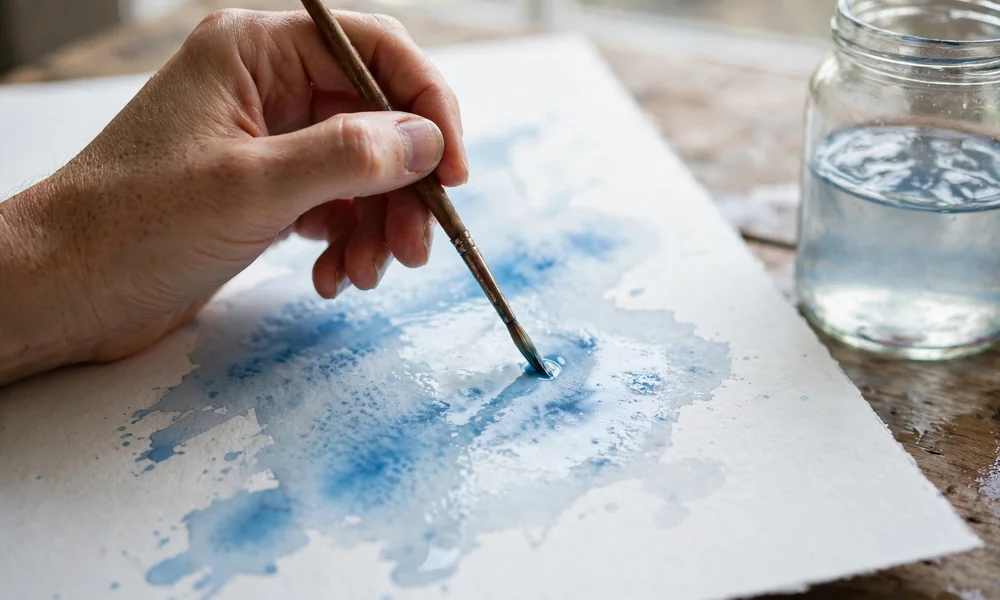
How the Best Watercolour Paints Compare in 2026
The table below sums up the main choices side by side.
| Type | Best for | Blend quality | Price | Watch out for |
|---|---|---|---|---|
| Professional pans | Sketchbooks, travel, finished work | Excellent, clean and luminous | Higher | Small pans run out fast in big washes |
| Professional tubes | Large paintings, skies, glazing | Excellent, rich and even | Higher | Messier to carry; cap tubes tightly |
| Student sets | Learning, practice, children | Good, slightly softer | Low | Some colours fade; check lightfastness |
| Liquid watercolour | Loose, expressive, pouring work | Very fluid, almost self-blending | Mid-range | Stains hard; difficult to lift or correct |
| Granulating paints | Landscapes, texture, skies | Textured, mottled blends | Higher | Needs rough paper to show the effect |
What to Look For When You Buy
Start with the pigment, not the packaging. A good set lists pigment codes on every tube or pan, like PB29 for ultramarine blue, with a lightfastness rating for each colour. Single-pigment colours blend more cleanly than pre-mixed hues, because every mixture has fewer ingredients to turn muddy.
Next, look at the palette itself. The most useful starter palette is a warm and a cool version of each primary, plus burnt sienna and raw umber: eight colours, from which you can mix almost any colour you need.
Finally, think about where you paint. At a desk, tubes and a large palette make sense; outdoors, a pan set that fits in a pocket is worth more than a studio full of tubes. The best paint is the one you actually use.
Paper Matters More Than You Think
Even the finest paint cannot blend on the wrong paper. The standard for serious work is 300 gsm, known as 140 lb. Paper that heavy stays flat when wet, holds a puddle long enough for colours to blend, and takes layer after layer without pilling. Lighter paper buckles the moment it gets wet and dries in seconds, leaving hard edges.
The surface matters too. Cold-pressed paper has a gentle texture that holds water and gives granulating paints something to settle into; it is the best all-round choice for blending. Hot-pressed paper is smooth and suits fine detail. Cotton paper outperforms wood pulp, because cotton fibres absorb water evenly and release it slowly. Cotton costs more, but for a painting you care about, it is the most effective upgrade after the paint itself.
Watercolour or Acrylic: How to Choose
If you are torn between watercolour and acrylic, the decision comes down to the effect you want and the surface you paint on. Watercolour is transparent and water-soluble, it lives on paper, and it rewards patience: you build a painting in thin glazed layers, letting the white paper do the work of the light. Acrylic is opaque and fast-drying, it works on canvas, board, wood and almost any surface, and it rewards boldness: you can cover mistakes and build thick impasto texture.
A good brush matters in both media, so it is worth reading our guide to Top Paint Brushes for Clean Edges in 2026 before you buy. The two media are not rivals; they are different instruments, and knowing which one a painting needs is one of the most useful skills a painter can learn.
Common Mistakes That Spoil a Blend
The most common mistake is overworking a wash. Every extra brush stroke stirs up the pigment and turns a clean blend cloudy. Lay the wash down, let the water do the blending, and leave it alone until it is dry. If a blend needs fixing, wait until the paper is dry and glaze over it rather than scrubbing at a wet wash.
The second mistake is using too little water. A wash that is too dry cannot flow, so colours sit side by side instead of meeting; load the brush generously and tilt the board slightly so the water carries the pigment. The third is mixing too many colours: three pigments in a mixture is the practical limit, and beyond that the blend turns grey.
Finally, many painters confuse house paint with art paint. Furniture and wall paints, like the chalk paints in our guide to Chalk Paint That Gives Furniture a Matte Finish in 2026, are thick, opaque coatings made to cover wood and plaster, and they have nothing to do with the transparent paints in this guide. Likewise, the paints in our guide to Acrylic Paints That Cover Bold and Bright in 2026 are chosen for durability on walls, not for blending on paper.
Your Watercolour Checklist
- Choose single-pigment colours: a warm and cool version of each primary, plus two earth tones.
- Buy heavyweight 300 gsm cotton paper for finished work; keep lighter paper for practice.
- Test every new colour on scrap paper, wet and dry, before it goes near a painting.
- Keep two jars of water: one for rinsing the brush, one clean jar for mixing washes.
- Let each glazed layer dry before adding the next, or layers will lift and cloud.
- Store pans flat, cap tubes tightly, and keep finished paintings out of direct sunlight.
Frequently Asked Questions
Do watercolour paints blend better wet or dry?
Wet, always. Colours blend while the paper is damp, because water carries the pigment. Once a wash dries, its edge is set, so work wet-into-wet for soft blends and let layers dry fully before glazing.
Are expensive watercolour paints worth it for a beginner?
A small professional set is worth it sooner than most beginners expect, because a little paint goes a long way. But a good student set is fine for learning, and many painters start there and upgrade one colour at a time.
Why do my watercolour blends turn muddy?
Usually because too many pigments were mixed, or a wet wash was overworked. Limit mixtures to three pigments, mix on the palette, and leave a wash alone once laid down.
Can I use watercolour paint on ordinary paper?
You can sketch on it, but ordinary paper buckles, dries too fast and pills under a wet brush. Use watercolour paper, ideally 300 gsm cotton.
How do I keep watercolour paintings from fading?
Choose paints with high lightfastness ratings, frame finished work behind glass, and hang it away from direct sunlight. Professional paints fade far more slowly than student-grade ones.
What is the difference between watercolour and acrylic paint?
Watercolour is transparent, water-soluble and painted on paper in thin layers, with the white paper providing the light. Acrylic is opaque, fast-drying and painted on canvas or board, where it can cover completely and build thick texture.
The Bottom Line
The watercolour paints that blend beautifully in 2026 have finely ground pigment, a good binder and transparency: they stay wet long enough for colours to meet, they rewet cleanly, and they let the white paper do the glowing. Pair a professional palette with heavyweight cotton paper, mix no more than three pigments at a time, and leave each wash alone, and your blends will stay luminous.


