
The best portable grills in 2026 are the ones that actually leave the house with you. A full-size backyard grill cooks beautifully, but it stays where it is. A portable grill folds, packs or carries, lights quickly on a campsite table, a tailgate or a patch of sand, and still sears a burger properly. The difference between a good one and a disappointing one is not size or price. It is heat: a portable grill that cannot get hot enough, or cannot hold its heat in a breeze, will steam your food instead of grilling it.
Portable means different things to different people. For a camper it means light enough to carry from the car and small enough to pack beside the tent. For a tailgater it means setting up in minutes in a car park.
Key Takeaways
- Gas tabletop grills are the fastest portable option: push-button lighting, steady heat, and no ash to carry home.
- Charcoal suitcase grills give the best smoke flavour and the highest searing heat, but take longer to light and leave ash behind.
- Allow about 100 square centimetres per person, and check the folded size against your car boot.
- Under about 10 kilograms is genuinely portable; over 15 kilograms, you will think twice about carrying it.
- Budget for a carry bag, fuel and a brush: a cleaned, covered grill lasts years longer.
What Makes a Portable Grill Different
A backyard grill is judged on cooking area and power. A portable grill is judged on what happens before and after the cooking: how small it folds, how much it weighs, how fast it sets up, and how easily it cleans. A grill that cooks well but takes twenty minutes to assemble and leaves ash all over the car boot will stay at home after the second trip. Our guide to the best grills for backyard cooking covers full-size models; this guide is only about grills built to travel.
Weight is the first test. Pick the grill up with one hand, the way you would carry it from the car to a picnic table. Folded size is the second test: measure your boot or cupboard against the folded dimensions, not the cooking ones. Setup time is the third: the best portable grills are cooking within five minutes of opening, with no tools and no loose parts to lose in the grass.

The Main Types of Portable Grill
Portable grills come in five main styles, and the right one depends on how you travel and what you like to cook.
Gas Tabletop Grills
A gas tabletop grill runs on a small disposable canister and lights with a button. It reaches grilling heat in about ten minutes and is the easiest to control: turn the knob down and the heat drops. The trade-off is flavour, since gas gives clean heat but little smoke, and the canisters add weight and cost. For families and tailgaters who want dinner fast, it is the default.
Charcoal Suitcase Grills
A charcoal suitcase grill folds into a case with a handle, opens into a small grill, and cooks over real charcoal. It gives the smoky flavour and fierce searing heat that gas cannot match. The cost is time: lighting takes twenty to thirty minutes, and you must wait for the coals to cool before packing up, then carry the ash home. If flavour matters most, this is the grill to buy.
Flat-Pack and Folding Grills
Flat-pack grills fold down to the size of a laptop and weigh as little as two kilograms. They are built for hikers, cyclists and anyone who packs light, and they run on charcoal, wood or firelighters. They cook well for one or two people, but their small grates and thin metal lose heat quickly in wind.
Electric Portable Grills
An electric portable grill plugs in and heats with an element, producing no flame and almost no smoke. It is often the only grill allowed on a balcony, and the simplest to clean: wipe the plate and put it away. It will not match gas or charcoal for searing, and it needs a power socket.
Hibachi and Small Kettle Grills
A hibachi is a small, heavy cast iron or steel box that burns charcoal fiercely and sears superbly. A small kettle grill is the same idea in a round, lidded form. Both are simple, cheap and tough, with no moving parts to break. They reward a cook who watches the fire.
Portable Grills Compared
| Type | Best For | Weight | Heat-Up Time | Typical Price |
|---|---|---|---|---|
| Gas tabletop | Camping, tailgates, fast cooking | 8–14 kg | 10 minutes | $100–$350 |
| Charcoal suitcase | Smoke flavour, searing | 6–12 kg | 25 minutes | $60–$200 |
| Flat-pack | Backpacking, hiking, light packing | 2–5 kg | 20 minutes | $40–$150 |
| Electric portable | Balconies, flats, no open flame | 4–8 kg | 10 minutes | $80–$250 |
| Hibachi / small kettle | Small groups, simple charcoal cooking | 5–9 kg | 25 minutes | $50–$180 |
Choosing the Right Size and Fuel
Count the people you usually cook for, then size the primary cooking area from that. A couple needs around 200 square centimetres, a family of four around 400, and regular hosts should look for 600 or more. Gas is clean, fast and easy to control, but you must carry canisters. Charcoal gives better flavour and higher heat, but you carry the bag, wait for the light, and carry the ash home.
Heat, Grates and Cooking Area
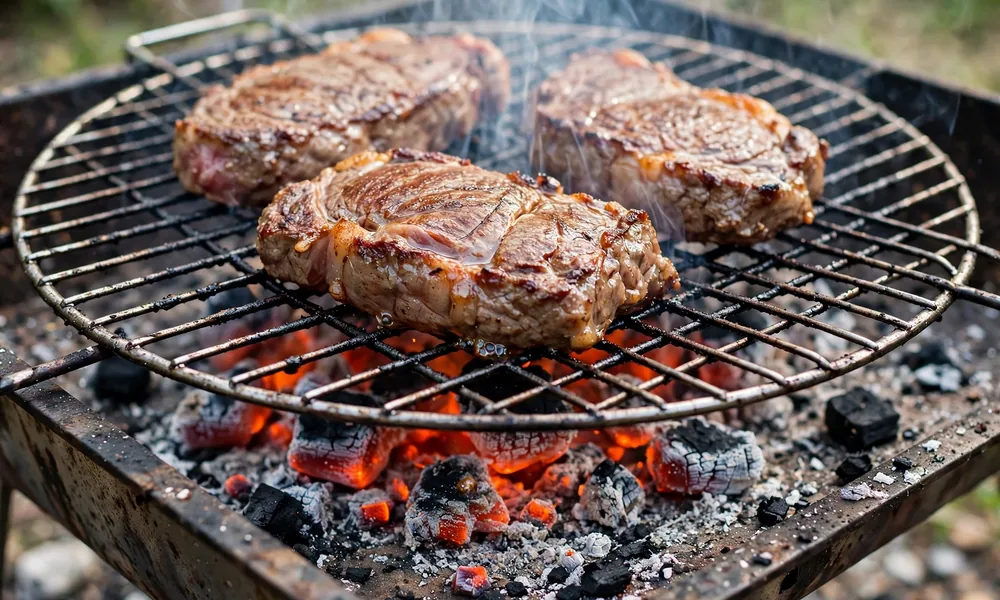
Heat is where cheap portable grills fail. A good one should reach 250 degrees Celsius on the grate and hold it with the lid down in a light breeze. Thin metal loses heat fast, so weight is a useful guide: the heaviest grill in a price range is often the best built.
Grates decide how your food cooks. Cast iron grates hold heat, give the best sear marks, and stay hot when cold food hits them, but they are heavy and need brushing and oiling after every cook to stop rust. Stainless steel grates are lighter and easier to clean, but they cool faster and give lighter sear marks.
The Best Portable Grills of 2026
Best Overall: A Gas Tabletop Grill
The best overall portable grill for most people in 2026 is a gas tabletop model with a single strong burner, a cast iron or porcelain-coated grate, and a lid that latches for carrying. It lights with a button, cooks four burgers at once, and packs into the boot without a trail of ash. Look for a built-in thermometer and a grease tray you can remove with one hand.
Best Charcoal: A Suitcase Grill
The best charcoal portable grill is a suitcase model in heavy steel, with adjustable air vents and a grate that sits close to the coals for searing. It folds into its own case, carries with one handle, and cooks with real smoke.
Best for Backpacking: A Flat-Pack Grill
The best portable grill for a backpack is a flat-pack model in stainless steel that folds to the size of a book and weighs under five kilograms. It will not feed a crowd, but it will grill for two after a long walk, using charcoal or dry wood.
Best for a Small Patio: An Electric Portable Grill
The best portable grill for a balcony or small patio is an electric model with a removable non-stick plate and a drip tray. It plugs in, heats evenly, produces almost no smoke, and cleans in the sink. It suits flats and shared gardens where open flame is not allowed.
Packing, Lighting and Cooking Away From Home
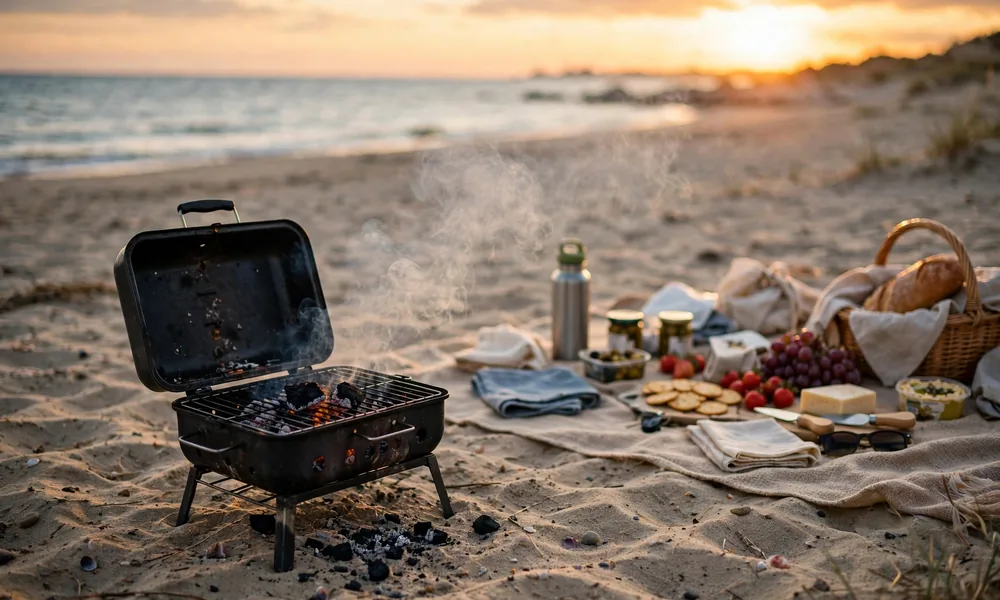
Pack like you will carry it further than you plan. Put the grill in its bag, the fuel in a sealed container, and the tools in a separate pouch, so nothing rattles or spills in the car. Check the rules before you go: some beaches, parks and campsites ban open flame or charcoal, or allow gas only. Our guide to the best camping stoves covers the rest of the outdoor cooking kit that pairs with a portable grill.
Light charcoal the patient way: a chimney starter and newspaper, or firelighters, with the vents open. Do not use petrol or lighter fluid on a small grill, because the flare can be fierce and the taste lingers. On gas, preheat with the lid down for ten minutes, brush the grate, and oil it lightly.
Cleaning and Looking After a Portable Grill
While the grill is still hot, brush the grates hard, then wipe them with an oiled cloth. Once cool, empty the ash or grease tray into a bag and take it home; never dump hot ash on a campsite. Store the grill dry, with the lid ajar so air can circulate, and keep it in its bag so it does not scratch the car. Our guide to the best BBQ tools for grilling covers brushes, tongs and the rest of the kit.
Common Mistakes When Buying a Portable Grill
The first mistake is buying on cooking area alone: a huge grate on a thin, light body cooks worse than a smaller, better-built grill. The second is ignoring weight: a grill you cannot comfortably carry will stay in the garage. The third is forgetting the fuel, since canisters and charcoal all need carrying and some sites ban some fuels.
Portable Grill Buying Checklist
- Weigh it and fold it: under about 10 kilograms, and small enough for your car boot or cupboard.
- Check the primary cooking area against the people you feed, about 100 square centimetres each.
- Choose the fuel that fits where you go: gas for speed, charcoal for flavour, electric for balconies.
- Check the grate material, the lid fit, and tool-free setup in under five minutes.
- Make sure it stands steady on uneven ground, with a lid that latches shut for carrying.
- Budget for a carry bag, fuel and a brush, and clean the grill after every cook.
Frequently Asked Questions
What is the best portable grill for a beginner?
A gas tabletop grill is the easiest portable grill for a beginner. It lights with a button, heats in ten minutes, and lets you control the temperature with a knob.
Can I use a portable grill on a beach?
Yes, if the beach allows it. Check the local rules first, since some beaches ban open flame or charcoal. Keep the grill off the sand, and take all ash and rubbish home with you.
How long does a portable gas canister last?
A small disposable canister usually lasts one to two hours of cooking, depending on the burner size and the heat setting.
Is charcoal or gas better for a portable grill?
Neither is better overall: gas is faster, cleaner and easier to control, while charcoal gives deeper smoke flavour and higher searing heat.
How do I stop food sticking to a portable grill?
Preheat the grate fully, brush it clean while hot, and oil it lightly before the food goes on. Let food form a crust before moving it: meat releases naturally once seared.
Can I use a portable grill on a balcony?
An electric portable grill is usually the safe choice for a balcony, since it produces no open flame. Check your building rules first: many flats ban gas and charcoal on balconies.
The Bottom Line
The best portable grill for camping, tailgates and small patios in 2026 is the one you will actually carry: light enough to lift with one hand, quick to set up, and hot enough to sear properly. Gas wins for speed, charcoal for smoke and searing, and electric for balconies.


