
The best grills for backyard cooking in 2026 are the ones that match how you actually cook. Some people want a gas grill that lights with a button and sears steaks in ten minutes on a Tuesday. Others want charcoal and smoke, slow ribs on a Sunday, and the ritual of tending a fire. The mistake is buying the biggest grill in the shop instead of the one that fits your garden, your food and your patience.
What matters is heat control, cooking area, build quality and how easy it is to clean. A grill that cannot hold a steady temperature, or that rusts through in two seasons, will ruin more meals than any recipe can save. This guide compares the main grill types, the sizes that suit real gardens, and the features worth paying for.
Key Takeaways
- Gas grills are fastest and easiest for weeknight cooking; charcoal gives the best smoke flavour but needs more time and practice.
- Pellet grills are the easiest way to smoke low and slow, holding steady temperatures for hours with almost no attention.
- Allow about 100 square centimetres of cooking area per person, and check the grill fits your patio with room to move around it.
- Cast iron grates hold heat and sear best; stainless steel grates are easier to clean but cool faster.
- Budget for a cover, tools and fuel: a grill that is covered and cleaned after every cook lasts years longer.
What Makes a Grill Great
Great grills start with heat. A gas grill should reach 250 degrees Celsius in ten minutes, and a charcoal grill should hold a steady bed of coals without constant fiddling. Even heat matters more than maximum heat: hot spots burn one burger while the next stays raw. Thick grates, a heavy lid and a well-sealed firebox help a grill hold temperature, which is why the heaviest grill in a price range is often the best built.
Cooking area comes next. The headline number counts every square centimetre, including the warming rack, which is not where you cook your dinner. Look at the primary cooking area, the main grate, and compare that. A family of four needs around 400 square centimetres of primary area, a couple can manage with 300, and hosts should look for 600 or more. A grill that is too small forces you to cook in batches, and the first batch is cold by the time the last is done.
Build quality separates a grill that lasts three summers from one that lasts ten. Stainless steel resists rust but thin panels warp; cast iron holds heat but needs oiling; porcelain-coated steel is easy to clean but chips if knocked. Check the warranty on the burners and the firebox, because those are the parts that fail first.

Gas, Charcoal, Pellet and Kamado
Gas is the default. Turn a knob, press a button, and you are cooking in ten minutes, with precise control over the heat. A three-burner gas grill lets you set up hot and cool zones, searing steaks on one side while vegetables cook gently on the other. The trade-off is flavour: gas gives clean heat but little smoke. Gas grills also need a gas bottle, and the burners will eventually need replacing.
Charcoal is the choice for flavour: burning charcoal and wood gives food a smoky depth gas cannot match, and a kettle grill can sear, roast and smoke with practice. The cost is time: lighting takes twenty to thirty minutes, and cleaning out ash is a regular job. Kamado grills, the heavy ceramic egg-shaped cookers, take charcoal further: their thick walls hold heat for hours, making them superb for slow smoking and high-heat baking.
Pellet grills split the difference. They burn compressed wood pellets, fed automatically from a hopper, and hold a set temperature like an oven while adding real wood smoke. They are the easiest way to smoke ribs, brisket or a whole chicken low and slow. They need electricity and are slower to reach searing heat than gas. For a cook who wants smoke without babysitting a fire, they are hard to beat.
Best Grills Compared
There is no single best grill for every backyard: the right one depends on what you cook and how often. Gas suits the weeknight cook, a charcoal kettle suits the weekend cook who loves smoke, a pellet grill suits the low-and-slow enthusiast, and a kamado suits the cook who wants one grill to do everything. Many keen cooks end up with two: gas for speed and charcoal for flavour.
| Grill Type | Best For | Heat-Up Time | Typical Price |
|---|---|---|---|
| Gas, 3-burner | Weeknight cooking, large groups | 10 minutes | $400–$1,200 |
| Charcoal kettle | Smoke flavour, searing, value | 25 minutes | $150–$500 |
| Pellet grill | Smoking, low and slow, set-and-forget | 15 minutes | $500–$1,500 |
| Kamado | Versatility, smoking, high-heat baking | 25 minutes | $600–$2,000 |
| Electric grill | Balconies, flats, no open flame | 10 minutes | $100–$400 |
| Portable grill | Camping, picnics, small patios | 15 minutes | $80–$300 |
Electric grills deserve a note for anyone without a garden: they plug in, produce no open flame, and are often the only grill allowed on a balcony or in a flat. They will not match gas or charcoal for searing, but modern models cook burgers, vegetables and fish well. Our comparison of gas vs electric grills goes deeper into heat and flavour.
Choosing the Right Size and Layout
Size is the decision most buyers get wrong. Too small, and you cook in batches. Too big, and you waste fuel heating a grill for two burgers. Count the people you usually cook for, then add two for guests, and size the primary cooking area from that. A side burner helps if you cook sauces outside, and side shelves matter: you need somewhere for the tray of raw food and the plate of cooked food.
Grates, Burners and Heat Control
Grates decide how your food cooks. Cast iron grates hold heat, give the best sear marks, and stay hot when cold food hits them, but they need brushing and oiling after every cook to stop rust. Stainless steel grates are easier to clean and resist rust, but they cool faster and give lighter sear marks. Porcelain-coated cast iron sits in the middle: good heat, easier cleaning, but the coating chips if it is dropped or scraped with metal tools. Whichever you choose, preheat the grate, brush it clean while hot, and oil it lightly before the food goes on.
On a gas grill, burners are the engine. Look for stainless steel or cast iron burners with a good warranty, and at least three burners, because three give you the hot and cool zones that make real cooking possible. One burner gives you no control at all. A lid thermometer measures the air at the top, not the grate, so a cheap probe thermometer tells you more. Our guide to the best BBQ tools for grilling covers thermometers, tongs and the rest of the kit that makes a good grill great.

Two-Zone Cooking, Explained Simply
Two-zone cooking is the single most useful grilling technique, and it works on gas, charcoal and kamado grills alike. Set one side hot and one side cool: sear steaks and burgers over the hot side, then move them to the cool side to finish without burning. If a flare-up starts, slide the food to the cool side.
What to Cook on Each Grill
Different grills shine with different food. Gas suits burgers, sausages, chicken and vegetables: fast-cooking food that benefits from even heat. Charcoal suits steaks, where high heat and smoke give a crust gas struggles to match. Pellet grills suit ribs, brisket and whole chickens, cooked low and slow. Kamado grills handle all of it, and are superb for pizza and roasting.
Vegetables deserve more attention than they usually get: courgettes, peppers, asparagus and corn all cook beautifully over direct heat, and a grill basket stops small pieces falling through. If your backyard cooking stretches beyond the grill, a pizza oven is a natural next step: our guide to the best pizza ovens covers the models that turn a patio into a proper outdoor kitchen.
Cleaning and Looking After Your Grill
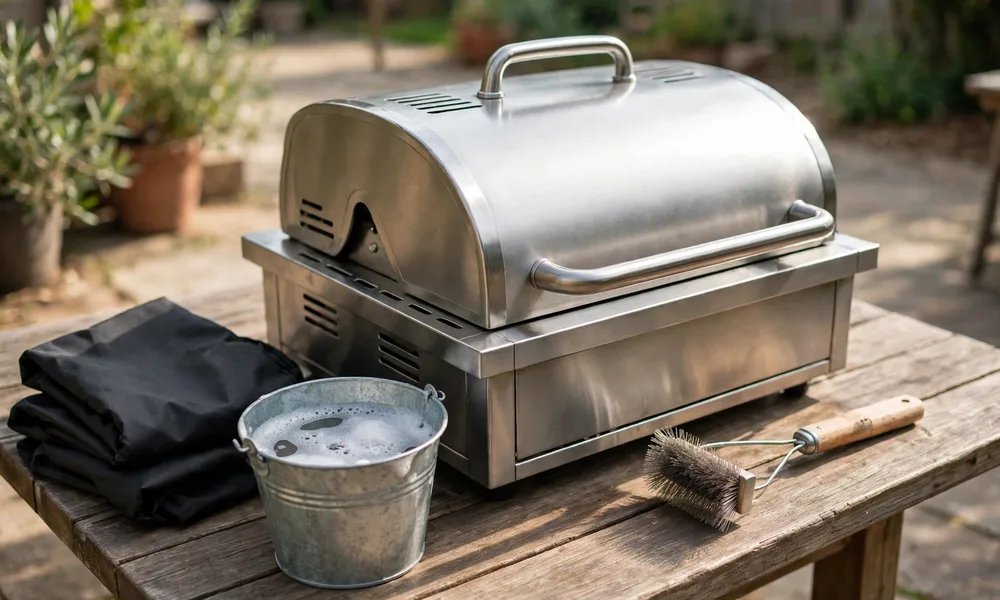
Cleaning is the part nobody enjoys, and it is the reason most grills die young. The routine is simple: while the grill is still hot, brush the grates hard, then wipe them with an oiled cloth. Once cool, empty the ash or grease tray, because old grease is the main cause of flare-ups. A deep clean once or twice a season keeps everything working properly.
Common Mistakes When Buying a Grill
The first mistake is buying on size alone: a huge grill with thin metal and weak burners cooks worse than a smaller, better-built one, and wastes fuel every time you light it. The second is ignoring the warranty on burners and the firebox. The third is forgetting running costs: gas, charcoal, pellets and parts add up.
The fourth mistake is skipping the cover and the tools: a grill without a cover rusts. The fifth is placing the grill badly, too close to the house or where wind blows smoke into the seating area. Walk the garden and check the wind before you commit to a spot.
Grill Buying Checklist
- Count the people you usually cook for and size the primary cooking area from that, not the headline number.
- Choose the fuel that fits your cooking: gas for speed, charcoal for smoke, pellet for low and slow.
- Check the burner and firebox warranty, the grate material, and the weight of the build.
- Make sure you have at least two heat zones, and three burners on a gas grill if you can.
- Plan the spot: flat, stable, a metre from anything flammable, near the kitchen door.
- Budget for a cover, a thermometer, tongs, a brush and fuel, and clean the grill after every cook.
Frequently Asked Questions
What is the best grill for a beginner?
A three-burner gas grill is the easiest grill for a beginner. It lights with a button, heats in ten minutes, and lets you control the temperature with a knob. Once confident, a small charcoal kettle is a cheap second grill that adds smoke flavour.
Is gas or charcoal better for grilling?
Neither is better overall: gas is faster, cleaner and easier to control, while charcoal gives deeper smoke flavour and higher searing heat. If you can only have one grill and you cook often, gas is the practical choice.
How big a grill do I need?
Allow about 100 square centimetres of primary cooking area per person. A couple needs around 300 square centimetres, a family of four around 400, and regular hosts should look for 600 or more. Always check the primary area, not the total including the warming rack.
How long should a grill last?
A well-built grill that is cleaned and covered should last eight to ten years, and a premium kamado or heavy stainless gas grill can last much longer. Cheap thin-metal grills often fail in two or three seasons.
Can I use a gas grill in winter?
Yes, but cold air and wind steal heat, so preheating takes longer and you may need higher burner settings. Keep the lid closed, shelter the grill from wind, and remember propane pressure drops in very cold weather.
How do I stop food sticking to the grill?
Preheat the grate fully, brush it clean while hot, and oil it lightly before the food goes on. Let food form a crust before moving it: meat releases naturally once seared. Pat meat and fish dry first, as cold, wet food sticks most.
The Bottom Line
The best grill for backyard cooking in 2026 is the one that fits your food, your garden and your patience. Gas wins for speed, charcoal for smoke and searing, pellet for low-and-slow smoking, and kamado for versatility. Size the cooking area to your table, check the burner warranty, buy a cover and a thermometer, and clean the grill after every cook.


