Choosing between gas vs electric grills in 2026 comes down to one question: where and how do you actually cook? Both types can turn out a great steak and perfectly charred vegetables, but they get there in very different ways. Gas grills bring real flame, high heat, and that classic backyard barbecue feel, while electric grills bring plug-in simplicity and the freedom to grill on a balcony or even indoors.
The gap between the two has narrowed a lot in recent years. Modern electric grills now reach temperatures that were once the exclusive territory of gas, and modern gas grills have become far easier to light, clean, and control. That makes the choice less about which one is objectively better and more about which one fits your home, your rules, and your cooking style.
This comparison puts gas and electric grills head to head across heat, flavour, cost, convenience, space, cleaning, and safety. By the end, you will know exactly which grill belongs on your patio, your balcony, or your kitchen counter.
Key takeaways
- Gas grills reach higher temperatures and sear better, making them stronger for thick steaks and large cookouts.
- Electric grills heat evenly, need no fuel, and are the only option where open flame is banned.
- Gas costs more upfront but is usually cheaper to run for frequent grilling.
- Electric grills are easier to clean, safer to use, and simple for a beginner to master.
- Your living situation matters most: check your building rules before you buy.
How Gas and Electric Grills Actually Work
The two grill types use completely different heat sources, and that difference explains almost every strength and weakness that follows.
The gas grill
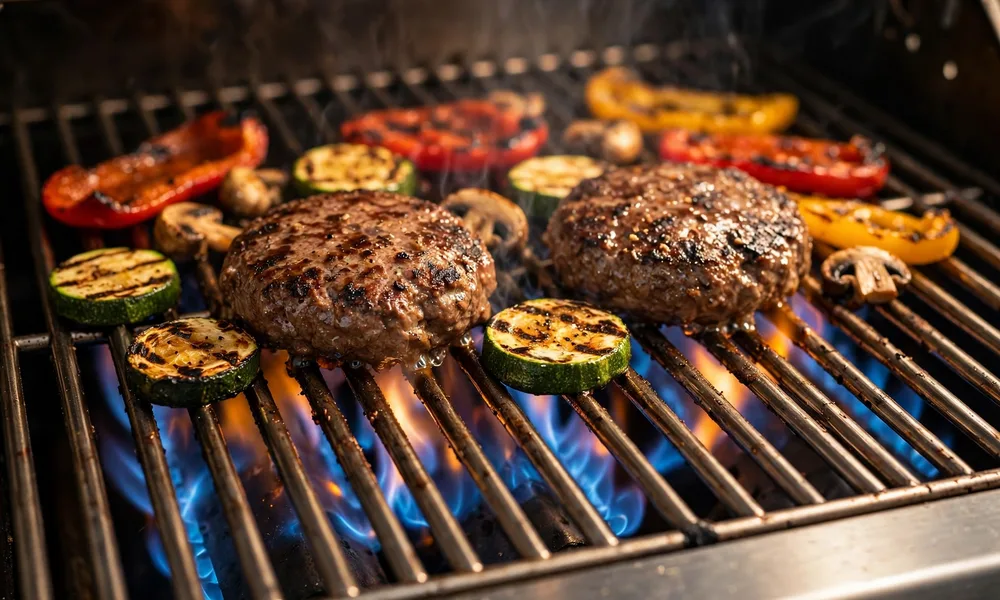
A gas grill burns propane from a refillable tank or natural gas from a plumbed line. Turn a knob, press an igniter, and burners under the grate produce an open flame. Fat dripping onto the hot surfaces vaporises into smoke that flavours the food. Most gas grills have two to six burners, so you can run one side hot for searing and the other side cool for gentle cooking. The flame responds quickly, but you need a fuel supply, a safe place to store a propane tank, and a grill that can live outdoors.
The electric grill
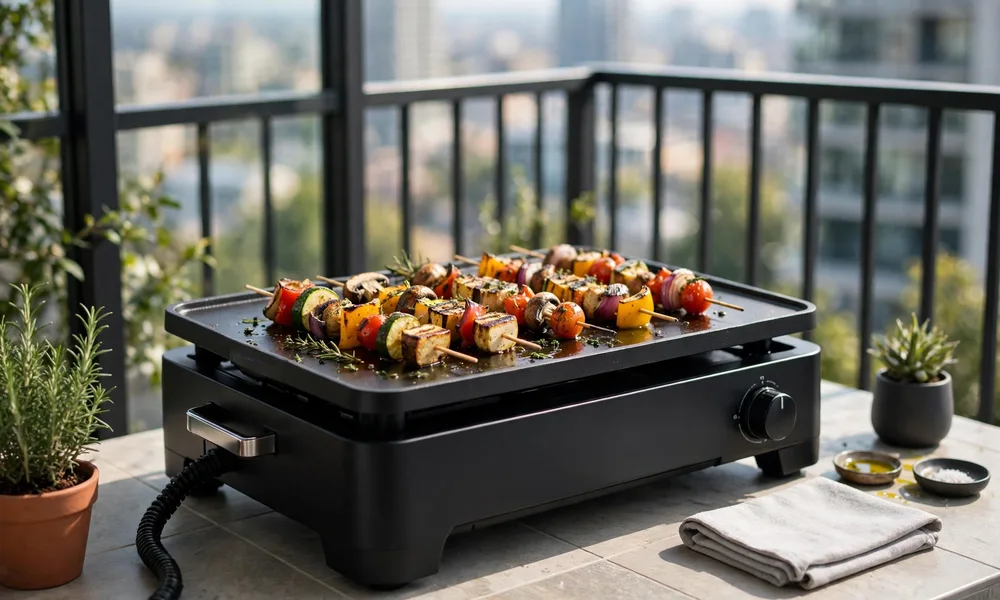
An electric grill uses a heating element powered by a standard wall outlet. Electricity heats a metal plate or a coil under the grate, and a thermostat holds the temperature steady. There is no flame, no fuel, and no smoke beyond what the food itself produces. Many models are small enough to sit on a tabletop, and some are designed for indoor use. The big advantage is consistency: an electric grill holds a set temperature with very little drift. The main limitation is top-end heat, since most electric grills top out lower than gas and recover temperature more slowly when you add cold food.
Gas vs Electric Grills 2026: The Head-to-Head Comparison
| Factor | Gas Grill | Electric Grill |
|---|---|---|
| Maximum heat | Very high, 500 to 700°F | Moderate to high, 400 to 550°F |
| Flavour | Smoky, flame-kissed taste | Clean taste, less smoke |
| Heat-up time | 10 to 15 minutes | 5 to 10 minutes |
| Temperature control | Manual knobs, fast response | Thermostat, very steady |
| Upfront cost | Higher, especially large models | Lower, many models under $200 |
| Running cost | Propane or natural gas | Electricity, a few cents per hour |
| Where you can use it | Outdoors only | Balcony, patio, or indoors |
| Cleaning | More parts to scrub | Quick wipe-down |
| Safety | Open flame, gas leaks possible | No flame, cooler exterior |
| Cooking space | Large, feeds a crowd | Compact, one to four people |
Heat and Cooking Performance
Heat is where the two grill types diverge most. A grill that cannot get hot enough will steam a steak instead of searing it, and no amount of seasoning fixes that.
Maximum temperature and searing
Gas wins the heat race clearly. A good gas grill reaches 500 to 700 degrees Fahrenheit, hot enough to create a deep, dark crust on a steak in a couple of minutes per side. Electric grills have improved, and the best models now reach 500 degrees or more, but they take longer to recover heat after you place food on the grate.
Temperature control and evenness
Electric grills win on evenness. A thermostat keeps the cooking surface at a steady temperature across the whole plate, so the burger in the corner cooks at the same rate as the one in the centre. Gas grills have hot spots above each burner and cooler zones between them, which experienced grillers use deliberately but beginners often struggle with.
Flavour: Does Gas Really Taste Better?
Gas has an edge on flavour, but it is smaller than most people think. The smoky taste of grilled food comes from fat and juices dripping onto a hot surface and vaporising. On a gas grill, those drippings hit flame and heat tents, producing aromatic smoke that wraps around the food. On an electric grill, the drippings hit a hot plate and produce less smoke, so the flavour is cleaner and milder. Most grilled flavour comes from the Maillard reaction, the browning that happens when meat meets high heat, and both grill types can produce it. Marinades and good seasoning close much of the remaining gap, though gas pulls clearly ahead with fatty foods like burgers, sausages, and ribs.
Cost: What You Pay to Buy and to Run
The price tag is only part of the cost. Fuel, maintenance, and replacement parts add up over years of use.
Upfront price
Electric grills are the budget-friendly entry point. A solid tabletop model costs well under $200, and even a large electric model rarely passes $400. Gas grills start higher: a decent two-burner model runs $250 to $400, a good three-burner model $400 to $700, and a premium four-burner model can pass $1,000.
Running costs
A standard 20-pound propane tank costs roughly $20 to $25 to refill and lasts about 18 to 20 hours of cooking, just over a dollar per hour. Electricity for an electric grill costs only a few cents per hour. For a household that grills two or three times a week, the yearly fuel difference is modest, perhaps $30 to $60. The bigger cost gap is maintenance: gas grills need new burners and igniters every few years, while electric grills have fewer parts to replace.
Convenience and Everyday Use
The best grill is the one you actually use. Electric grills are the convenience winners: plug in, turn the dial, and you are cooking within minutes, with no tank to check. When you finish, most have removable plates that go straight into the sink. Gas grills ask more of you, but they are always ready for a big cookout, with no outlet needed and enough space to feed twelve people. For a quick weeknight dinner for two, electric is easier; for a Saturday barbecue, gas is the workhorse. If you live in a flat or a home with limited outdoor space, the best electric grills for apartments are worth a close look.
Space, Rules and Where You Can Grill
This factor settles the debate for millions of people before any comparison of heat or flavour begins. Many apartments and rental homes ban open-flame grills on balconies, and some ban them anywhere on the property. A gas grill in that situation is against the rules and can cost you your deposit. Electric grills exist precisely for this problem: with no open flame, most buildings allow them on balconies and patios, and many models are approved for indoor use. Read your building rules and local fire code before you spend anything.
Cleaning and Maintenance
Electric grills are the easiest to clean. Most have non-stick plates that lift out, plus a drip tray that catches fat. A wipe with a damp cloth while the plates are still warm handles most messes. Gas grills demand more: after each cook, burn off residue on high heat, brush the grates, and empty the grease tray. A few times a year, the burners need inspection and the heat tents will eventually need replacing.
Safety and Durability
Both grill types are safe when used correctly, but they carry different risks. Gas grills involve an open flame and a pressurised fuel source, so two things matter: gas leaks and flare-ups. Connections should be checked with soapy water at the start of each season, and tanks stored upright and outdoors. Electric grills remove both risks: no flame, no fuel, and no gas to leak, plus a cooler exterior and automatic shut-off on many models. On durability, a quality stainless steel gas grill can last ten to fifteen years, while electric grills typically last five to eight years.
Who Should Buy Which Grill?
There is no single winner here, because the right grill depends on your home, your habits, and what you cook most.
Choose gas if you have a yard, love to host, and want the highest heat
Pick a gas grill if you have outdoor space, cook for a crowd, and care about searing and smoky flavour. Gas suits the weekend barbecue host, the steak lover, and anyone who grills several times a week. If you are wondering how gas compares with the older charcoal tradition, our guide to gas vs charcoal grills covers that rivalry in full.
Choose electric if you live in a flat, grill for one to four people, and want simplicity
Pick an electric grill if you live in an apartment, have a small balcony, or want a grill you can use indoors when the weather turns. Electric suits the weeknight cook, the beginner, and anyone who values quick cleanup over maximum heat. The same logic applies in the kitchen, where the choice between induction vs gas cooktops follows a very similar pattern of flame versus plug-in convenience.

Buyer Checklist: 6 Things to Check Before You Buy
- Check your building rules first. Confirm whether open-flame grills are allowed on your balcony or patio.
- Measure your space. Leave clearance on all sides and room for the lid to open fully.
- Match the size to your table. A two-burner gas grill or compact electric grill is plenty for one to four people.
- Look for easy cleaning. Removable plates, a drip tray, and rust-resistant grates save you hours.
- Check the maximum temperature. For searing, look for at least 500°F on gas or 450°F on electric.
- Budget for the extras. A cover, thermometer, tongs, and brush are essential; add a spare propane tank for gas.
Frequently Asked Questions
Can an electric grill really sear a steak?
Yes, if your model reaches at least 450°F and you preheat it fully. Pat the steak dry and leave it undisturbed for two to three minutes per side. The crust will be slightly lighter than on gas.
Is it cheaper to grill with gas or electric?
Electricity is cheaper per hour, but gas grills are usually larger and used for longer sessions. The yearly fuel difference is small, often under $50. The bigger cost gap is upfront: electric grills cost less to buy and maintain.
Can I use an electric grill indoors?
Many electric grills are designed for indoor use, especially smokeless models with a drip tray and a fan. Always check the manual and use it near ventilation.
Do gas grills taste better than electric grills?
Gas produces more smoke and a stronger flame-kissed flavour, especially with fatty meats. The difference is noticeable for burgers and ribs but small for chicken, fish, and vegetables.
How long does a propane tank last on a gas grill?
A standard 20-pound tank lasts about 18 to 20 hours of cooking on medium heat, roughly eight to ten long barbecue sessions. Keep a spare tank if you host often.
Which grill is better for a small balcony?
An electric grill is the better choice for a small balcony. It is compact, has no open flame, and is allowed by most building rules. A tabletop model still handles dinner for two to four people with ease.
The Bottom Line
Gas vs electric grills in 2026 is not a contest with one winner; it is a choice between two different kinds of cooking. Gas gives you higher heat, smokier flavour, and the capacity to feed a crowd, and it is the right pick if you have a yard and you grill often. Electric gives you simplicity, safety, even heat, and the freedom to grill where gas is banned, and it is the right pick if you live in a flat and cook for a few people. Either way, the best grill is the one that fits your home and gets used every week.