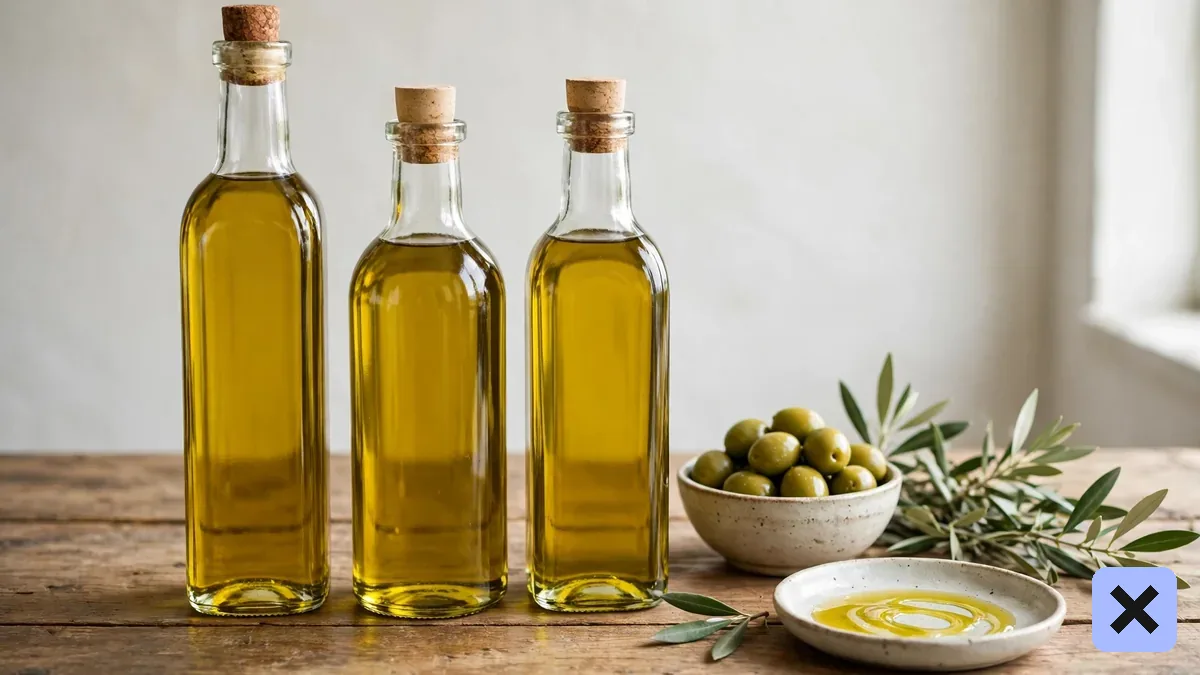
The gas vs charcoal grills debate has divided backyard cooks for decades. One side promises instant heat and push-button control, while the other swears by a smoky flavour no burner can imitate. Both cook excellent food, yet they suit very different cooks, budgets and weeknights.
Choosing the wrong grill usually has little to do with the food itself. It comes down to how much time you have on a Tuesday evening, how much mess you will tolerate, and whether you enjoy tending a fire. A grill that fights your habits will sit unused, however good its reviews.
This guide compares gas and charcoal grills on flavour, heat, cost, convenience and cleanup, so you can pick the one you will actually love using. There is a clear winner for most households, but the best choice still depends on what you cook.
Key takeaways
- Gas grills win on speed and control: they light in minutes and hold a steady temperature with a turn of a knob.
- Charcoal grills win on flavour: burning wood and charcoal adds a smoky depth that gas cannot reproduce.
- Charcoal costs less to buy but more of your time, while gas costs more upfront and needs a fuel supply.
- For searing steaks, both reach high heat, but charcoal edges ahead on crust and char.
- The best grill for most families is gas for weeknights, with charcoal as a second grill for weekends.
How Gas and Charcoal Grills Actually Cook
Before comparing results, it helps to understand what happens under the grate. Gas and charcoal create different cooking environments, and that difference shapes everything from sear marks to smoke.
How a Gas Grill Works
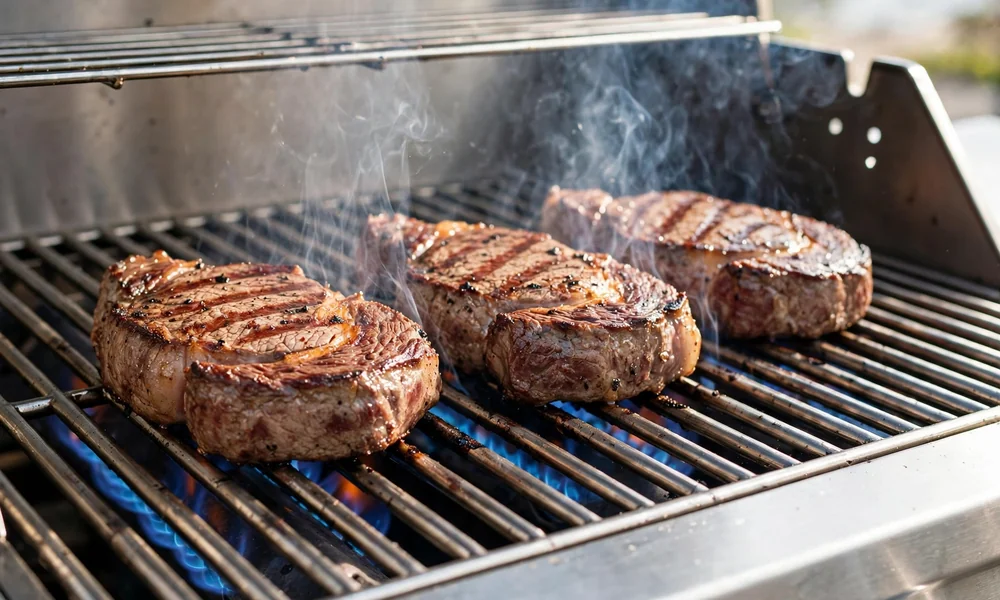
A gas grill burns propane or natural gas through burners beneath the grate. Turn a knob, press the igniter, and blue flames appear within seconds. Heat deflectors spread the warmth, and the burners hold steady output while the gas flows. Most gas grills reach cooking temperature in about ten minutes, and many have three or four burners so you can run one side hot and the other cool.
How a Charcoal Grill Works
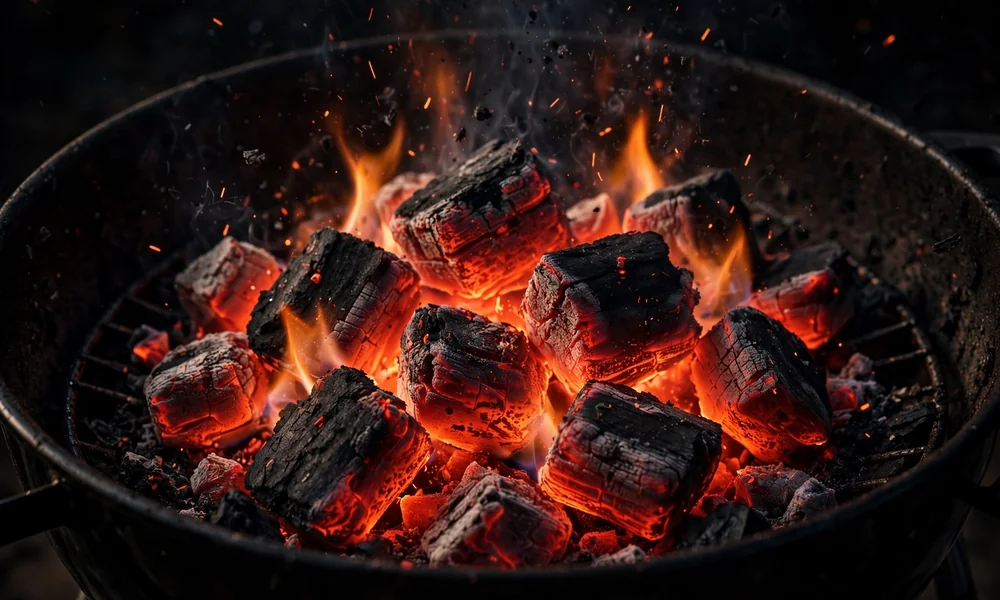
A charcoal grill burns briquettes or lump charcoal in a bowl beneath the grate. You light the coals, wait for them to turn grey with ash, and spread them where you want the heat. The fire peaks and then slowly fades, so the cook manages temperature by moving coals and adjusting the vents. Lighting takes fifteen to thirty minutes, and the grill stays hot long after the food comes off.
The practical difference is control against character. Gas gives you a dial; charcoal gives you a live fire. One is a kitchen appliance moved outdoors, and the other is closer to cooking over a campfire.
Flavour: Where Charcoal Pulls Ahead
Flavour is the strongest argument for charcoal. When fat drips onto hot coals, it vaporises into smoke that rises back over the food, adding a savoury, wood-fired note gas grills struggle to match. Lump charcoal and wood chunks deepen this effect, and soaked wood chips can make a simple chicken taste like it came from a smokehouse.
Gas grills are not flavourless, though. High heat still creates the Maillard reaction, the browning that gives a steak its crust and a burger its savoury edge. Fat dripping onto hot deflectors also creates some smoke, just less of it and milder. For marinated chicken, sausages, vegetables and fish, most eaters could not tell which grill cooked them in a blind test.
Where the gap shows is in foods that spend longer over the fire. A thick ribeye, a whole chicken or a rack of ribs picks up far more smoke character on charcoal, and that is why competition barbecue cooks almost never use gas. Once the steak is off the grill, it also helps to know which wine pairs best with a grilled steak, because the right glass can lift a good cookout into a memorable one.
Heat, Control and Cooking Speed
Speed is where gas wins outright, and for busy households that matters more than smoke. A gas grill goes from cold to ready in about ten minutes, cooks dinner, and cools down quickly. A charcoal grill needs half an hour before the first burger goes on, and the coals keep burning for an hour after you finish.
Holding a Steady Temperature
Gas holds a set temperature almost by itself. Turn the knob down for gentle heat, up for a sear, and the grill obeys within a minute or two. Charcoal temperature moves with the fire, the wind and the vents, so the cook checks and adjusts throughout. Experienced charcoal cooks love this control, but beginners often find their first meals run too hot or too cool.
Two-Zone Cooking
Both grills can run a two-zone setup, with one hot side for searing and one cooler side for finishing. On a gas grill, you simply turn one burner off; on charcoal, you pile the coals on one side and leave the other empty. Gas makes it easier to repeat, while charcoal demands a little practice first.
Gas vs Charcoal at a Glance
| Feature | Gas Grill | Charcoal Grill |
|---|---|---|
| Startup time | About 10 minutes | 15 to 30 minutes |
| Maximum heat | High, around 500 to 600 degrees | Very high, above 700 degrees |
| Flavour | Clean, mild, less smoky | Rich and smoky |
| Temperature control | Knob control | Vents and coal placement |
| Running cost | Propane refills or gas line | Bags of charcoal per cook |
| Cleanup | Brush grate, empty drip tray | Brush grate, dispose of ash |
| Best for | Weeknights and frequent grilling | Weekends, smoking and searing |
Cost: Buying and Running Your Grill
Charcoal wins the first round on price. A solid kettle charcoal grill costs far less than a comparable gas grill, and even a good-sized charcoal model usually undercuts a mid-range gas grill by a wide margin. If the budget is tight, charcoal puts a capable grill in the backyard for the price of one dinner out.
Upfront Price
A decent gas grill starts at several times the price of a basic kettle grill, and larger models with side burners and heavy stainless steel can cost as much as a small appliance. The extra money buys convenience, cooking space and durability, and a well-built gas grill can last a decade or more with basic care.
Fuel Costs Over a Season
Running costs narrow the gap. A bag of charcoal covers a few cooks, so regular charcoal grilling adds up over a summer. A propane tank lasts for many cooks and costs less per session. Over a full season of frequent grilling, gas often works out cheaper per meal, even though the grill cost more to buy.
Ease of Use, Safety and Cleanup
Convenience is the quiet reason most gas grills get used more often. There is no ash to handle, no chimney starter to fill, and no waiting for coals to die down before you can go inside. You cook, brush the grate, close the lid and walk away. That simplicity matters when grilling is a weekly habit rather than a weekend event.
Charcoal asks more of the cook at every stage: lighting, tending, and disposing of ash once the coals are fully cold. Ash must never go into a bin while warm, and the grill needs a safe spot away from decking and dry leaves. Most ruined cookouts come from simple errors, so it pays to read about the most common backyard BBQ mistakes before your first big cookout, whatever fuel you choose.
Cleanup Compared
Gas cleanup takes about five minutes: brush the hot grate, wipe the drip tray, and check the burners now and then. Charcoal cleanup takes longer because ash gets everywhere, and the grate needs a thorough scrub after fatty cooks. The difference adds up across a summer.
Which Grill Suits Which Cook?
The honest answer is that the best grill is the one that matches your routine. A grill that fits your evenings will get used twice a week; a grill that fights your schedule will gather dust, however good its smoke ring.
Choose Gas If You Grill Often
Pick gas if you grill two or three times a week, cook after work, or feed a family on busy evenings. It suits cooks who value speed, steady heat and easy cleanup, and it handles everything from vegetables to whole chickens. Anyone who wants dinner in twenty minutes will be happiest with gas.
Choose Charcoal If You Love the Ritual
Pick charcoal if you grill mainly at weekends, enjoy the process as much as the meal, and care most about deep smoky flavour. It suits cooks who like to sear thick steaks and smoke ribs low and slow. If lighting the fire feels like the start of the party, charcoal is your grill.
The Two-Grill Option
Many serious backyard cooks eventually own both: a gas grill for weeknights and a charcoal kettle for weekends. The pair covers every situation, and the charcoal grill costs little enough that the combination is often cheaper than one premium gas model. Long, slow charcoal sessions are far more pleasant with proper seating, so consider a few comfortable camping chairs for the patio alongside the grill, and the backyard becomes a place to linger rather than just a place to cook.
Checklist: Before You Buy a Grill
- Measure your patio or balcony, and leave space around the grill for safe use.
- Count how many people you usually cook for, and choose a grate big enough for them.
- Decide honestly how often you will grill on a weeknight.
- Check local rules if you live in a flat, since some buildings restrict charcoal.
- Budget for fuel, a cover, tongs, a thermometer and a good grate brush.
- Try the lid, wheels and knobs in person if you can, since wobbly grills age badly.
Frequently Asked Questions
Do gas grills really taste worse than charcoal?
They taste different rather than worse. Charcoal adds a smoky depth gas cannot copy, but a well-seared steak or burger from a gas grill is still delicious. Seasoning and technique matter more than fuel for most everyday meals.
Can a gas grill sear a steak properly?
Yes, if it gets hot enough. Preheat with the lid closed for ten minutes, pat the steak dry, and sear it over the hottest burner. Resting the steak for five minutes after cooking keeps it juicy.
Is charcoal grilling safe on a wooden deck?
It can be, with care. Place the grill on a heat-resistant mat, keep it away from railings and dry leaves, and never leave it unattended. Wait until the ash is completely cold before disposal.
How long does a propane tank last?
A standard twenty-pound propane tank usually lasts around eighteen to twenty hours of grilling, which covers many weeks of regular use. Keep a spare tank or a gauge so you never run out mid-cookout.
What is the best charcoal for a beginner?
Standard briquettes are the best starting point because they burn evenly and predictably. Light them in a chimney starter, wait until they are covered in grey ash, and spread them in a single layer. Lump charcoal burns hotter, so save it for later.
Can I add smoky flavour to a gas grill?
Yes, a smoker box filled with soaked wood chips adds a gentle smoky note. It will not match a charcoal fire, but it closes much of the gap for chicken, fish and vegetables.
The Bottom Line
Gas grills cook better for most people, most of the time, because they are fast, steady and easy to use, and a grill you use twice a week beats one you use twice a summer. Charcoal grills cook better food when flavour is the priority and time is no object, and nothing else matches their smoky sear. If you must choose one, choose gas. If you have the space, own both, and let each grill do what it does best.