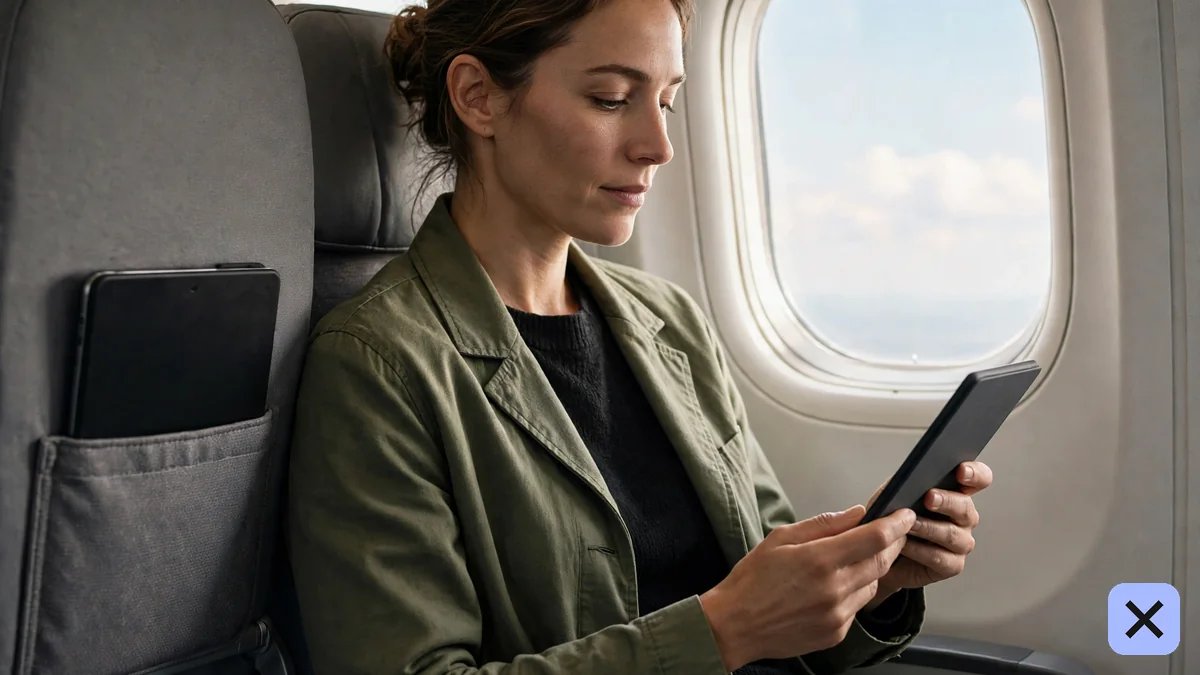
Choosing a tablet vs e-reader for travel reading sounds simple until you are at the airport with a bag that is already too heavy. Both hold hundreds of books and fit in a day pack, yet they suit very different trips. The right choice depends on how you travel, not on which device is better in general.
A tablet is a small computer that happens to read books well. It shows colour, plays films, runs maps and messaging apps, and handles magazines and guidebooks with ease. An e-reader is built around one job: making long reading sessions feel close to paper, with a screen that stays readable in bright light and a battery that lasts for weeks.
This guide compares the two for travellers, from screen comfort and battery life to weight, durability and cost, so you can pick the device that belongs in your bag.
Key takeaways
- E-readers win on comfort, sunlight readability and battery life.
- Tablets win on versatility, handling colour books, films, maps and work on one device.
- For pure reading on long trips, an e-reader is lighter and easier on the eyes.
- For short trips where one device must do everything, a tablet is the better all-rounder.
- Take both only if you read for hours daily and need a screen for films and planning.
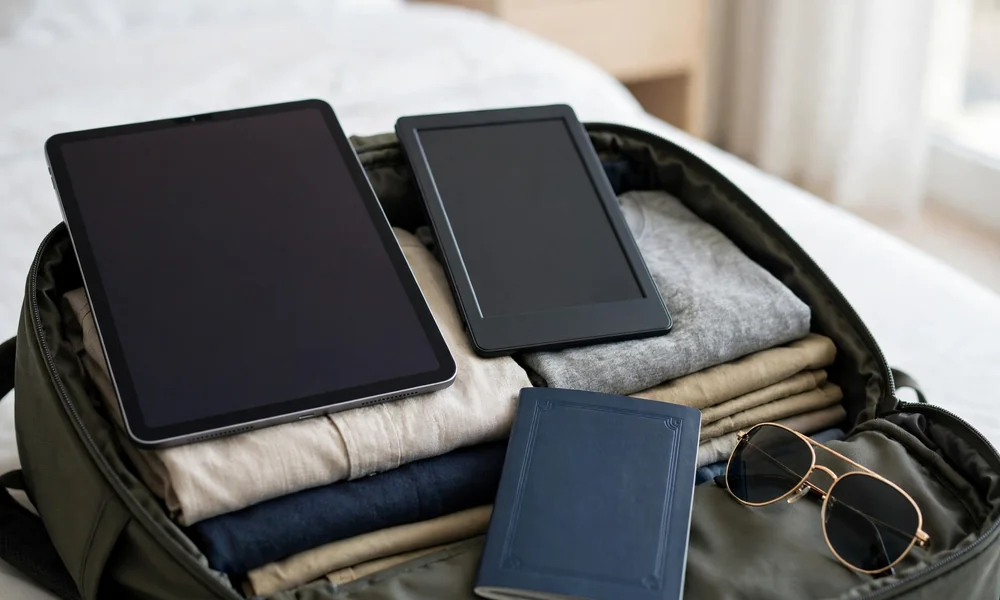
The Short Answer: Pick by How You Read on the Road
If your trip is mostly about reading, pack the e-reader. It is lighter, its battery will outlast your holiday, and its screen behaves in sunlight the way a tablet cannot. A dedicated e-reader weighs around 200 grams, slips into a small bag, and holds thousands of books without ever asking for a charger.
If your trip is mostly about doing many things with one device, pack the tablet. It is your book, your map, your cinema and your notebook in a single slab. Travellers who plan routes, watch films on night trains and read a chapter before sleep will get more value from one tablet than from an e-reader plus a phone doing the extra work.
Reading Comfort: Screens, Sunlight and Eye Strain
Reading comfort is where the two devices part ways most clearly. An e-reader uses an e-ink screen that reflects light like paper instead of shining light into your eyes. There is no glare and no glow, so a long chapter feels much like reading a printed page, and in direct sunlight the screen gets easier to read, not harder.
A tablet uses a backlit LCD or OLED screen. It is brighter, sharper and far better for colour, but it reflects sunlight, washes out on a bright beach, and can tire your eyes during a long session. Warm-light modes help in the evening, yet the basic difference remains: one screen is lit from behind, the other is not.
Tablets have closed some of the gap: high-resolution screens render text crisply, and reading apps let you change fonts and spacing in seconds. If you mostly read indoors or in short bursts, a tablet is perfectly comfortable. The comparison of Kindle vs iPad for reading shows the same trade-off: paper-like comfort against a brighter, more flexible screen.
Sunlight and Outdoor Reading
Outdoors, the e-reader wins without a contest. E-ink stays readable in full sun with no need to shade the screen, while a tablet in the same spot becomes a mirror.
Long Sessions and Tired Eyes
For marathon sessions such as a six-hour flight, the e-reader is gentler. The matte, glare-free screen and the absence of notifications make it easier to stay in a book for hours.
Weight, Size and Packing
Weight is a travel decision, not a minor detail. A typical e-reader weighs 180 to 220 grams, about the same as a small paperback, and slides into a jacket pocket. A typical tablet weighs 450 to 650 grams, roughly three times as much, and needs a case, which adds more weight still.
That difference matters most when you travel light. With a small backpack or a strict carry-on limit, every gram counts, and the e-reader earns its place easily. The tablet earns its place differently: it replaces several other items, so its weight is shared across reading, entertainment and navigation.
Reading on the Move: Planes, Trains and Buses
Travel reading happens in motion. On a plane, the e-reader lasts the whole flight and the next one without charging, while a tablet used for films as well as books may need a top-up before landing. On a night train, the e-reader’s warm light lets you read without disturbing a cabin mate.
On buses and in cars, the e-reader’s light weight makes it easier to hold one-handed, and its screen does not strain your eyes on bumpy roads. A tablet is better when the journey needs planning: checking a route, reading a colour guidebook, or watching a film when the road gets dull. Download your books before you leave, since station Wi-Fi is unreliable.

Battery Life and Charging
Battery life is the e-reader’s biggest advantage. A modern e-reader lasts three to six weeks on a single charge with regular reading, because the e-ink screen only uses power when the page changes. You can cross continents, forget your charger entirely, and still be reading on the last day of the trip.
A tablet lasts far less: eight to twelve hours of reading, and much less if you also watch video or navigate. That is enough for a day, but it means the tablet joins the nightly charging queue with your phone, and on a long travel day you may have to choose between reading and saving power for maps.
Both charge over USB-C, but the e-reader’s long battery removes a whole category of travel worry: no searching for a socket at the airport, no dead device on the last leg home.
Outdoor Reading: Sun, Sand and Water
Outdoor travel is where e-readers earn their reputation. Their screens are readable in bright sun, and many models are now waterproof, so a splash at the beach or a sudden rain shower is not a disaster.
Tablets can go outdoors too, but they need more help: shade, a matte screen protector and a waterproof case. Even then, the screen will glare in strong sun. On the other hand, a tablet shows colour guidebooks, photos and maps far better, so a traveller who reads and navigates outdoors may still prefer it.
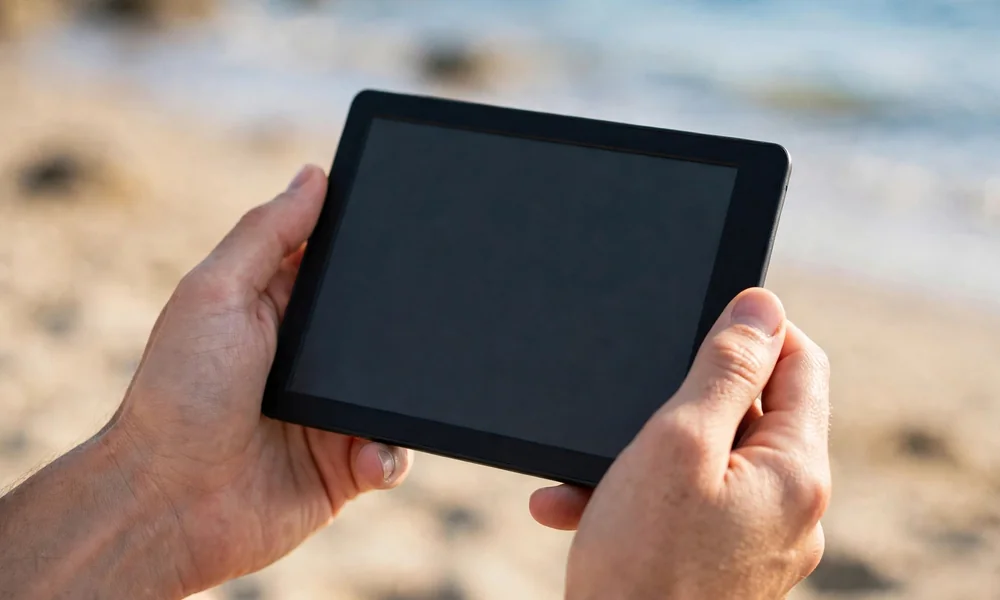
The rule is simple: for a beach lounger or sunny terrace, take the e-reader. For a shaded cafe or hotel room, either device works, and the tablet’s colour screen becomes a real advantage.
Beyond Books: What Else Each Device Does
A tablet is not just a reader; it is a travel tool. It runs maps, translation apps, booking confirmations, email, films and note-taking, often at the same time. For a traveller who works on the road or keeps a travel journal with photos, the tablet replaces a laptop for most tasks and is far easier to carry.
An e-reader does almost none of that. It reads books, and it reads them very well, but it will not navigate a city, translate a menu or play a film. This is a feature, not a flaw: its single purpose is why its battery lasts for weeks and why it never distracts you with notifications.
If your phone already handles maps and bookings, an e-reader is the perfect companion. If you want a bigger screen for planning and entertainment, the tablet covers everything in one place. The debate in e-reader vs paperback books is a useful reminder that the best device is the one you actually reach for.
Cost and Value for Travellers
Price favours the e-reader. A good e-reader costs far less than a good tablet, often half the price or less, and it needs no expensive case or keyboard to be useful. Its books are often cheaper than print, and its long battery means no power bank is required just for reading.
A tablet costs more, but it replaces more: one tablet can stand in for a reader, a small laptop and a navigation screen, so its higher price buys a wider set of jobs.
A heavy reader who finishes a book every few days will save money and weight with an e-reader quickly, while a light reader may get better value from a tablet they already own. The head-to-head of Kindle vs Kobo e-readers is worth reading before you buy, since the two leading e-reader ranges differ in price, store and features.
Tablet vs E-Reader at a Glance
| Feature | Tablet | E-Reader |
|---|---|---|
| Reading comfort | Good, bright and sharp | Excellent, paper-like |
| Sunlight readability | Poor, heavy glare | Excellent, no glare |
| Battery life | 8 to 12 hours | 3 to 6 weeks |
| Weight | 450 to 650 grams | 180 to 220 grams |
| Colour and media | Full colour, films, apps | Mostly black and white |
| Water resistance | Needs a case | Many models waterproof |
| Price | Higher | Lower |
Which Traveller Should Choose Which?
Choose the e-reader if you read for hours every day, travel light, spend time outdoors, or take long trips away from reliable charging. It suits beach holidays, long train journeys and backpacking trips, and anyone who wants a device that disappears into the trip and simply holds books.
Choose the tablet if you travel with work, plan as you go, read colour books and magazines, or want one device for films, maps and reading together. It suits city breaks, business travel and family trips where one screen entertains everyone.
Choose both if you read heavily and also need a versatile screen. The pair weighs less than a small laptop, and each covers the other’s weakness.
Packing Checklist: Travel Reading
- Download all books, maps and films before you leave home.
- Charge the device fully and pack the right USB-C cable.
- Add a slim case or sleeve to protect the screen in your bag.
- Pack a small power bank if you take a tablet for a long travel day.
- Set the screen to warm light for comfortable evening reading.
- Keep the device in your day pack, not in checked luggage.
Frequently Asked Questions
Can I read on a tablet in bright sunlight?
You can, but it is not comfortable: a tablet’s glossy screen reflects sunlight and washes out. An e-reader stays readable in direct sun and is the better choice outdoors.
How long does an e-reader battery last on a trip?
Most last three to six weeks on one charge, because the e-ink screen uses power only when the page turns. A tablet usually lasts eight to twelve hours and needs charging every day.
Is a tablet too heavy for travel reading?
A tablet weighs 450 to 650 grams, about three times an e-reader, and needs a case. For light travel, the e-reader is easier to carry, but a tablet earns its weight by replacing other gadgets.
Can an e-reader replace a tablet on holiday?
For reading alone, yes. For maps, films, bookings and work, no. An e-reader works best alongside a phone that handles the extras, while a tablet covers all of those jobs itself.
Are e-readers waterproof?
Many modern e-readers are waterproof and can survive a splash, which makes them good beach companions. Tablets are rarely waterproof without a case, so they need more protection outdoors.
Should I take both a tablet and an e-reader?
Take both if you read for hours daily and also need a screen for films, maps and planning. The pair is still lighter than a laptop. For short trips, one device is usually enough.
The Bottom Line
For most travellers who read a lot, the e-reader is the best travel reading device: lighter, easier on the eyes, readable in sunlight and able to last an entire trip on one charge. For travellers who need one screen to do everything, the tablet is the better buy. Match the device to your trip and download your books before you go.


