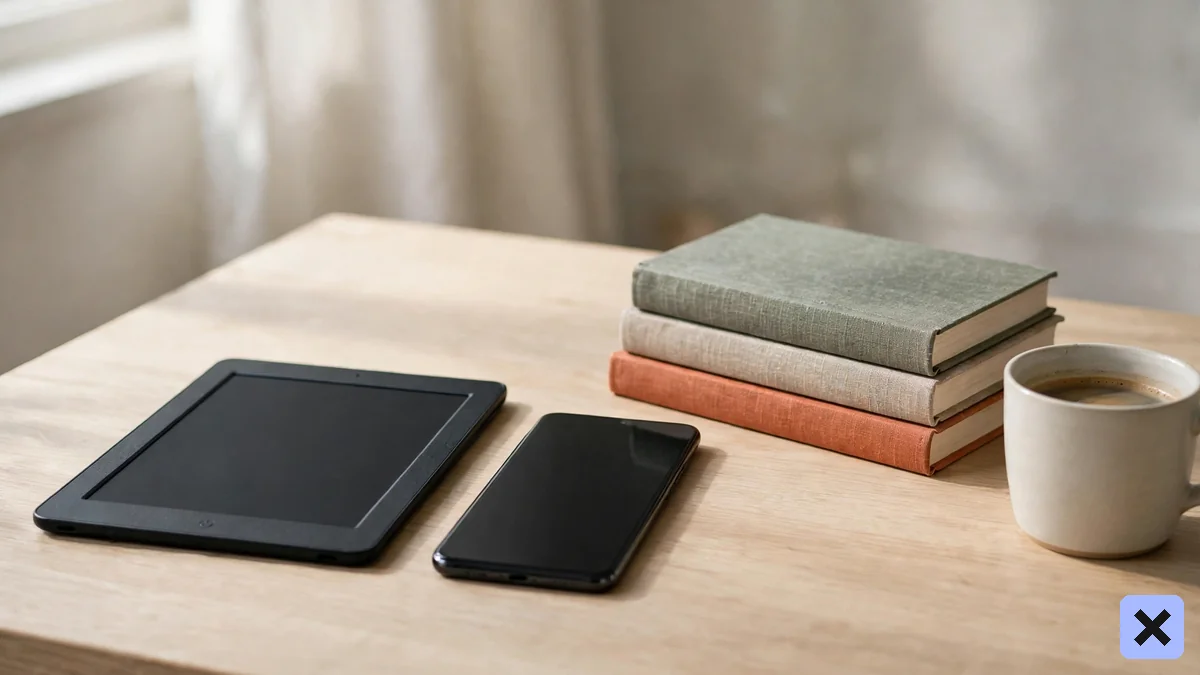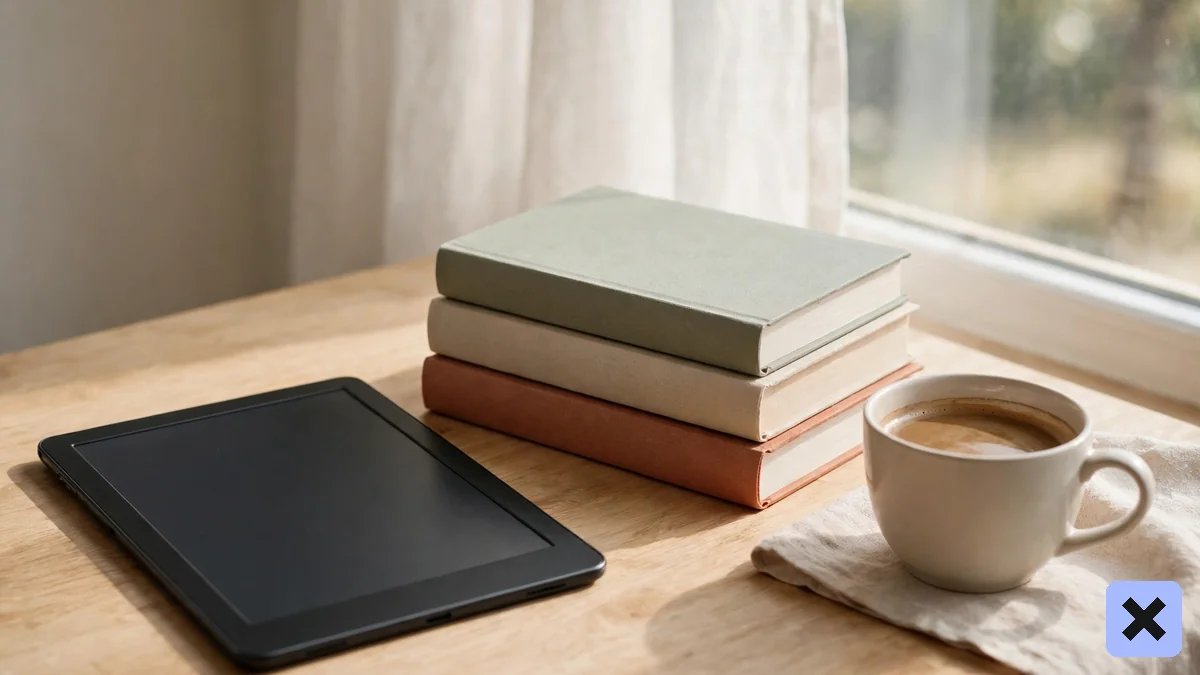
Every reader eventually faces the same quiet question at the bookshop or at the checkout screen: e-reader or paperback? The e-reader promises a whole library in your pocket, a screen that never needs a lamp, and instant downloads at midnight. The paperback promises something older and simpler: the weight of a book in your hand, the smell of the pages, and a cover you can actually judge. Both formats have loyal defenders, and both have real advantages that go far beyond nostalgia or novelty.
The honest answer is that neither format wins outright. An e-reader is better for travel, for late-night reading, and for anyone who reads several books a month. A paperback is better for deep focus, for sharing and lending, and for readers who love the physical ritual of turning pages. The best choice depends on how you read, where you read, and what you want from a book after you finish it.
In this guide, we compare e-readers and paperback books on comfort, eye strain, cost, portability, focus, memory, and the environment, so you can choose with confidence — or happily keep both.
Key takeaways
- E-readers win on portability and convenience: thousands of books in one light device, adjustable text, and a built-in light for night reading.
- Paperbacks win on focus and the reading experience: no notifications, no battery, and a tactile ritual many readers find easier to concentrate with.
- Over time, an e-reader can be cheaper for heavy readers, while paperbacks are cheaper if you read only a few books a year or borrow from the library.
- E-ink screens are far gentler on the eyes than phones or tablets, but paper still causes the least eye strain of all.
- The best answer for most readers is both: an e-reader for travel and everyday reading, and paperbacks for the books you want to keep, share, or savour.
The Reading Experience: Screens vs Paper
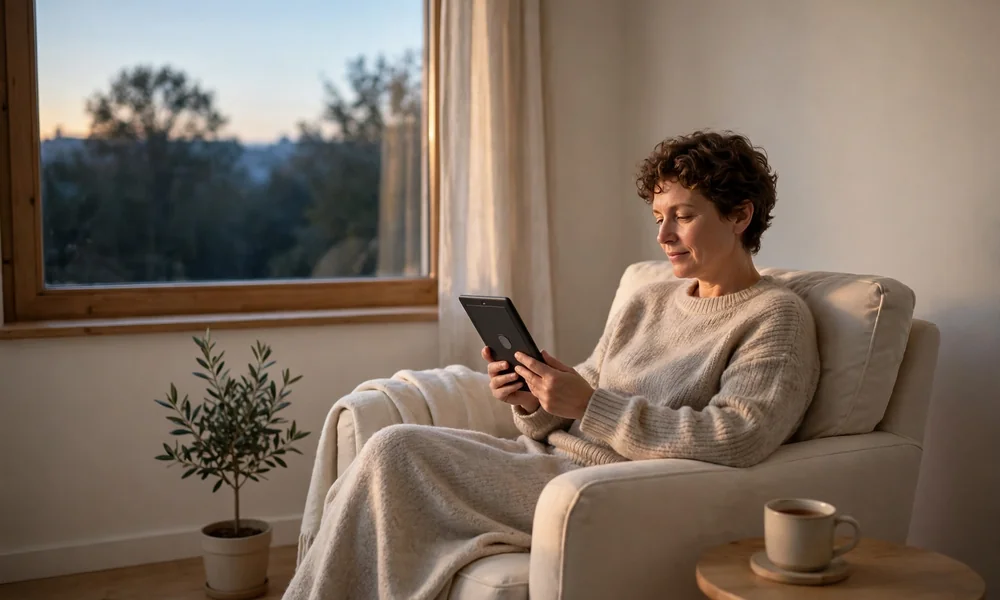
The first thing any reader notices is how a book feels. A paperback has weight, texture, and rhythm: the soft crack of a spine, the flick of a page, the satisfying thickness of the pages already read growing on the left. An e-reader cannot copy that. Instead, it offers a different comfort: a clean, even page, text sized exactly how you like it, and a device that weighs the same on page one as on page four hundred.
Neither experience is objectively better, but they suit different moods. A paperback feels like an event: you pick it up, you open it, and the world narrows to the page. An e-reader feels like a tool: you tap, you read, you move on. Readers who love the ceremony of reading often stay loyal to paper, while readers who value ease and speed drift toward the screen.
The Feel of Paper
Paper has a sensory richness that screens do not. You can dog-ear a page, underline a sentence, or slip a ticket stub between the leaves as a bookmark. You can see at a glance how far you have come, and readers often remember where a passage sits in a physical book — which helps them find it again later.
The Glow of E-Ink
Modern e-readers use e-ink, a display that looks much more like printed paper than a phone screen. The page is matte, glare-free, and easy to read in bright sunlight, and most e-readers now have a warm front light for dark rooms. You can change the font and the font size until the page suits your eyes — for readers with poor eyesight, that adjustability is the difference between reading comfortably and not reading at all.
Comfort, Eye Strain and Sleep
Comfort decides whether you keep reading or put the book down. A paperback is light and easy to hold in one hand, but a heavy novel can tire your wrist, and reading in low light means a lamp. An e-reader is lighter than most paperbacks, balanced for one-handed reading, and lit from within, which makes it easier to read in bed, on a dim train, or in a dark room.
Eye strain is where the two formats genuinely differ. Paper reflects ambient light and never flickers, so it is the gentlest option for your eyes. E-ink is the next best thing: it also reflects light rather than shining it at you. Phones and tablets, by contrast, emit light directly and tire the eyes quickly, which is why reading a novel on a phone feels so different from reading on a dedicated e-reader.
Reading Before Bed
What you read on before bed matters for sleep. Paper emits no light at all, so it cannot interfere with your body clock, and e-readers with a warm light setting emit very little blue light. The real problem is the phone: bright, blue-rich, and full of notifications. Readers who struggle to fall asleep often find that switching from a phone to either a paperback or a warm-lit e-reader helps, and the comparison of Kindle vs Audible for reading habits shows how the device you choose can quietly shape when and how much you read.
Cost Over Time: Which Is Cheaper?
The cost question has a clear answer, but it depends on how much you read. An e-reader costs real money up front — a decent one is roughly the price of ten to fifteen paperbacks — and then each e-book usually costs a little less than its paperback equivalent. A paperback costs nothing beyond the book itself. So the maths is simple: if you read a lot, the e-reader pays for itself; if you read a little, paperbacks are cheaper.
A reader who finishes two books a month will usually recover the cost of an e-reader within a year, especially with discounted e-books, a digital library, or free classics. A reader who finishes four books a year may never break even and is better off with paperbacks or the library, which lends both formats for free.
| Factor | E-Reader | Paperback |
|---|---|---|
| Up-front cost | One device, roughly 10–15 paperbacks | Nothing beyond the book itself |
| Cost per book | Usually slightly cheaper, often discounted | Full price new, cheap second-hand |
| Break-even point | About 15–25 books, depending on prices | No break-even needed |
| Free options | Free classics and library e-books | Library loans and borrowed copies |
| Replacement cost | A new device every few years | Only the books you choose to replace |
Portability and Storage
This is the e-reader’s strongest argument, and it is not close. A single device weighing less than a paperback holds thousands of books, so you never have to choose which one to pack. On holiday, on a long flight, or on a daily commute, that matters enormously: you can finish one novel at breakfast and start another before lunch.
Paperbacks fight back with a different kind of portability: they need no charging, no cable, and no software update. A paperback works on a beach, in a rainstorm, and after a week in a bag with no power socket in sight. An e-reader needs charging every few weeks — easy to forget — and a dead battery means no reading at all. Most readers keep both, and a thousand e-books take up no shelf space, while a thousand paperbacks need a room of their own.

Focus, Memory and Retention
Ask readers which format helps them concentrate, and most will say paper: a paperback does one thing, with no notifications, no messages, and no temptation to check something else. An e-reader is nearly as focused, but it is still a screen, and screens carry the habit of skimming. The difference is small on a dedicated e-reader and large on a phone or tablet. If focus is your priority, a paperback or a dedicated e-reader will both serve you far better than a phone, as the comparison of Kindle vs iPad for reading makes clear.
Remembering What You Read
Several studies have found that readers remember slightly more from paper than from screens, particularly for longer, more complex texts — probably because of the spatial memory of physical pages and the absence of scrolling. The effect is real but modest, and the difference is largest for study material and smallest for light fiction.
The Environment and the Bookshelf
Making an e-reader uses mining, manufacturing, and shipping, and its footprint is far larger than a single paperback. But once you have read roughly twenty to twenty-five books on it, the e-reader’s footprint per book falls below that of buying each book new in print, because paper, printing, and transport add up with every copy.
Paper comes from managed forests, printing uses energy and water, and unsold books are pulped. But paperbacks are also shared, resold, donated, and recycled in a way that electronics are not, and a well-loved paperback can pass through many hands over decades. The greenest option of all is the one both formats share: the library, the second-hand shop, and the borrowed copy.
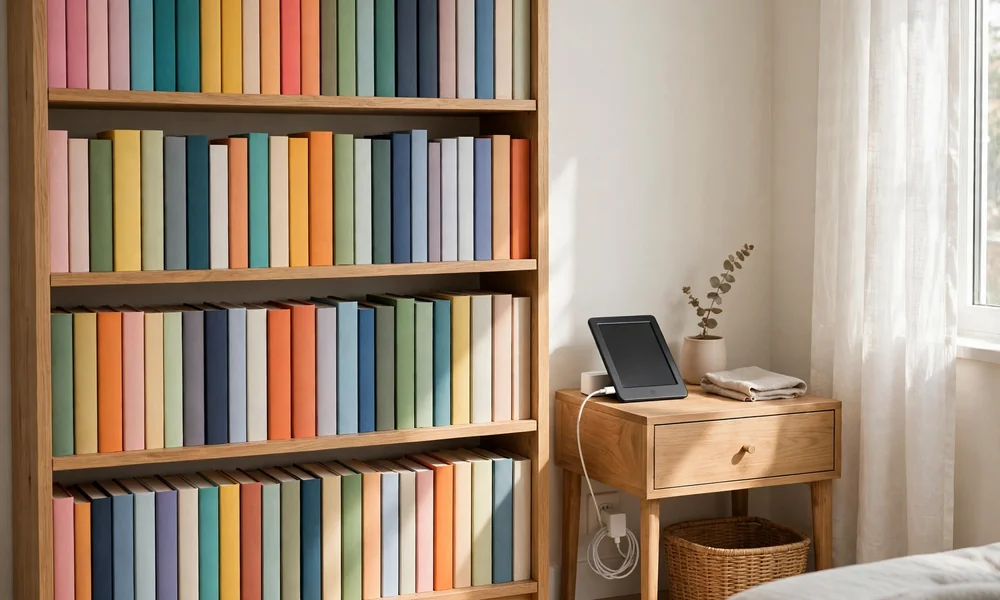
How to Choose: A Quick Checklist
If you are still torn, work through this checklist. Your answers will point to the format that fits your reading life.
- How much do you read? More than two books a month points to an e-reader; fewer than one points to paperbacks.
- Where do you read? Commutes, flights, and travel favour an e-reader; home and the beach favour paper.
- Do you read at night? A warm-lit e-reader or a paperback with a soft lamp both work; a phone does not.
- Do your eyes tire easily? Paper is gentlest, e-ink is a close second, and adjustable text can help more than either.
- Do you lend and share books? Paperbacks are made for lending; e-books are usually locked to one account.
- Do you keep books or pass them on? Keepers suit shelves and paperbacks; passers-on suit the library.
Frequently Asked Questions
Is reading on an e-reader bad for your eyes?
No, not in the way reading on a phone is. E-ink screens reflect light like paper and do not flicker, so they are far gentler than phones or tablets. Paper is still the easiest on the eyes, but most readers find an e-reader comfortable for hours with the brightness turned down.
Do e-books cost less than paperbacks?
Usually, yes, but only slightly. New e-books are often a little cheaper than new paperbacks, and older titles and classics are frequently discounted or free. The real saving comes from volume: the more you read, the more the lower per-book price adds up.
Can I lend e-books to friends?
Mostly no. E-books are usually tied to your account and cannot be lent the way a paperback can. A few shops allow limited lending, and libraries lend e-books freely, but if sharing books matters to you, paperbacks are far better.
Which is better for studying?
Paper has a small advantage for deep study, because spatial memory and annotation on a physical page help students remember complex material. But an e-reader’s searchable highlights and adjustable text are useful too, and many students use both.
Do e-readers work in sunlight?
Yes, and this is one of their best features. E-ink screens are matte and glare-free, so they are easy to read in bright sunlight — often easier than a paperback with glossy pages.
Should I keep my paperbacks if I buy an e-reader?
Yes, at least the ones you love. An e-reader is best for new reading, travel, and trying books cheaply, while paperbacks are best for the books you want to keep, display, lend, or return to. Most happy readers end up with both — though if you need help picking your next read, the worst book club picks are a useful warning about what to avoid.
The Bottom Line
An e-reader is better for portability, night reading, and heavy readers who want a whole library in one light device. A paperback is better for focus, for lending, and for the simple pleasure of holding a book. The happiest readers stop choosing sides: an e-reader for the commute and the holiday, and paperbacks for the books that matter most.