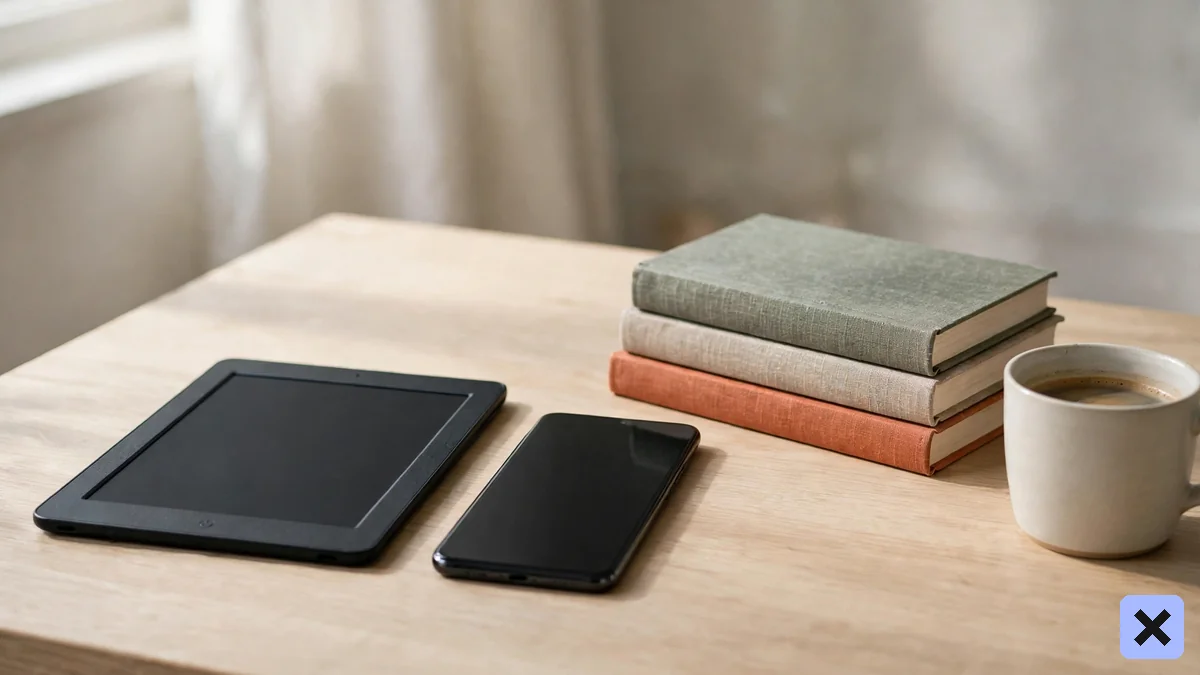
Most readers already own the device that could carry their next novel. The smartphone in your pocket holds every book you could want, it is always charged, and it is already in your hand a hundred times a day. So why do millions still buy a separate gadget that does only one thing? The e-reader vs smartphone for reading debate comes down to one question: do you want the device that is always with you, or the device built for the job?
Both will get you to the last page. The difference is what happens along the way. An e-reader gives you a calm, paper-like screen, weeks of battery life, and no pings mid-chapter. A smartphone gives you instant access, a colour screen, and nothing extra to carry. Neither is wrong for everyone, but one is better for you.
This comparison looks at what actually shapes a reading habit: comfort, focus, battery life, cost, and real-life behaviour, from a bright beach afternoon to a dark bedroom at midnight.
Key takeaways
- E-readers win on comfort: glare-free E Ink screens read like paper and cause less eye fatigue over long sessions.
- Smartphones win on convenience: your library is always in your pocket, with nothing extra to carry or charge.
- An e-reader lasts weeks on a charge; a phone used for reading needs charging every day or two.
- Phones are distraction machines, and notifications threaten any daily reading habit.
- For serious readers, the e-reader is the better device, while the phone is the best backup reader you already own.
Reading Comfort: Why Your Eyes Notice the Difference
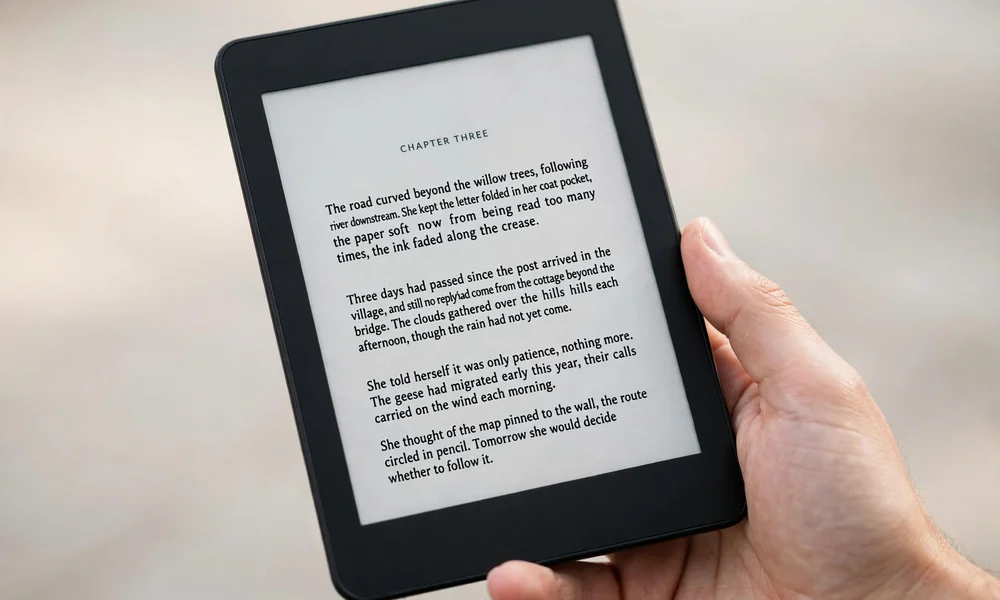
Comfort is where the two devices part ways first, and it is why most dedicated readers end up owning an e-reader. An e-reader uses an E Ink display, which reflects ambient light like printed paper instead of shining light into your eyes. The page feels calm and steady, even after an hour of reading.
A smartphone screen is beautiful for photos and video, but not for long-form text. It is a backlit, glossy panel that refreshes constantly and emits blue light. In a dim room the glow feels harsh; in sunlight, reflections make text hard to follow. Brightness settings and warm filters help, but they are fixes for a screen doing a different job.
E Ink Feels Like Paper for a Reason
The appeal of E Ink is not nostalgia. It is physics. Because it reflects light instead of producing it, contrast stays steady under a lamp or in a sunny garden. There is no flicker and no glare, and readers who struggle on a phone often read for an hour on an e-reader without thinking about their eyes.
Modern e-readers add a front light spread evenly across the screen, so you can read in bed without a lamp. The best models shift the light warmer as the evening goes on, which feels gentler than a phone at full brightness. If long phone sessions leave you with dry eyes, the difference is hard to overstate.
The Smartphone Screen Fights Back in Sunlight
Take both devices outside on a bright day and the contest ends in seconds. The e-reader stays perfectly readable, while the phone screen washes out and turns into a mirror. You crank the brightness or give up and go inside. For anyone who reads outdoors, this alone can settle the argument.
The phone has one comfort advantage: size and weight. It is lighter than most e-readers, fits easily in one hand, and works in situations where a larger device would be awkward. Short bursts, like a few pages while waiting for a train, are more comfortable on a phone simply because it is already there.
Reading at Night Without Wrecking Your Sleep
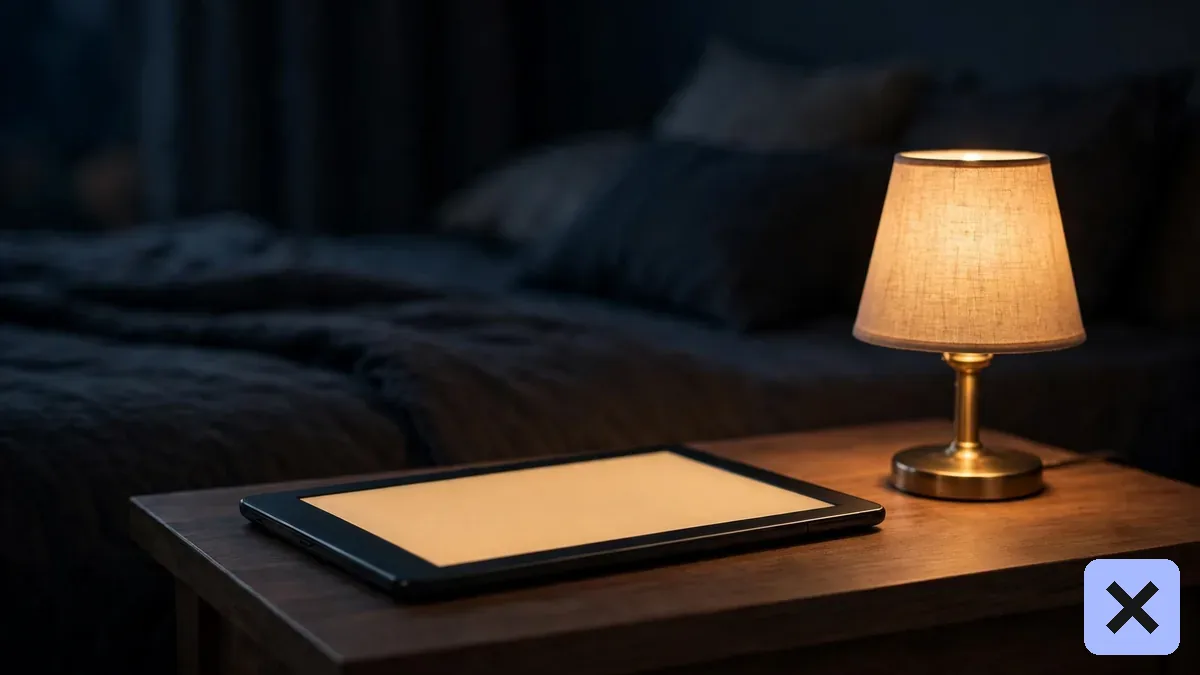
Night reading is where the two devices reveal their personalities. An e-reader with a warm front light is a gentle bedtime companion: soft light, a still screen, nothing to pull you into one more scroll. You read until you are sleepy, then you put it down.
A phone at night is a different story. Even with a warm filter and low brightness, the screen is a glowing rectangle full of temptations. A notification arrives, and suddenly you are checking a message. The message leads to a feed, and twenty minutes are gone while the book sits open underneath it all.

None of this means you cannot read on a phone at night. Do-not-disturb mode, low brightness, and a warm sepia theme make a real difference. But the e-reader wins this round by removing the battle entirely: nothing to resist, nothing to lose sleep over.
If you love physical books but want a digital library, the choice gets interesting. Our comparison of e-reader vs paperback books looks at how digital reading stacks up against print, including the comfort and cost trade-offs that matter most.
Battery Life, Storage and the Library in Your Pocket
Battery life is not a close contest. A modern e-reader lasts three to six weeks on a single charge with regular reading, because E Ink only uses power when the page changes. You can take it on a two-week holiday without a charger. A smartphone used as a reader needs charging every day or two, and heavy reading drains power you need for everything else.
Storage is generous on both devices. Even a basic e-reader holds thousands of books, and most phones hold just as many. A phone shares storage with photos, videos, and apps; an e-reader is a library and nothing else, so it never asks you to delete a book for a software update.
Syncing is smooth on both sides. Buy a book on your phone and it appears on your e-reader moments later, with your place and highlights carried across. Phone apps are often more polished, with better search and faster page turns, while the e-reader offers a calmer library that makes it easy to pick up where you left off.
Travel Reading: One Device or None at All
For travel, the e-reader has a clear edge. It is light, holds your entire holiday reading list, and survives a long flight and a week without a power socket. Many models are waterproof, which matters beside a pool or in the bath. A phone can do this too, but it is also your camera, map, and boarding pass, so every hour of reading is battery you might need later.

The phone wins on one travel point: you already carry it. If you are travelling light and every gram counts, reading on the phone you own beats carrying a second device. Our guide to tablet vs e-reader for travel reading explores the same trade-off for long journeys.
Focus and Distraction: The Hidden Cost of Reading on a Phone
The biggest weakness of reading on a smartphone has nothing to do with screens or batteries. It is attention. A phone is designed to interrupt you: notifications and apps compete for every spare second, and reading is a slow activity in a device built for fast ones. People read less deeply on phones because the environment is hostile to sustained attention.
An e-reader is the opposite: it does one thing, quietly. There are no notifications, no social feeds, and no browser tabs one tap away. Readers who switch often finish more books, not because they have more time, but because the time they had stopped leaking away.
This does not mean phone readers are doomed. Plenty of people build strong habits on their phones with focus modes and silenced notifications. The habit matters more than the hardware. But if you have tried to build a routine on your phone and keep losing the battle, the device may be the problem, not your willpower.
What Each Device Really Costs Over Five Years
A smartphone looks free because you already own one, but it is the most expensive reading device you can buy. A flagship phone costs hundreds and is usually replaced every two to three years. Spread over five years, the reading share of that cost is still far higher than any e-reader.
A good e-reader costs roughly what you would pay for ten to fifteen paperback books, and it lasts for years. There is no subscription, no monthly fee, and no pressure to upgrade. A five-year-old e-reader still reads as well as it did on day one. For heavy readers the maths is simple: the e-reader pays for itself quickly.
There are trade-offs. E-readers are tied to a book store ecosystem, and switching stores can be awkward. Colour e-readers exist, but they cost more and their colour is muted next to a phone. If you read comics or magazines, a phone or tablet serves you better. If you read mostly novels, the e-reader is the better value, and our comparison of Kindle vs Kobo e-readers will help you pick the right model.
E-Reader vs Smartphone for Reading at a Glance
| Feature | E-Reader | Smartphone |
|---|---|---|
| Screen comfort | Paper-like E Ink, no glare | Bright backlit screen |
| Sunlight readability | Excellent in direct sun | Poor, washes out and reflects |
| Battery life | Weeks per charge | One to two days |
| Distractions | Almost none | Constant notifications |
| Portability | Light, thousands of books | Always in your pocket |
| Colour content | Limited or muted colour | Vivid full colour |
| Upfront cost | Low, one-off | High, replaced often |
Which One Fits Your Reading Life?
The best device matches how, when, and where you read. Work through this checklist and the answer usually becomes obvious.
- You read for more than 30 minutes at a time: choose an e-reader: comfort and focus advantages grow with every page.
- You read mostly outdoors or on holiday: choose an e-reader. Sunlight readability and battery life decide it.
- You read in short bursts between tasks: your smartphone is enough: always in your hand, and five pages here and there add up.
- You struggle to finish books because of distractions: choose an e-reader. Removing notifications beats resisting them.
- You read comics, magazines, or illustrated books: stick with your smartphone. Colour and speed matter more than E Ink here.
- You want the cheapest way to read more: choose an e-reader. It pays for itself in cheaper ebooks.
Frequently Asked Questions
Is reading on a phone bad for your eyes?
Reading on a phone is not dangerous, but it can be tiring. The bright, backlit screen demands more from your eyes than a paper-like E Ink display. Breaks, lower brightness, and a warm filter help, but long sessions stay more comfortable on an e-reader.
Can an e-reader replace a smartphone for reading?
For books, yes. An e-reader handles novels and non-fiction better than a phone. It cannot replace a phone for colour content or richly formatted articles, so most readers keep both.
Do e-readers work without Wi-Fi?
Yes. Once downloaded, you can read anywhere without internet. You only need Wi-Fi to buy new books or sync progress.
Which is better for reading before bed?
An e-reader with a warm front light is the better bedtime choice. Its soft light and lack of notifications make it easier to wind down, while a phone screen keeps your brain alert.
Are ebooks cheaper than buying books on a phone?
Books cost the same on either device, since the price comes from the store. The saving is the hardware: a cheap e-reader lasting years costs far less than replacing a phone.
Should I buy an e-reader if I already read on my phone?
If you read regularly, yes: a small investment that makes reading more comfortable and helps you finish more books. If you only read occasionally, your phone is fine.
The Bottom Line
For most readers, the e-reader is the better reading device. Its paper-like screen is kinder to your eyes, its battery lasts weeks, and its single-purpose design protects your attention in a way a phone never will. The smartphone is the best backup reader you already own: always with you and perfectly good for short sessions. If you read every day, buy the e-reader and keep the phone as your spare.