Choosing between gas vs electric fireplaces looks simple until you start comparing the details. Both promise warmth, glow and a room that feels finished, yet they work in completely different ways, cost different amounts to run, and suit different homes. The right choice depends less on which one is fashionable and more on how you actually live in the room.
A gas fireplace burns natural gas or propane to create real flames over ceramic logs or glass, and it produces serious heat that can warm a whole living space. An electric fireplace uses a heater and LED lights to mimic flames, and it can be plugged in almost anywhere without a flue, a gas line or a chimney. Both can look beautiful, but only one of them will feel right once winter arrives and the bills come in.
In this guide we compare gas vs electric fireplaces on heat, cost, installation, safety, looks and maintenance, so you can choose with confidence. The verdict is clear for most households, even though there are a few situations where the other option wins.
Key takeaways
- Gas fireplaces give out far more real heat and keep working during a power cut, which makes them the stronger choice for a main living room.
- Electric fireplaces are cheaper to buy, need no flue or gas line, and can be installed in almost any room in an afternoon.
- Running costs depend on your local gas and electricity prices, but gas usually costs less per hour of serious heating.
- Electric models are safer to touch and simpler to maintain, while gas models need annual servicing and proper ventilation.
- For flame realism, modern gas wins, but the best electric models now look convincing enough for bedrooms and flats.
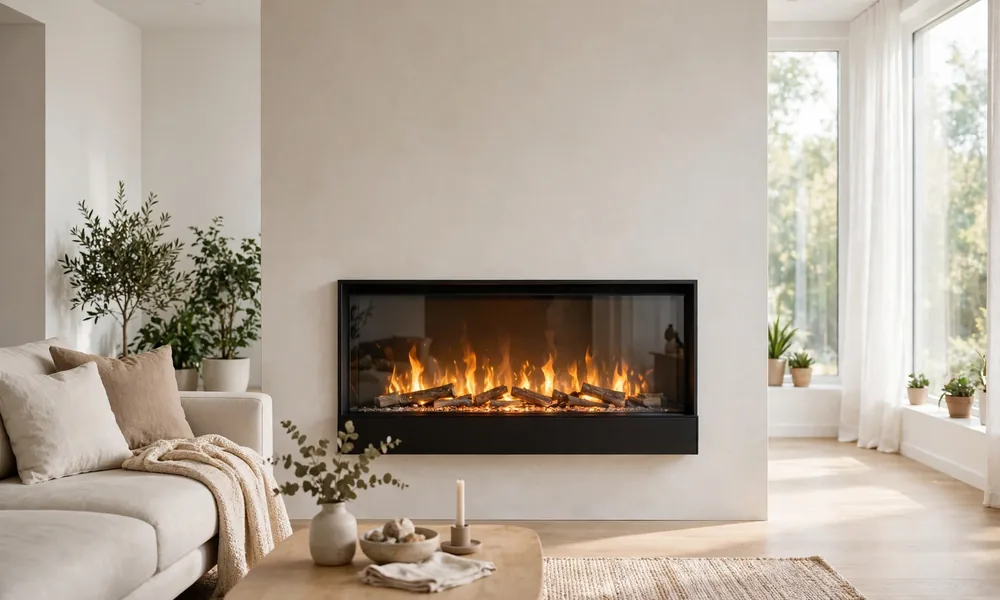
How Gas Fireplaces Work
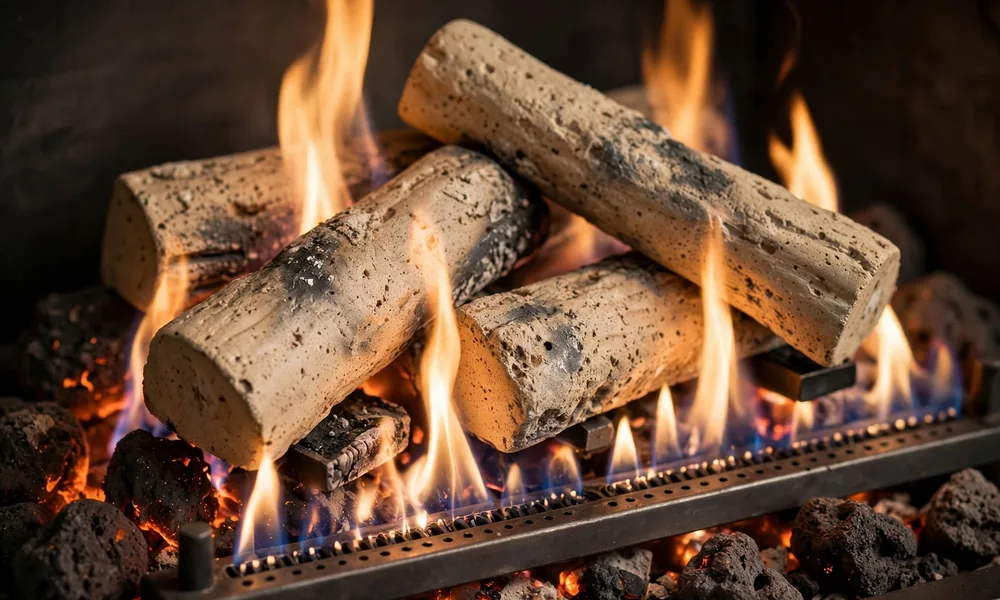
A gas fireplace connects to your home gas supply or a propane tank and burns fuel through a burner hidden beneath ceramic logs, stones or glass beads. Switch it on with a wall switch, remote control or thermostat, and the gas ignites into a real flame with real heat. Many models let you adjust the flame height, which changes both the look and the amount of warmth in the room.
There are three main types. A vented gas fireplace sends exhaust up a flue or chimney, much like a traditional fire, and it looks the most natural. A vent-free model burns gas so cleanly that it needs no flue, although it releases a small amount of moisture into the room, so it is not allowed everywhere.
Heat Output of a Gas Fireplace
Most gas fireplaces produce between 20,000 and 40,000 BTUs, enough to heat a large living room or an open-plan space of 400 to 1,000 square feet, depending on insulation and ceiling height. That is genuine, room-warming heat, not just a glow. On a cold evening, a gas fireplace can take the chill off a room in minutes and keep it comfortable without the central heating running at full power.
How Electric Fireplaces Work
An electric fireplace is, at heart, a stylish electric heater with a flame effect. A heating element warms the air, a fan circulates it, and LED lights projected onto a screen create the illusion of flames. The flame effect and the heater work independently, so you can enjoy the glow on a mild evening without any heat at all.
Heat Output of an Electric Fireplace
Most electric fireplaces produce around 4,000 to 5,000 BTUs, roughly the same as a good portable heater. That is enough to warm a bedroom, a small living room or a home office, but it will not heat a large open-plan space on its own. In a big room, an electric fireplace works best as a secondary heat source that takes the edge off, while the main heating does the heavy work.
Gas vs Electric Fireplaces: The Comparison Table
| Feature | Gas Fireplace | Electric Fireplace |
|---|---|---|
| Heat output | 20,000–40,000 BTUs, heats large rooms | 4,000–5,000 BTUs, best for small to medium rooms |
| Flame realism | Real flames, very convincing | LED effect, good but clearly simulated up close |
| Installation | Professional, needs gas line and venting | Often DIY, plug-in models need only a socket |
| Running cost | Usually lower per hour of heating | Higher per hour at full heat, cheap in flame-only mode |
| Works in a power cut | Yes, most models with a standing pilot or battery ignition | No |
| Maintenance | Annual service, glass cleaning, vent checks | Minimal, occasional dusting and bulb or LED care |
| Safety | Hot glass, needs ventilation and a carbon monoxide alarm | Cool-touch glass, no fumes, very safe around children |
| Upfront cost | Higher, plus installation | Lower, often under half the price of gas |
Running Costs Compared
Running costs are where many buyers get surprised, because the cheaper fireplace to buy is not always the cheaper one to run. Gas is usually the cheaper fuel for heat in most regions, so a gas fireplace running at full power often costs less per hour than an electric model producing the same warmth. The gap widens the longer you run it and the colder the weather gets.
The fairest way to compare is to think about how you will use it. If you want a fire glowing for three or four hours most winter evenings, gas usually wins on cost. If you want a glow for an hour or two, with heat only now and then, electric is often cheaper overall once you include the lower purchase and installation price. The same gas-versus-electric logic applies to other home appliances, and our guide to gas vs electric water heaters and which saves more shows how the same fuel-price maths plays out in a different part of the home.
Installation: What Each One Really Involves
Installing a gas fireplace is a proper project. A qualified gas engineer needs to run a gas line, fit the firebox, connect the venting and test everything for leaks. If your home has no chimney, a direct-vent model can vent through an outside wall, but that still means cutting a hole and sealing it properly. Expect the work to take a day or more, and expect to pay for both the unit and the labour.
Safety in a Family Home
Both types are safe when they are installed and used properly, but they carry different risks. A gas fireplace has a real flame and a glass front that gets very hot, so it needs a guard if small children or pets are in the room. It also produces combustion products, which is why ventilation and a carbon monoxide alarm are non-negotiable. Annual servicing keeps the burner clean and the vent clear, and it catches small problems before they become serious.
Looks, Ambience and the Living Room
A fireplace is as much about atmosphere as it is about heat, and this is where personal taste matters most. Gas flames move, flicker and change with the air in the room, and ceramic logs glow at the edges in a way that LEDs still struggle to copy. If the sight of a real fire is the whole point for you, gas is the clear winner, and it will anchor a living room in a way that few other features can.
Styling matters too. A fireplace shapes the whole room around it, from the seating arrangement to the colours on the walls. If you are refreshing the space at the same time, it is worth thinking about the seating and fabrics together with the fire, and our comparison of velvet vs linen sofas and which suits your home will help you choose seating that works with the warmth and texture a fireplace brings to a room.
Maintenance and Lifespan
Gas fireplaces need regular care. The glass should be cleaned when it clouds, the burner and logs should be checked for soot, and the vent should be inspected for blockages. An annual service by a qualified engineer is the standard advice, and it is the best way to keep the unit efficient and safe. With that care, a good gas fireplace can last 15 to 20 years or more.
Which Rooms Suit Which Fireplace
The best choice changes with the room. A large living room that you use every evening is the natural home for a gas fireplace, because the heat output justifies the installation cost and the real flames become the heart of the room. A dining room or a large family space follows the same logic, especially if the room is hard to heat with radiators alone.
Consider the ambience of the whole room as well. A fireplace changes how a space feels in the evening, and the smaller details, from lighting to scent, add up. If you like a gentle fragrance alongside the glow, our guide to candle vs diffuser for home scent explains which option pairs best with a fireplace in a living room or bedroom.
Environmental Impact
Gas fireplaces burn a fossil fuel, so they produce carbon dioxide directly, although a modern direct-vent model is far cleaner than an old open fire. Using a gas fireplace to heat one room instead of the whole house can actually reduce your total energy use. Electric fireplaces produce no emissions in the home, but their impact depends on how your electricity is generated. In a home powered by renewable energy, an electric fireplace is the cleaner choice by a wide margin.
Your Pre-Purchase Checklist
- Measure the room and check the heat output you actually need, remembering that electric models suit small to medium rooms best.
- Confirm whether your home has a gas supply and a suitable route for venting, or whether electric is the only practical option.
- Check local building rules and whether you need a registered professional for gas work in your area.
- Decide whether you need heat, ambience, or both, and whether flame-only mode matters to you.
- Budget for the full cost, including installation, servicing for gas, and running costs over a winter.
- Choose the size and style before you buy, and check the clearance distances the manufacturer requires around the unit.
Frequently Asked Questions
Are gas fireplaces cheaper to run than electric?
In most regions, yes, when you are heating for several hours.
Do electric fireplaces look realistic?
The best ones do, especially from a distance and in low light.
Can I install an electric fireplace myself?
Most plug-in and freestanding models are designed for DIY installation, and wall-mounted units are manageable if you can find the studs and follow the instructions.
Do gas fireplaces work during a power cut?
Most do, as long as they have a standing pilot light or battery ignition.
Which is safer around children?
Electric fireplaces are safer to touch and produce no fumes, which makes them the better choice for nurseries and children’s bedrooms.
How long does each type last?
Both can last 15 to 20 years with reasonable care.
The Bottom Line
For most homes, gas is the best choice. It gives out far more real heat, its flames look genuinely convincing, and it keeps working when the power goes out, which makes it the stronger fireplace for a main living room that you use every evening. The higher installation cost pays for itself in warmth and in the way a real fire anchors a room.
Electric is the best choice when gas is impractical, when the room is small, or when you rent your home. It is cheaper to buy, simple to install, safe to touch and lovely to look at in flame-only mode, and for a bedroom or a flat it is often all the fireplace you will ever need. Choose gas for the living room, electric for the smaller rooms, and you will get the best of both.