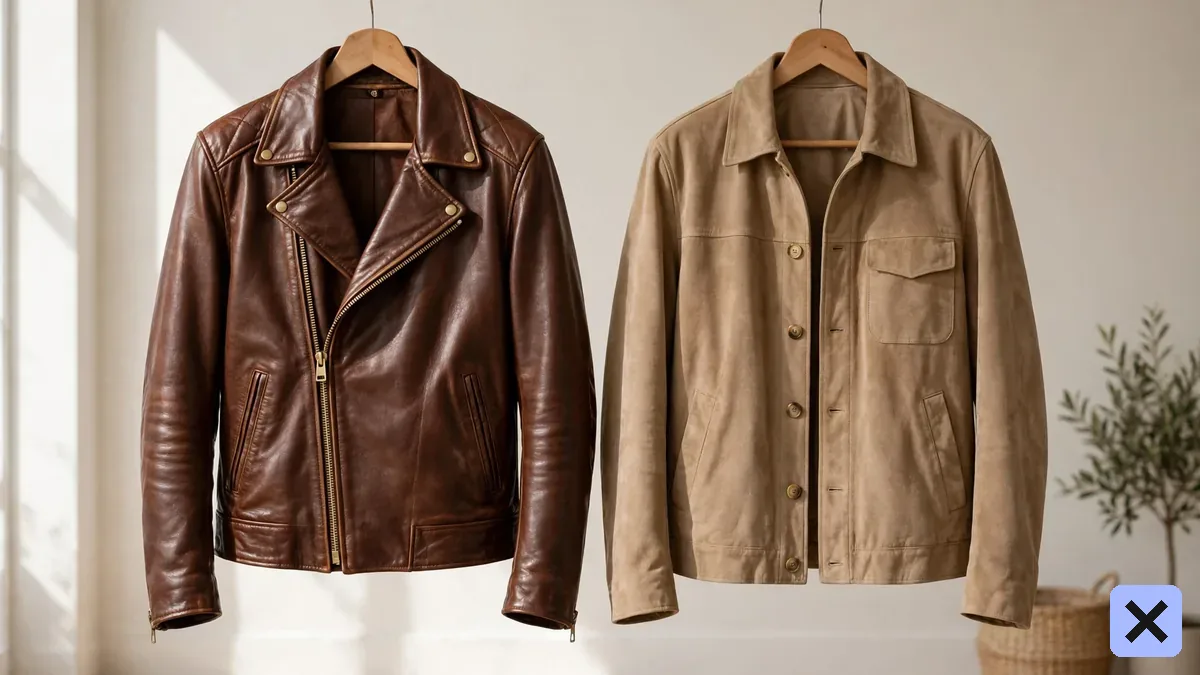
Leather vs suede jackets is one of those wardrobe debates that never really ends, and for good reason. Both materials come from animal hide, both look superb when they are well made, and both can last for years, yet they behave very differently once you start wearing them every day. A leather jacket shrugs off rain and scuffs, while suede feels softer, lighter and more relaxed.
The confusion usually starts because the two materials look similar in a shop window. A smooth brown leather jacket and a tan suede jacket can share the same cut, the same collar and even the same price, yet one will age into a rich patina and the other will show every drop of water it ever meets. That is why it pays to understand the difference before you spend money.
This guide compares leather vs suede jackets on durability, weather resistance, comfort, style, care and cost, with a checklist to match the material to your routine.
Key takeaways
- Leather jackets are tougher, more water resistant and longer lasting than suede jackets, making them the stronger choice for daily wear.
- Suede jackets feel softer and lighter, and they look more relaxed and refined, but they stain easily and need more protection.
- Leather develops a patina that improves with age, while suede needs regular brushing and waterproofing to keep its nap even.
- For rain, commuting and rough use, leather wins clearly; for dry days and smart casual outfits, suede is hard to beat.
- Buy the best quality you can afford in either material, because cheap leather cracks and cheap suede wears through fast.

What Leather and Suede Actually Are
Leather is made from the outer, grain side of an animal hide, usually cowhide, lambskin or goatskin. That layer is smooth, dense and naturally resistant to water and abrasion, and it is tanned and finished into a material that is strong, flexible and able to take a beating.
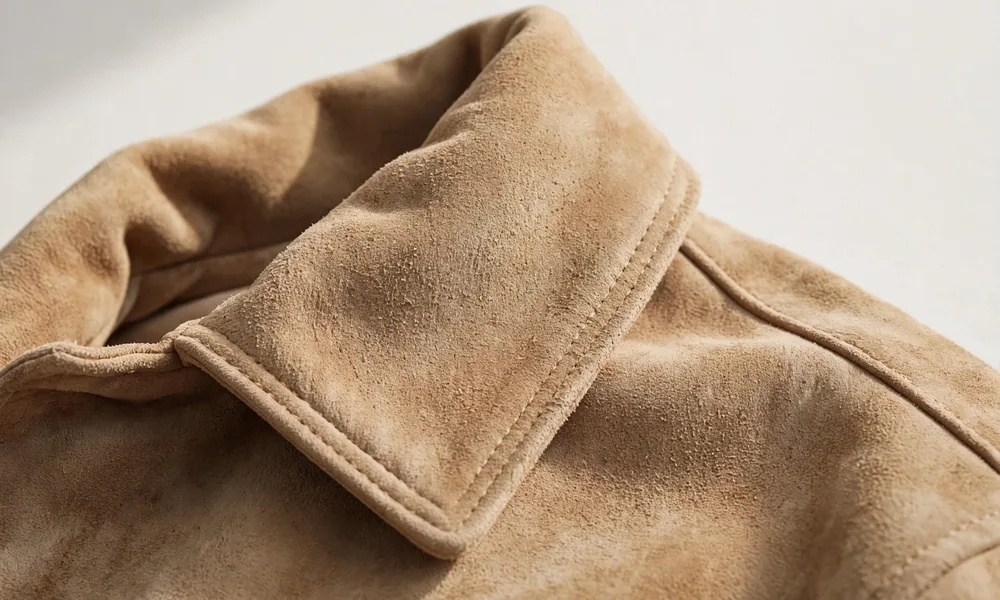
Suede is made from the underside of the hide, the soft inner layer beneath the grain. It has no smooth outer surface. Instead, it has a short, velvety nap made of fine fibres that catch the light and feel wonderfully soft to the touch. That nap gives suede its distinctive matte look, and it is also what makes suede so vulnerable. Water, oil and dirt sink into the open fibres instead of sitting on the surface, so stains form quickly and are harder to remove. Cowhide is thick and durable, lambskin is softer and lighter, and goatskin sits between the two.
Leather vs Suede Jackets at a Glance
The table below sums up the comparison. Leather leads on durability, weather resistance and lifespan, while suede leads on softness, lightness and a relaxed, refined look.
| Feature | Leather Jacket | Suede Jacket |
|---|---|---|
| Durability | Excellent; resists scuffs, tears and abrasion | Good; softer and more prone to wear |
| Water resistance | Good; rain beads on the surface | Poor; water stains and marks easily |
| Comfort | Stiff at first, softens with wear | Soft and comfortable from day one |
| Weight | Heavier, especially cowhide | Lighter and easier to wear all day |
| Style | Bold, classic, slightly rugged | Relaxed, refined, understated |
| Care | Occasional conditioning | Regular brushing and waterproofing |
| Lifespan | 10 to 20 years or more | 5 to 10 years with good care |
| Best for | Daily wear, commuting, rain | Dry days, smart casual, comfort |
Durability and Lifespan
Durability is where leather pulls ahead most clearly. A well-made leather jacket can last ten to twenty years, and many vintage leather jackets are still in regular use after three decades. The dense grain surface resists scuffs, scratches and abrasion, and minor marks often buff out or blend into the patina. Leather also resists tearing, which matters if you wear your jacket while cycling or carrying a bag with a strap that rubs the same spot every day.
Suede is not fragile, but it is softer by nature, and softness comes at a cost. The nap wears down first at the elbows, the cuffs and the collar, and those areas can become smooth and shiny, which looks worn rather than aged. A good suede jacket will still last five to ten years with careful wear, but it will not survive the same rough treatment as a leather jacket. The same trade-off applies to footwear, and choosing the best hiking boots for 2026 comes down to the same choice between tough materials and comfortable ones.
Weather Resistance
Weather is the second decisive difference, and it is the one that catches most buyers by surprise. Leather handles rain well. Water beads on the smooth grain surface and can be wiped away, and a light shower will not leave a mark on a conditioned leather jacket. Leather is not fully waterproof, and a long soak in heavy rain will eventually wet it through, but it recovers well if you let it dry naturally, away from direct heat, and condition it afterwards.
Suede handles rain badly. A few drops of water can leave visible spots on the nap, because the fibres absorb moisture unevenly and dry at different rates. A suede brush and specialist cleaner can often lift those marks, but the risk is real every time the sky darkens, and road salt can stain suede permanently. A protector spray, applied before the first wear and reapplied every few months, adds useful water resistance, though it will not make suede waterproof. If you live somewhere with frequent rain, leather is the safer everyday choice.
Comfort and Fit
Comfort is where suede fights back. A suede jacket feels soft and supple from the first day you wear it. There is no breaking-in period, no stiffness across the shoulders, and no creaking when you move your arms. The material drapes naturally and moves with you, which is why suede jackets feel so easy to wear.
Leather starts stiff and gets better. A new cowhide jacket can feel rigid for the first few weeks, particularly around the shoulders and elbows, and it needs regular wear before it moulds to your body. Lambskin and goatskin break in faster, but they still need a little time. Once broken in, a leather jacket becomes remarkably comfortable, because it has shaped itself to the way you move. Fit matters too: try jackets on with the layers you would normally wear underneath, check that the shoulders sit in the right place, and make sure the sleeves end at your wrist bone.
Style and Versatility
Leather jackets look bold, confident and a little rebellious. The classic biker jacket, with its asymmetric zip and wide lapels, pairs naturally with jeans, boots and a plain T-shirt. A leather bomber is softer and more versatile, working with chinos and trainers as easily as with denim, and a leather blazer can even work in a smart casual office.
Suede jackets look softer, warmer and more refined. A tan suede trucker jacket is a classic for a reason: it adds texture and warmth to a simple outfit without shouting about it. Suede works beautifully in earthy tones like tan, sand, olive and chocolate, and it pairs well with denim, corduroy and knitwear. Texture is the hidden advantage of suede, and the same principle applies at home, as the velvet vs linen sofas comparison shows.
Care and Maintenance
Leather needs occasional conditioning, roughly two or three times a year, to keep it supple and prevent it from drying out and cracking. Wipe the jacket with a damp cloth, let it dry, then apply a thin layer of leather conditioner with a soft cloth and buff off the excess. Keep it on a wide hanger, away from direct sunlight and radiators, and let it air out after a wet day.
Suede needs more frequent attention. Brush it after wear, always in one direction to keep the nap even. Treat stains at once, using a suede eraser for dry marks and a specialist cleaner for anything worse. Never use water on a stain unless the cleaner tells you to. Reapply protector spray every few months, and store the jacket in a breathable bag rather than a plastic cover, which traps moisture.
Cost and Value
A good leather jacket typically costs between two hundred and six hundred pounds or dollars, depending on the hide and the construction. A good suede jacket sits in a similar range, often slightly less for the same quality. Cheap versions of both are a false economy: cheap leather is usually bonded or heavily corrected, and it cracks and peels within a year, while cheap suede wears through quickly and stains at the first sign of rain.
Value is the price divided by the number of times you wear the jacket. A four-hundred leather jacket worn two hundred times a year for ten years costs far less per wear than a two-hundred suede jacket worn fifty times a year for five years.
Which Jacket Suits Which Lifestyle
The right choice depends on your daily life. A commuter who walks in all weathers needs a different jacket from someone who drives everywhere. The checklist below matches the material to your routine.
Your Everyday Jacket Checklist
- You walk, cycle or commute in rain: choose leather, because it handles wet weather and daily scuffs far better.
- You drive everywhere and live in a dry climate: choose suede, because you will enjoy its softness without worrying about the weather.
- You want one jacket to last a decade: choose leather, preferably full-grain cowhide or goatskin.
- You want the most comfortable jacket from day one: choose suede, which needs no breaking in.
- You travel light and pack a jacket often: choose suede or lambskin leather, because both are light and pack better than heavy cowhide.
- You love a jacket that ages visibly: choose leather, because its patina improves with every year of wear.
If your answers are split, consider owning both over time. Start with the material that matches your most common day, and add the other when your budget allows. When you travel, roll the jacket rather than folding it flat, and hang it up on arrival. Packing well matters, which is why choosing the best travel packing cubes for 2026 is worth the same careful thought as choosing the jacket itself.
Frequently Asked Questions
Is leather or suede better for everyday wear?
Leather is better for most people, because it is tougher, more water resistant and longer lasting. Suede is better if your days are mostly dry and you value softness above durability.
Can you wear a suede jacket in the rain?
You can wear suede in a light shower if it has been treated with a protector spray, but heavy rain will stain it, so choose leather when rain is likely.
Does suede or leather last longer?
Leather lasts longer: ten to twenty years for a good leather jacket, against five to ten years for a good suede jacket with careful wear.
Which is warmer, leather or suede?
Leather is slightly warmer in cold wind, especially lined cowhide. Suede feels lighter and cooler, which suits mild days better.
How do you clean a suede jacket?
Brush it regularly, use a suede eraser for dry marks and a specialist cleaner for stains, and never use plain water on a stain.
Is a leather jacket worth the money?
Yes, if you buy good quality and wear it often. A well-made leather jacket improves with age and works out cheaper per wear than a cheap jacket that needs replacing.
The Bottom Line
Leather vs suede jackets comes down to a simple trade: leather gives you toughness, weather resistance and a jacket that improves with age, while suede gives you softness, lightness and a relaxed, refined look. For most people, leather is the best choice, because it handles real life without demanding constant attention. But if your days are dry and you love the feel of suede, then suede is the jacket you will enjoy wearing more. Choose the material that matches your life, buy the best quality you can afford, and look after it.