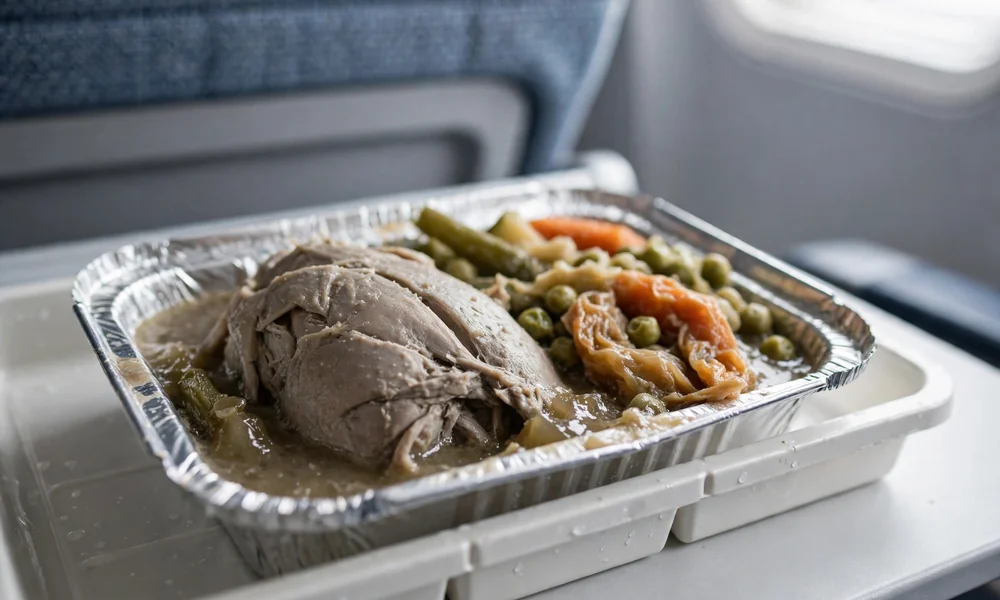
Some disappointments only air travel can deliver. You settle into your seat, the meal cart rolls down the aisle, and the foil lid peels back to reveal the worst airline food you have ever been served. It is lukewarm, grey, overcooked, and under-seasoned all at once. You eat it anyway, because the alternative is hours of hunger.
Bad airline food is not a new complaint. Travellers have been joking about it for decades, and the jokes have survived because the food has barely improved. Tickets cost more and cabins are smarter, yet the meal is still a foil tray of mystery meat, a rock-hard bread roll, and a dessert that tastes of nothing at all.
This is a straight verdict, not a polite review. We looked at what travellers actually report, what goes wrong in the galley, and which dishes fail most consistently. The results are below, and they are not pretty.
Key takeaways
- Dry cabin air and low pressure dull your sense of taste by up to 30 percent at altitude.
- Rubbery chicken, grey mystery meat, soggy pasta, and the sad side salad are criticised most often.
- Meals are cooked up to 72 hours before the flight, then chilled and reheated, which destroys texture.
- Short-haul snack boxes are often worse value than the main meal.
- Pre-order a special meal, pack your own food, or eat properly before boarding.
Why Airline Food Tastes So Bad
The worst airline food is not always the caterer’s fault. Some of the blame belongs to the cabin itself. At cruising altitude, cabin air is drier than most deserts, with humidity of around 10 to 20 percent. Your nose dries out, your taste buds lose sensitivity, and flavours that would be obvious on the ground become muted and flat. Sweet and salty flavours can be dulled by as much as 30 percent.
Airlines that care add more salt, spice, and acidity, knowing the cabin will strip some of it away. The worst offenders do not compensate at all.
The Science of Taste at 35,000 Feet
Taste is mostly smell, and smell depends on moist air moving across the receptors in your nose. In a dry cabin, those receptors work less efficiently, and the pressure change in your ears dampens the experience further. This is why tomato juice is so popular on planes: its sharp, savoury flavour survives the cabin.
The same effect explains why strong, spiced dishes survive the flight better than subtle ones. A heavily seasoned curry still registers on dulled taste buds, while a lightly poached fish or a delicate cream sauce tastes of almost nothing. The worst airline food ignores this completely, offering bland dishes that the cabin then renders flavourless.
Cooked, Chilled, and Reheated
Every hot meal on a plane has already lived a long life before it reaches your tray. Airline meals are prepared in industrial catering kitchens, often up to 72 hours before departure. They are cooked, blast-chilled, transported to the airport, and reheated in galley ovens.
Reheating is the real killer. A chicken breast that was tender when it left the kitchen becomes dry and fibrous after a second heating. Pasta absorbs its sauce and turns to mush. Vegetables that were crisp go limp and grey. The foil tray works against the food too, trapping steam and heating unevenly, so one corner is scalding while another is still cold.
The Worst Airline Meals Travellers Keep Reporting
Ask frequent flyers to name the worst airline food they have ever been served, and the same dishes come up again and again. These are the recurring failures of airline catering, reported on route after route, year after year.
The Mystery Meat
The most feared dish in economy class is the one you cannot identify. It arrives under foil, grey-brown, in a sauce of uncertain origin, and the menu card describes it only as “beef” or “meat”. It is usually overcooked to toughness, swimming in a gravy that tastes mostly of salt and starch.
The Rubber Chicken
Chicken is the default airline meal, and also the most reliably disappointing. Chicken breast dries out quickly, and the double-cooking process removes whatever moisture it had left. What arrives on the tray is pale, rubbery, and resistant to the plastic knife, and the thin mushroom or pepper sauce cannot save it. Some airlines serve thighs instead, which hold moisture better, but the worst offenders still serve the breast.
The Soggy Pasta
Pasta should be one of the safest things to serve on a plane. It is cheap, filling, and hard to get badly wrong. Yet soggy pasta is one of the most common complaints in airline food reviews. The pasta is cooked, sauced, chilled, and reheated, and by the time it reaches the passenger it has absorbed so much liquid that it has lost all structure, arriving as a soft, clumped mass.
The Sad Side Salad
The salad is the part of the tray that nobody asked for and nobody finishes. It is usually a small plastic tub with a handful of lettuce, a slice of cucumber, and a cherry tomato that has seen better days. The dressing is a sealed sachet of something pale and sweet, the lettuce is wilted, and the whole thing tastes of the fridge it has been sitting in for a day.
The Inedible Dessert
The dessert is the final insult. It is usually a small cake, mousse, or fruit jelly, sealed in plastic and served at fridge temperature. The cake is dry, the mousse is oddly rubbery, and the jelly has a chemical aftertaste that lingers. Some airlines serve a small chocolate bar instead, which is at least edible, but the worst offenders persist with the little plastic pot of something that was once a dessert.
Worst Airline Food by Category
Not every dish fails equally. This table ranks the usual suspects by how often travellers report them as the worst part of the meal.
| Dish | Most Common Complaint | Why It Fails | Verdict |
|---|---|---|---|
| Mystery meat in gravy | Tough and grey | Cooked twice | Worst of all |
| Rubber chicken breast | Dry and fibrous | Dries out on reheating | Very bad |
| Soggy pasta | Clumped and mushy | Absorbs sauce | Very bad |
| Side salad | Wilted and watery | Days old | Bad |
| Hard bread roll | Stale and hard | Baked hours earlier | Bad |
| Plastic pot dessert | Chemical aftertaste | Long storage | Bad |
| Instant coffee | Bitter and weak | Low-grade beans | Poor |
The Snacks Are Barely Better
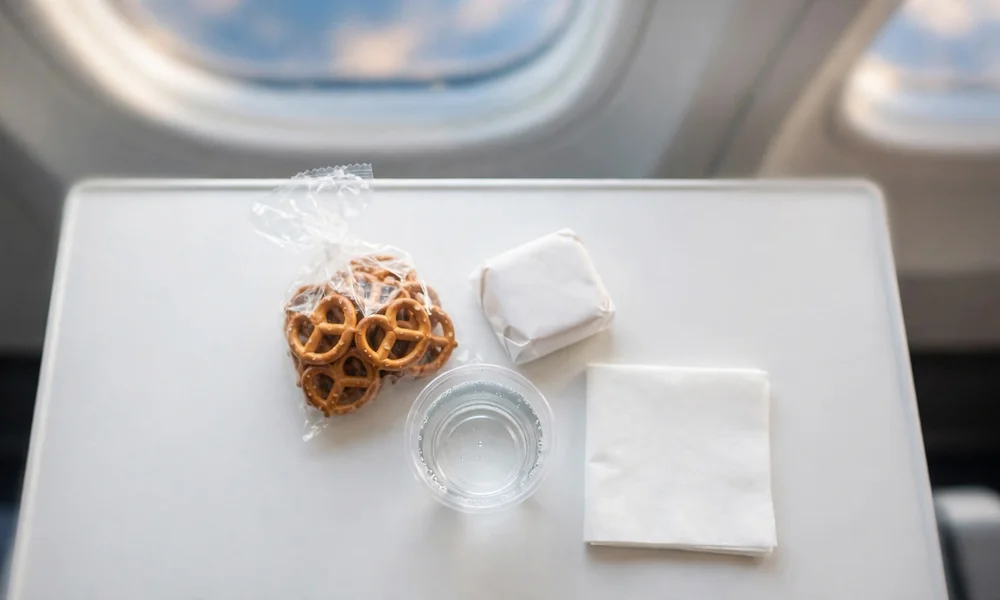
On short-haul flights, the meal has been replaced by the snack box, and the snack box is often a worse deal than the worst hot meal. For the price of a proper lunch on the ground, you get a small bag of pretzels, a wrapped biscuit, a tiny bottle of water, and a napkin. The pretzels are stale, the biscuit is dry, and it is over in ninety seconds.
The problem is not just the quality. It is the value. Airlines have learned that passengers will pay for food on short flights, and the buy-on-board menu is priced accordingly. A sandwich that costs a few pounds to make is sold for several times that amount, and the worst airline food on short flights is not a hot meal at all. It is a cold sandwich that tastes of the plastic it was wrapped in.
Why Some Airlines Serve Better Food Than Others
The gap between the best and the worst airline food is enormous, and it comes down to money and attention. Airlines that take food seriously spend more per passenger on catering, design menus with altitude in mind, and test their dishes in simulated cabin conditions. They season boldly, choose cuts that survive reheating, and drop the dishes that fail at altitude.
The worst offenders do the opposite. They treat catering as a cost to be cut, and the cuts show up on the tray. They buy the cheapest ingredients and serve the same menu for months without testing it. The difference is not mysterious. It is a budget line, and the passenger pays for it in disappointment.
How to Survive a Flight Without Eating the Tray
You do not have to eat the worst airline food. The first option is to pre-order a special meal. Airlines offer vegetarian, vegan, gluten-free, and other special meals, often prepared in smaller batches with more care than the standard option. They are also served first, so they are hotter and fresher.
The second option is to bring your own food. A sandwich made at home, a wrap, or a salad in a sealed container will beat anything the airline serves, for a fraction of the buy-on-board price. Just remember that liquids are restricted at security, so buy drinks after you pass through. The same discipline that helps you avoid the worst summer holiday packing mistakes will keep your carry-on organised for a long flight too.
Packing smart is half the battle. A good set of best travel packing cubes keeps your food, snacks, and essentials separate and easy to reach, so you are not digging through your bag at 35,000 feet while the meal cart rolls past. Eat before you board, bring snacks that travel well, and drink plenty of water, because the dry cabin air dehydrates you.
Finally, remember that the flight is only the beginning of the trip. Once you land, your stay matters far more than your tray, and choosing between a cabin and a hotel for a mountain trip deserves more attention than the foil lid in front of you. Save your appetite for the destination.
Your Pre-Flight Food Checklist
- Pre-order a special meal at least 24 hours before departure.
- Pack your own sandwich, wrap, or salad in a sealed container.
- Bring snacks that travel well, such as nuts, dried fruit, or a cereal bar.
- Eat a proper meal before boarding.
- Buy a large bottle of water after security.
- Skip the buy-on-board menu unless you know the price.
Frequently Asked Questions
Why does airline food taste so bad?
Airline food tastes worse at altitude because dry cabin air and low pressure dull your sense of taste and smell by up to 30 percent. Meals are cooked up to 72 hours before the flight, then chilled and reheated, which damages texture and flavour.
What is the worst airline food dish?
The mystery meat in gravy is criticised most, followed closely by rubbery chicken breast and soggy pasta. Reheating destroys their texture, which is why they top the list.
Is airline food safe to eat?
Yes. Airline catering is strictly regulated, and meals are prepared in licensed kitchens. The worst airline food is unpleasant, not dangerous. If a meal smells off or looks spoiled, tell the crew and do not eat it.
Can I bring my own food on a plane?
Yes, in most cases. Solid food such as sandwiches, wraps, fruit, and snacks can be carried through security and eaten on board. Liquids over 100 millilitres are restricted at security, so buy drinks after you pass through.
Are special meals better than the standard meal?
Often, yes. Special meals are prepared in smaller batches and served first, so they are usually fresher and hotter. Frequent flyers consistently rate them above the standard tray.
Which airlines serve the worst food?
It varies by route and class. The worst food tends to come from airlines that spend the least per passenger on catering and change their menus rarely. Short-haul buy-on-board menus are often the worst value of all.
The Bottom Line
The worst airline food is no accident. It is the predictable result of meals cooked days in advance, chilled, reheated, and served in a cabin that dulls your taste buds. The mystery meat, the rubber chicken, and the soggy pasta will keep appearing as long as airlines treat catering as a cost to be cut. Until then, pre-order a special meal, pack your own food, and save your appetite for the destination.