The best travel packing cubes 2026 turn a chaotic suitcase into a tidy, predictable system. Instead of clothes shifting, wrinkling, and disappearing into a jumble, each category gets its own zippered home. Tops stay with tops, underwear stays separate, and dirty laundry never touches clean clothes again.
Packing cubes also change how much you can carry. By compressing soft clothes into neat rectangles, they remove wasted air and let you use the full shape of your suitcase. A bag that once held three days of clothes can suddenly hold five.
This guide explains what makes a great set, compares the main types side by side, and shows you how to pack with cubes for weekend breaks, family holidays, business trips, and backpacking adventures.
Key takeaways
- Packing cubes organise clothes by category, so you can find anything in seconds without unpacking your whole bag.
- Compression cubes save the most space, while standard cubes are lighter and simpler for short trips.
- A set of four to six cubes in mixed sizes covers most trips, from a weekend away to a two-week holiday.
- Look for strong zips, lightweight ripstop fabric, mesh panels, and a laundry bag for dirty clothes.
- Roll or fold clothes neatly before loading cubes, and never overfill them, or the zips will strain and fail.
What Are Travel Packing Cubes and Why They Work
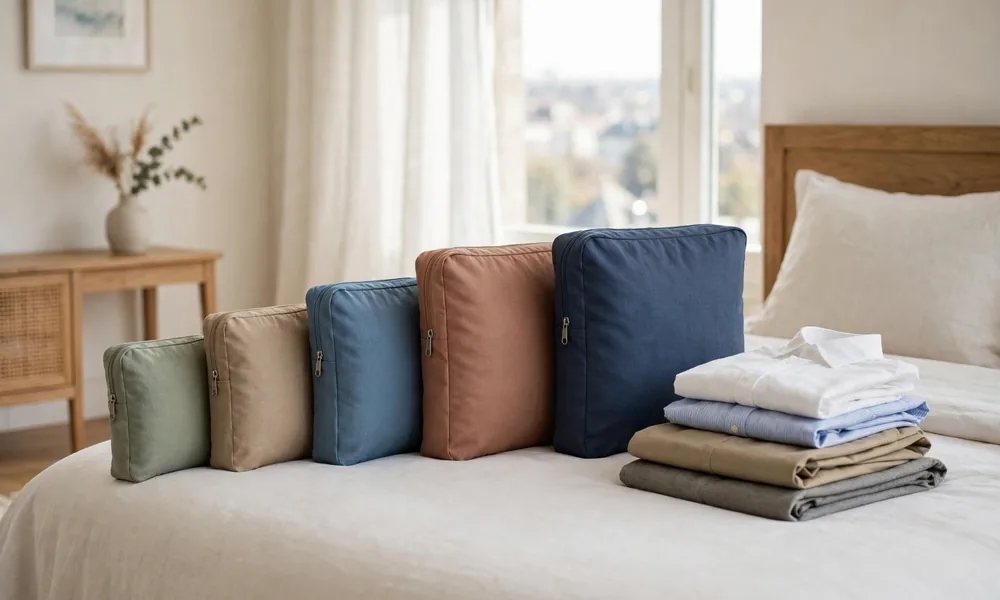
Travel packing cubes are small, soft-sided containers with a zip closure, designed to fit inside a suitcase or backpack. Most are made from lightweight nylon or polyester, with a mesh top panel so you can see what is inside without opening the cube. They come in sets of three to eight pieces, from small accessory pouches to large cubes that hold several folded shirts.
The idea is simple: divide and conquer. Instead of one large, shapeless space, your suitcase becomes a set of drawers. You can lift out the cube you need, leave the rest untouched, and put it straight into a hotel drawer.
Cubes also protect your clothes. Folded items stay folded because they cannot slide around, and the fabric walls reduce creasing during transit. They work best when paired with the right bag, so check the internal dimensions of your luggage before you buy. If you are still choosing your main bag, our guide to the best luggage sets will help you find a case that pairs well with a full cube system.
The Best Travel Packing Cubes of 2026
The best travel packing cubes 2026 are not one single product. The right choice depends on how you travel, how much you pack, and whether space or simplicity matters more to you. The table below compares the five main types, so you can match a style to your trips before you spend any money.
| Type | Best for | Space saving | Weight | Price range |
|---|---|---|---|---|
| Standard fabric cubes | Everyday trips and beginners | Good | Very light | Low |
| Compression cubes | Maximum space in a small bag | Excellent | Light | Medium |
| Mesh cubes | Seeing contents at a glance | Good | Very light | Low |
| Water-resistant cubes | Wet weather and toiletries | Good | Medium | Medium |
| Vacuum-style cubes | Bulky winter clothes | Excellent | Heavier | Higher |
Standard Fabric Cubes
Standard cubes are the best starting point for most travellers. They are simple zippered pouches with no extra compression mechanism, which keeps them light, cheap, and easy to use. A set of five or six in mixed sizes will organise a full week of clothes. Choose sturdy zips and reinforced stitching, because a broken zip ruins a cube.
Compression Cubes
Compression cubes add a second zip that squeezes the cube flat once it is packed. That extra step can reduce the volume of soft clothes by a third, which is a real advantage in a carry-on bag or a small backpack. The trade-off is weight: they are slightly heavier, and the extra zip adds a point of failure. They are worth it for longer trips and winter clothes.
Mesh and Water-Resistant Cubes
Mesh cubes let you see the contents without opening them, which is handy when you are living out of a suitcase for several days. Water-resistant cubes, made from coated nylon, are better for toiletries, swimwear, and damp items. Many travellers mix types: standard cubes for clothes, a mesh cube for accessories, and one water-resistant cube for items that might leak.
How to Choose the Right Set
Choosing packing cubes is mostly about size, fabric, and zips. Get those three right and almost any reputable set will serve you well for years.
Size and Set Composition
Measure the inside of your suitcase before you buy, then look for cubes that fill that space in neat rows. A large cube should hold three or four folded shirts, a medium cube should hold underwear for several days, and a small cube is ideal for cables. A set of four to six cubes covers most trips.
Fabric and Build Quality
Look for ripstop nylon or dense polyester, which resist tears without adding weight. Mesh panels should be fine enough to hold small items but strong enough not to snag. Handles help you lift cubes out of a deep suitcase. Avoid very cheap sets with thin fabric and flimsy zips, because they fail exactly when your bag is fullest.
Zips and Compression
Zips are the weakest point of any packing cube, so test them before you trust them. A good zip runs smoothly around corners without catching the fabric, and the pull should feel solid. If you choose compression cubes, check that the second zip compresses evenly. If the seams strain, remove an item rather than forcing the zip.
Compression vs Standard Cubes
Compression cubes win on space, especially for soft, bulky items such as jumpers and winter layers. They let you fit more into a carry-on, which can mean avoiding a checked-bag fee. Standard cubes win on simplicity and weight: they are easier to pack, easier to open, and lighter to carry.
Many experienced travellers use both. Compression cubes hold bulky clothes, while standard cubes hold shirts and items you need during the journey. Just remember that compression does not reduce weight, only volume, so a tightly packed bag can still be overweight. If you pack to the limit, a set of the best luggage scales will help you check the weight before you leave for the airport.
How to Pack With Cubes
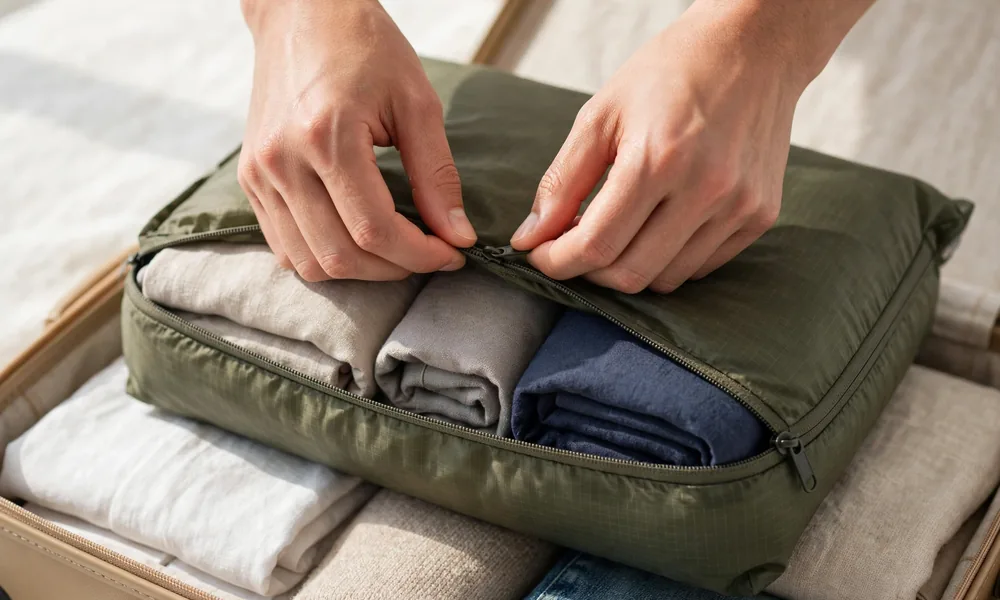
Start by laying out everything you plan to take, then group it by category: tops, bottoms, underwear, sleepwear, and accessories. Assign one cube to each group, and choose the cube size that fits the group without leaving empty space. Empty space lets clothes shift and crease, while an overfilled cube strains the zip.
Fold or roll each item neatly before it goes into a cube. Rolling works well for t-shirts and casual clothes, because it reduces creases and lets you see each item from above. Folding works better for shirts and trousers. Keep your method consistent within a cube, so the layers stack evenly and the cube holds its rectangular shape.
Load the cubes into your bag like building blocks, largest first, with heavier cubes at the bottom near the wheels. Keep one small cube at the top with the items you need first: sleepwear and a change of clothes for arrival. Repacking is easy too: used clothes go into the laundry cube, and clean clothes stay in their original cubes.
Packing Cubes for Different Trips
Weekend Breaks
For a weekend, three cubes are usually enough: one for tops, one for bottoms and sleepwear, and one small cube for underwear and accessories. Standard cubes are ideal here, because you do not need maximum compression for two or three days. Pack your arrival outfit on top so you can change quickly.
Family Holidays
Families benefit most from colour-coding. Give each person a colour, so every cube belongs to one traveller and nobody has to search through shared piles. A shared laundry cube for the whole family saves space and makes the return journey simpler.
Business Trips
Business travellers should protect shirts and smart clothes. Use a large, flat cube for shirts, fold them carefully, and place a thin layer between them to reduce creasing. Keep work clothes in one cube and casual clothes in another.
Backpacking and Carry-On Only
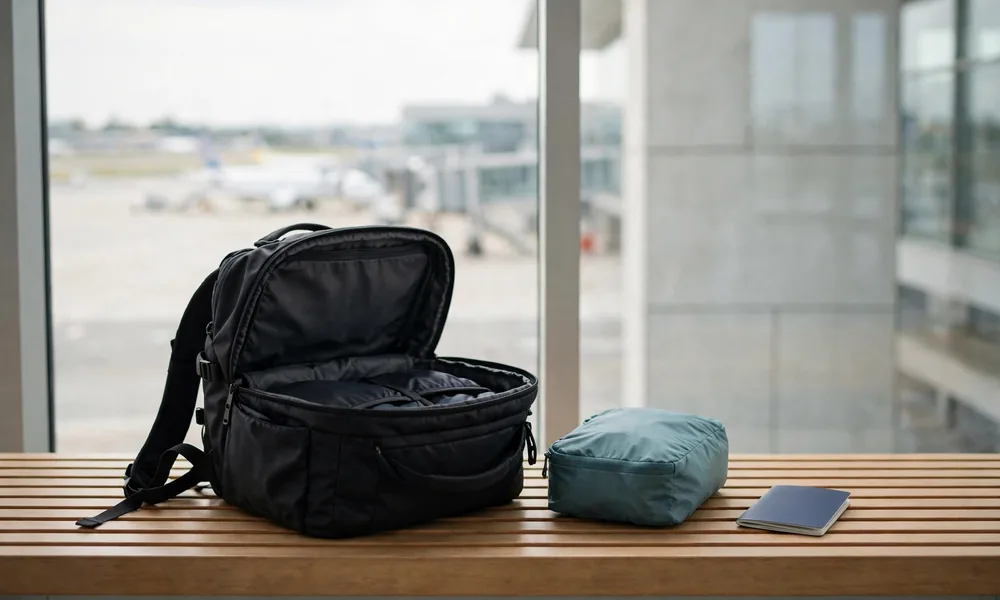
Backpackers need cubes that fit a soft, curved bag rather than a rectangular suitcase. Slim, flexible cubes work best, and compression cubes earn their keep when space is tight. Pack heavy cubes low and close to your back for balance, and keep a small cube of essentials at the top. A good backpack makes this system work, so if you travel light, read our guide to the best travel backpacks before choosing your cubes.
Common Mistakes to Avoid
The most common mistake is overfilling. A cube packed to bursting will not compress properly, will strain its zips, and will be hard to fit into your suitcase. Leave a little room at the top, and if the zip resists, take something out. Using too many cubes is another mistake: a bag full of half-empty cubes is worse than a bag with a few well-filled ones. Wash your cubes regularly on a gentle cycle.
Packing Checklist
Use this checklist before your next trip to make sure your cube system is ready.
- Measure your suitcase and choose cubes that fill it in neat rows.
- Pick four to six cubes in mixed sizes, plus one laundry bag.
- Test every zip before you pack, and replace any cube with a catching zip.
- Group clothes by category and assign one cube to each group.
- Roll casual clothes and fold shirts and smart clothes.
- Weigh your packed bag before you leave, and keep essentials in a top cube.
Frequently Asked Questions
Do packing cubes really save space?
Yes, especially compression cubes, which can reduce the volume of soft clothes by around a third. Standard cubes save less space but still help, because neatly folded clothes use the shape of your suitcase better than loose piles.
How many packing cubes do I need?
Most travellers need four to six cubes: a large one for tops, a medium one for bottoms, a small one for underwear, and one or two extra cubes for accessories or laundry. Weekend trips need fewer, while two-week trips need more.
Are compression cubes worth it?
Compression cubes are worth it if you travel with hand luggage only, pack bulky winter clothes, or often run out of space. They are less useful with a large checked bag. Many travellers use a mix, with compression cubes for bulky items and standard cubes for the rest.
Can packing cubes reduce wrinkles?
Yes, cubes reduce wrinkles by keeping folded clothes in place so they cannot shift and bunch during transit. Rolling casual clothes also helps. Compression cubes can cause creases in cotton shirts if packed too tightly, so avoid overfilling.
How do I wash packing cubes?
Most fabric cubes can be hand-washed with mild soap and air-dried, and many can go through a gentle machine cycle. Check the label first, because mesh panels and coated fabrics may need gentler care. Let them dry fully before storing them away.
Do packing cubes work in a backpack?
Yes, slim and flexible cubes work very well in backpacks, especially for carry-on travel. Choose cubes that match the shape of your pack, keep heavy cubes low for balance, and use a small cube at the top for items you need during the journey. Look for soft-sided sets.
The Bottom Line
The best travel packing cubes 2026 are the ones that fit your bag, suit your trips, and survive regular use. Start with a mixed set of four to six standard cubes, add a compression cube for bulky clothes if you need it, and pack by category with a laundry cube for worn items. Done well, packing cubes turn packing from a chore into a quick, calm routine.