
The best travel backpacks of 2026 do more than carry your clothes from one place to another. The right pack fits in the overhead bin, sits comfortably on your shoulders for hours, and keeps everything organised. The wrong one leaves you with sore shoulders and a bag that will not close.
This year the gap between good and great has narrowed. Carry-on sized packs now come with proper hip belts, laptop sleeves that actually protect a laptop, and clamshell openings that make packing feel like using a small suitcase.
We judged the leading designs on what matters on a real trip: how they carry when full, how they fit airline sizers, how easy they are to pack and unpack, and how they hold up over time. Here are the best travel backpacks of 2026 for city breaks, long-haul flights, hiking weekends and everything in between.
Key takeaways
- For most travellers, a 35 to 45 litre carry-on sized pack is the sweet spot between capacity and airline compliance.
- Comfort comes from the harness, not padding alone: look for load lifters, a hip belt and adjustable torso length.
- Clamshell openings pack faster and unpack more neatly than top-loading designs.
- Water-resistant fabric matters more than a rain cover you will forget to use.
- Buy for the trip you take most often, not the trip you imagine taking one day.
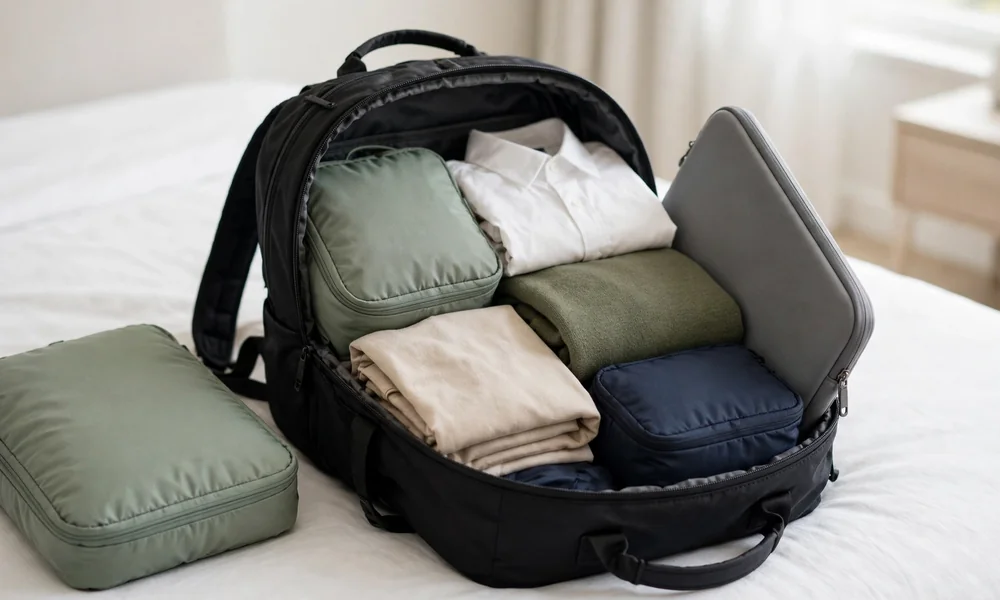
How We Chose the Best Travel Backpacks of 2026
A good travel backpack is a compromise, and the best ones compromise in the right places. We judged every pack on carry-on compatibility, comfort under load, organisation, build quality and value.
Size and Carry-On Fit
Most airlines allow a carry-on of around 55 x 40 x 20 centimetres, though budget carriers are stricter. The best packs sit just inside those limits when packed, with compression straps that pull the load tight.
Comfort and Carry
Comfort is where cheap packs give themselves away. We loaded each bag to around ten kilograms and walked with it for an hour, including stairs and a brisk stretch through a station. The best designs spread weight across the hips.
Organisation and Access
The difference between a good trip and a frustrating one is often a single pocket. A reachable laptop sleeve, a zipped pocket for documents and a bottle holder that fits a real bottle all save time. We also checked whether the main compartment opens flat.
The Best Travel Backpacks of 2026 at a Glance
Every pack fits standard carry-on limits when packed sensibly, and each earned its place through comfort and build quality rather than looks alone.
| Pick | Best for | Capacity | Carry-on friendly | Standout feature |
|---|---|---|---|---|
| Best Overall: 40L Carry-On All-Rounder | Most travellers | 40 litres | Yes | Clamshell opening, superb harness |
| Best for City Breaks: 30L Everyday Traveller | Short trips | 30 litres | Yes | Slim profile, quick laptop access |
| Best for Long Trips: 45L Expedition Pack | Two weeks or more | 45 litres | Most airlines | Adjustable torso, huge compartment |
| Best for Hiking: 38L Trail Hybrid | Trails and outdoors | 38 litres | Yes | Ventilated back panel, pole loops |
| Best on a Budget: 35L Value Pack | Price-conscious travellers | 35 litres | Yes | Surprising comfort, low price |
| Best for Work Trips: 32L Business Carry-On | Work travel | 32 litres | Yes | Padded laptop area, smart styling |
The Top Picks in Detail
Best Overall: The 40L Carry-On All-Rounder
This is the pack to buy if you only want to buy one. At forty litres it holds enough for a week without feeling oversized, and its clamshell opening means you can pack it like a small suitcase and find everything again without emptying it. The harness is the real star: padded shoulder straps, a proper hip belt and load lifters that pull the weight in close. A suspended laptop sleeve and water-resistant fabric complete the package, and the compression straps keep it slim enough for the overhead bin.
Best for City Breaks: The 30L Everyday Traveller
For a long weekend in a city, thirty litres is plenty, and this pack proves that smaller can be better. It is slim enough to wear on a crowded metro without knocking into fellow passengers, yet it swallows three days of clothes, a laptop and a light jacket. The quick-access laptop sleeve sits against the back, so you can slide a laptop out at security without opening the main compartment. It carries like a day pack and looks smart enough for a nice restaurant. The trade-off is capacity.
Best for Long Trips: The 45L Expedition Pack
When a trip stretches past two weeks, capacity and comfort matter more than anything else. Its adjustable torso length is the key feature: set it to your back and the hip belt sits exactly where it should, which makes a heavy load manageable over a full day of walking. The main compartment is a simple, generous space. It is the largest pack here, so check your airline first, because a few budget carriers will ask you to check it.
Best for Hiking: The 38L Trail Hybrid
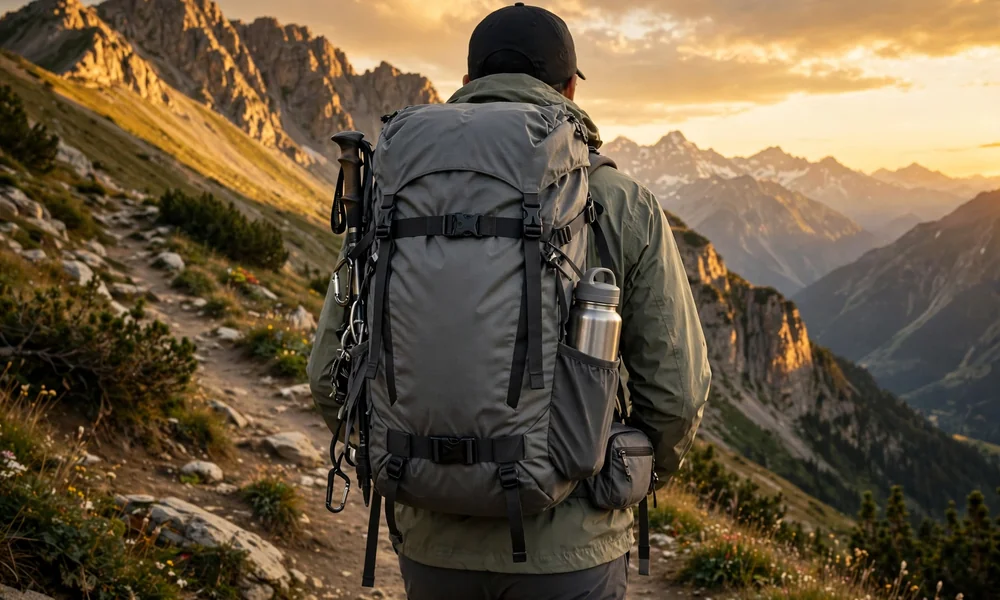
Most travel packs are miserable on a trail, and most hiking packs are awkward in an airport. This hybrid is the rare design that works well in both places. The ventilated back panel keeps air moving on a climb, the hip belt is properly padded, and trekking pole loops and a rain cover are included rather than sold separately. At thirty-eight litres it is big enough for a multi-day hike with light gear, yet it still fits in an overhead bin.
Best on a Budget: The 35L Value Pack
Good travel backpacks do not have to cost a fortune, and this thirty-five litre pack is the proof. It covers the essentials well: a clamshell opening, a laptop sleeve, a hip belt that actually works, and fabric that handles rain better than its price suggests. It feels less refined than premium packs, but not cheap where it matters. For a first travel backpack, or for a traveller who flies a few times a year, it is excellent value.
Best for Work Trips: The 32L Business Carry-On
Work travel has its own demands: a laptop that must stay protected, documents that need to stay flat, and a bag that looks right in a meeting room. This thirty-two litre pack handles all three. The laptop compartment is padded on every side and opens flat for security checks, there is a dedicated pocket for papers, and the styling is understated enough for a professional setting. It suits two or three nights.
Carry-On Size and Airline Rules
The most useful thing you can do before buying a travel backpack is to check the carry-on rules of the airlines you fly most. A pack that fits one airline perfectly can be too big for another, and budget carriers are the strictest, with smaller sizers and firm enforcement at the gate.
Capacity in litres is only part of the story. A soft forty-litre bag often travels more easily than a stiff thirty-five litre one. It is also worth learning from the mistakes others make: many travellers choose a bag that is too big or too heavy when empty. Reading about the worst luggage choices for frequent travellers is a useful reminder of what to avoid before you spend your money.
Packing Smarter: Less Weight, More Room
A great backpack cannot fix bad packing, but the right habits make any pack feel bigger. Roll soft clothes rather than folding them, use packing cubes to compress and separate outfits, and put heavy items close to your back and high up, where they affect your balance least. Keep the things you need during the journey, like documents and headphones, in an outer pocket.
The other half of packing well is leaving things behind. Most travellers pack for problems that never happen. Some of the travel gadgets that are not worth packing add weight and take up space without earning their place. Lay out everything you plan to take, then remove a third of it before you zip up.
Comfort and Fit: What Actually Matters
Comfort is not a luxury on a travel backpack; it is the feature you will notice most. A pack that digs into your shoulders after twenty minutes will ruin a day of sightseeing, however well it is organised.

Start with torso length, the distance from your neck to your hips. Packs with adjustable torso lengths fit far more people well, while fixed-length packs suit only the middle of the range. Next, check the hip belt: it should sit on your hip bones and take most of the weight, with the shoulder straps mainly keeping the pack stable. Load lifters make a surprising difference on a full load. Try the pack loaded before you travel.
Tech and Essentials on the Move
Modern travel means carrying electronics, and a good backpack should protect them. Look for a laptop sleeve suspended from the bottom of the bag, so a dropped pack does not slam the laptop into the floor, and a padded pocket for a tablet or e-reader.
Power is the other essential, and it is worth choosing carefully, because a bad power bank is dead weight. Some of the worst power banks for travel are heavy, slow to charge and unreliable when you need them most. A ten thousand milliamp-hour bank is enough for most trips.
Checklist: Before You Buy
Use this checklist before you buy.
- Check the pack against your airline’s carry-on sizer, packed full.
- Check torso length and hip belt fit with ten kilograms inside.
- Confirm the laptop sleeve fits and is suspended from the bottom.
- Check the main compartment opens flat for easy packing.
- Look for water-resistant fabric and sturdy hardware.
- Choose capacity for your real trips, not imaginary longer ones.
Frequently Asked Questions
What size travel backpack is best for carry-on only?
For most travellers, a 35 to 45 litre pack is the best size for carry-on only travel. It holds a week’s worth, fits overhead bins, and stays comfortable to carry.
Are travel backpacks better than rolling suitcases?
It depends on the trip. Backpacks win on stairs, cobbled streets and crowded stations, where wheels are a liability. Rolling suitcases win on flat airport floors.
How much should a good travel backpack cost?
Budget packs cover the essentials well, mid-range packs add comfort and durability, and premium packs add refinement and better materials. Spend more if you travel often.
Do I need a rain cover for a travel backpack?
Not always. Most of the best travel backpacks of 2026 use water-resistant fabric and covered zips that handle light and moderate rain. A rain cover is worth carrying for heavy downpours, and several packs on this list include one.
Can I take a travel backpack as my personal item?
Usually not if it is also your carry-on. Airlines typically allow one carry-on bag and one smaller personal item, such as a day pack or laptop bag. A small packable day bag inside can serve as your personal item.
How do I clean a travel backpack?
Empty it fully, shake out loose dirt, and hand wash it with mild soap and lukewarm water, using a soft brush on stained areas. Never machine wash or tumble dry it. Let it air dry fully.
The Bottom Line
The best travel backpacks of 2026 fit the overhead bin, carry comfortably for hours, and keep your gear organised from the first morning to the last. For most travellers, the 40 litre carry-on all-rounder is the right choice, with the 30 litre city pack for short breaks and the 45 litre expedition pack for longer journeys. Choose the size that matches your real trips, and buy once and buy well.


