
The best hiking boots 2026 has to offer share one thing in common: they disappear on your feet. When a boot fits properly, grips confidently and keeps your feet dry, you stop thinking about your footwear and start enjoying the trail. That is the real test of a hiking boot, and it matters far more than any brand name on the side.
Choosing the wrong pair can turn a beautiful day in the mountains into a miserable slog. Blisters form within the first hour, ankles roll on loose rock, and wet socks chill your feet long before you reach the summit. The difference between the best and worst hiking boots is rarely obvious in a shop, but it becomes clear by mile five.
This guide focuses on what actually matters: fit, grip, waterproofing and weight. We compare the strongest boot styles of the year and finish with a practical checklist, so you can buy once and hike happily for years.
Key takeaways
- Fit matters more than brand: a boot that matches your foot shape will always beat a famous name that pinches.
- Deep, widely spaced lugs grip mud and loose rock far better than shallow tread.
- Waterproof membranes keep rain out but trap sweat in, so breathability matters when it is warm.
- Lightweight boots suit day hikes, while stiffer boots protect ankles on rough, loaded treks.
- Always break boots in on short walks before taking them on a long hike.
What Makes a Great Hiking Boot
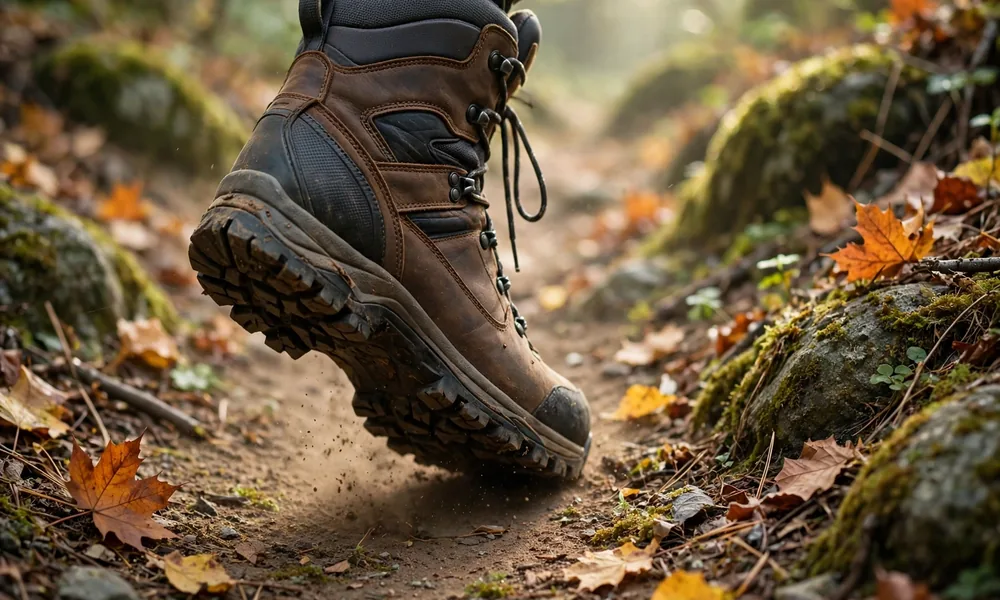
A great hiking boot balances four competing demands: comfort, support, protection and weight. A boot that is too soft lets sharp rocks bruise your soles, while a boot that is too stiff feels like walking in ski boots. The best hiking boots of 2026 get this balance right for their intended use, so match the boot to your hiking style rather than chasing a single overall winner.
Fit and Comfort
Fit is the single most important factor, and it is also the most personal. Your heel should sit snugly in the heel cup without lifting when you step uphill, and your toes should have room to spread. Leave roughly a thumb’s width between your longest toe and the front of the boot.
Always try boots on with the socks you will hike in, and shop in the afternoon, when your feet have swollen slightly. A small rub in the store becomes a blister on the trail, so do not assume a tight boot will simply stretch out. Leather softens a little with wear, but synthetic uppers barely change, and no boot should hurt from the first step.
Grip and Traction
The outsole is what keeps you upright on wet rock, muddy slopes and loose gravel. Look for deep lugs with wide gaps between them so mud can clear instead of packing into a smooth, slippery layer. A heel brake, the angled lugs at the back of the sole, helps control steep descents, where most slips happen.
Rubber compound matters as much as tread pattern. Softer rubber grips wet rock better but wears faster, while harder rubber lasts longer yet can feel slippery on smooth stone. If you hike mostly on wet, rocky terrain, prioritise grip over sole life; on dry, dusty trails, a harder compound will serve you longer.
Waterproofing and Breathability
Waterproof boots use a thin membrane inside the upper that blocks liquid water while letting some vapour escape. On rainy hikes and stream crossings, this is the difference between dry feet and a soggy, blister-prone mess. On hot summer days, however, the same membrane traps sweat, and your feet can end up just as wet from the inside.
Think about where and when you hike most. If your trails cross streams, bogs and frequent rain, waterproof boots are worth the extra warmth. If you hike mainly in dry, warm weather, a breathable non-waterproof boot will keep your feet cooler and dry faster after a splash. Reproof the outer fabric once a season so water keeps beading on the surface instead of soaking in.
The Best Hiking Boots of 2026
The strongest boots of 2026 fall into clear groups. The table below summarises the main styles at a glance.
| Boot style | Best for | Weight per pair | Waterproof |
|---|---|---|---|
| Lightweight trail boots | Day hikes and smooth trails | 700–900 g | Often |
| Midweight all-round boots | Mixed terrain and weekend trips | 900–1,200 g | Usually |
| Heavy-duty backpacking boots | Rough ground and heavy loads | 1,200–1,600 g | Yes |
| Approach-style boots | Rocky scrambles and dry trails | 800–1,000 g | Rarely |
Best Overall: Midweight All-Round Boots
For most hikers, a midweight all-round boot is the smartest single purchase. These boots support your ankles on uneven ground, yet stay flexible enough to walk comfortably for hours, and they usually include a waterproof membrane, a protective rubber rand and a cushioned midsole. Paired with a well-fitted travel backpack that spreads the load across your hips, a midweight boot handles everything from a gentle valley walk to a demanding mountain weekend.
Look for a gusseted tongue, which stops grit and water sneaking in through the laces, and metal eyelets or hooks that let you fine-tune the lacing. Many brands offer the same boot in narrow, standard and wide versions, so try a different width before giving up on a model that pinches.
Best Lightweight: Trail Boots for Fast Day Hikes
Lightweight trail boots are built for speed and comfort on well-maintained paths. They borrow heavily from running shoe design, with softer midsoles, flexible uppers and lower ankle collars, and they feel more like a sturdy trainer than a traditional boot. On a smooth day hike, that freedom is a joy: your legs stay fresher, your stride feels natural, and you finish the walk with energy to spare.
The trade-off is protection. A lightweight boot offers less ankle support and less defence against sharp rocks, so it suits hikers with strong ankles and trails without heavy scree or deep mud. If your routes involve boulder fields, river crossings or a heavy pack, step up to a midweight boot instead.
Best Waterproof: Boots for Wet and Winter Trails
Waterproof boots earn their place on wet, muddy and snowy trails, where dry feet are not a luxury but a necessity. The best waterproof models pair a reliable membrane with a tall, well-padded collar that stops water pouring in over the top, and a deep tread that sheds mud instead of clogging. Full-grain leather uppers are particularly good here: naturally water-resistant, tough against scrapes, and they mould to your feet over time.
Leather boots need a little more care than synthetic ones, but the effort pays off. Clean off mud after each walk, let them dry slowly away from direct heat, and treat the leather a few times a year. A well-maintained leather boot can last a decade of regular hiking. When you plan an overnight trip in wet conditions, it is worth reading our guide to the best camping tents for 2026 before you pack.
How to Choose the Right Pair
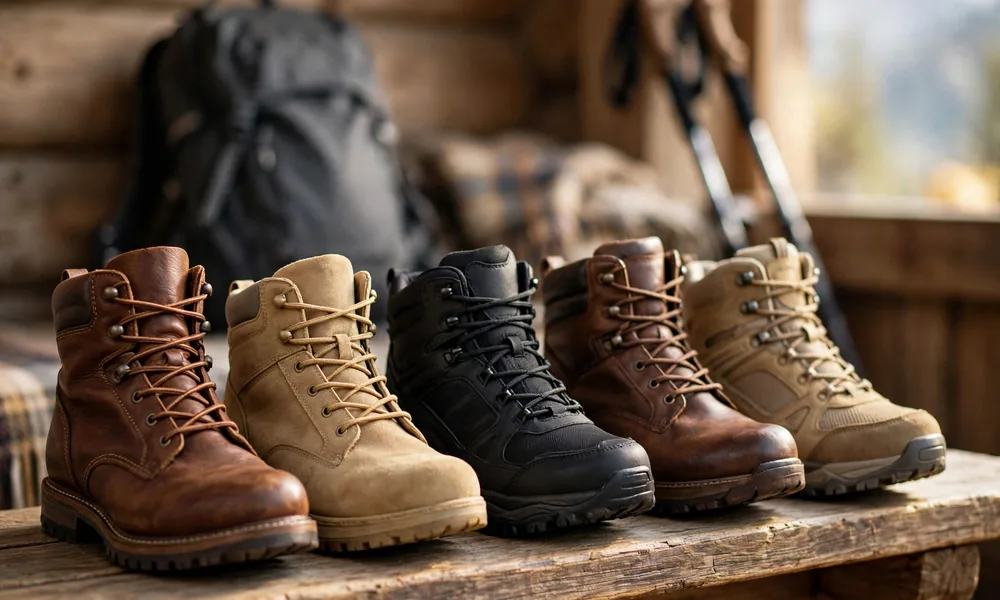
Choosing well is mostly a matter of being honest about how you hike. A boot designed for fast summer day walks will disappoint on a wet winter ridge, and a heavy leather boot will feel like overkill on a flat riverside path. Start with your most common hike.
Match the Boot to the Trail
Think about three things: terrain, distance and load. Smooth, well-marked trails call for light, flexible boots. Rocky, uneven ground with steep ascents calls for stiffer soles and higher ankle collars. Multi-day trips with a heavy pack call for the most supportive boots you can comfortably wear, because tired ankles cause most injuries on long treks.
Season matters too. Summer boots can be lighter and more breathable, while winter boots need insulation, waterproofing and room for thicker socks. If you only buy one pair, choose a midweight waterproof boot, which copes with the widest range of conditions. For materials, leather suits rough, wet terrain and hikers who value longevity, while synthetic suits warm, dry conditions and hikers who value light weight.
Sizing and Break-In
Never buy hiking boots in the same size as your everyday shoes without trying them on. Most hikers need a half size larger, because feet swell during a long walk and toes need room on descents. Try both boots on, lace them fully, and walk around for ten minutes. Your heel should stay put and your toes should not touch the front when you walk downhill.
Break-in is the step most people skip, and it causes most blisters. Wear new boots around the house for a few evenings, then take them on a short local walk, then a half-day hike, before committing to a full day in the mountains. Merino wool hiking socks also help, because wool manages moisture far better than cotton.
Hiking Boot Care Checklist
A little care after each walk keeps boots waterproof, comfortable and long-lived.
- Knock off loose mud and brush the uppers clean before it dries hard.
- Remove the insoles and laces so the inside dries properly.
- Stuff boots with newspaper to absorb moisture and hold their shape.
- Dry them slowly at room temperature, never beside a radiator or fire.
- Reproof the outer fabric or leather once a season.
- Check the tread and stitching regularly and replace worn laces before they snap.
Common Mistakes to Avoid
The most common mistake is buying boots that look good but fit badly. A beautiful boot that pinches will sit in the cupboard after one painful walk, while a plain-looking boot that fits perfectly will carry you for hundreds of miles. Always prioritise fit over appearance, and never buy a boot you have not walked in.
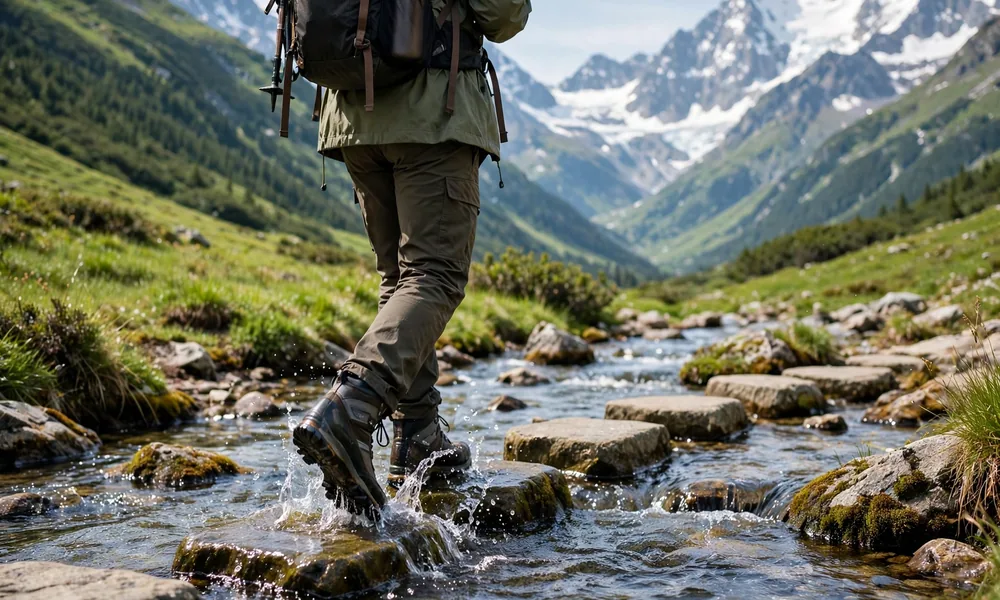
The second mistake is trusting waterproofing too much. Even the best membrane cannot help if water pours in over a low collar during a deep stream crossing, or if your trousers funnel rain straight into the boot. Gaiters help in heavy rain and deep mud. Before a big trip, it is also sensible to check your cover, and our guide to the best travel insurance for 2026 explains what to look for in a policy that covers mountain walking.
Frequently Asked Questions
How much should I spend on hiking boots?
Good hiking boots usually cost between 100 and 250 pounds. A mid-priced boot that fits you well will always beat an expensive boot that does not.
Do I need waterproof hiking boots?
You need waterproof boots if you hike in rain, bogs, snow or across streams. If you hike mainly on dry trails in warm weather, breathable non-waterproof boots are cooler, lighter and dry faster.
How long do hiking boots last?
Most hiking boots last between 500 and 1,000 miles, depending on the terrain, your weight and how well you care for them. Resoling can extend the life of a quality pair well beyond that range.
Should hiking boots be tight or loose?
Neither. They should feel snug around the heel and midfoot, with room in the toe box for your toes to spread. Your heel should not lift uphill, and your toes should not hit the front downhill.
Can I wear hiking boots every day?
You can, but they will wear out faster. Lightweight trail boots work well as everyday shoes, while heavy backpacking boots are best saved for the trail.
How do I stop my hiking boots smelling?
Remove the insoles after each walk, let the boots dry fully, and wear moisture-wicking merino socks. A sprinkle of baking soda left overnight absorbs odour.
The Bottom Line
The best hiking boots 2026 has to offer are the ones that fit your feet, suit your trails and keep you comfortable. Choose a midweight waterproof boot for all-round use, a lightweight boot for fast summer days, or a sturdy leather boot for wet and rugged terrain, break them in properly, and look after them between walks. Do that, and your boots will become something you trust.


