
A passport holder is a small thing that carries a big responsibility. It holds the one document you cannot travel without, along with the cards, cash, and boarding passes that get you through every airport, station, and border in between. When it works well, you never think about it: your passport slides out smoothly at the desk, your cards are where you expect them, and everything stays dry and safe in your bag. When it works badly, you think about it constantly — fumbling at security, fishing a card out of a stretched pocket, or discovering too late that a cheap holder has fallen apart mid-trip.
The gap between the best and the worst passport holders in 2026 is wider than the price tags suggest. Two holders can look almost identical in a shop, with the same shape and the same number of slots, yet one will still be protecting your documents after years of travel while the other is peeling, splitting, or stuck shut after a single holiday. This guide puts the two ends of the market side by side, so you can tell them apart before you pack.
Key Takeaways
- The best passport holders use real materials, tight stitching, and slots that hold their shape; the worst peel, stretch, and split within months.
- Full-grain leather ages well and protects best, but a good fabric or vegan holder can beat a bad leather one every time.
- Size matters more than looks: your passport should slide in and out easily, with room for cards and a boarding pass, and nothing more.
- Radio-blocking lining is a nice extra, not a must-have — but a holder that cannot close properly is a deal-breaker.
- A passport holder is travel gear, not a fashion statement: buy for the trips you actually take, not the ones you imagine.
Pick the Right Type First
Before looking at any single holder, decide what kind you actually need. A simple sleeve is the lightest option: a slim cover that protects the passport from scuffs and rain and slips into a jacket pocket. A bifold wallet-style holder adds card slots, a cash pocket, and sometimes a boarding-pass slot, turning the holder into a small travel wallet you can carry on its own through the airport. It is the most popular type for good reason, but it is also the one where cheap materials fail fastest, because every slot and fold is a place for stitching to give way.
A family or document organizer is bigger still, with room for several passports, tickets, and papers in one place. It suits parents travelling with children or anyone who likes to keep every document together, but it is too bulky to carry in a pocket and belongs in a bag. Then there are the extras: a neck pouch or money belt that hides under your clothes, and a holder with a wrist strap or a zip. A frequent flyer who moves fast through airports needs something slim and quick to open; a family on a long holiday needs space and organization. The wrong type is not a bargain at any price, because a holder that does not fit your trip will spend it in the bottom of your bag.
What the Best Passport Holders Get Right
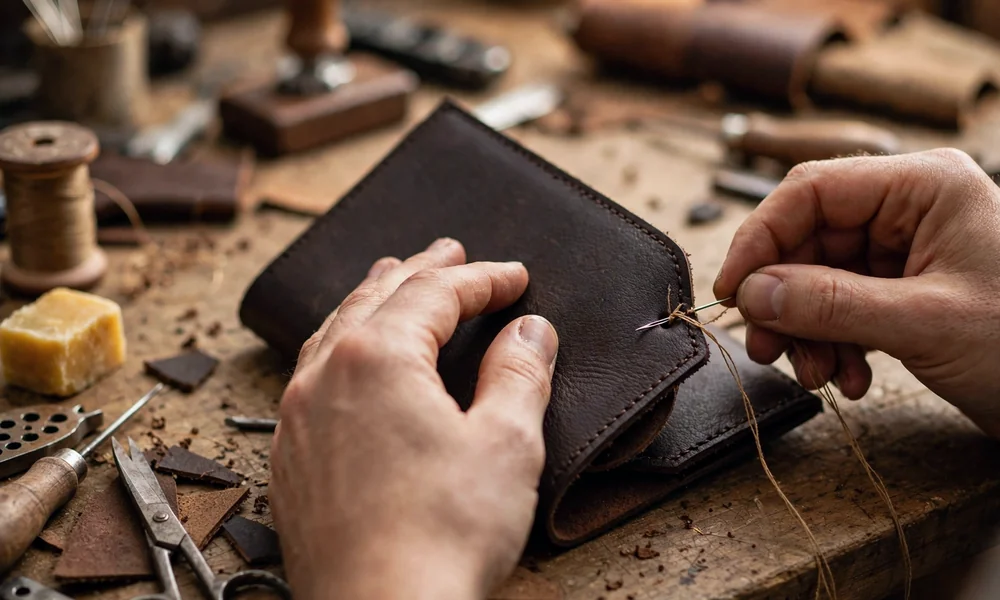
The best passport holders are not the most expensive ones. They are the ones where the material, the stitching, and the layout were all thought through by people who actually travel. You can feel the difference the moment you pick one up: it opens flat without fighting you, the passport slides in with a snug fit rather than rattling around or sticking, and the card slots hold cards firmly without stretching after a few uses. The edges are finished cleanly, the lining is smooth, and nothing snags or catches when you pull a document out in a hurry.
Good holders also age gracefully. Full-grain leather develops a soft patina and gets better-looking with use, while the stitching stays tight and the shape holds. A good fabric holder keeps its structure and its colour after being stuffed into bags and pockets. The clasp or zip, if there is one, works smoothly hundreds of times without sticking. And a good holder protects: it keeps rain off the passport, stops the corners from curling, and holds its shape in a crowded bag. None of this shows up in a product photo, which is why buying on looks alone is such a poor way to choose. The same care that goes into choosing the rest of your travel kit matters here too — the bag it rides in, for a start, which is why travellers who research the best and worst travel backpacks of 2026 usually end up rethinking their passport holder at the same time.
Materials: Leather, Fabric, and Everything Else
Material is where the best and worst holders part company most clearly. Full-grain leather is the benchmark: it is the top layer of the hide, it is strong, it resists scuffs, and it ages with character. Genuine leather, despite the confident name, is one of the lowest grades — made from the leftover layers of the hide, bonded and coated — and it is the material most likely to peel and crack. If a listing says “genuine leather” and nothing else, treat that as a warning, not a selling point.
Fabric holders have their own strengths. A tightly woven canvas or nylon holder is light, flexible, and easy to clean, and it will not mind being rained on. Vegan leather varies the most: a good one is soft, durable, and hard to tell from the real thing, while a bad one is stiff plastic that cracks along the folds within months. The test is simple: bend the holder sharply and look at the crease. Good material springs back; bad material shows a pale line or a tiny crack, and that crack is where it will split first. Whatever the material, it should feel good in the hand, because you will be holding it at every border crossing for years.
What the Worst Passport Holders Get Wrong
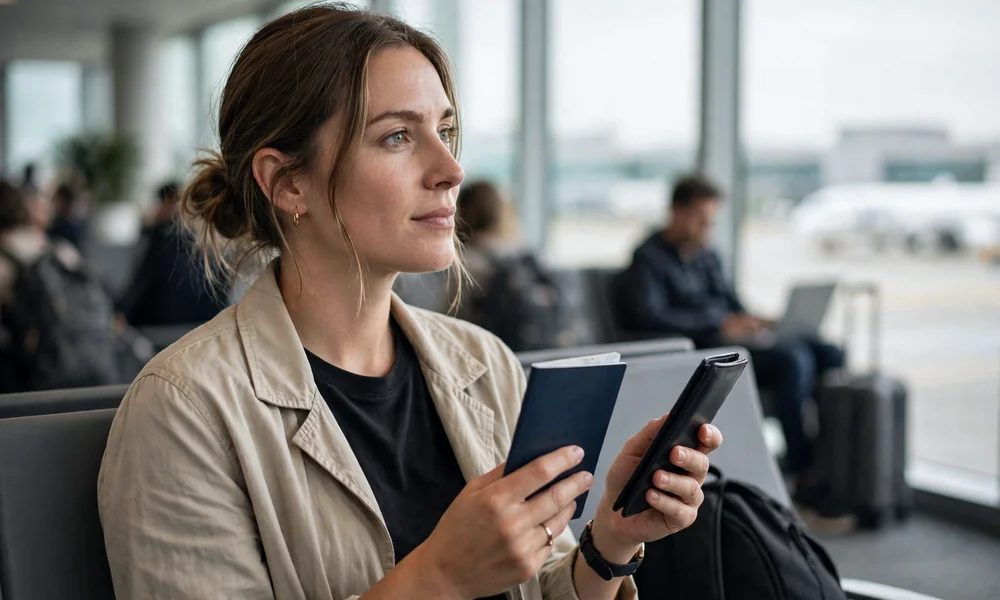
The worst passport holders usually fail in the same few ways. The material is the first problem: a thin bonded leather or cheap plastic that looks glossy in the shop and starts peeling at the corners within weeks. The stitching is the second: loose threads, uneven seams, and glued edges that come apart the first time the holder is stuffed into a full bag. The layout is the third: card slots that are too tight to use or so loose that cards slide out, a passport pocket that grips so hard you have to tug the document free at the desk, or a design so bulky that it will not fit in any pocket.
Then there is the hardware. A zip that sticks, a snap that pops open in your bag, or a clasp that scratches the passport cover will ruin a holder that is otherwise fine. A good holder does a small number of things well. A bad one tries to do everything and does none of it properly. The same discipline applies to the rest of your carry-on: a bag that tries to be everything usually ends up being nothing, which is why our guide to the best and worst carry-on luggage of 2026 starts with the same question — what do you actually need to carry?

Best vs Worst: The Head-to-Head
Put the two side by side and the pattern is clear. The best holders protect your passport, hold their shape, open and close smoothly, and still look good after years of trips. They cost more at the till, but the cost per trip is often lower because you are not replacing them every year, and they save you the stress of a document falling out at the worst possible moment. They also tend to come from makers who are honest about their materials and who stand behind their stitching.
The worst holders look fine on the shelf, peel and split within months, lose cards from stretched slots, and end up in a drawer — or worse, in a bin at the airport when a seam gives way at security. They cost less up front, which is their only real advantage, and even that fades once you count the replacement and the risk to the documents inside. If the description will not say what the holder is made of, assume the worst.
Who Each Side Is For
Good holders are for anyone who travels more than once a year, carries more than just a passport, or has ever stood at a border desk wrestling with a stuck document — which is to say, almost everyone who flies. They matter most for frequent flyers, for families travelling together, and for anyone whose passport has to survive years of use.
Cheap holders make sense in only a narrow set of cases: a single trip where you need something basic, a child who will outgrow it, or a traveller on a genuinely tight budget who understands the trade-off. Even then, the cheapest holder on the shelf is rarely the best value; a mid-priced holder from a known maker is usually the sweet spot. And whatever you buy, remember that a passport holder is only one piece of your travel kit. The small things add up: the adapter that charges your phone at the hotel, the bag that carries it all. Our guide to the best and worst travel adapters of 2026 covers the other small item that causes the most trouble when it fails.
Before You Buy: A Short Checklist
- Take your passport with you, or know its exact size — a holder that fits one country’s passport may not fit another’s.
- Slide your cards in and out of every slot in the shop; they should grip firmly without a fight, and stay put when you shake the holder gently.
- Bend the holder sharply and check the crease for pale lines or cracks, which are the first sign of material that will split.
- Pull on the stitching at the corners and along the spine — loose threads there mean the holder will come apart under real use.
- Check that it closes flat and stays closed in your bag, and that it fits the pocket or bag where you plan to carry it.
The Verdict
The best passport holders of 2026 are the ones that protect your documents, hold their shape, open smoothly, and still look good after years of travel. They cost more on the day, and they repay it every time you glide through a border desk instead of fumbling, and every time you do not have to buy a replacement before your next trip. The worst holders are the ones that look like a saving and turn into a cost: peeling material, stretched slots, a lost card, and a passport that arrives home more battered than it left. A passport is the most important thing you carry when you travel, so the thing that protects it is worth choosing well. Buy the best you can afford, test it before you pack, and travel lighter for it.


