
A cruise is a strange kind of holiday: you unpack once, and the hotel, the restaurant, the theatre and the view all move with you. Done well, it feels effortless, a week of sea air, good meals and new ports with almost no planning. Done badly, it feels like being stuck in a crowded floating hotel where the queues are long, the food is tired, and the sea is something you glimpse between other people’s shoulders. The gap between the best cruises of 2026 and the worst is wider than most first-time cruisers expect, and it is rarely about the size of the ship.
This comparison puts the best cruises of 2026 head to head against the worst, judging them the way you would actually live them: the cabin you sleep in, the food you eat three times a day, the space you get on deck, the ports you visit, and whether the bill at the end matches the price you were quoted. The same honest testing sits behind our comparison of the best and worst suitcases of 2026, because a cruise starts with packing, and a bag that survives the gangway matters more than one that only looks good in the shop.
Key Takeaways
- Space per passenger matters more than ship size: a smaller ship with fewer guests often feels calmer than a giant ship packed to its limits.
- The cabin decides your sleep: a quiet cabin away from lifts, bars and the theatre is worth more than a balcony you never sit on.
- Food is a daily test, not a one-off dinner: check the buffet, the main dining room and the snacks, because you will eat all three every day.
- Port time is the real holiday: short rushed stops and long tender queues can turn a great route into a frustrating one.
- Read the full fare before you book: drinks, tips, Wi-Fi and excursions can add hundreds to a cheap-looking headline price.
How a Cruise Actually Works
A cruise ship is a floating town, and every part of it runs on a schedule. You board at a home port, settle into a cabin, and the ship sails overnight to its first stop. Days at sea are spent on deck, in the pool, at shows or in restaurants, while port days mean going ashore for a few hours, either walking straight off the gangway or taking a small tender boat to land. At the end of the trip you return to the same port, or a different one, and disembark with your luggage.
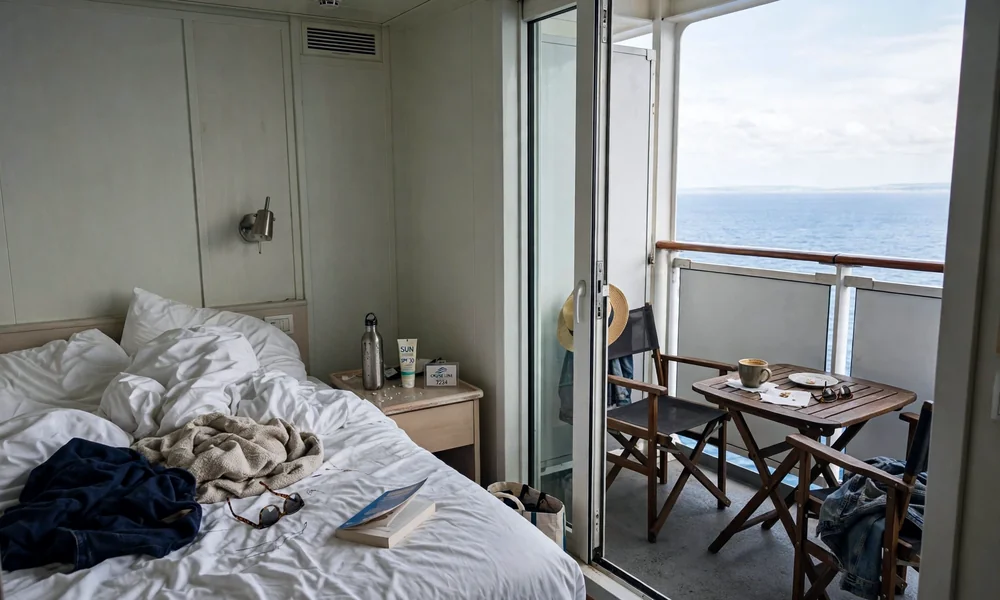
Cabins come in four broad kinds, and knowing them makes choosing much easier. Inside cabins have no window and are the cheapest, but they can feel dark and small after a few days. Ocean-view cabins add a porthole or window, which helps with light and with knowing whether it is day or night. Balcony cabins add a small private outdoor space, which is lovely in warm weather and in port, though it costs more. Suites add space, a bigger bathroom and often extra perks, but they cost several times the price of an inside cabin, and the extra room is only worth it if you plan to spend real time there.
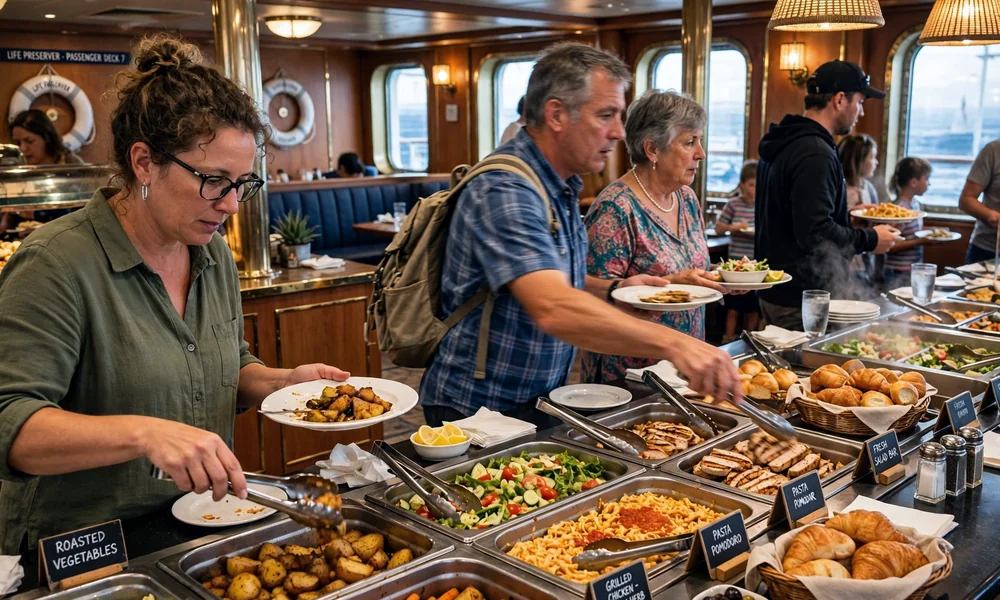
Meals are included on most cruises, at least in the main dining room and the buffet, and this is where the daily rhythm of a cruise is set. Breakfast and lunch are usually casual, taken in the buffet or a cafe, while dinner is a longer sit-down meal with a menu that changes each evening. Speciality restaurants cost extra, and they are often better, but a cruise that needs you to pay extra for every good meal has a problem with its included food. Drinks are a separate question: some fares include them, most do not, and the bar bill can surprise people who assumed everything was covered.
Entertainment fills the sea days. There are shows in the theatre, live music in the bars, quizzes, talks, pools and gyms, and, on the biggest ships, water slides and climbing walls.
What Makes a Cruise One of the Best
The best cruises of 2026 share one quality above all others: they feel calm. There is enough space on deck that you can find a quiet chair without a dawn dash for towels, enough room in the dining room that you are not waiting for a table, and enough staff that a drink order does not take half an hour. This calm is not an accident; it comes from a ship that is not sailing full to the last berth, and from a crew that has time to look after its guests.
The cabin is the second mark of a good cruise. A good cabin is quiet at night, with a comfortable bed, a shower that runs hot and steady, storage that actually fits two people’s clothes, and lighting you can read by. A balcony cabin adds fresh air and a private view, and on a good ship the balcony furniture is comfortable enough to sit on for an hour. Our comparison of the best and worst carry-on luggage of 2026 follows the same rule: the thing you live with every day has to work, not just look good in a photograph.
Food is the third mark, and it is tested three times a day. On the best cruises the buffet is fresh, with food cooked in small batches and replaced often, salads that look bright rather than wilted, and bread that tastes of something. The main dining room serves food that is hot, seasoned properly and presented with care, and the menu changes enough that a week on board does not feel like the same meal repeated.
The route is the fourth mark. A good cruise gives you real time in port, arriving early enough and leaving late enough that you can see a place properly, rather than rushing ashore for two hours and back. It chooses ports that are worth visiting, and it is honest about which stops need a tender boat and how long that takes.
Finally, a good cruise is honest about its price. The fare you book is close to the fare you pay, with tips, taxes and port charges shown clearly, and extras that are genuinely optional rather than quietly essential. Wi-Fi, drinks and excursions are priced fairly, and the staff do not push paid extras at every turn. That honesty is worth more than any headline discount.
What Makes a Cruise One of the Worst
The worst cruises fail in the same place first: they feel crowded. The pool deck is full by nine in the morning, the buffet queues snake around the room at lunch, the theatre fills an hour before the show, and the lifts are so busy that people take the stairs for ten decks. This is not bad luck; it is a ship carrying more guests than its shared spaces can hold, and no amount of decoration fixes it.
The cabin is where a bad cruise hurts most, because you cannot escape it. The most common failure is noise: a cabin under a bar, above the theatre, or next to a lift shaft, where music, footsteps and machinery keep you awake. Then there is size: a cabin so small that two people cannot pass each other, with storage that holds one suitcase and a shower so tight you cannot turn around.
Food is where bad cruises give themselves away fastest. A bad buffet serves food that has sat for hours under heat lamps, with dried-out meat, limp salads and bread that is stale by lunchtime. The main dining room is no better: dishes arrive lukewarm, the menu repeats itself, and the portions are small enough that you leave hungry.
Ports are the last sign of a bad cruise. A bad itinerary gives you two hours in a place that deserves a day, arrives late and leaves early, or skips a promised port and replaces it with another sea day and a shrug. Tender ports are handled badly, with long waits in the sun and no clear information, and excursions are overpriced, rushed and packed with too many people. The result is a holiday where you see the inside of a ship far more than the places you sailed to see.

How to Choose a Cruise Before You Book It
The best test is the space test, and it takes only a few numbers. Look up the ship’s passenger count and its size, and work out how much room each guest gets; a ship with far fewer guests for its size will almost always feel calmer than a giant ship at full capacity. Then check the deck plans: look for a cabin away from lifts, bars, the theatre and the pool deck, ideally mid-ship and on a deck with cabins above and below rather than public rooms.
The second test is the food test, and it matters more than most people realise. Read recent reviews that talk about the buffet and the dining room in detail, not just the headline rating, and look for words like fresh, hot and varied rather than repetitive, lukewarm and tired. If the cruise line charges extra for its best restaurant, ask yourself whether the included food is good enough on its own, because you will eat it most days.
Reading the fare is the third test, and it takes only a few minutes. Check whether tips, taxes, port charges, drinks and Wi-Fi are included, and add them up before you compare prices. A cheap fare that needs hundreds in extras is not cheap. The same careful packing matters for the journey itself, and a cruise is one trip where your documents need to be easy to reach, which is why our comparison of the best and worst passport holders of 2026 starts from the same question: does the thing you carry make the trip easier.
Finally, check the itinerary the way you would check a real holiday. Count the hours in each port, check which stops need a tender, and look at how many sea days there are in a row. A route with real time ashore, a mix of ports and rest days, and a ship that fits the way you like to travel will always beat a cheaper cruise that rushes you through places you never get to see.
The Verdict
The best cruises of 2026 are not the biggest ships, and they are not the ones with the flashiest water slides. They are the ones with room to breathe, a quiet cabin that lets you sleep, food that is fresh three times a day, ports with real time ashore, and a fare that is honest about what it includes. They make a week at sea feel restful rather than hectic, and they are worth booking again. Choose one of those and the sea, the food and the places you visit all get better at once.
The worst cruises fail quietly and keep failing: a crowded deck with no space to sit, a noisy cabin that ruins your sleep, tired food that repeats itself, ports that are rushed or skipped, and a bill that grows with extras you never expected. Spend a little more on a ship with room for its guests, pick a cabin away from the noise, and read the full fare before you book. Choose the cruise that gives you space, sleep and real time ashore, and the rest of the holiday takes care of itself.


