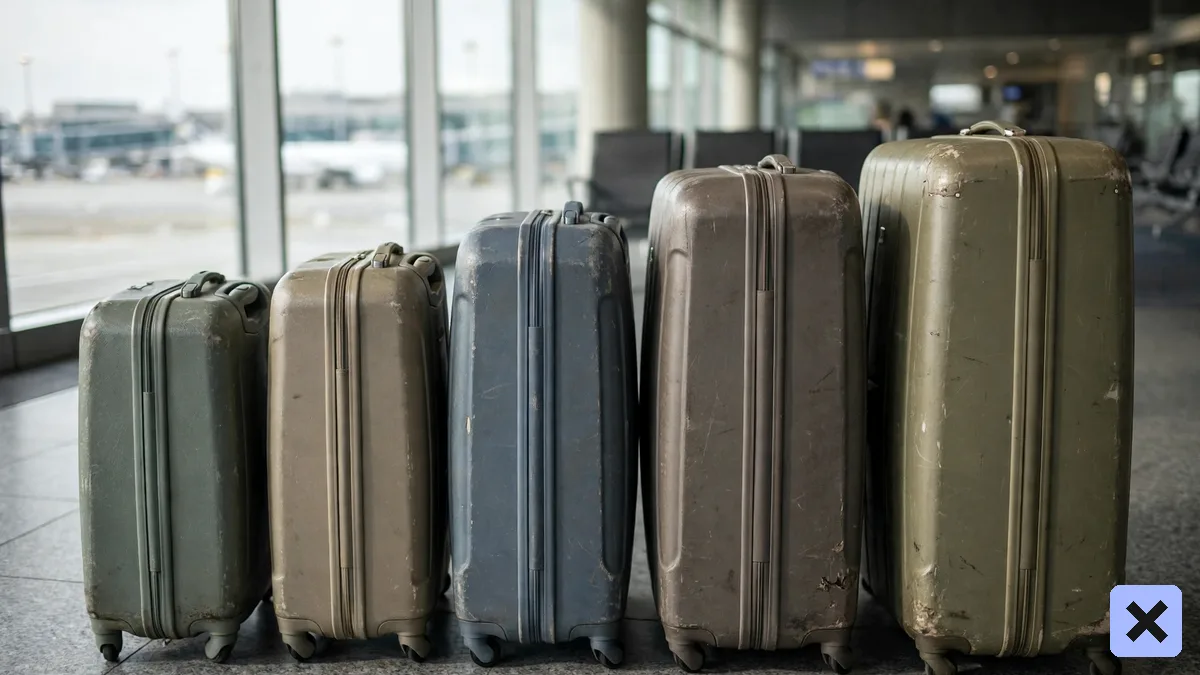
A suitcase is the one travel purchase that either quietly does its job for a decade or loudly ruins a trip on day one. It gets thrown onto conveyor belts, dragged over cracked pavements, squeezed into overhead bins, and left standing in the rain outside a hotel. A good suitcase rolls straight, closes properly when it is full, and comes home looking almost the same as it left. A bad one fights you at every step: the wheels wobble, the handle sticks, the zip splits, and the shell cracks on the first flight. This guide puts the best and the worst suitcases of 2026 side by side, across every size from cabin to large checked bags, so you can tell the difference in the shop, not at the airport.
Key Takeaways
- The best suitcases use strong polycarbonate or ballistic nylon, smooth spinner wheels, and a handle that locks firmly at more than one height.
- A large checked suitcase should weigh under 10 pounds empty, and a cabin suitcase under 7 pounds, so your clothes do not eat up your weight allowance.
- Four-wheel spinner bags are easier to steer through airports than two-wheel bags, especially when fully packed and heavy.
- Cheap suitcases usually fail at the wheels, the handle, or the zip first, and a cracked shell or a split seam is rarely worth repairing.
- Measure every suitcase including wheels and handles, because airlines measure the whole bag, not just the body.
How We Judged the Best and the Worst
We judged suitcases on the things that decide whether a trip goes smoothly or falls apart. Durability came first, because a suitcase that cracks or splits is useless no matter how smart it looks. We looked at shell materials, fabric strength, stitching, zips, and how wheels and handles are fixed to the body. A wheel bolted into a reinforced corner lasts; one glued into thin plastic does not.
Next we looked at rolling and handling. Good suitcases glide in a straight line, turn easily in a crowd, and stay upright when you let go of the handle. We checked how the handle feels when the bag is fully packed, whether it locks at different heights for different travellers, and whether the bag tips over when it is pulled over a kerb. We also weighed every size, because every pound of empty suitcase is a pound less of clothes you can carry, and checked interiors for compression straps, dividers, and pockets that actually help you pack.
The Best Side: What Great Suitcases Do Right
The best suitcases share a simple quality: they are built around the realities of travel, not the look of the bag in a shop window. Their makers spend the money where it shows up on a trip, on strong wheels, a solid handle, zips that do not jam, and a shell or fabric that survives being thrown into a hold. You pay more, but the bag lasts for years of trips instead of one. If you only ever take cabin bags, our guide to the best and worst carry-on luggage of 2026 covers the cabin-only side of this comparison in detail.
Shells and Fabrics That Survive the Hold
On the best hard-shell suitcases, the shell is made from polycarbonate, often with a slightly textured finish that hides scuffs. Polycarbonate flexes under impact instead of cracking, so it absorbs the knocks that would split cheaper plastic. The best shells are thick enough to hold their shape when the bag is half empty, and they keep rain out completely. Aluminium suitcases are tougher still, but heavier, and they dent.
The best soft-sided suitcases use ballistic nylon or a heavy woven fabric that resists tears and scuffs. Their advantage is flexibility: they squeeze into tight spaces, they expand a little when you need an extra inch, and they usually offer exterior pockets for the things you need on the plane.
Wheels and Handles That Last for Years
On the best bags, four spinner wheels glide in any direction, so you can push the bag beside you through a crowd instead of dragging it behind you. The wheels are set into reinforced corners, with bearings that keep turning smoothly after long use on rough floors. The telescoping handle extends with one hand, locks at more than one height, and stays steady when the bag is fully packed. Nothing wobbles, nothing rattles, and nothing needs a second try.
Size, Weight, and Interiors That Work Together
A great suitcase fits the way you actually travel. Cabin sizes are honest: the stated dimensions include the wheels and handles, so the bag that measures 22 inches really is 22 inches at the gate. Medium checked bags, around 24 to 26 inches, suit a week away, while large checked bags, around 28 to 30 inches, suit two weeks or a family trip. The best makers offer all three sizes in the same range, so you can buy a matching set that stacks and stores neatly.
Weight matters at every size. A large checked suitcase under 10 pounds empty leaves far more room for clothes within a 50-pound allowance, and a cabin bag under 7 pounds leaves room within strict carry-on limits. Inside, a good bag has compression straps, a lined divider, and a pocket for documents. For the cabin end of the range, our guide to the best luggage carry-on bags of 2026 looks at the bags that deliver on these basics.
Build Quality and Warranties Worth Having
The best bags are built to be repaired, not replaced. Their zips are strong enough to close a fully packed bag without straining, their shells resist cracking, and their fabric resists scuffs and tears. Many come from makers with proper warranties and spare parts, so a worn wheel or a tired handle can be fixed instead of sending the whole bag to landfill. That is also why the best bags hold their value: a well-made suitcase that has survived fifty flights still rolls straight and closes properly, while a cheap bag rarely survives five. Spending more once beats spending less three times, and it beats arriving with a broken bag even once.
The Worst Side: Where Bad Suitcases Go Wrong
The worst suitcases look convincing in a shop or in a product photo. They promise spinner wheels, waterproof fabric, lockable zips, and a cabin-friendly size, and the price often looks like a bargain next to the well-known brands. The trouble only shows up under a real load on a real trip, when thin stitching gives way, cheap zips seize, and wheels built for a showroom floor give up on a rough terminal.
Wheels and Handles That Give Up Mid-Trip
The most common failure is the wheels. Cheap spinner wheels wobble, drag, and seize, turning a bag that should glide into one you have to drag. Two-wheel bags with flimsy axles tilt and tip over when they are fully packed, and their handles wobble so much that steering becomes a struggle. On the worst bags, the handle collapses under load, or it sticks halfway out and will not lock at all.
Shells That Crack and Fabrics That Tear
Cheap hard-shell suitcases are often made from thin ABS plastic or a weak polycarbonate blend that looks glossy in the shop and cracks at the first hard knock. The crack usually starts at a corner or around a wheel housing, where the shell is under the most stress, and it spreads with every trip. A cracked shell lets rain in, and it will not protect fragile items inside.
Cheap soft-sided suitcases have the same problem in a different form. Thin fabric tears at the seams, especially around the handle and the wheel housings, and the zips are the first thing to go. A soft bag with a sagging base and torn stitching is not just ugly: it will not stand upright, it will not protect what is inside, and it will keep getting worse. If you are choosing between a cheap hard shell and a cheap soft bag, neither is a good buy. The money is better spent on one well-made bag than on two that fail.
Zips, Sizes, and Other Hidden Traps
On the worst suitcases, the zips are the weakest link. They catch on the fabric, they split under pressure, and they come off their tracks when the bag is full. A bag that will not close is a bag you cannot check in, and a zip that splits mid-trip can spill your clothes across an airport floor. The best bags use large, smooth zips that run the full length of the bag without catching. The worst use small, stiff zips that struggle from the first day.

Checked vs Cabin: Choosing the Right Size
The right size depends on how you travel. A cabin suitcase suits short trips and travellers who hate waiting at the carousel. A medium checked bag suits a week away, and a large checked bag suits two weeks, a family holiday, or a trip where you need bulky clothes. Buying a set in one range is often the best value, because the sizes are designed to work together and the bags nest inside each other for storage at home.
When a Cabin Bag Is Enough
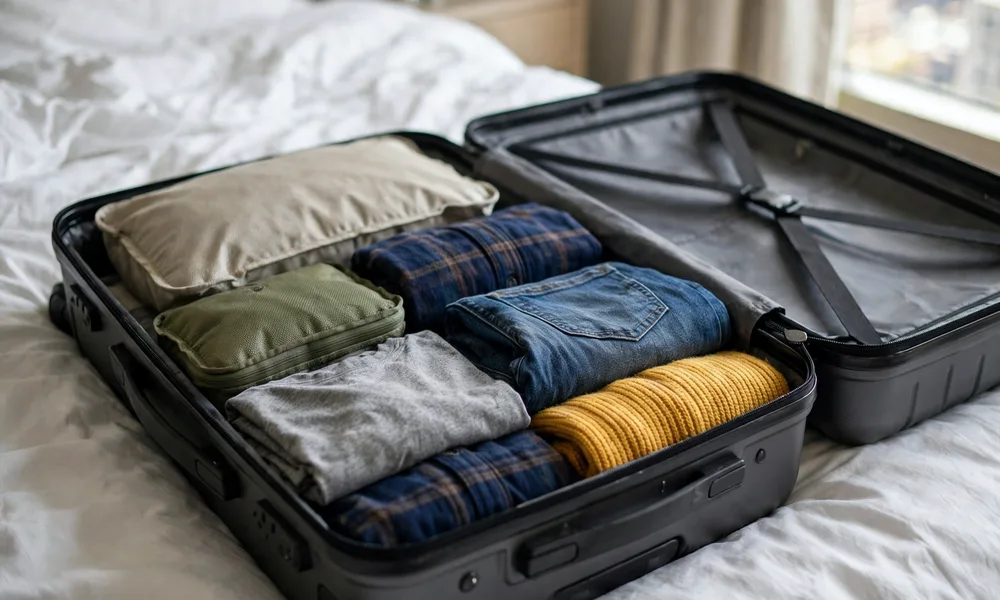
A cabin bag is enough for two or three days if you pack light, roll your clothes, and use packing cubes. It saves checked-bag fees, it cannot be lost by an airline, and it gets you out of the airport fast. The trade-off is space: you will wash clothes on longer trips, and you cannot carry liquids over the limit. For many travellers, that trade is worth it.
When You Need a Checked Suitcase
A checked suitcase is the right choice for longer trips, cold weather, formal clothes, or travelling with children. It holds more and protects fragile items better, and a well-made one, with a strong shell and good wheels, keeps the small risk of delay or damage low.
Best vs Worst at a Glance
The best suitcases are light for their size, honest about their dimensions, smooth on their wheels, and backed by a warranty you can actually use. The worst are heavy, misleading about size, rough on their wheels, and sold with little or no aftercare. Their shells crack at the corners, their fabric tears at the seams, and their zips split under pressure.
Who Each Is For
The best suitcases suit frequent travellers, families, and anyone who flies more than a few times a year. They also suit travellers who check bags, because checked luggage takes the hardest knocks. If you travel for work, a good suitcase protects your clothes and your time, and it will not let you down on the way to a meeting.
The worst suitcases tempt first-time buyers and occasional travellers, but even one trip can be ruined by a bad bag. If the budget is tight, a well-made second-hand suitcase from a good maker beats a new cheap one, and for shorter trips a good weekender bag can be the smarter choice altogether.
Verdict: The Best Suitcases Win on Durability
The verdict is clear: the best suitcases of 2026 win because they are built for the hardest parts of travel, not the easiest. Strong shells, smooth wheels, firm handles, honest sizes, and a warranty that means something are worth paying for, because they are the things that decide whether a trip goes well. The worst suitcases lose because they fail at exactly those points, and they fail when it matters most, far from home with a bag full of clothes.
Buy the best suitcase you can afford, in the size that matches your trips, from a maker that will repair it. Test every wheel, handle, and zip in the shop, loaded, before you trust it with a real journey. A good suitcase will not make a trip by itself, but a bad one can break it.


