A travel backpack is the one bag that has to do everything. It carries your clothes, your laptop, your passport, and the jacket you will need when the weather turns, while you walk through airports, up station steps, and along cobbled streets. A good one makes all of that feel easy: it sits close to your back, spreads its weight across your hips, and opens up so you can find what you need without emptying the whole bag onto a hotel bed. A bad one fights you at every step. It digs into your shoulders, swings around as you walk, and falls apart at the exact moment you are furthest from home. That gap between the best and the worst travel backpacks of 2026 is wider than most buyers expect, and it is decided by details that never appear on the product page.
This comparison puts the best travel backpacks of 2026 head to head against the worst, judging them the way you would actually live with them: how comfortable they are after three hours on your back, how much they really hold, how well they survive rain and overstuffing, and how easy they are to pack and unpack. A good travel backpack is not simply a bigger school bag. It is designed around the way people really travel, with a harness that adjusts to your body, a shape that fits airline cabin rules, and materials that take punishment without tearing. The best travel backpacks of 2026 show what that looks like when it is done well, and this guide uses those strengths as the benchmark for everything that follows.
Key Takeaways
- Fit matters more than volume: a 40-litre pack that sits properly beats a 60-litre pack that pulls you backwards.
- Look for a padded hip belt and a load-lifting harness, because your hips should carry the weight, not your shoulders.
- Carry-on size is a hard limit, not a suggestion: measure the packed bag, not the empty one, before you fly.
- The worst travel backpacks have thin straps, weak zips, and flimsy fabric that tears at the seams after one hard trip.
What Makes a Travel Backpack Work
A travel backpack has a harder job than a hiking pack or a school bag, because it has to work in two very different worlds. On the trail it needs to carry weight comfortably for hours, with a frame, a hip belt, and straps that adjust to your torso. In the airport it needs to behave like a suitcase, opening flat and fitting the overhead bin. The best packs of 2026 manage both, usually by combining a proper adjustable harness with a wide clamshell opening and a rectangular shape that packs neatly. The worst packs manage neither: they are shaped like a tall tube, so everything sinks to the bottom, and their straps are thin strips of webbing that cut into your shoulders within twenty minutes.
The part buyers most often overlook is the harness, and it is the part that decides whether a pack is a pleasure or a punishment. A good harness has padded shoulder straps, a sternum strap that stops them sliding off, and a hip belt that transfers most of the weight onto your legs. It should adjust in several places, because a pack that fits a tall traveller will not fit a shorter one. A bad harness cannot be adjusted at all, or it slips loose as you walk, so the bag slowly slides down your back and drags on your shoulders. That is the difference between arriving at your hotel feeling fresh and arriving with aching shoulders and a red mark across your neck.
The Best Travel Backpacks of 2026
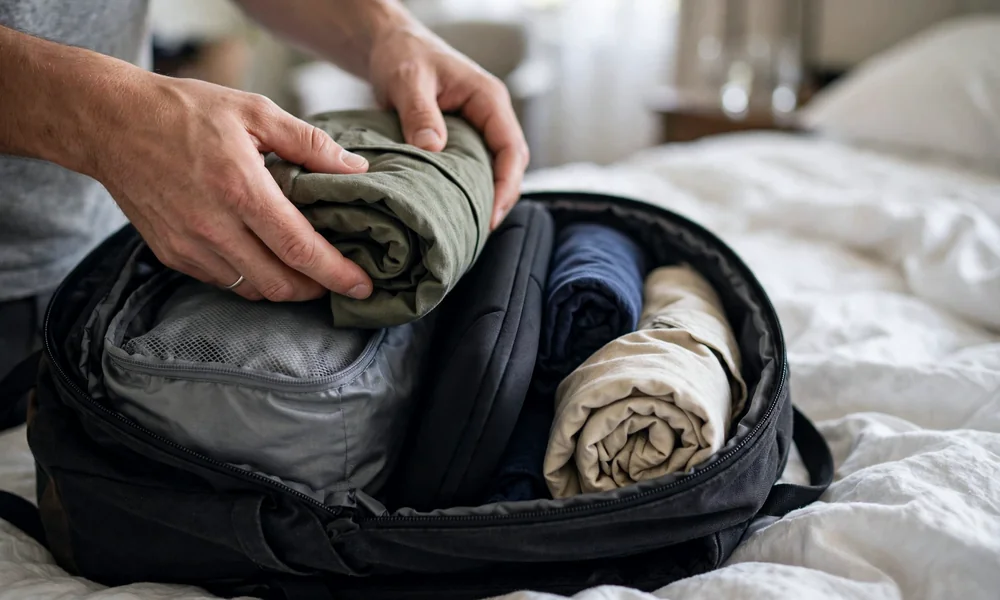
The best travel backpacks share a simple quality: they disappear onto your back. They carry their weight low and close, they open wide when you need them, and they ask for very little in return beyond an occasional wipe down. They are not the cheapest bags on the shelf, and they are not the ones with the most dangling straps and decorative buckles. They are the ones whose fabric, zips, and harness were designed for bags that get thrown into overhead bins and stuffed under seats, week after week.
Best for flying: cabin-sized packs that open like a suitcase
A good cabin pack is built around the size limits of the airlines you actually fly, and the best ones are honest about it. They measure roughly 55 by 40 by 20 centimetres, they hold forty litres or so, and they keep that shape when they are packed, because a soft bag that bulges in the middle will not fit a sizing cage. The clamshell opening is what makes them work: the whole front unzips and folds open like a suitcase, so you can pack in layers and reach the shirt at the bottom without pulling everything out. Look, too, for lockable zips, a padded laptop sleeve against your back, and compression straps that pull the load tight.
Best for long days on foot: packs with a real harness
Some trips are mostly walking: city breaks on foot, island hopping, and hostels up steep lanes. For those trips, the harness is everything, and the best packs have one that would not look out of place on a hiking bag. The shoulder straps are wide and padded, the hip belt is firm and adjustable, and the back panel is shaped with air channels so your back does not turn into a puddle of sweat on a warm day. A good pack also has a chest strap and load lifters, the small straps at the top of the shoulders that pull the bag in close and stop it swaying. With the weight on your hips and the bag hugging your spine, you can walk for hours without thinking about the pack at all.
The Worst Travel Backpacks of 2026
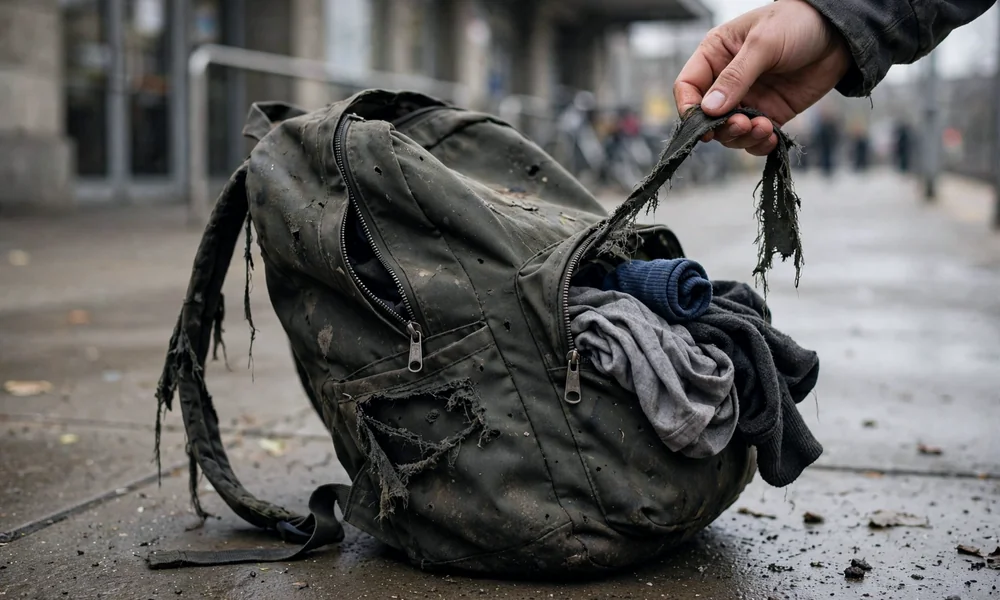
The worst travel backpacks fail in ways that are slow, quiet, and easy to blame on yourself. Sore shoulders, a bag that will not close, a zip that bursts open in the overhead bin, a laptop that gets soaked in the rain: all of these feel like bad luck, but they are usually bad design. The worst packs are usually cheap, but price is not the whole story. Some expensive-looking packs fail just as badly, because they were designed to look impressive in a shop window rather than to survive a real journey.
Worst for comfort: thin straps and no hip belt
The worst travel packs are the ones you feel within ten minutes of putting them on. Their shoulder straps are thin, flat strips of webbing with almost no padding, and they cut into your shoulders the moment the bag is full. There is no hip belt at all, or a flimsy one that does nothing, so every kilo hangs from your shoulders and pulls you backwards as you walk. The back panel is a flat sheet of foam with no ventilation, so your shirt is soaked through by the time you reach your hotel. A pack like this does not carry your luggage; it punishes you for bringing it.
Worst for durability: weak zips and paper-thin fabric
The most common failure in a cheap travel pack is a zip that gives up. It sticks, it jumps its teeth, or it bursts open under the pressure of a full bag, usually in the middle of an airport. Close behind come the seams: thin fabric that frays where the straps meet the body, stitching that unravels along the base, and a bottom panel that wears through after a few months on rough ground. Some packs look sturdy in the shop because the fabric is stiff and shiny, but it is cheap plastic-coated nylon that cracks in cold weather and tears along a crease. A bag that cannot survive being packed full is not a travel bag; it is a shopping bag with ambitions.
Worst for security: pockets that invite thieves
A travel pack spends much of its life in crowded places, and the worst ones make a thief’s job easy. Their main zip sits on the outside of the bag where anyone behind you in a queue can open it, their outer pockets are deep and unzipped, and their laptop sleeve is in a front compartment that can be slit open without you noticing. The best packs hide their valuables pocket against your back and use lockable zips. That is not paranoia; it is the difference between a trip you remember fondly and a trip you spend in a police station filling in a report.
Best vs Worst: Head to Head
Put the two sides next to each other and the differences are stark. The best travel backpacks hold their shape when they are full, open flat like a suitcase, and carry their weight on your hips, so you arrive fresh and organised. The worst are tall, floppy tubes that sag, pull on your shoulders, and bury everything at the bottom, so every stop becomes a wrestling match with your own luggage. The best have zips that glide and fabric that shrugs off rain and scuffs. The worst have zips that stick and burst, and fabric that tears at the seams.
Packing is the other great divide. The best packs make packing a pleasure: a flat opening, a few sensible pockets, compression straps that keep everything still, and a rain cover for bad weather. The worst make it a chore, with a narrow top opening and no way to keep clean and dirty clothes apart. Over a long trip the cheap pack often costs more than the good one, not in money but in time, comfort, and the things you lose or ruin along the way.
The Verdict
The verdict is clear: buy the travel backpack that fits your body and your airline, not the one that merely looks big. A cabin-sized pack of around forty litres, with a padded hip belt, a clamshell opening, and lockable zips, is the right choice for most travellers, and a slightly larger pack with a proper hiking-style harness is the right choice if you will be walking a lot. Spend a little more on a bag with tough fabric and smooth zips, and it will serve you quietly for years. The bags to avoid are the ones with thin straps, no hip belt, or fabric so thin you can see light through it. Those are not bargains; they are future landfill.
Who Each Travel Backpack Is For
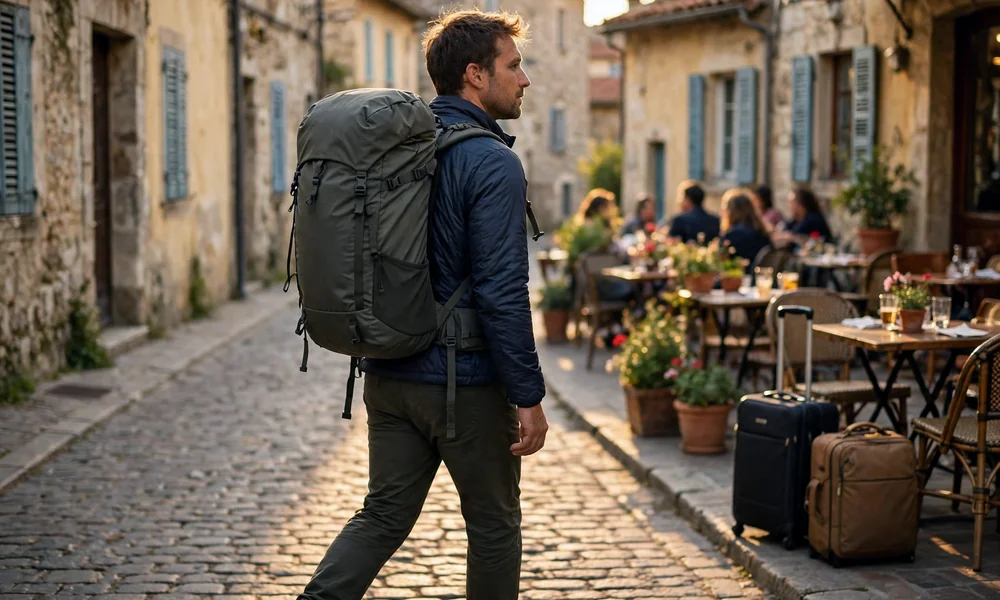
The best travel backpacks are for anyone who travels light and wants to move freely: weekend city breaks, backpacking trips, island hopping, and anyone who would rather walk out of the airport than wait at a carousel. They are for people who pack carefully and know that a bag that fits properly is worth more than a bag that holds a little extra. If you are willing to measure your bag and adjust the harness properly, a good travel pack will repay that small effort on every single trip.
The worst travel backpacks, by contrast, are for no one, though they do end up in many homes, usually because they were cheap, looked big, or were bought in a hurry the night before a flight. If you already own one, use it with care: pack light, keep valuables in a separate pouch against your body, and test the zips before you leave. Better still, replace it before your next trip with a pack that has a hip belt and a clamshell opening. Your shoulders, your clothes, and your temper will all notice the difference, and the best versus worst carry-on luggage makes a useful companion read if you are torn between a pack and a wheeled bag. For a softer option, the best duffel bags of 2026 show what to buy when a simple holdall suits your trip better than a backpack.