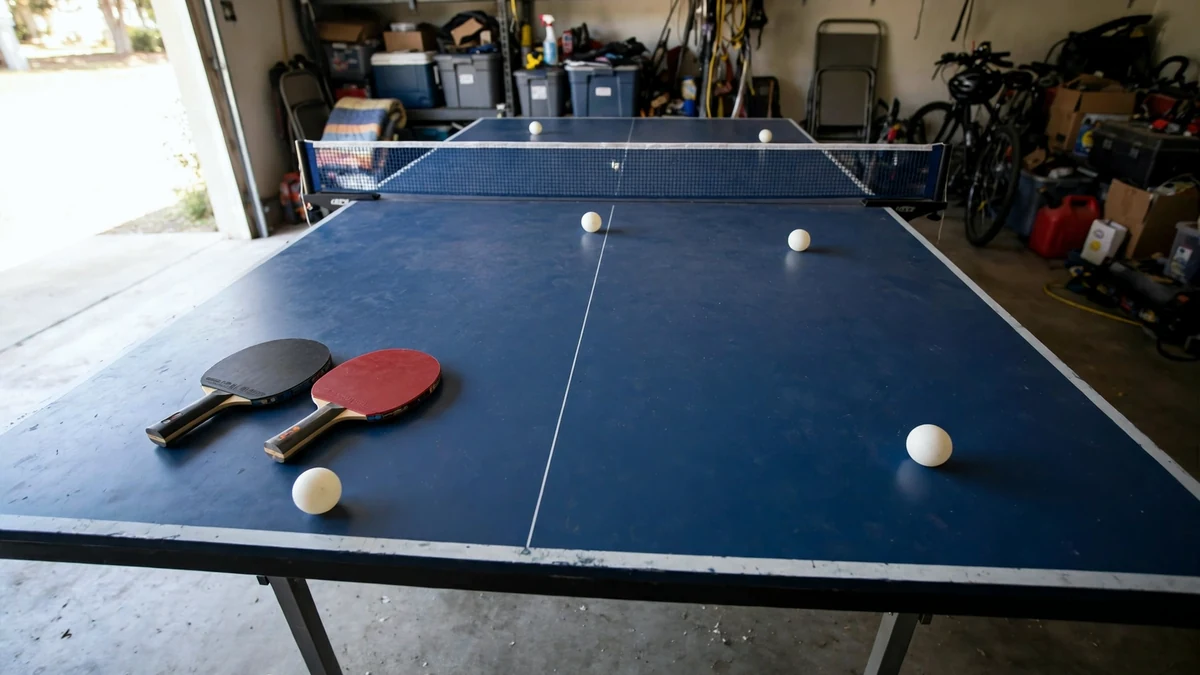
A table tennis table should bounce true, stand steady through a fast rally, and fold away safely when the game is over. The worst table tennis tables of 2026 fail at it in ways that leave a family with a table that plays badly, wobbles on every shot, or will not fold without a struggle. Their tops have dead spots, their legs wobble, and their surfaces warp in a damp garage. Families buy them hoping for evenings of fast rallies and friendly competition. What they get is a table that bounces unevenly, a table that wobbles, or a table that becomes a dumping ground because nobody wants to play on it.

Dead Spots and Uneven Bounce
A table tennis table lives or dies on its bounce, and the worst ones have dead spots where the ball does not come up properly. A dead spot is usually a place where the top is thinner, delaminated, or badly joined, so the ball dies instead of bouncing, and a rally ends for no reason the players can see. The bounce should be even across the whole table, from edge to edge, and a table that bounces true in the middle but dead at the edges is a table that punishes any shot that is not perfect. A player who loses a rally to a dead spot is a player who has been beaten by the table, not by their opponent, and a table with dead spots is a table that nobody wants to play on.
Test the bounce before you buy by dropping a ball from a set height at several points across the table, and watching whether it comes up to the same height every time. A good table has a top of at least eighteen millimetres, with a consistent bounce from edge to edge, and a surface that is smooth and even. A table with a thin top will have dead spots, and a table with a badly joined top will have a dead line down the middle. A table that bounces evenly is a table that plays fairly, and a table with dead spots is a table that will be left folded up in the corner.
Tops That Warp in Damp Garages
A table tennis table usually lives in a garage, and the worst tops warp in the damp. A top made from cheap chipboard absorbs moisture, swells, and warps, so the playing surface is no longer flat, and the ball rolls and bounces unpredictably. The warp is worst at the edges, where the moisture gets in first, and a table that was flat in the shop can be warped within a winter in a damp garage. A warped top cannot be fixed: the table is ruined, and a family that bought a table for the garage has bought a table that the garage destroyed. A top that warps is a top that was never meant for the place it was sold for.
Look for a top made from moisture-resistant board, with sealed edges that keep the damp out, and store the table upright in the driest part of the garage. A table with a proper edge banding will resist moisture far better than one with raw edges, and a cover helps too. Check the top for flatness before you buy by laying a straight edge across it, and check it again after a winter in the garage. A table with a sealed top will stay flat for years, and a table with raw edges will warp in one damp winter. Our guide to the best table tennis paddles of 2026 covers the paddles that play well on a true table, because a good paddle cannot fix a bad top.
Legs That Wobble on Every Shot
A table tennis table stands on four legs, and the worst ones wobble on every shot. The legs are thin, the cross-bracing is missing or flimsy, and the whole table rocks when a player leans on it or hits a hard shot. The wobble is worst on tables with no levellers, because a garage floor is never perfectly flat, and a table with one leg shorter than the others will rock forever. A table that wobbles is a table that distracts the players, because the net shakes and the ball bounces differently, and a table that rocks is a table that feels cheap, however good the top is.
Look for a table with sturdy legs, proper cross-bracing, and levellers on each foot, so the table can be made level on an uneven floor. Test the table by leaning on it firmly and shaking it: a good table stays solid, while a bad one rocks. Check the leg joints before you buy, and look for bolts rather than plastic clips, because a bolted joint stays tight and a clipped joint works loose. A table with solid legs is a table that plays properly, and a table that wobbles is a table that will be folded up and forgotten.
Fold Mechanisms That Fight Back
Most table tennis tables fold up for storage, and the worst ones fight back. A fold mechanism that is stiff, jams, or needs two people to operate is a mechanism that will not be used, so the table stays up and becomes a dumping ground. Worse still, a fold mechanism with no safety lock can drop a heavy top onto a child’s fingers, and a table that folds unexpectedly is a table that is dangerous. The problem is worst on cheap tables, where the hinges are thin, the locks are plastic, and the whole mechanism was designed to a price. A table that will not fold safely is a table that cannot be stored, and a table that cannot be stored is a table that takes over the garage.
Test the fold mechanism before you buy by folding and unfolding the table yourself, and check that it moves smoothly and locks securely in both positions. A good table folds with one hand, locks with a clear click, and has a safety catch that stops the top from falling. Check the hinges for strength, and look for a mechanism that holds the top firmly upright, so it cannot fall on anyone. A table that folds easily and locks safely is a table that gets used, and a table that fights back is a table that will be left up and covered in boxes.
Nets and Posts That Will Not Stay Up
A table tennis table needs a net, and the worst nets will not stay up. The posts are flimsy, the clamp will not grip the edge of the table, and the net sags in the middle, so the ball passes over it when it should not. A net that sags changes the game, because a ball that should have been stopped sails over, and a post that falls off mid-rally stops the game entirely. The problem is worst on tables that come with a cheap net as an afterthought, where the posts are plastic and the clamp is too weak for a thick top. A net that will not stay up is a net that ruins every rally, however good the table is.
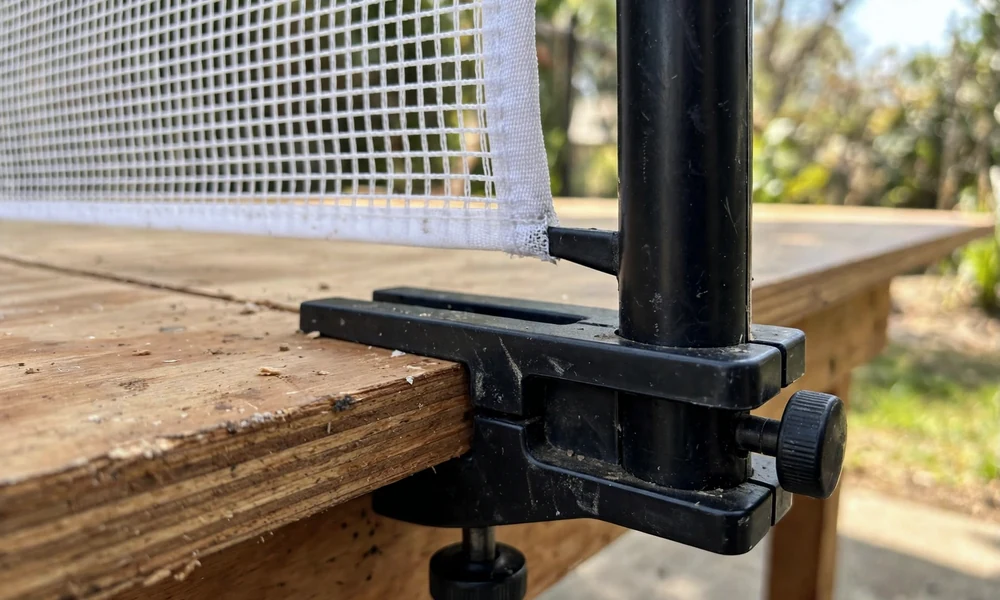
Look for a net with sturdy posts and a clamp that grips the edge of the table firmly, with a screw that tightens properly. The net should be taut, with no sag in the middle, and the posts should be metal, not plastic, because a plastic post will snap. Check the net height before you play, because a net that is too low or too high changes the game, and adjust it if needed. A net that stays up is a net that lets the game flow, and a net that falls is a net that stops it. If the games room needs more than one table, our guide to the best air hockey tables of 2026 covers the tables that play fast and stay steady.
Wheels That Jam and No Brakes
A table tennis table rolls on wheels, and the worst wheels jam, stick, or have no brakes. A wheel that jams makes the table hard to move, and a table that cannot be moved cannot be stored, so it stays where it is and takes over the room. A table with no brakes rolls away when a player leans on it, which is dangerous as well as annoying, because a table that moves mid-rally is a table that cannot be played on. The problem is worst on cheap tables, where the wheels are small, plastic, and badly fitted, and a wheel that breaks will drop the table suddenly, which can damage the top and hurt anyone nearby.
Look for a table with large, sturdy wheels that roll smoothly, and brakes on at least two of them, so the table stays put when it is in use. Test the wheels before you buy by rolling the table across the floor, and check that the brakes hold firmly. A table with good wheels moves easily and stays put, while a table with bad wheels is hard to move and will not stay still. Check the wheels regularly, and replace any that are cracked or jammed, because a broken wheel is a safety problem, not just an annoyance. Our guide to the best foosball tables of 2026 covers another games-room table where sturdy legs and smooth movement matter just as much.
What to Buy Instead
The table tennis tables worth buying share a short list of features, and none of them is expensive on its own. A top of at least eighteen millimetres, with a consistent bounce and sealed edges that resist damp. Sturdy legs with cross-bracing and levellers, a fold mechanism that moves smoothly and locks safely, and a net with metal posts and a clamp that grips. Large wheels with brakes, so the table moves easily and stays put. If a table fails any one of those checks, keep looking.
Fit matters as much as build, and the table should suit the room in front of you rather than the room in the photograph. Measure the space, check the floor is level enough for levellers, and picture the table folded and stored. A table that fits the room and folds away safely is a table that gets played every week, and a table that fights the room will be left folded in the corner. Buy the table for the space you have, and test the bounce before you pay.
The Bottom Line
The worst table tennis tables of 2026 share a pattern: dead spots and uneven bounce, tops that warp in damp garages, legs that wobble on every shot, fold mechanisms that fight back, nets and posts that will not stay up, and wheels that jam and no brakes. Avoid those six failures and you avoid almost every table tennis table regret. Test the bounce, check the top is sealed, and fold it yourself before you buy. Do that, and the table you buy will be the one that hosts fast rallies for years, not the one that becomes a dumping ground in the garage.