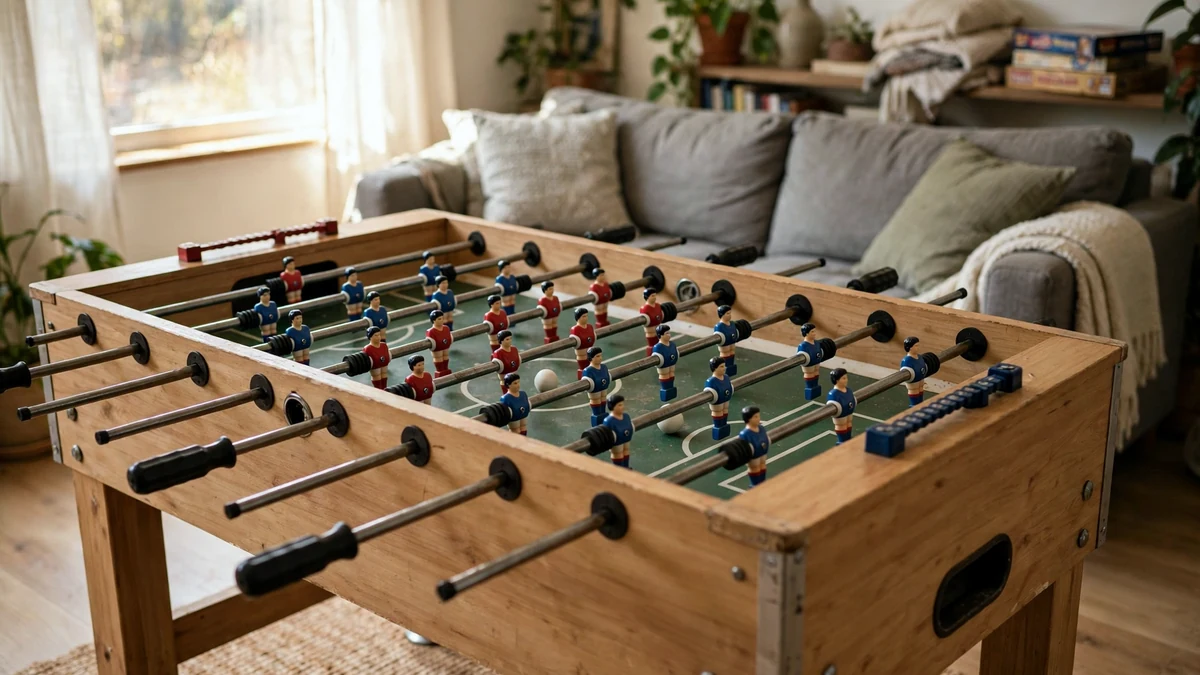
A foosball table is one of the few games that can fill a room without a screen. Two players stand at opposite sides, hands on the rods, and within a minute the whole room is involved: someone shouts for a pass, someone else groans at a missed shot, and the ball is flying from end to end. A good foosball table makes all of that feel easy. The rods slide smoothly, the ball rolls true across a level surface, and the players stay firmly fixed to their rods. A bad table does the opposite. The rods stick, the ball veers off on its own, and the game turns into a wrestling match with the table instead of a match against your opponent. The best foosball tables of 2026 are not the most expensive ones, and they are not the flashiest. They are the tables that play smoothly, stand steady, and keep inviting people back for one more game.
What Makes a Foosball Table Good
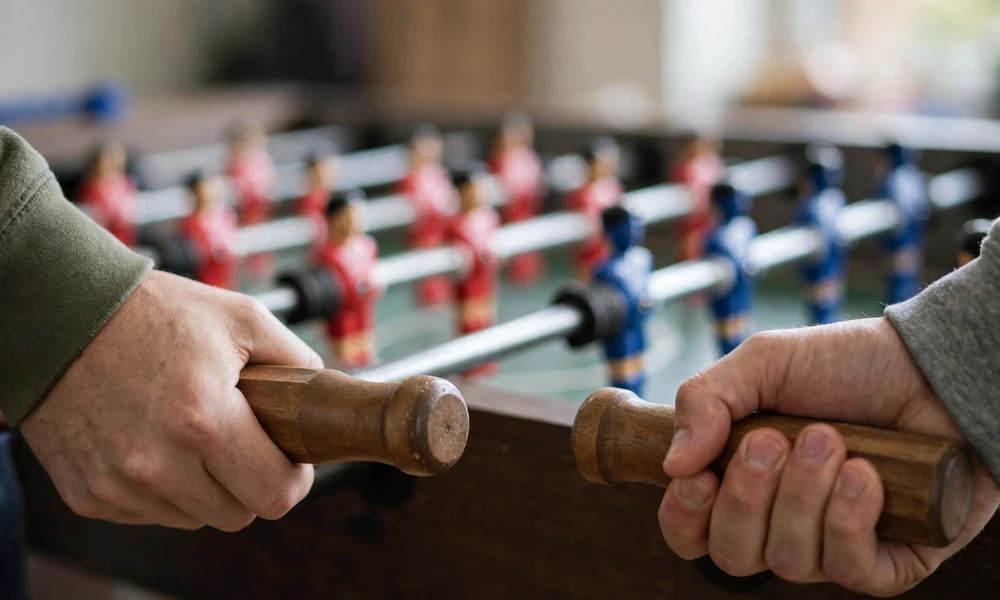
The first thing to judge is how the rods move. A good rod slides in and out freely and spins without catching, so a player can pass, shoot and defend in one smooth motion. If the rod sticks or grinds, every move becomes a struggle, and the game slows to a crawl. Hollow steel rods are usually lighter and quicker than solid ones, which makes them easier on the wrists during a long game. The handles matter too: a comfortable, grippy handle lets you control the rod precisely, while a smooth plastic handle can slip in a sweaty hand at the worst possible moment.
The playing surface is the second test. It should be flat, smooth and level, so the ball rolls where it is hit and nowhere else. A warped or bumpy surface sends the ball off in random directions, and no amount of skill can make up for it. A slightly textured surface gives the ball a little grip, which helps with passing and ball control, while a very slick surface makes the ball fly around too fast to control. Look for a table that feels solid when you lean on it and does not wobble when the game gets lively. A heavy cabinet and sturdy legs are not decoration; they are what keep the table still while four hands are working the rods.
The Main Types of Foosball Table
Full-size tables are the classic choice. They are about five feet long, stand at waist height, and are built for two or four players standing on opposite sides. They are heavy, often weighing more than fifty kilograms, and they need a permanent spot in a games room, a garage or a large living room. In return they give the best game: a full-length pitch, proper spacing between the rods, and a solid, steady feel. If you have the space and you expect the table to be played often, a full-size table is almost always the right choice.
Tabletop foosball tables are the compact alternative. They sit on an existing table or desk, and they are small enough to be put away in a cupboard when the game is over. They are a good fit for small flats, for children, and for anyone who wants a quick game without giving up a whole corner of a room. The trade-off is the game itself: the pitch is shorter, the rods are closer together, and the play is faster and less controlled. A good tabletop table is still fun, but it is a different kind of fun from a full-size game, and it suits short, light-hearted matches rather than serious contests.
How to Choose the Right Table
Start with the space you have. Measure the room before you buy, and remember that a foosball table needs room around it as well as under it. Each player needs enough space to stand, pull the rods out fully, and move along the side of the table without bumping into a wall or a sofa. A full-size table needs roughly a metre of clear space on each long side. If the room is tight, a smaller table or a tabletop model will be played far more often than a full-size table squeezed into a corner where nobody can move properly.
Next, think about who will play. A table for young children should be lower, lighter and sturdier, with rods that are easy to grip and figures that can take a knock. A table for teenagers and adults can be taller and heavier, with faster rods and a slicker surface. If the table is for a family, look for one with a ball return that is easy to reach, a score counter that children can use, and a cabinet that will not show every mark. The best family table is the one that gets played every week, not the one that looks best in a photograph.
Build quality is where cheap tables give themselves away. Check the thickness of the cabinet walls, the weight of the legs, and the way the rods sit in their bearings. A good table uses solid wood or thick engineered wood for the cabinet, steel rods, and bearings that let the rods slide without wobbling. A cheap table often uses thin panels, plastic rods and loose bearings, and it will start to feel tired within a few months. It is worth spending a little more on a table that will still play well in five years than saving money on one that will be wobbling by next summer.

Foosball for the Family
Foosball is one of the best games for a family room because it works for almost every age. Young children can play with a parent on their side, working one rod together, and older children can play proper matches. It is a game that rewards quick thinking and teamwork rather than strength, so a smaller player can genuinely beat a bigger one. It also gets people standing, moving and talking to each other, which is a welcome change from everyone sitting with a screen. Our guide to the best board games of 2026 covers other games that bring a family together in the same way, from quick card games to longer evening games that suit a rainy weekend.
Foosball for Serious Play
For players who take the game seriously, the details matter more. Serious players look for a table with counterbalanced players, which stay horizontal when the rod is released instead of dropping down and blocking the ball. They want a level, slightly grippy surface for pinning the ball and making controlled passes, and rods that are straight, true and well oiled. They also care about the ball: a textured ball grips the foot of a player better than a smooth one, which makes passing and shooting far more precise. These details make little difference in a casual game, but they change everything when both players know what they are doing.
If you play other table games too, it helps to think about foosball as part of a wider games room. A foosball table pairs well with a table tennis table, because the two games use different skills and different space, and they give a group something to do all evening. Our guide to the best table tennis paddles of 2026 covers the paddles that suit a casual games room as well as a more serious one, so you can match the paddle to the way your household actually plays.
Setting Up Your Table
Setting up a foosball table is mostly about the floor. The table must sit level, or the ball will roll to one side on its own and the game will never feel fair. Most tables have adjustable feet, and it is worth taking the time to use them, with a small spirit level if you have one. Check the level across the pitch and along it, and adjust until the ball stays put when nobody is touching it. Once the table is level, it should not be moved without checking it again, because even a small shift can tilt the surface.
Looking After Your Foosball Table
A foosball table lasts longer with a little care. Keep it out of damp rooms, because moisture swells wooden cabinets and rusts steel rods. Keep it out of direct sunlight, which can fade the pitch and dry out the wood. Wipe the surface with a dry or slightly damp cloth after play, and keep drinks away from the table, because a spilled drink on the pitch is hard to clean and can warp the surface. If the table will not be used for a while, a cover keeps dust out of the bearings and off the pitch.

Mistakes to Avoid
The second mistake is buying on price alone. The cheapest table in the shop is cheap for a reason, and that reason usually shows up within a few months: rods that stick, figures that come loose, and a cabinet that wobbles. A foosball table is not a disposable toy, and the difference between a cheap table and a decent one is usually less than the cost of replacing the cheap one a year later. Buy the best table you can afford, and buy it once.
The third mistake is forgetting the players. A foosball table is a game for people, and the best table in the world is wasted if nobody in the house wants to play. If the table is mainly for children, choose one they can reach and control. If it is for adults who play seriously, choose one that rewards skill. The right table is the one that matches the people who will use it, not the one with the longest list of features. If your household enjoys other active games too, our guide to the best bowling balls of 2026 is a useful next step for a games room that keeps everyone moving.
The Bottom Line
There is no single best foosball table for everyone, because the best table depends on the room, the players and the way the game will be played. A full-size table is the best choice for a dedicated games room and for players who want the proper game. A tabletop table is the best choice for a small home, for children, and for anyone who wants a quick game without giving up a room. A folding table suits a household that wants a full-size game but needs the floor back sometimes. The best foosball table of 2026 is the one that fits your space, feels smooth in your hands, and gets played week after week.
The simplest way to find it is to play on a few tables before you buy. Visit a shop, grip the rods, spin them, and hit the ball a few times. Notice which table feels steady under your hands and which one lets you pass the ball where you meant it to go. That table, whichever size it turns out to be, is your best foosball table. Bring it home, level it carefully, and enjoy a game that has been bringing rooms together for generations.