A trampoline is one of the simplest ways to get children moving outside, and one of the easiest garden buys to get wrong. A good kids trampoline bounces evenly, stays steady on its legs, and keeps the jumping area enclosed by a net that actually stays upright. A bad one wobbles, sags in the middle, or has a net that leans and gaps at the door. The best kids trampolines of 2026 are not the biggest ones, and they are not the cheapest. They are the trampolines that are built strongly, sized sensibly for the children who will use them, and easy for an adult to check, clean and keep safe through the season.
What Makes a Kids Trampoline Good
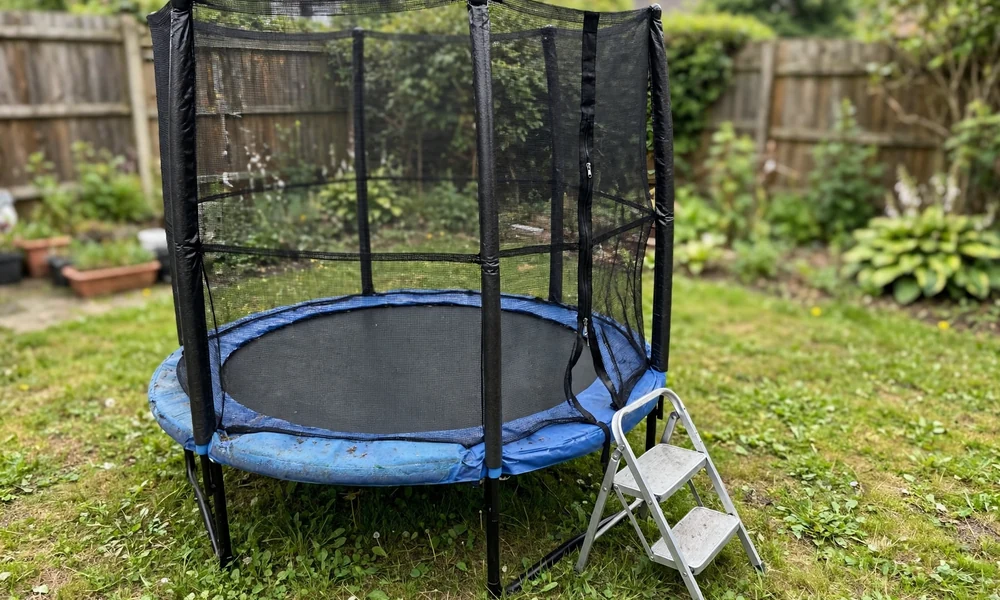
The first thing to judge is the frame. A good trampoline uses thick steel tubes, legs that spread wide enough to resist tipping, and joints that fit tightly without rattling. When you press down on the edge of the mat, the whole frame should stay planted. If a leg lifts, or the frame rocks from side to side, the trampoline is too light for the jumping it will get. A sturdy frame matters more than a bright colour or a fun pattern, because it is what keeps every bounce safe.
Choosing the Right Size
Size is the choice that most families get wrong, because a trampoline that looks small in a shop can look very large once it is standing on the lawn. An eight-foot round trampoline suits younger children and smaller gardens. It gives enough room for one child to bounce happily, it is easier to supervise, and it leaves space for the rest of the garden. It is not a good choice for two older children jumping together, and it will feel cramped as they grow.
A ten-foot or twelve-foot trampoline suits most family gardens, and it is the size most parents end up happiest with. It gives a bigger jumping area, a more forgiving bounce, and room for a child to grow into it over several summers. It needs a flat patch of lawn with clear space all around it, and it needs an adult to walk the whole area first, checking for fences, branches, washing lines and anything hard that a bouncing child could reach. Measure the garden before ordering, not after the boxes arrive.
A small indoor trampoline, sometimes called a rebounder, is a different product altogether. It is made for one small child at a time, indoors, on a flat floor, and it usually has a handle bar to hold. It is useful in winter or in a flat with no garden, but it is not a substitute for an outdoor trampoline, and it should never be used as a launch pad onto furniture. If you want a garden toy that keeps children active outdoors, our guide to the best outdoor toys for kids in 2026 covers trampolines alongside swings, slides and other garden play, so you can compare the space and the supervision each one needs.

Safety Nets and Padding
A safety net is not an optional extra on a kids trampoline. It is the part that keeps a bouncing child on the mat, and it should be tall, taut and attached all the way around. The net poles should be padded, so a child who bounces into the side meets soft covering rather than bare metal. The door should close with a zip or a strong clip, and it should stay closed during jumping. A net that sags, a door that will not stay shut, or poles that lean after a few weeks are all reasons to stop using the trampoline until the parts are fixed.
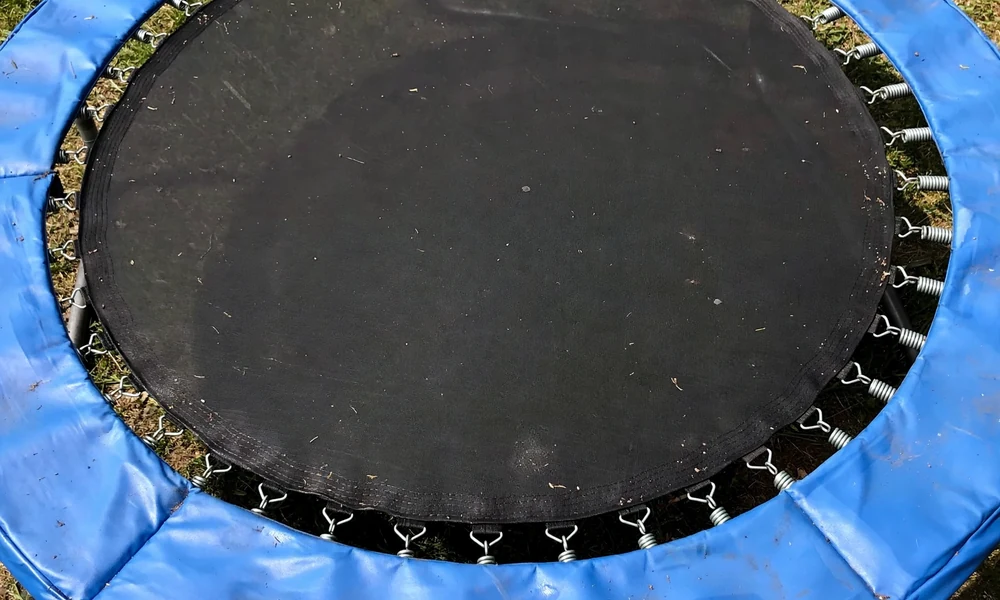
The springs need covering too. On a spring trampoline, the steel springs sit around the edge of the mat, and a bare spring can pinch fingers or catch clothing. A good trampoline has a thick, weatherproof pad that covers every spring completely, with no gaps where small hands can reach through. The pad should be tied or strapped down firmly, not just laid loosely on top. Check it after rain and wind, because a pad that has slipped is a pad that is not protecting anyone.
Springs, Bungees and the Bounce
Most garden trampolines use steel springs, and the number and the length of the springs decide much of the bounce. More springs usually means a smoother, more even bounce, because the load is shared across the whole edge of the mat. Short, stiff springs give a firm bounce that suits heavier children, while longer springs give a softer, higher bounce. Neither is better in every case. What matters is that the bounce feels even, and that the mat returns to level after each jump.
Weight Limits and One Jumper at a Time
Every trampoline has a weight limit, and it is not a rough guide. It is the maximum the springs, mat and frame are built to carry safely, and going over it shortens the life of the trampoline and makes landings harder. Check the limit before buying, and check it again as children grow. A trampoline bought for a five-year-old may be outgrown by the time that child is eight, and a second, heavier jumper on the same mat changes the forces completely.
Choosing by Age
For children aged three to five, a small trampoline with a low mat, a full enclosure and a handle or a low entry step is the safest starting point. The bounce should be gentle, the mat should be close to the ground, and an adult should stay beside the trampoline for the whole session. At this age, short sessions are best. Ten minutes of bouncing, then a rest and a drink, is plenty, and it keeps jumping fun rather than tiring.
For children aged six to nine, a round eight-foot or ten-foot trampoline with a good net is usually the sweet spot. Children this age jump higher, try small tricks and play bouncing games, so the net, the padding and the one-at-a-time rule matter more than ever. A ladder or a step helps them climb on and off without scrambling over the frame, and it stops the edge of the mat being used as a step. This is also the age when a bike or a scooter often shares the garden, so keeping the play areas separate helps. Our guide to the best kids bikes of 2026 covers sizes and safety checks for the other wheeled toy most gardens see, and the same measure-twice thinking applies to both.
For children aged ten and over, a larger ten-foot or twelve-foot trampoline with a higher weight limit is the better buy. Older children jump harder and higher, so the frame, the springs and the net all need to be stronger. A trampoline that is too small for a ten-year-old will feel cramped, and a cramped jumper is more likely to hit the net or the edge. If an older child is also keen on other active play, the garden can get busy quickly, so agree where each activity happens before the summer starts.
Setting Up in the Garden
Pick a flat spot with clear space around it. The ground should be level, with no slope, no roots and no hidden stones. Leave at least two metres of clear grass on every side, so a child who comes off the mat does not land on a fence, a wall or a patio. Keep the trampoline away from trees, because low branches are a hazard, and falling leaves make the mat slippery. A trampoline on a slope will always bounce unevenly, and it will wear out faster on one side.
Once the trampoline is up, walk around it and check everything before the first jump. Pull the net gently to check the poles, zip the door shut and tug it, press the padding over the springs, and bounce lightly in the centre to check that the mat returns evenly. Then check it again after the first week of use, because bolts settle and springs stretch slightly at first. A quick weekly check through the summer takes five minutes and catches most problems before they become dangerous.
Looking After a Trampoline
In winter, or during a long spell of bad weather, a cover helps, and taking the net down in strong winds stops it acting like a sail. If the trampoline will not be used for months, consider storing the mat and the net indoors, out of the damp. The frame can stay outside, but it should be checked for rust in spring, especially at the joints and the feet. A trampoline that is looked after lasts several summers longer than one that is left to the weather.
Summer Play and Cooling Off
Cooling off after jumping is part of the fun, and a garden with a trampoline often has a paddling pool or a sprinkler nearby too. Keep water play away from the trampoline itself, because a wet mat is slippery and wet grass around the legs is a slipping hazard. Dry feet, dry hands and a dry mat make for a safer bounce. If swimming is the next activity, the changeover is a good moment for a rest and a snack. Our guide to the best kids swim goggles of 2026 covers the kit that makes that cooling-off swim more comfortable, and the same check-the-fit-first advice applies to goggles as it does to a trampoline net.
Mistakes to Avoid
The most common mistake is buying the biggest trampoline that will fit in the garden, without thinking about who will jump on it or how it will be supervised. A very large trampoline in a small garden leaves no safe space around it, and it tempts two or three children to jump together. A smaller trampoline with good supervision is safer and more fun than a huge one that dominates the garden. Buy for the children you have now, and for the space you actually have, not for the biggest model in the shop.
The Bottom Line
There is no single best kids trampoline for every family, because the best choice depends on the age of the children, the size of the garden and how much supervision the trampoline will get. A small, low trampoline with a full net is best for younger children. A ten-foot or twelve-foot trampoline with a strong frame and a high weight limit is best for older children. A bungee trampoline is best for a quiet, soft bounce indoors, while a spring trampoline is best for a lively garden bounce. In every case, the net, the padding, the frame and the one-jumper rule matter more than the brand on the box.
The simplest way to choose is to measure the garden, check the weight limit, and look closely at the net and the springs before you buy. If you can, see the trampoline assembled, press the mat in several places, zip the net door and tug the padding over the springs. The trampoline that feels solid, bounces evenly and has a net that stays taut is the one to take home. Set it up on flat ground, anchor it if the garden is windy, and make one jumper at a time the rule from the first bounce. That is how a trampoline stays a favourite for summers to come.