
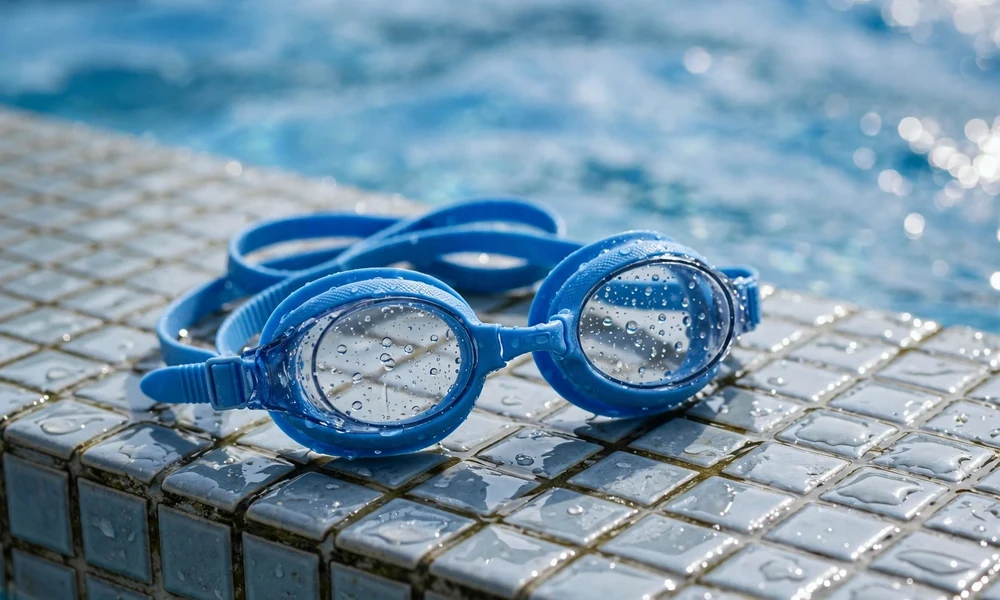
A child who cannot see clearly in the water will not enjoy swimming, however warm the pool is or however patient the teacher is. Eyes sting, water blurs the lane ropes, and every splash becomes a reason to stop. A good pair of kids swim goggles changes that in seconds. It keeps chlorinated water out, gives a child a clear view underwater, and turns a nervous first lesson into a game. The best kids swim goggles of 2026 do that without pinching, fogging, or slipping off at the first push from the wall, and they are built for small faces rather than simply shrunk from an adult design.

What Makes a Kids Pair Different
An adult pair is designed for a wider face, a stronger nose bridge, and a swimmer who will adjust the strap once and leave it alone. A child has a narrower face, softer skin, and far less patience for fiddling. The seal therefore has to be smaller and gentler, the bridge has to sit closer together, and the strap has to be easy to tighten with cold, wet hands. The best kids swim goggles get those proportions right first, because no lens coating or bright colour can rescue a pair that does not seal.
How to Choose: The Four Things That Matter Most
Start with fit, because it decides everything else. The eye cups should sit neatly inside the eye sockets without pressing on the eyeball, and the bridge should match the distance between the eyes. Many kids pairs now come with two or three interchangeable nose bridges, which is a genuine help rather than a gimmick. Try the pair on dry first, press the cups gently against the eyes without using the strap, and see whether they stay in place for a few seconds. If they fall off at once, the seal is wrong for that face.
Next, look at the seal itself. A wide, soft silicone gasket seals better on a small face than a narrow, hard one, and it is more forgiving if the child moves the goggles slightly while swimming. Check that the gasket is even all the way round, with no thin spot or hard seam. A mask-style pair, with one wide lens across both eyes, can suit a very young child who finds separate cups uncomfortable, but it is heavier and more likely to leak if it is knocked. For most children over five, two separate cups give a better, lighter seal.
Then consider the lenses. Clear lenses are the safest choice for indoor pools and lessons, because they let in the most light and make the water look natural. Tinted or mirrored lenses suit bright outdoor pools and sunny holidays, but they can make an indoor pool look too dark for a nervous swimmer. Anti-fog coating matters more than tint for most families. A good coating keeps the view clear for a whole lesson, while a poor one clouds over within minutes. Rinse the lenses in clean water after swimming and never rub the inside dry, or the coating will wear off far sooner than it should.
Finally, match the pair to the child’s age and stage. A three-year-old needs a very small, soft, forgiving pair for splashing and short lessons, and bright colours help because the child actually wants to wear them. A six-year-old learning strokes needs a secure seal and clear lenses for seeing the teacher’s demonstrations underwater. A ten-year-old swimming lengths needs a low-profile pair that does not drag in the water, with a strap that stays put during turns. Buying the smallest size for a growing child is a false economy if it pinches, and buying adult goggles for a nine-year-old is worse.

The Best Picks by Age and Use
For toddlers and first swimmers, aged about three to five, choose the softest pair you can find, with a wide silicone seal and a simple strap. The priority is comfort and confidence, not speed. A mask-style pair can work well here, because it feels less strange on a small face and gives a wide view that makes the water less frightening. Keep the lenses clear, keep the strap loose enough to avoid marks, and let the child wear the goggles at home for a few minutes first so they feel familiar before the pool.
For children aged six to eight who are taking regular lessons, a standard two-cup pair with clear lenses and an anti-fog coating is the best all-round choice. This is the age when a leaking pair does the most damage, because it interrupts the lesson and teaches the child to expect discomfort. Look for interchangeable nose bridges, a split strap, and a gasket that seals without hard pressure. If your child swims outdoors as well, a lightly tinted spare pair is useful, but the clear pair should be the one they reach for first.
For holidays and outdoor swimming, sun protection deserves its own thought. A tinted or mirrored lens reduces glare, and a pair with ultraviolet protection shields young eyes from strong sun reflected off the water. This is also where a spare pair earns its place in the bag: one clear pair for the indoor pool and one tinted pair for the beach or outdoor pool covers almost every family trip. Our guide to the best swim goggles of 2026 covers the wider adult market, but for children the smaller seal and gentler strap matter far more than racing features.
The Fit Test to Do Before You Buy
Do the suction test at home before the first swim. Hold the goggles against the child’s eyes without putting the strap on, press gently, and let go. A good pair will stay in place for a few seconds on suction alone. Then put the strap on, adjust it until the seal feels snug but not tight, and ask the child to look up, down, and side to side. The goggles should not move, and the child should be able to see clearly in every direction without the frame blocking the view.
Watch for the signs of a poor fit over the first few swims. Deep red rings that last more than a few minutes, complaints of pressure behind the eyes, or goggles that need constant readjustment all point to the wrong pair. A good pair should leave only a faint mark that fades quickly, and the child should forget they are wearing it once they start swimming. If the child keeps taking the goggles off, believe them: something is pinching, leaking, or fogging, even if the pair looks right to you.
Fog, Leaks and Comfort in Real Use
Fog is the most common complaint with kids goggles, and it is usually caused by handling rather than by a faulty pair. The inside of the lens has a delicate anti-fog coating, and touching it, rubbing it dry, or washing it with soap strips that coating away. Teach your child to rinse the goggles in clean water after swimming, shake off the excess, and let them air-dry in their case. A quick rinse in the pool before putting them on also helps, because it brings the lens closer to the water temperature.
Leaks usually come from hair, fit, or strap position rather than from a broken seal. Long hair trapped under the gasket will let water in every time, so tuck hair under a swim cap or push it back before fitting the goggles. The strap should sit high on the back of the head, not low on the neck, because a low strap pulls the cups down and breaks the seal at the top. Check the strap position first whenever a leak appears, before assuming the pair is faulty.
Looking After the Pair You Buy
Care is simple, but it makes a surprising difference to how long a pair lasts. Rinse the goggles in fresh water after every swim, even after a pool session, because chlorine left on the silicone and strap will stiffen them over time. Store them in their case or a soft pouch, not loose in a bag with keys, toys, and a water bottle. Keep them out of direct sun and away from radiators, because heat warps the frame and dries out the seal.
What to Pair Them With
Goggles work best as part of a small, well-chosen swim kit rather than as a single purchase. A swim cap keeps hair out of the seal and reduces drag, and it makes fitting the goggles easier for children with long hair. A comfortable swimsuit that does not ride up or chafe lets the child focus on swimming rather than adjusting clothing, and our guide to the best swimwear of 2026 is a useful starting point if the current suit is getting tight. A towel, a dry bag, and a spare pair of goggles complete a kit that survives a busy term of lessons without a last-minute panic.
Safety kit deserves the same care as the goggles themselves. For open water, boats, or a child who is not yet a confident swimmer, a properly fitted life jacket is essential, and our guide to the best life jackets of 2026 explains how to choose one that fits a child rather than an adult. Goggles are not a safety device, and they should never be treated as one. They help a child see and enjoy the water, but supervision, lessons, and the right safety gear are what keep a child safe.
Mistakes Parents Make Most Often
The most common mistake is buying adult goggles for a child, or buying the cheapest pair without checking the seal. Adult goggles are wider, harder, and made for a face that is still growing into its shape, so they leak on almost every child. The second mistake is tightening the strap to fix a leak. A strap that is too tight causes pain, leaves marks, and can even distort the seal, making the leak worse. Fix the fit first, then adjust the strap gently.
Another mistake is choosing by colour alone. Bright colours help a child feel excited about swimming, and there is nothing wrong with letting them pick a favourite shade, but colour should be the last decision, not the first. Fit, seal, lens clarity, and strap comfort come first. If two pairs fit equally well, then by all means let the child choose the pink or the blue one. A pair the child loves to wear will be worn far more often than a pair that was chosen for them.
Our Verdict
The best kids swim goggles of 2026 are the ones that fit a small face properly, seal without pinching, stay clear for a whole lesson, and survive being stuffed into a wet bag week after week. Clear lenses and a good anti-fog coating suit most children best, a split strap and interchangeable nose bridges solve most fit problems, and a soft silicone gasket is worth paying for. Choose by fit first and colour second, test the seal at home before the first lesson, and keep a spare pair in the bag. Get those basics right, and the goggles disappear into the swim itself, which is exactly what they should do.


