Best Life Jackets 2026
A life jacket is the one piece of water gear you buy hoping never to need, and the one piece that matters most when you do. It does not matter how strong a swimmer you are, how calm the lake looks, or how short the trip is supposed to be. Cold water, a sudden wave, a slip on a wet deck, or a capsize can turn a relaxed afternoon into a fight to stay afloat in seconds, and in that moment a well-fitting life jacket does the work your arms cannot.
Key Takeaways
- Buy by weight, not by clothing size, because a life jacket rated for your body weight is the only one that will float you properly.
- Foam vests work every time with no moving parts, while inflatable jackets are cooler and slimmer but need regular checks and servicing.
- A jacket that rides up past your chin in the water is too loose, whatever the label says, so always do the lift test before you buy.
- Children need a jacket with a head support, a crotch strap, and a grab handle, and they should never wear an adult size.
- Bright colours are not a fashion choice on the water, since orange, yellow, and red are far easier for rescuers to spot.
Life Jackets 2026 at a Glance
| Best for | Jacket type | Buoyancy | Standout strength |
|---|---|---|---|
| Best overall | Foam Type III vest | 15.5 pounds | Reliable, comfortable, and ready to wear |
| Best for kayaking | Low-profile paddling vest | 16 pounds | Short cut that clears the seat back |
| Best for boating | Inflatable belt or vest | 22 to 35 pounds | Slim and cool on long hot days |
| Best for children | Foam Type II with head support | 11 pounds | Turns a small child face up |
| Best for rough water | Offshore Type I jacket | 22 pounds | Maximum buoyancy and face-up turning |
| Best for dogs | Canine vest with handle | Sized by girth | Lifts a tired dog back aboard |
What a Life Jacket Really Does
A life jacket is not a swimming aid, and it is not a substitute for learning to swim. It is a personal flotation device, designed to keep your head above water when you are tired, cold, injured, or unconscious. That last point is the one people forget. A good jacket is built to turn an unconscious wearer face up, and that turning ability is what separates a real life jacket from a pool toy or a swim vest.
Buoyancy is measured in pounds of lift, and the number matters more than the brand name. Most adult foam vests provide around fifteen and a half pounds of buoyancy, which is enough for the average adult in calm water. Offshore jackets offer around twenty-two pounds, and inflatable jackets can offer more still. Heavier adults, people wearing waders or heavy clothing, and anyone in rough water should look for the higher numbers, because a jacket that barely floats you in a pool will struggle in waves.
Understanding the Types
Life jackets are grouped into types, and the labels are worth learning before you shop. Type I jackets are offshore jackets, bulky and bright, built for open water where rescue may take a while. They offer the most buoyancy and the strongest face-up turning, and they are the right choice for rough seas and long passages. They are also the least comfortable for paddling, which is why few kayakers choose them for a calm lake.
Type III jackets are the flotation aids most paddlers, anglers, and casual boaters wear. They are comfortable, allow a full range of arm movement, and will keep a conscious wearer afloat, but they are not designed to turn an unconscious wearer face up. For most day trips on lakes and slow rivers, a well-fitting Type III is the practical choice, and it is the type you will see most often in this guide.
Foam or Inflatable: Which Suits You
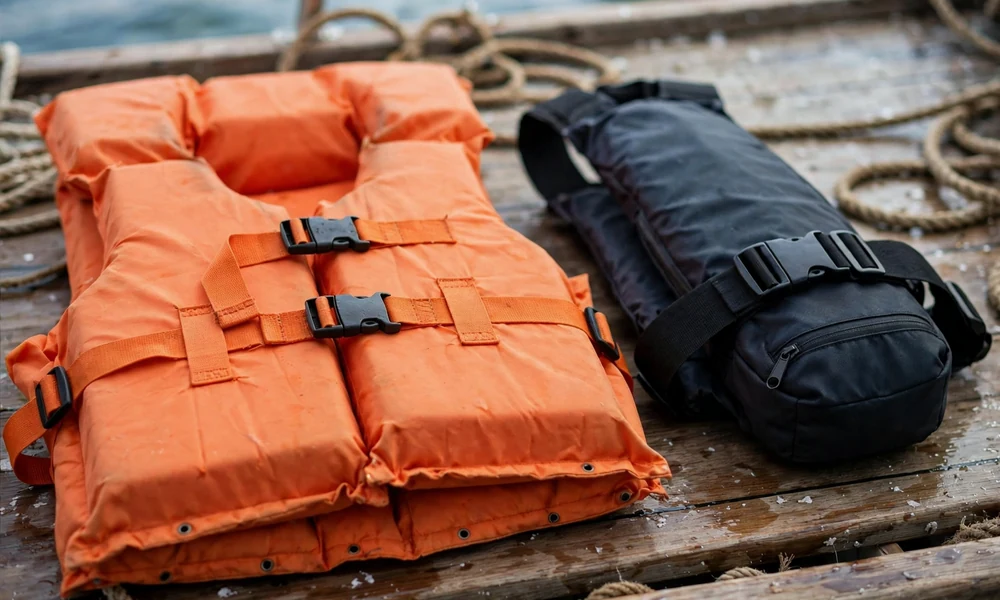
Foam jackets are the simple, honest option. They float the moment they touch water, they have no cartridge to replace, no bladder to puncture, and no annual service to remember. A foam vest can be thrown in a boat, left in the sun, and still work years later, provided the foam has not gone soft or crumbly and the straps still hold. Their weakness is bulk and warmth: on a hot day, a thick foam vest is a sweaty garment, and some people take it off, which defeats the purpose entirely.
Inflatable jackets solve the comfort problem. Worn as a slim vest or a belt pack, they barely feel like safety gear at all, and when they inflate they provide more buoyancy than most foam vests. Automatic models inflate on contact with water, while manual models need a pull of the cord. That convenience comes with responsibility: the gas cylinder must be armed and in date, the bladder must be checked for leaks, and the jacket must be serviced on schedule. An inflatable with a spent cylinder is just a fancy waistcoat.
Choosing by Activity
Kayaking demands a short, low-profile vest. A long jacket bunches against the seat back and pushes up around your neck with every stroke, so paddling vests are cut short at the waist with large armholes. Our guide to the best kayaks for beginners in 2026 covers the boats themselves, and the same logic applies here: gear that fits the activity gets worn, and gear that fights you gets left in the car. Look for a paddling vest with pockets for a whistle and a knife, and mesh shoulders that breathe.
Paddle boarding has its own shape of problem. You are standing, falling, and climbing back on, so the jacket must stay put when you hit the water feet first and must not block your stroke. A belt-pack inflatable is popular with experienced paddle boarders on calm water, because it stays out of the way until it is needed. Beginners, though, are better off in a slim foam vest, because a fall in the first weeks is a matter of when, not if, and a foam vest needs no action at all. Our guide to the best paddle boards for beginners in 2026 pairs well with this one if you are starting from scratch.
Life Jackets for Children
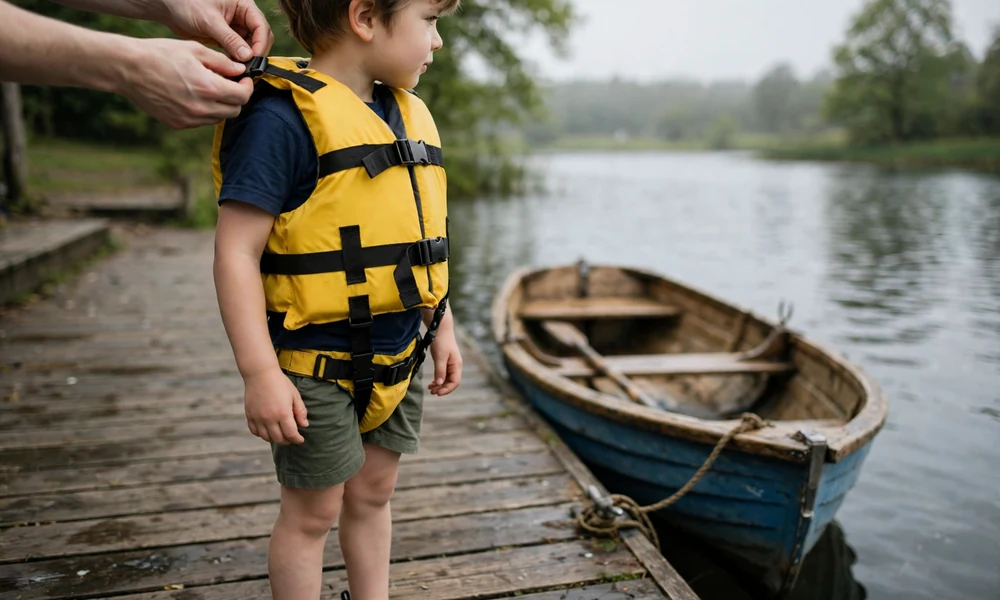
Children’s life jackets are sized by weight, not age, and the ranges are narrow for a reason. A jacket for a child under thirty pounds is built differently from one for a child of fifty pounds, with a bigger head support and a different distribution of foam. Weigh the child, read the label, and do not buy a size to grow into. A jacket that is too big will ride up over a child’s face in the water, and that is the most dangerous failure a life jacket can have.
The crotch strap is not optional, even though children dislike it. It is the strap that stops the jacket sliding up, and a children’s jacket without one is a poor choice for open water. The head support pillow keeps a small child’s head tilted back, and the grab handle on the collar lets an adult lift a child out of the water with one hand. Test all three before you buy, and test them again after the child has grown over winter.
Fit, Comfort, and the Lift Test
The lift test is the single most useful check in this guide, and it works for every adult jacket. Put the jacket on, fasten every strap and buckle, then tighten the side straps until the jacket feels snug. Ask someone to lift the shoulders of the jacket firmly upward, or hook your thumbs under the shoulder straps and pull up hard. If the jacket rises past your nose, tighten it further or try a smaller size. If it still rises, the jacket is the wrong shape for your body, and no amount of tightening will fix it.
Care, Storage, and When to Replace
A life jacket fails slowly, and the signs are easy to miss. Check the foam by squeezing it: good foam springs back, while tired foam stays compressed or crumbles at the edges. Check the fabric for fading and fraying, because sun damage weakens the shell long before it looks serious. Check every buckle and zip, and pull the straps firmly to make sure the stitching holds. If any of these checks fail, retire the jacket.
Rinse a jacket in fresh water after salt use, and let it drip dry in the shade before storing it. Never store a life jacket compressed under heavy gear, because crushed foam loses buoyancy and does not recover. Hang it in a dry, ventilated place, away from fuel, oil, and direct sunlight, and keep inflatables with their cylinders armed and their indicators showing green. A jacket that has been in a crash, a flood, or a fire should be replaced, not repaired.

Mistakes That Undo a Good Jacket
The most common mistake is wearing a jacket unfastened, or with the straps loose enough to be comfortable on land. A loose jacket is a jacket that will come off in the water, and it will do so at the worst possible moment. Fasten every buckle, tighten every strap, and check the fit again after ten minutes on the water, because foam settles and straps slacken once they are wet.
The third mistake is treating a life jacket as a one-time purchase for the whole family. Bodies change, children grow, and a jacket that fitted last summer may not fit this one. Re-check the fit at the start of every season, and re-check it for guests too, because the spare jacket in the locker may have been bought for someone half your size. Our comparison of the best and worst kayaks of 2026 makes the same point about boats: the right gear for one person is the wrong gear for another, and the label is no substitute for a proper fit.
How to Buy in 2026
Start with the water you will actually use. Calm lakes and slow rivers suit a comfortable Type III foam vest, while open sea, rough water, and long passages argue for a Type I or a high-buoyancy inflatable. Match the jacket to the activity, then match it to your weight, then try it on. If you cannot try it on, order two sizes and return the one that fails the lift test, because a jacket bought blind is a gamble.
The Bottom Line
The best life jacket is not the most expensive one, and it is not the one with the most features. It is the one that fits your body, suits your water, and stays on for the whole trip without a second thought. A foam Type III vest covers most people’s needs, a paddling vest covers kayakers and paddle boarders, an inflatable covers long hot days for swimmers who will maintain it, and a Type I covers rough water where rescue is far away.
Buy by weight, do the lift test, fasten every strap, and wear the jacket before you step onto the dock. The water does not care how experienced you are, and it does not give warnings. A good life jacket is a quiet piece of insurance, and the best time to be glad you bought one is the moment you realise you need it.