
A kayak is one of the simplest ways to get out on the water. There is no engine to maintain and no long learning curve before the first trip feels good. On a calm morning, a beginner can be gliding across a lake within minutes of leaving the shore. That ease is why so many first kayaks end up gathering dust in a garage.
The difference between a kayak you love and one you regret is rarely the price tag. It is stability, comfort, weight, and whether the boat suits the water you will actually paddle. A wide, steady recreational kayak forgives wobbly strokes and lets you relax. A long, narrow touring boat might be faster, but it will punish every mistake a new paddler makes. This guide picks the best kayaks for beginners in 2026, organised by the paddling most new owners actually do.
Key Takeaways
- Stability matters more than speed for a first kayak, because a steady boat lets you relax and actually enjoy being on the water.
- A short, wide recreational kayak is the safest starting point for calm lakes, slow rivers, and sheltered bays.
- Sit-on-top kayaks are the easiest to get in and out of, which makes them ideal for warm water and nervous first-timers.
- Inflatable kayaks have improved enormously, and a good one now paddles well enough for most beginners while solving storage completely.
- Budget for a paddle, a life jacket, and a dry bag as well as the boat itself, because those three items shape every trip.
How We Judged
We judged every kayak the way a beginner would actually use it. Stability came first: how steady does the boat feel when you climb in, reach for a water bottle, or meet a small wave? A kayak that feels tippy in the first five minutes never gets a second chance, no matter how fast it is. Tracking came next, because a boat that wanders off course with every stroke turns a relaxing paddle into a constant correction exercise. Comfort mattered too: a seat that aches after an hour cuts trips short.
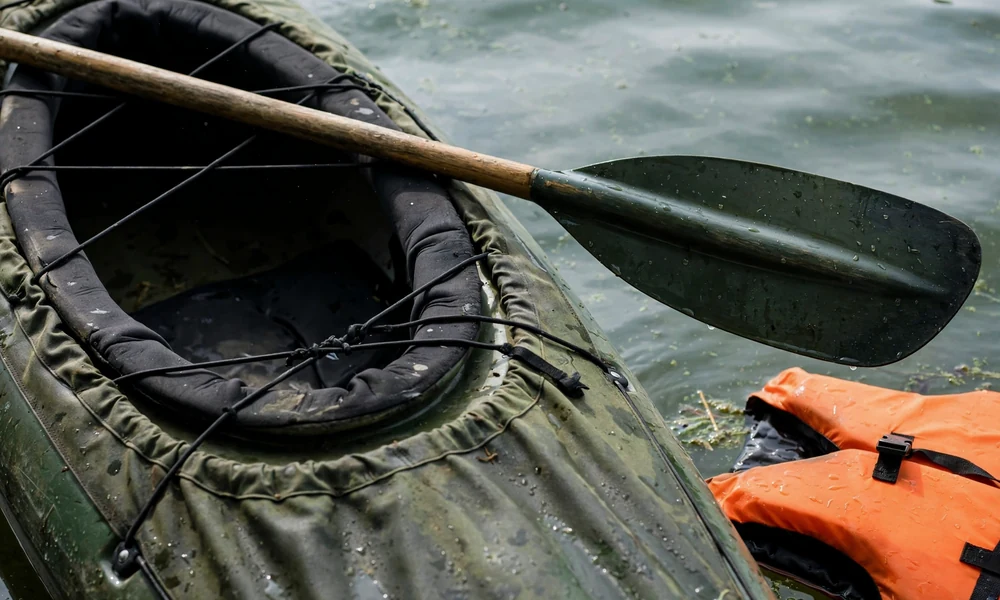
Best Overall Beginner Kayak
The best overall beginner kayak is a wide, stable sit-in recreational kayak around three metres long. It is the sweet spot for most new paddlers because it does everything well enough and nothing badly. The hull is broad enough to feel steady the moment you sit down, yet narrow enough to glide without exhausting you. The cockpit is roomy, the seat is padded and adjustable, and there is room for a dry bag and a camera.
What sets the best overall pick apart is how forgiving it is. You can paddle it badly and still go straight, and lean too far reaching for something and the boat will forgive you. It tracks well on flat water, turns easily enough for winding rivers, and handles a light breeze without being pushed around. For a beginner who wants one boat for lakes, slow rivers, and the occasional sheltered coastal paddle, this is the category to buy in. A good beginner kayak should also survive scrapes on rocks and sun on a roof rack, with hatches that seal and footrests that stay put.
Best Inflatable Kayak for Beginners
Inflatable kayaks used to be a compromise, and the cheap ones still are. A poor inflatable sags in the middle, bends with every stroke, and handles like a pool toy. A good one is a different creature entirely. Modern drop-stitch floors and high-pressure chambers make the best inflatables feel almost rigid, and they track straight enough for a full day on a lake. For anyone who lives in a flat or drives a small car, an inflatable solves the biggest barrier to kayaking: where to keep a three-metre boat.
The best inflatable for beginners inflates in about ten minutes with a decent pump, packs into a bag that fits in a car boot, and carries one or two paddlers plus gear without feeling crowded. Look for thick, puncture-resistant material, a proper skeg for tracking, and a seat that supports your back. Like the craft in our look at the best and worst surfboards of 2026, the gap between the best and the worst here is enormous, so buying on quality rather than price is the whole game.
Best Sit-On-Top Kayak for Beginners
A sit-on-top kayak is the friendliest boat a beginner can buy. You sit on the deck rather than inside a cockpit, so getting on and off takes seconds, and if you capsize, climbing back aboard is straightforward. There is no feeling of being trapped, which matters for nervous paddlers and for anyone who plans to swim from the boat.
The best sit-on-top for beginners is wide, stable, and comfortable for a full afternoon, with a padded seat and a proper backrest. Storage matters too: a rear tank well with bungee rigging holds a dry bag or a cooler, and a small hatch keeps keys and a phone safe. These boats are heavier and slower than sit-ins of the same length, but for warm water, fishing, and family days at the lake, that trade is worth making. Many anglers start here too, and our comparison of the best and worst fishing rods of 2026 pairs naturally with this steady platform.
Best Kayak for Lakes
Lakes are where most beginners spend their first season, and the best lake kayak is built for exactly that water. It is stable at rest, so you can stop paddling and drift without feeling the boat shift beneath you. It tracks straight across open water, where there is no bank to bounce off and no current to help you along. And it carries enough gear for a long, lazy day: lunch, water, a spare layer, and a camera.
For lakes, a recreational kayak between three and three and a half metres long is ideal. Shorter boats turn quickly but wander on open water, while longer touring boats are faster but feel tippy and are harder to transport. The best lake pick has a comfortable seat, sealed hatches that genuinely keep water out, and a hull that handles a chop when the afternoon wind picks up.
Best Budget Kayak for Beginners
A beginner does not need to spend a fortune to get a good first kayak. The best budget kayaks in 2026 are far better than the budget boats of a few years ago. The trick is knowing where the savings come from. Good budget boats save money on frills, not on the hull: a simpler seat, fewer hatches, and plain deck rigging, while the plastic, the shape, and the stability are genuinely solid.
What should you avoid at the budget end? A boat that is very short and very wide will feel stable at rest but will wander badly and exhaust you on anything but the smallest pond. A seat that cannot be adjusted will ache within an hour, and hatches that do not seal will soak your spare clothes. The best budget pick avoids all of those traps. It is a straightforward, honest boat: stable, straight-tracking, comfortable for a half day, and tough enough to survive being dragged across a beach. Spend the money you save on a decent paddle and a life jacket that fits properly.
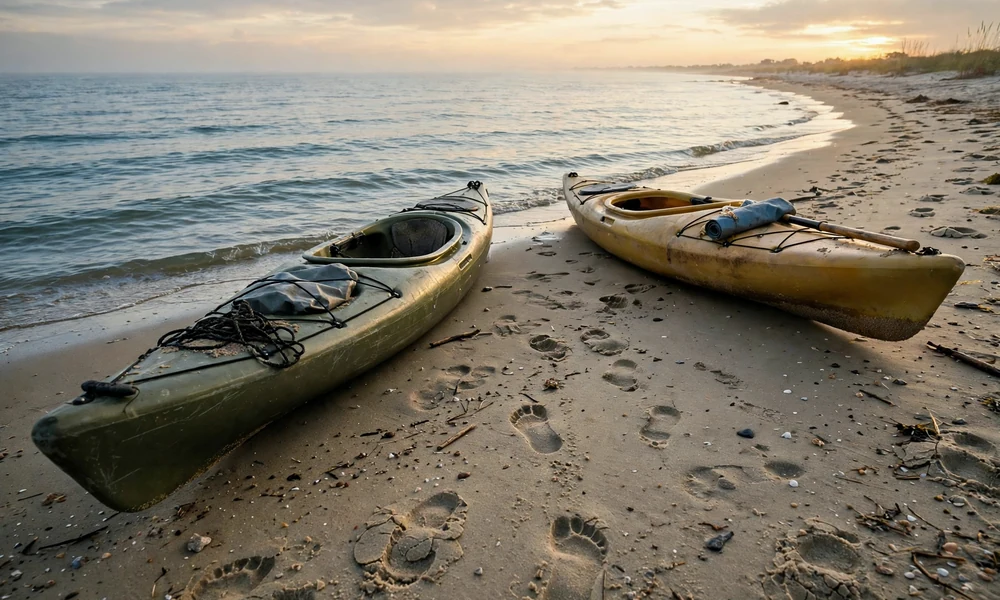
What to Look For When Choosing
Choosing a first kayak is easier once you know which features actually matter. The marketing will push speed, colours, and gadgets, but five things decide whether a boat works for a beginner: stability, length, weight, seat, and storage. Get those right and the rest is decoration.
Stability
Stability is the single most important quality in a beginner kayak. A wide hull with a flat bottom feels steady at rest and forgives clumsy movements, while a narrow hull with a rounded bottom feels lively and tips easily. The right boat feels reassuring, not alarming.
Length
Length decides how a kayak behaves on the water. Short boats, under three metres, turn quickly and are easy to store and carry, but they wander and are slow over distance. Longer boats track straighter and glide further with each stroke, but they are harder to turn and harder to transport. For most beginners, three to three and a half metres is the sweet spot.
Weight
Weight decides how often you actually use the kayak. A boat over thirty kilograms needs two people and a trolley, and that alone will cut your trips in half. A boat under twenty-five kilograms can be carried solo from the car to the water, which means spontaneous evening paddles become possible. Lift the boat before you buy it.
Seat
The seat is where comfort lives or dies. A good beginner seat is padded, adjustable, and supports your lower back, because kayaking posture over two hours is demanding. Adjust the footrests until your knees are slightly bent, and check that the backrest does not dig in. A cheap, flat seat will end trips early.
Storage
Storage turns a kayak from a toy into a tool for real days out. Sealed hatches keep spare clothes dry, deck rigging holds a dry bag, and a small cockpit pocket keeps a phone and keys close. Think about what you will actually carry: water, food, a layer, sunscreen, and a camera at minimum. A boat with no storage will frustrate you within a month.

Care, Safety and Mistakes to Avoid
A kayak is simple to look after, and a little care goes a long way. Rinse the boat with fresh water after paddling in the sea, because salt corrodes fittings and fades plastic. Store it out of direct sunlight, ideally on its side or upside down, because a hull left in the sun will warp over a summer.
Safety starts with a life jacket that fits properly and is worn, not stowed. Always tell someone where you are going and when you expect to be back, and check the weather before you launch, because wind on open water builds faster than most beginners expect. Stay close to the shore on your first trips, and practise getting back into the boat in shallow water before you need to do it for real. A short lesson with an instructor covers all of this in an afternoon.
The most common mistakes are easy to avoid once you know them. Buying too small a boat for your weight is the first, because an overloaded kayak sits low, handles badly, and feels unstable. Buying for the water you dream about rather than the water near your home is the second. Skipping the paddle is the third: a heavy, badly sized paddle will tire your shoulders within an hour. And forgetting the rest of your kit is the fourth, because a kayak rarely travels alone, which is why our guide to the best camping essentials of 2026 is worth a read before your next trip.
The Verdict
The best kayaks for beginners in 2026 are the ones that disappear beneath you: stable, straight-tracking, comfortable for hours, and built to survive scrapes, sun, and salt. Start with a wide recreational kayak, choose a sit-on-top if you want the easiest possible entry, or pick a quality inflatable if storage is your biggest problem. Buy for the water you will actually paddle, lift the boat before you buy it, and spend the savings on a good paddle and a life jacket that fits.


