
The best camping essentials for 2026 are the pieces of gear that turn a weekend outdoors from a test of endurance into a trip you actually enjoy. A good tent, a warm sleep setup, a reliable stove and a decent light are not luxuries; they are the difference between waking up rested and ready for the trail and waking up cold, damp and counting the hours until home.
Camping gear has improved quietly over the past few years. Tents pitch faster, sleeping pads pack smaller, stoves boil water in minutes, and rechargeable lights last for days on a single charge. The trick is knowing which items deserve a place in your pack and which ones only add weight. This guide covers the essentials across every category, from shelter and sleep to cooking, light, water and safety.
Whether you are heading to a drive-up campsite with the family or hiking in to a backcountry pitch, the checklist below works for both. Every category includes what to look for, what to skip, and the mistakes that catch first-time campers out. Use it as a packing list, a shopping guide, or a quick check before you lock the front door.
Key Takeaways
- Shelter and sleep matter most: a weatherproof tent and a warm sleep system decide whether the trip is comfortable.
- Pack for the weather you might get, not the weather you hope for, and always carry a rain layer and a warm layer.
- A two-burner stove, a cooler and a simple cook kit cover almost every camp meal without extra weight.
- Carry more water than you think you need, plus a way to treat or filter water from natural sources.
- A headlamp, a first aid kit and a charged power bank are small items that solve big problems after dark.
How We Chose the Essentials
An essential is something you will miss within hours if you leave it behind. That simple test shaped every category in this guide. We judged each item on reliability, weight, ease of use and how often it actually gets used on a real trip. Gear that looks clever in a shop but stays in its bag at camp did not make the cut.
We also kept the list honest about the difference between car camping and backpacking. At a drive-up site, a bigger tent and a full cook kit are sensible. On a trail, every gram counts and the list shrinks to what fits in a pack.
Camping Essentials at a Glance
| Category | Top Priority | Best For | Budget Tip |
|---|---|---|---|
| Shelter | Weatherproof tent with full rainfly | Every trip | Size up by one person for comfort |
| Sleep | Insulated pad plus rated sleeping bag | Cold nights | Rent before you buy expensive bags |
| Cooking | Two-burner stove and cooler | Family trips | One pot and one pan cover most meals |
| Light | Headlamp plus rechargeable lantern | Evenings at camp | Warm white light is easier on tired eyes |
| Water | Large jug plus filter or tablets | Remote sites | Freeze bottles to double as ice packs |
| Safety | First aid kit and power bank | Every trip | Check kit contents before each season |
Shelter and Sleep
Shelter is the foundation of a good trip. A tent keeps the rain, wind and bugs out, and a proper sleep setup keeps you warm through the coldest part of the night, which usually arrives just before dawn.
Choosing a Tent
Pick a tent with a full-coverage rainfly, a bathtub floor and enough mesh for airflow. A tent rated for four people sleeps two adults and a child comfortably, or two adults with gear inside. Practice pitching it at home before the trip so setup at the campsite takes minutes, not an argument. If you camp with family, our guide to camping tents for families compares the roomiest options for 2026.
Weight matters more than most beginners expect. A heavy tent is fine at a drive-up site, where you carry it a few steps from the car, but it becomes a burden on a trail. Backpackers should look for a tent under three kilograms that still offers a proper vestibule for boots and packs.
The Sleep System
Your sleep system has three parts: a sleeping bag, an insulated pad and a pillow. The pad matters as much as the bag, because the ground steals heat all night. An insulated pad with a good warmth rating keeps you comfortable even when the air temperature drops. Our roundup of sleeping bags for camping explains temperature ratings and which fill suits different seasons.
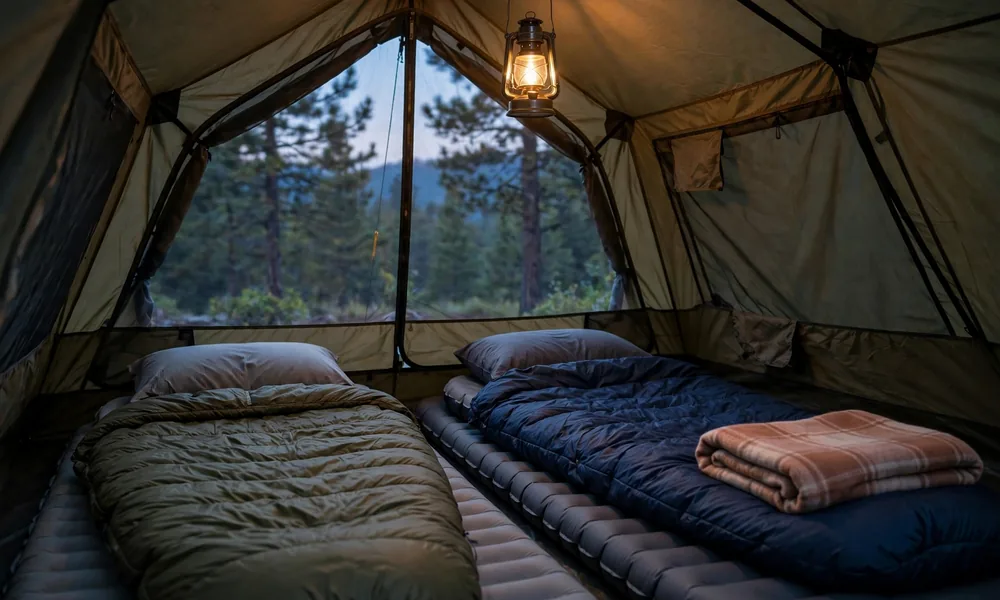
Check the temperature rating on your bag and add a safety margin of five degrees. A bag rated to freezing will feel cold at freezing if you sleep cold, so size the rating to the lowest temperature you expect, not the average. A lightweight liner adds warmth for little weight and keeps the bag cleaner for longer.
Camp Kitchen and Food
Camp cooking is one of the best parts of a trip, and it does not need a complicated setup. A two-burner stove, a cooler, one pot, one pan and a small set of utensils cover breakfast, lunch and dinner for a family. Keep meals simple: one-pot dishes, foil packets and anything that cooks in under half an hour.
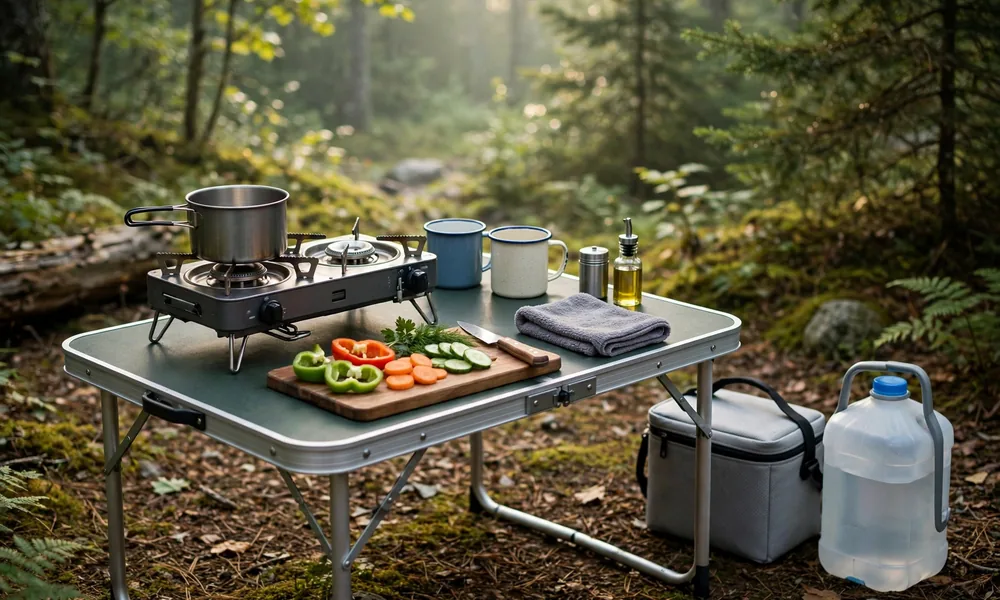
Plan meals before you leave and prep what you can at home. Chop vegetables, marinate meat and measure dry ingredients into labelled bags. At camp, store food in sealed containers and keep the cooler in the shade, opening it as little as possible. Freeze water bottles before the trip so they double as ice packs and become drinking water as they melt.
Stove and Fuel
Canister gas stoves are the easiest choice for most campers: they light instantly, simmer well and pack small. Two-burner propane stoves suit car camping and bigger groups. Whichever you choose, carry a spare fuel canister and a backup lighter, and always test the stove at home before the first trip of the season.
Light and Power
Darkness arrives fast at a campsite, and a good light changes the whole evening. A headlamp keeps your hands free for cooking and tent work, while a lantern lights the table and the tent for reading and card games. Choose warm white light around 2700K to 3000K, which feels cosy and is easier on tired eyes than harsh white light.
Rechargeable lights with USB-C charging are the most convenient in 2026, especially paired with a power bank. A 20,000 mAh power bank charges a phone several times and keeps lights and headlamps topped up for a long weekend.
Water and Hydration
Water is the heaviest essential and the easiest to underestimate. Plan on at least three litres per person per day for drinking, cooking and washing, and more in hot weather or on strenuous hikes. At a drive-up site, carry a large jug. On a trail, carry bottles plus a filter or purification tablets so you can refill safely from streams.
Never drink untreated water from a natural source, even if it looks clear. A compact filter removes most bacteria and sediment, while purification tablets handle viruses and weigh almost nothing. Keep a dedicated water bottle for each person so nobody has to guess how much they have drunk.
Safety and First Aid
A small first aid kit earns its place on every trip. Pack adhesive bandages, antiseptic wipes, pain relief, blister plasters, tweezers and any personal medication. Check the kit before each season and replace anything expired or used. Knowing basic first aid matters more than owning a large kit, so a short course is a worthwhile investment for regular campers.
Other safety essentials include a map and compass, a whistle, sunscreen, insect repellent and a multi-tool. Tell someone where you are going and when you expect to be back, especially on remote trips. Keep your phone charged, but do not rely on it as your only navigation tool, since signal disappears exactly when you need it most.
Clothing and Comfort
Dress in layers and avoid cotton, which stays wet and cold once it gets damp. A moisture-wicking base layer, an insulating mid layer and a waterproof outer layer handle almost any weather. Pack a warm hat and an extra pair of dry socks, because dry feet at the end of the day feel like a luxury after a long walk.
Camp chairs are worth the space at a drive-up site. A comfortable chair turns the evening around the fire from a squat on a log into proper relaxation.
Packing and Carrying
A good pack makes the difference between a comfortable walk and a miserable one. Look for a pack that fits your torso length, with a padded hip belt that carries most of the weight on your hips rather than your shoulders. Pack heavy items close to your back and high in the pack for balance. Our guide to hiking backpacks covers sizing and fit in detail.

Use stuff sacks or packing cubes to keep gear organised and dry. Before you leave, do a final check of the list below so nothing essential stays behind on the kitchen table.
The Six-Item Pre-Trip Checklist
- Tent and sleep gear: tent, rainfly, pegs, sleeping bags, pads and pillows, all packed and counted.
- Kitchen box: stove, fuel, lighter, pot, pan, utensils, plates, mugs and a cooler with ice.
- Water: full jugs or bottles for the trip, plus a filter or purification tablets for refills.
- Light and power: headlamps, lantern, spare batteries or a charged power bank.
- Safety kit: first aid supplies, map, whistle, sunscreen, insect repellent and medication.
- Clothing: layers, rain jacket, warm hat, dry socks and sturdy footwear for the trail.
Frequently Asked Questions
What are the absolute must-have camping essentials?
A tent, a sleeping bag, an insulated pad, a stove with fuel, water, a headlamp, a first aid kit and food. Everything else improves comfort, but those items cover shelter, sleep, cooking, light and safety, which are the four things that decide whether a trip works.
How much water should I bring camping?
Plan on at least three litres per person per day for drinking, cooking and washing, and more in hot weather. Carry a filter or purification tablets as well so you can refill safely from streams if you run low.
What size tent do I need for a family?
Size up by one person from your group size. A four-person tent suits two adults and a child, or two adults with gear inside. Extra floor space matters more than a low price when everyone needs to sleep well.
Should I buy or rent camping gear for my first trip?
Rent the expensive items, like sleeping bags and tents, for your first trip. It lets you learn what you like before spending money, and you will make better buying decisions once you know how you actually camp.
What food is easiest to cook at a campsite?
One-pot meals, foil packet dinners, pasta, rice dishes and anything pre-chopped at home. Keep the menu simple, cook in under half an hour, and bring snacks that need no cooking at all.
How do I keep food cold without a fridge?
Use a good cooler kept in the shade, pre-chill it before packing, and freeze water bottles to use as ice packs. Open the cooler as little as possible and keep it closed between meals.
The Bottom Line
The best camping essentials for 2026 are not the most expensive items on the shelf. They are the reliable, well-chosen basics that cover shelter, sleep, food, water, light and safety, packed in a way that suits your trip. Get those right and the rest of the trip takes care of itself.


