
A rowing machine is the hardest-working piece of home fitness equipment you can own, and also one of the easiest to buy badly. The best ones give you a full-body workout in twenty minutes: legs, back, arms, and lungs, all in one smooth motion, with almost no impact on your joints. The worst ones give you a sore lower back, a noisy fan, and a seat that sticks halfway down the rail. Within a month, the machine is leaning against the wall, and the only thing it works is your guilt.
This comparison puts the two sides head to head, instead of praising good rowers on one page and warning about bad ones on another. On one side are the machines that glide smoothly, measure your effort honestly, and survive years of daily use. On the other are the machines that look solid in a photograph and then fail where it matters: rails that flex, footplates that slip, monitors that invent numbers, and resistance that feels nothing like water or air.
Key Takeaways
- Air and water resistance feel the most like real rowing, while cheap magnetic rowers often feel flat and lifeless at the catch.
- A long, rigid rail matters more than the screen: if the rail flexes or the seat sticks, no app will save the workout.
- Adjustable footplates and a comfortable handle decide whether your back survives the first month of regular rowing.
- Noise is a real constraint in a flat: air rowers are loud, water rowers are quieter, and magnetic rowers are the quietest of all.
- Learn the leg-drive technique before you chase speed, because good form protects your back and makes every stroke more effective.
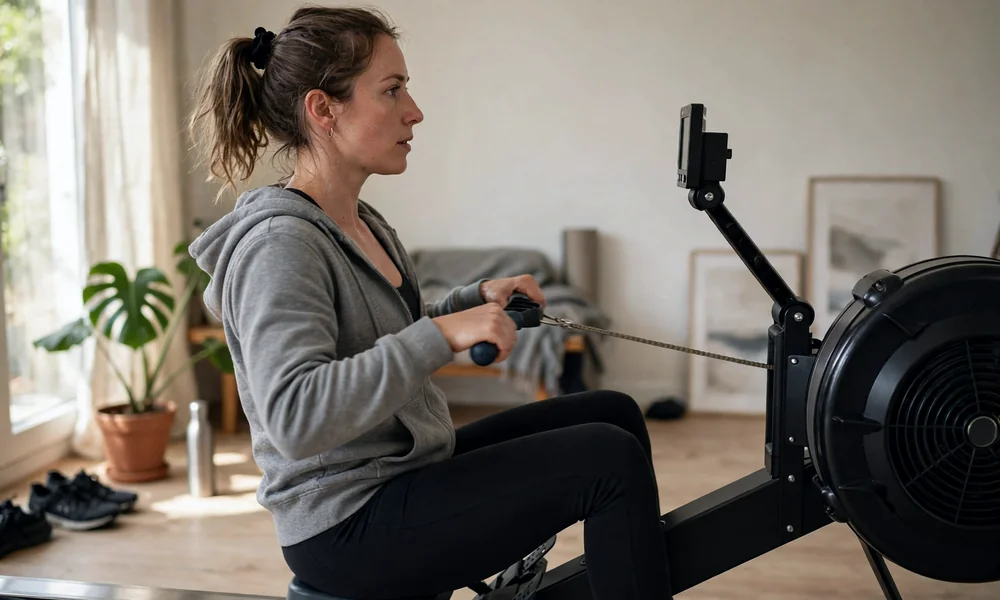
The Main Types of Rowing Machine, Compared
There are four main types of rowing machine, and the resistance system defines how each one feels. Air rowers use a fan: the harder you pull, the more resistance you meet, which feels natural and rewards effort. Water rowers use paddles in a tank of water, and they sound and feel the closest to rowing on a river. Magnetic rowers use magnets around a flywheel, and they are silent and smooth, but the resistance can feel flat unless the design is good. Hydraulic rowers use pistons on the arms, and they are compact and cheap, but the rowing motion feels cramped and uneven.
For most homes, the choice comes down to air or water. The air rower wins if you want the most honest feedback, the widest range of workouts, and a machine that every gym in the world uses. The water rower wins if you want a quieter, calmer machine that looks like furniture and sounds like a stream. Magnetic rowers suit flats where silence matters most. Hydraulic rowers are hard to recommend: they are the cheapest, but the short, choppy stroke teaches bad habits, and the pistons wear out. If you are choosing between cardio machines, an exercise bike is the closest alternative: our guide to the best exercise bikes for small spaces covers the compact options.
| Rower type | Feel | Best for | Noise level |
|---|---|---|---|
| Air | Natural, harder as you pull | Serious training | High |
| Water | Smooth, river-like | Quiet full-body work | Medium |
| Magnetic | Silent, steady | Flats, beginners | Low |
| Hydraulic | Short, uneven | Tight budgets only | Low |
What the Best Rowing Machines Get Right
The best rowing machines start with the stroke itself. The seat glides the full length of the rail without sticking, wobbling, or catching, and the rail is long enough for tall rowers to extend their legs fully. The chain or strap pulls smoothly and returns without slack, and the handle is wide enough for a comfortable grip without twisting your wrists. The resistance responds to effort: pull harder and the machine pushes back harder, which is what makes interval training work and what makes the machine feel alive rather than mechanical.
Fit is the second thing the best rowers get right, and it is the thing buyers most often overlook. The footplates adjust to different shoe sizes and hold your feet firmly without pinching, and the straps tighten with one hand. The handle is at the right height for the catch, the monitor arm adjusts so you can read it without craning your neck, and the whole machine suits a wide range of heights. Some of the best machines also fold upright or split in two for storage, which matters in a home where the rower must share a room with everyday life.
Build quality shows in the details you only notice after months of use. The rail is a single rigid piece, not two pieces bolted together that flex at the joint. The frame is steel or solid aluminium, the seat rollers are sealed against dust and sweat, and the footplates are bolted through the rail rather than clipped on. The machine stays planted when you drive hard with your legs: a rower that rocks or slides across the floor at full effort is a rower you cannot trust.
The best rowers also measure honestly. Their monitors show split time per five hundred metres, strokes per minute, distance, and watts, and the numbers are consistent from one workout to the next, so you can see yourself improving. The best monitors connect to a phone or a heart-rate strap without a subscription, and the machine still works properly if you never open the app. A rower that invents flattering numbers, or hides its basic data behind a monthly fee, is selling you a feeling rather than a workout.
What the Worst Rowing Machines Get Wrong
The worst rowing machines fail first at the stroke. A short rail means tall rowers cannot extend their legs, so they row with bent knees and a cramped back. A seat that sticks, or rollers that go flat after a few months, turns every stroke into a judder. Hydraulic pistons make it worse: the arms move independently, the resistance changes as the pistons heat up, and the stroke feels nothing like rowing.

Bad fit is the second failure, and it is the one that hurts people. The worst rowers have footplates that only fit one shoe size, straps that slip mid-stroke, and handles that are too narrow or too low. When your feet slip, your back takes the load, and a sore lower back is the most common reason people abandon rowing. A handle that forces your wrists into an awkward angle will ache within ten minutes, and a monitor fixed at the wrong height will leave your neck stiff. Every one of these faults is small on its own, and together they make the machine unusable.
The third failure is noise and instability. An air rower is loud by nature, and a cheap one is louder still, with a fan that rattles and a frame that hums at every stroke. In a flat, that noise travels through the floor and the walls, and it limits rowing to the hours when nobody minds. Some of the worst machines are also unstable: narrow feet, a high centre of gravity, and a rail that flexes mean the whole machine can shift or rock when you drive hard. A rower you cannot trust at full effort is a rower you will never use at full effort.
The final failure is the monitor and the subscription trap. The worst rowers ship with a screen that shows a cartoon river, demands an account, and refuses to display your split time unless you pay every month. The numbers it does show are often invented: distance that does not match the strokes, and calories that flatter the rider. When the company behind the app stops supporting it, the screen becomes a dead weight on the rail.
How to Choose the Right Rowing Machine
Start with the space you actually have, not the space you wish you had. A rower needs a long, clear run: most machines are over two metres long when in use, and you need room at the front for the fan or tank and room at the back for the full slide. Mark it out with masking tape and lie down inside it: if you cannot stretch out without hitting furniture, the rower will not fit that spot. Check the stored dimensions too, because a rower that lives against the wall between sessions gets used far more than one dragged out of a cupboard.
Next, match the machine to your body and your goals. If you are tall, check the rail length and the maximum user height, not just the maximum weight. If you have a bad back, prioritise a smooth magnetic or water rower and learn the leg-drive technique before you add intensity. If you want to train hard, look for an air rower with a reliable monitor and a wide resistance range. If you live in a flat, prioritise quiet operation over everything else, because a loud rower will limit when you can use it. And think about tracking: a heart-rate strap, or one of the best fitness trackers we have compared, will show your effort honestly and keep your training on track.
Finally, test the machine before you buy if you possibly can. Sit on it, strap your feet in, and row for ten minutes, not ten seconds. Notice whether the seat glides or sticks, whether the handle pulls straight, and whether your lower back feels comfortable at a steady pace. Try a hard ten strokes and listen for rattles, and watch whether the machine moves on the floor. Check that the monitor shows split time and strokes per minute without a subscription.
Mistakes That Turn a Good Rower Into a Clothes Rail
The most common mistake is rowing with your arms instead of your legs. Beginners pull with their arms first, which exhausts the upper body, strains the back, and wastes the power of the legs. The correct order is legs, then back, then arms on the drive, and arms, back, legs on the return. It feels strange for the first week and natural after the second, and it is the single biggest difference between rowing that builds fitness and rowing that builds back pain.
The second mistake is buying the cheapest rower in the shop and expecting it to feel like a gym machine. Cheap rowers are cheap because something was left out, usually the rail, the rollers, or the monitor. The third mistake is ignoring the subscription: add up the monthly cost over three years before you buy. And the fourth is putting the rower in the wrong room. A rower in a cold garage or behind a pile of boxes will not get used, however good it is. If you want guided sessions without a locked-in subscription, the best fitness apps we have reviewed include free options that work with any rower.

The Verdict
The best rowing machines of 2026 are the ones that disappear into your routine: a long rigid rail, a seat that glides, resistance that answers your effort, and a monitor that tells the truth without a subscription. They do not demand attention, and they still feel good after a thousand sessions. The worst are the ones that fight you from the first week: short rails, sticking seats, slipping footplates, and screens that hold your workout hostage. Between the two, the choice is simpler than the marketing suggests. Spend your money on the rail, the seat, and the resistance, and as little as possible on the screen. A rower that feels good to use will get used, and a rower that gets used is the only one worth owning.


