
What is the best exercise bike for small spaces in 2026? It is the one that fits your room, folds or tucks away when you are done, stays quiet enough for a flat, and still gets used three or four times a week. A bike that dominates the living room, squeaks through the floor to the neighbours below, or needs half an hour of assembly every time you want a ride will end up as a clothes rail. This guide compares the types that genuinely work in flats and small homes, explains how to measure your space properly, and shows what to check before you spend anything.
Key Takeaways
- Measure your floor space and your ceiling height before you shop: you need room to pedal, mount, dismount and store the bike.
- For the smallest homes, a folding upright bike or a compact spin bike is usually the best fit; recumbent bikes need the most floor space.
- Magnetic resistance is quieter and smoother than friction pads, and it matters a lot in a flat with neighbours below.
- Check the folded dimensions and the weight, not just the footprint in use: you will move this bike more than you think.
- Buy for the riding you will actually do, not the classes you hope to take, and test the saddle and handlebar adjustment first.
What “Best for Small Spaces” Actually Means
A bike that works in a small space has to pass three tests, not one. First, it has to fit while you are riding it, with room for your knees, your elbows and the full circle of the pedals. Second, it has to fit when you are not riding it, either because it is small enough to live in a corner or because it folds or stands upright for storage. Third, it has to be practical in a shared home: quiet enough for early mornings, stable enough not to rock on a wooden floor, and light enough to move without help.
Manufacturers quote footprint figures that are easy to misread. The length and width on the box are the dimensions of the bike itself, not the space you need to use it. You need extra room at the front for the handlebars and at the back to step on and off, plus space at the sides so your knees do not hit furniture.
The Main Types of Exercise Bike, Compared
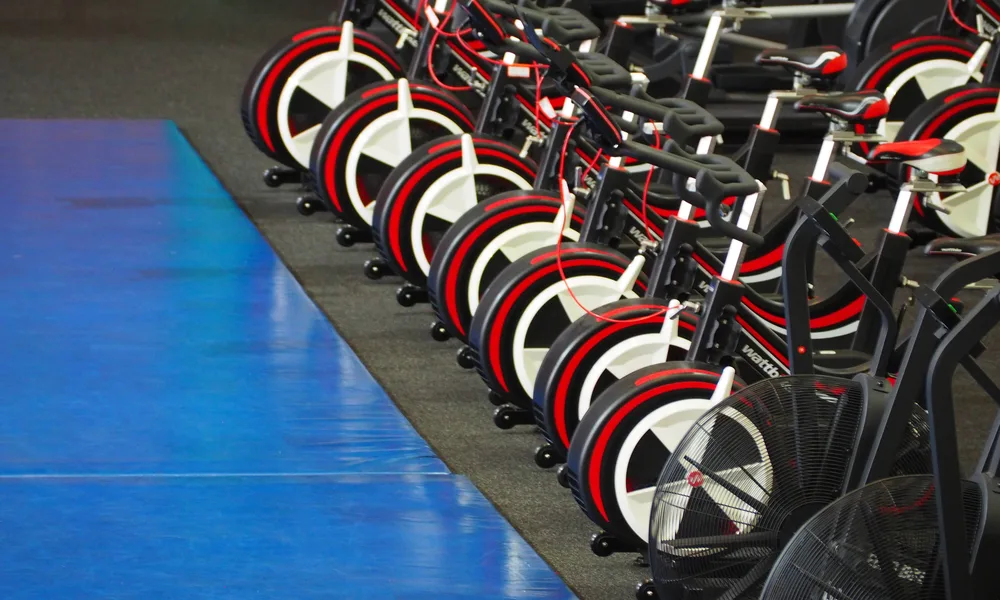
There are four main types, and they suit very different homes and riders. Upright bikes are the classic shape: you sit upright, pedal, and hold the handlebars. They are compact, affordable and familiar, and many fold. Recumbent bikes have a reclined seat with a backrest and pedals out in front; they are comfortable and kind to backs and knees, but they take up the most floor space. Spin bikes are built for intense, standing workouts with a heavy flywheel; they are slim but heavy, and they do not fold. Air bikes use a fan for resistance and get harder the faster you pedal; they are effective but noisy and wide.
| Bike type | Footprint | Best for small spaces? | Noise level |
|---|---|---|---|
| Folding upright | Small, folds in half | Yes, the best choice for tiny flats | Low with magnetic resistance |
| Compact upright | Small, does not fold | Yes, if you have a permanent corner | Low with magnetic resistance |
| Spin bike | Slim but long, heavy | Yes, if you can leave it out | Low to medium |
| Recumbent | Large, long and low | Rarely, needs a dedicated spot | Low |
| Air bike | Wide, fan at the front | No, too wide and too loud | High |
For most small homes, the choice comes down to a folding upright bike or a compact spin bike. The folding bike wins if you must put it away after every ride. The spin bike wins if you have a corner to leave it in and you want harder, more intense workouts. Recumbent bikes are wonderful for comfort, but they are the wrong choice for a small flat unless you have a spare room.

Measuring Your Space Properly
Start with the riding space. Mark out the bike’s footprint on the floor with masking tape, then add 30 centimetres on each side and 45 centimetres at the back. Stand inside the marked area and mime getting on and off the bike. Can you swing your leg over without hitting furniture? Can you reach the handlebars without leaning into a wall? Is there a shelf or a radiator at knee height that you forgot about? This five-minute exercise prevents most buying regrets.
Then measure the storage space. If the bike folds, check the folded dimensions against the space under your bed, behind a door or in a cupboard, and check that you can actually get it there: a folded bike still has to fit through the doorway and round the corner. If the bike stands upright for storage, check the ceiling height and that it locks safely in that position. If it lives in a corner permanently, measure the corner properly, including skirting boards and radiators that eat into the space.
Upright, Recumbent, Spin or Air: Which Rides Best?
The riding experience differs more than the pictures suggest. Upright bikes feel like a normal bicycle and suit steady, moderate workouts, gentle cardio and longer, easier sessions while you watch television. They are the most versatile choice and the easiest to live with. Recumbent bikes feel like sitting in an armchair, and they suit anyone with back pain, knee problems or balance worries, because the seat supports your back and the pedalling position is gentle. The trade-off is size: they are long, low and hard to store.
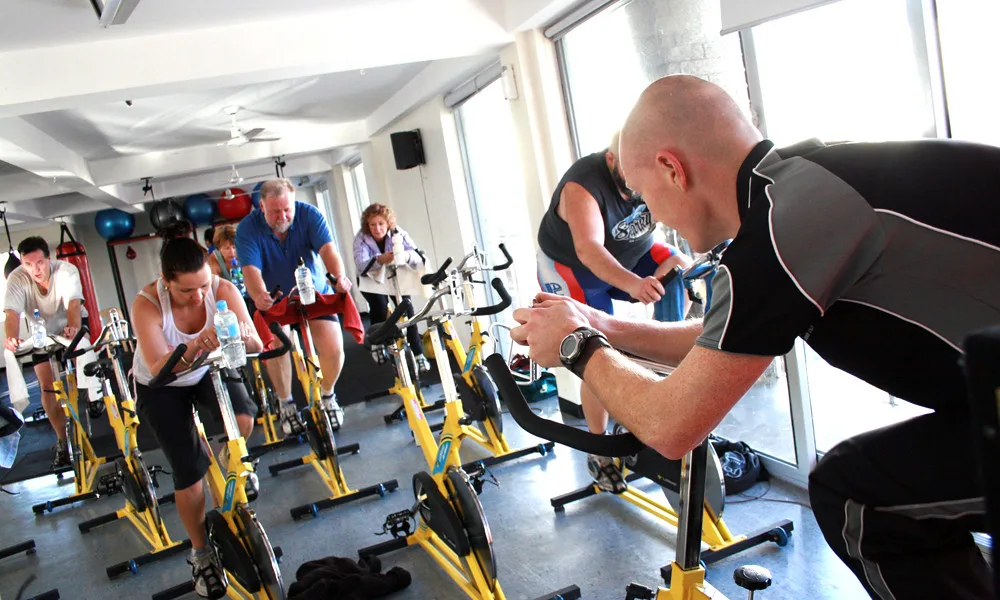
Spin bikes are built for intensity. The heavy flywheel gives a smooth, road-like feel, and you can stand on the pedals for climbs and sprints. They suit people who already enjoy cycling or high-intensity classes, and they are the best choice if your main goal is a hard workout in a short time. They are also the heaviest type, often 40 kilograms or more, so once you have put one in place you will not want to move it.
Noise, Floors and Neighbours
Noise is the issue that turns a good bike into a problem in a flat. There are two kinds: the mechanical noise of the bike itself, and the impact noise of your pedalling travelling through the floor. Magnetic resistance is the quietest system, because there is no pad rubbing against the flywheel. Friction resistance, where a felt pad presses on the flywheel, is cheaper but noisier, and the pads wear out and need replacing. Belt drives are quieter than chain drives, and they need less maintenance. Check the drive type and the resistance type in the specification before you buy.
Impact noise is harder to fix, but a thick rubber mat helps a lot, and so does keeping the bike on a ground floor or on a solid floor rather than a suspended wooden one. If you live above neighbours, ride at reasonable hours and avoid standing sprints late at night.
Folding and Storage in Practice
Folding sounds simple, but the reality varies. Some folding bikes fold in seconds with one lever and roll away on small wheels. Others need two hands, a strong pull and a knack you only develop after a week. If you plan to fold the bike after every ride, test the mechanism before you buy, or at least read reviews that describe it honestly. A bike that is a struggle to fold will not be folded, and then it is just a bike taking up space.
If you have a permanent corner, storage is simpler, but the bike still needs to look acceptable in your home. A slim spin bike in a dark colour blends into a corner far better than a bulky machine in bright plastic. And if you have a spare room or a home gym corner, a dedicated setup is worth doing properly: see Best Home Gyms 2026 for how to build a small training space that actually gets used.
What to Check Before You Buy
Adjustability is the first thing to check. The saddle should move up and down and forwards and backwards, and the handlebars should move too, so riders of different heights can use the same bike comfortably. A bike with only saddle height adjustment will suit one person and frustrate everyone else.
The saddle itself is the most common complaint with exercise bikes. Most stock saddles are hard, narrow and uncomfortable for rides longer than twenty minutes. That is normal, and it is fixable: a padded saddle cover, a wider saddle, or padded cycling shorts all help. Do not reject an otherwise good bike because of the saddle, but do budget for a replacement.
Finally, check the warranty and the returns policy. A good exercise bike should have at least a two-year warranty on the frame and a year on parts. Read reviews from people who have owned the bike for six months or more, not just first impressions, since cheap bikes often develop wobbles, squeaks and console faults after a few months. A bike that costs more but lasts five years is cheaper than a bike that costs half as much and lasts one. For tracking your progress, a training app helps, and Best Fitness Apps 2026 compares the apps that pair best with home cardio equipment.
Exercise Bike Buying Checklist
- Mark out the riding space on the floor with tape, adding 30 centimetres on each side and 45 centimetres at the back.
- Check the folded dimensions and the weight against your actual storage spot and the doorways in between.
- Choose magnetic resistance and a belt drive for the quietest ride in a flat.
- Check saddle and handlebar adjustment, maximum user weight, and pedal type before ordering.
- Budget for a rubber mat, and a saddle cover if the stock saddle is hard.
- Read the warranty and the returns policy, and check reviews from owners after six months of use.
Frequently Asked Questions
What is the best exercise bike for a small flat?
A folding upright bike with magnetic resistance is the best choice for most small flats, because it folds away after every ride and runs quietly.
How much space do I need for an exercise bike?
Allow the bike’s footprint plus at least 30 centimetres on each side and 45 centimetres at the back for mounting and dismounting.
Are folding exercise bikes any good?
Yes, for steady cardio and general fitness. They are not as stable as a heavy spin bike for intense standing workouts, but a well-made folding bike with magnetic resistance is smooth, quiet and perfectly adequate for most riders.
How noisy is an exercise bike in a flat?
A magnetic resistance bike with a belt drive is very quiet, and most of the noise comes from your pedalling travelling through the floor.
Can I use an exercise bike upstairs?
Yes, with a rubber mat and reasonable hours. Check the floor can take the weight, keep the bike stable, and avoid standing sprints late at night if you have neighbours below.
Do I need a subscription or a screen?
No. A screen and live classes can be motivating, but they add cost and a monthly fee.
The Bottom Line
The best exercise bike for small spaces in 2026 is the one that fits your room, folds or tucks away without a struggle, stays quiet enough for your neighbours, and gets ridden several times a week. Measure your space properly, choose magnetic resistance and a belt drive, and buy for the riding you will actually do. A comparison like Peloton vs NordicTrack Treadmills 2026 shows how much the connected fitness world has to offer, but for a small home the simplest bike that fits and gets used will always beat the impressive one that does not.


