
Peloton and NordicTrack are the two names that come up first whenever someone starts shopping for a premium home treadmill, and for good reason. Both sell sturdy machines with big screens, live and on-demand classes, and enough power for serious daily running. Yet they are built around two very different ideas: Peloton sells a fitness experience first and a machine second, while NordicTrack sells a powerful machine first and wraps it in a training platform. Pick the wrong one and you end up paying every month for classes you never open.
This guide puts the two head to head across the things that actually decide whether a treadmill gets used or becomes an expensive clothes rack: running feel, motor and deck, screen and classes, incline and training variety, subscription costs, folding and space, and the total price over three years. There is no single winner. The right choice depends on how you like to train, how much room you have, and whether you want a coach in your ear or a mountain trail on your screen.
- Peloton wins on class energy, music and community: its live classes and leaderboards keep many runners showing up long after the novelty fades.
- NordicTrack wins on hardware variety and value: stronger incline ranges, decline training, longer belts on some models and usually a lower price for similar power.
- Both need a monthly subscription to unlock their best features, and that subscription is the biggest long-term cost difference between the two.
- Serious runners should weigh deck cushioning, belt size and motor power above the screen, because those decide how your knees feel after a year.
- If you love studio-style classes and competition, choose Peloton. If you love outdoor routes, incline hiking and a bigger machine for less money, choose NordicTrack.
The Two Brands in One Paragraph Each
To choose well, it helps to know what each company is really selling. The treadmill is only half the product. The other half is the software, the classes and the monthly bill that comes with them.
Peloton: the studio that happens to sell treadmills
Peloton started as a bike company and built its name on live studio classes, charismatic instructors and a leaderboard that turns a solo run into a race against thousands of strangers. Its treadmill, the Tread, carries that same idea into running: a clean, compact machine with a large touchscreen, a slatted-style running belt and a modest incline range. Peloton assumes you will run with an instructor. That focus is also its limit: if you do not enjoy instructor-led workouts, much of what you are paying for goes unused.
NordicTrack: the machine builder with a world to run through
NordicTrack has been building treadmills for decades, long before screens and subscriptions existed, and that history shows in the hardware. Its Commercial series treadmills tend to be bigger and heavier: steeper inclines, decline settings, longer and wider belts, and stronger motors at a given price. The training platform, iFIT, takes a different approach from Peloton. Instead of a studio, it takes you outside: a trainer leads you along a trail in the mountains, through a city, or up a volcano, and the treadmill automatically adjusts its incline to match the terrain on screen. It is less about competition and more about place. The trade-off is that the machines are bulkier and the software can feel busier.
Build Quality and Running Feel
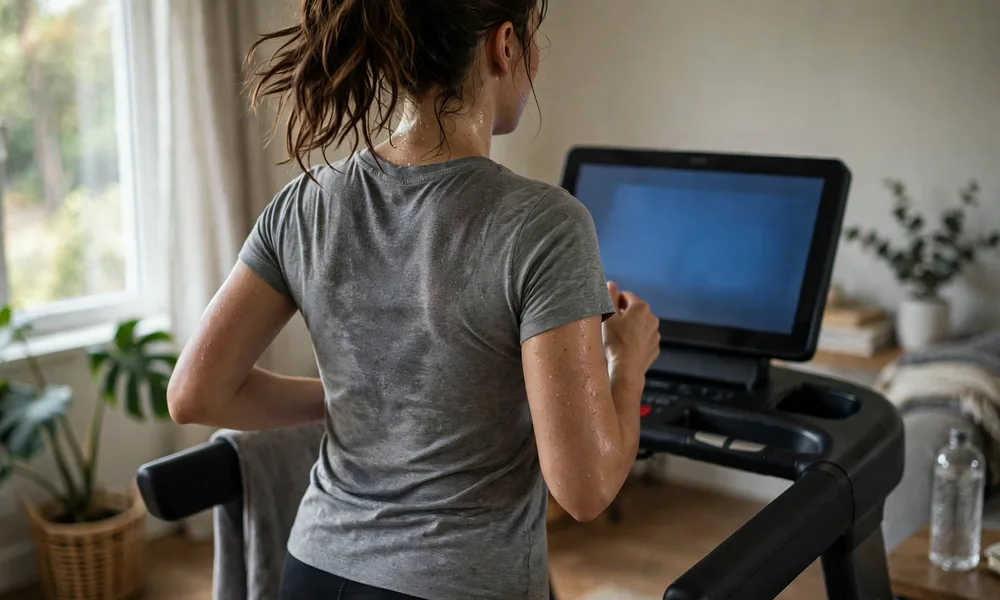
The first thing to judge is the part your feet actually touch: a beautiful screen means little if the deck is harsh or the belt is short.
Belt size and deck cushioning
Peloton’s Tread uses a slatted belt design with individual rubber slats instead of a single continuous belt. Runners often describe it as firm and grippy, with a slightly different feel underfoot from a conventional treadmill. The belt is wide enough for most runners, though taller runners with a long stride sometimes wish for more length. NordicTrack’s Commercial models use a conventional belt, usually longer and wider, with adjustable cushioning that lets you choose a softer landing for easy days or a firmer surface that feels closer to road running. For tall runners, heavier runners, or anyone running daily, the extra belt length and cushioning choice on a NordicTrack is a genuine advantage, and it is one of the reasons the brand scores well in our roundup of the best treadmills of 2026.
Motor power and top speed
Both brands offer motors strong enough for home running, but the numbers tell a useful story. Peloton’s motor is sized for its compact design and is generally rated for steady running rather than heavy sprint work. NordicTrack’s larger models carry more powerful motors that hold speed more steadily under a heavier runner and recover faster after interval changes. A casual runner will never notice the difference, but a runner doing daily tempo runs and intervals will. Look for three continuous horsepower or more, and ignore peak horsepower figures: peak numbers are marketing, while continuous horsepower is what keeps the belt moving at the same speed when your foot lands.
Noise and stability
A treadmill that shakes or whines will not get used in a flat, and it will not make you popular with the neighbours downstairs. Both brands are reasonably quiet at walking and jogging pace, but the heavier NordicTrack frames tend to feel more planted at higher speeds, with less vibration through the floor. Peloton’s lighter, more compact frame is stable for its size, yet it can transmit more vibration on a hard floor at a fast run. A good mat underneath helps either machine and protects the floor too.
Screens, Classes and the Daily Experience
This is where the two brands diverge most, and where most buyers should make their decision. The hardware gap is real but small. The experience gap is large.
Peloton classes and community
Peloton’s classes are its superpower. The instructors are polished, the music is central, and the leaderboard gives every run a competitive edge. For people who struggle with motivation, this is often the difference between running three times a week and not running at all. The library is deep, covering running, walking, strength, yoga and stretching. The weakness is scenery: you are always in a studio, and some runners eventually tire of the same format.
iFIT routes and outdoor training
iFIT takes the opposite approach. Its signature workouts are filmed outdoors, with a trainer running ahead of you on a real trail while the treadmill matches the hills. One day you are climbing in the Alps, the next you are jogging along a beach. For runners who find studio classes repetitive, this is a genuine pleasure, and the automatic incline changes make the workout feel less like exercise and more like a run. iFIT also offers studio classes and strength training. The downside is a cluttered interface and a weaker competitive element: there is no leaderboard culture to pull you out of bed on a grey morning.

Incline, Decline and Training Variety
If you train for hills, hike for fitness, or simply get bored on a flat belt, this section matters more than the screen. NordicTrack has a clear edge here. Many of its treadmills incline to twelve or fifteen percent, and several offer decline down to minus three percent, which lets you train downhill as well as uphill. That range opens up hiking workouts, hill repeats and trail simulations that a flat treadmill cannot offer. Peloton’s incline tops out lower, which is fine for most running but limits hill training. Walkers should pay attention too: incline walking is one of the most effective low-impact workouts available, and it is where a NordicTrack earns its keep. See our guide to the best home gyms of 2026 for how a treadmill fits into a home setup.
Subscriptions and the True Cost Over Three Years
The sticker price is only the start. Both brands charge a monthly subscription, and over three years that subscription can cost as much as the machine itself. Peloton’s all-access membership covers the treadmill and the app, and it is priced at the premium end. iFIT’s membership is usually a little cheaper, and it often comes with a free year bundled into the treadmill price, which softens the first-year cost. Both subscriptions are required to unlock live classes, the full library and automatic trainer control. Without a subscription, both machines still work as basic treadmills, but you lose the features that justify the price. Before you buy, add up three years of subscription plus the machine price, and compare that total rather than the headline price. A cheaper treadmill with a pricier subscription can easily become the more expensive choice. Also check family use: both allow multiple profiles, but the rules differ, and a household of two runners should confirm what one membership covers.
Space, Folding and Living With the Machine
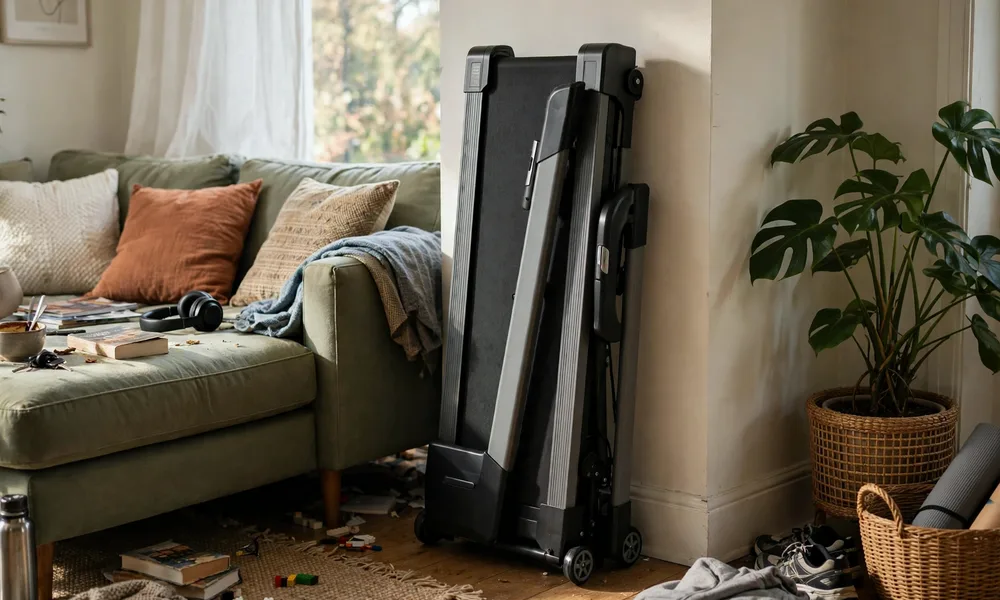
A treadmill is a large object that lives in your home, and the best machine is the one you can actually fit and fold away. Peloton’s Tread is the more compact of the two, with a smaller footprint and a cleaner look that suits a bedroom or living room corner. It does not fold flat in the traditional sense, so measure carefully: what you see is what you live with. NordicTrack’s larger models take up more floor space and are heavier to move, though many fold upright with a hydraulic lift that makes storage easier. That folded footprint still needs a tall, clear space against a wall. If your room is small, Peloton’s compact design is a real advantage. If you have a dedicated gym room or garage, the NordicTrack’s size is rarely a problem. Either way, measure twice, and remember that a treadmill placed in a room you never enter will not get used, however good it is. Buying for a spare room instead of the room you actually live in is the most common home gym mistake, as our guide to the worst home gym setups explains.
Who Should Buy Peloton
Choose Peloton if you love instructor-led classes, thrive on competition, and want a machine that feels like a studio membership rather than gym equipment. It suits runners who need motivation more than they need incline range, households where several people will share one subscription, and homes where a compact, good-looking machine matters. The trade-offs are a higher total cost, a smaller incline range, and a machine that feels limited if you ever fall out of love with the classes.
Who Should Buy NordicTrack
Choose NordicTrack if you want the strongest machine for the money, love outdoor routes and hill training, or plan to walk at steep inclines as much as you run. It suits taller and heavier runners who benefit from a longer belt and stronger motor, households with a dedicated workout space, and buyers who want decline training and a wider range of workout styles. The trade-offs are a bigger footprint, busier software, and a patchier customer service record. Buy from a retailer with a solid returns policy.
Verdict
For most buyers, the decision comes down to one question: do you run for the class or for the run itself? If the class is what gets you moving, Peloton is the best choice, and its leaderboard, instructors and music justify the premium for the people who use them every week. If the run itself matters more, if you want hills, trails, a longer belt and a stronger motor for less money, NordicTrack is the best choice, and iFIT’s outdoor routes are a genuine joy. Both machines will serve a committed runner well for years. The worst choice is neither brand: it is buying the more expensive machine, paying for a subscription you never open, and letting a beautiful treadmill gather dust in the corner. Whichever you choose, commit to the classes or the routes, put the machine where you will actually see it, and run on it three times in the first week.


