
Dumbbells are the simplest piece of strength equipment you can own, and also one of the easiest to buy badly. A good pair will train every major muscle group, last for decades, and cost less than a few months of gym membership. A bad pair will rust in a corner, wobble in your hands, chew up your floor, or sit unused because the weights are wrong for you.
This guide puts both sides on the table. On the best side are the dumbbells that earn their place in a home gym year after year: adjustable sets that grow with your strength, rubber hex dumbbells that survive drops and stay put, and comfortable neoprene pairs for beginners. On the worst side are the sets that look like a bargain and turn into a regret: sand-filled vinyl dumbbells that leak, flimsy spinlock sets that rattle, and novelty weights so light they train nothing at all. If you are building a home gym from scratch, start with our guide to the best home gyms of 2026 to see where dumbbells fit alongside the rest of your kit.
Key Takeaways
- Adjustable dumbbells are the best choice for most home gyms, because one pair replaces a whole rack and grows with your strength.
- Rubber hex dumbbells are the best choice for serious lifters with space, because they are simple, stable, and nearly indestructible.
- Neoprene dumbbells are the best choice for beginners and light work, because they are comfortable, quiet, and kind to floors.
- Sand-filled vinyl dumbbells are the worst buy in the category: they leak, they smell, and their weight is often wrong.
- Cheap spinlock sets with smooth handles and loose collars are the worst for safety, because plates can slide mid-lift.
- Handle quality matters more than the weight stamped on the end: a knurled, well-sized handle beats a slippery or oversized one every time.
How We Judged the Best and the Worst
We judged every dumbbell on six things that matter in real training. First, grip: the handle should be knurled enough to stay put when your hands sweat, but not so sharp that it tears your skin, and it should be a diameter your hand can actually close around. Second, durability: the coating should survive being set down hard, the ends should not crack or peel, and an adjustable mechanism should still work smoothly after a year of use. Third, weight accuracy: a dumbbell marked 10 kg should weigh close to 10 kg, because a pair that is a kilo light on one side trains you unevenly. Fourth, stability: a dumbbell should sit still on the floor instead of rolling away between sets. Fifth, safety: collars and locking mechanisms must hold under load, every time.
The Best Dumbbells of 2026
Adjustable Dumbbells: Best for Most Home Gyms
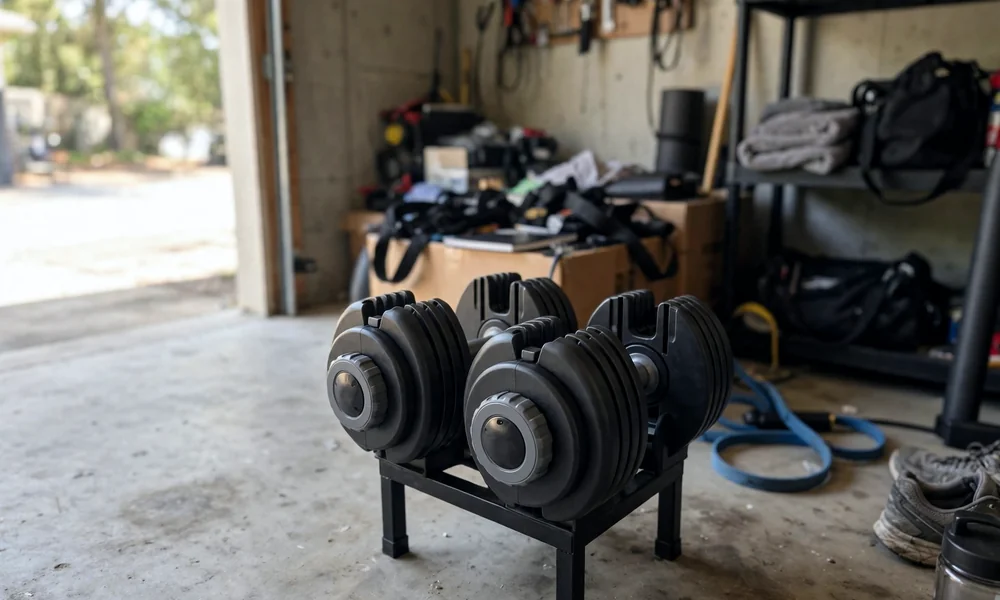
An adjustable dumbbell replaces a whole rack with a single pair. Turn a dial or slide a selector, and the same handle goes from 2 kg to 24 kg in seconds.
The best adjustable sets have a solid, positive locking mechanism that clicks into place and cannot slip mid-set. The plates sit tight against the handle with no rattle, and the cradle holds them squarely so you can pick the handle up and set it down without a fiddle.
Rubber Hex Dumbbells: Best for Serious Training
Hex dumbbells are the workhorse of the dumbbell world, and the rubber-coated version is the best of them. The six-sided heads stop the dumbbell rolling across the floor between sets, which matters more than it sounds when you are supersetting exercises in a small room. The rubber coating protects your floor, deadens the sound when you set a weight down, and keeps the steel core from rusting.
A good hex dumbbell has a straight, knurled steel handle with heads that are moulded firmly onto it. There is no rattle, no wobble, and no gap where sweat can creep in and start corrosion. They are the dumbbells you will find in almost every serious gym, and there is a reason for that: nothing about them is clever, and everything about them works.
Neoprene Dumbbells: Best for Beginners
Neoprene dumbbells are the friendly face of strength training. The soft, grippy coating is comfortable in bare hands, quiet when it touches the floor, and kind to wooden floors and tiles. For beginners, for light rehabilitation work, and for high-repetition classes, they are the easiest dumbbells to live with.
They come in small weights, usually from 0.5 kg to 5 kg, which is exactly the range most beginners need for their first months of training.
The Worst Dumbbells of 2026
Sand-Filled Vinyl Dumbbells: The Worst Buy
Sand-filled vinyl dumbbells are the worst buy in the category, and it is not close. The vinyl coating looks cheerful in the listing photo and feels pleasant for about a week. Then the seams start to split, fine sand leaks onto your floor and into the carpet, and the dumbbell develops a soft spot where the filling has shifted. Worse, the weight is often wrong: a pair marked 3 kg can differ from each other by half a kilo, because sand is not a precision material and the filling process is not a precision job.
Cheap Spinlock Sets: The Worst for Safety
Spinlock dumbbells, the kind with threaded handles and screw-on collars, can be excellent when they are well made. The cheap versions are a different story. The handles are often smooth instead of knurled, so the dumbbell twists in a sweaty hand. The collars are made from soft metal that strips its thread after a few changes, and then they will not stay tight at all.
The real problem is what happens mid-lift. A loose collar lets a plate slide along the handle, and a sliding plate changes the balance of the dumbbell while it is over your face or your chest. That is not an inconvenience; it is a safety failure. If you buy a spinlock set, buy one with knurled handles, steel collars that thread smoothly, and plates that sit flush. If the collars feel gritty or loose in the shop, walk away.
Novelty and Ultra-Light Sets: The Worst Value
Then there are the dumbbells that are not really dumbbells at all: pairs in pastel colours sold as a fashion accessory, weights so light they would not challenge a child, and sets bundled with a branded carry bag that costs more than the weights inside it. A 0.5 kg dumbbell has a place in rehabilitation and in the very first week of training, but a set that tops out at 1 kg is not a strength tool. It is a prop.
Best vs Worst Dumbbells Compared
| Type | Verdict | Best For | Typical Price | Watch Out For |
|---|---|---|---|---|
| Adjustable | Best | Small spaces, growing strength | $150–$350 a pair | Do not drop them |
| Rubber hex | Best | Serious training, durability | $1–$2 per pound | Needs a rack and floor space |
| Neoprene | Best | Beginners, light work | $10–$40 a pair | Tops out at 5 kg |
| Sand-filled vinyl | Worst | Nothing | $10–$30 a pair | Leaks, smells, wrong weight |
| Cheap spinlock | Worst | Nothing | $30–$80 a set | Loose collars, smooth handles |
| Novelty ultra-light | Worst | Nothing | $15–$50 a pair | Too light to train with |
How Much Weight Do You Need?
Most beginners overestimate the weight they need and underestimate how fast they will outgrow it. A useful starting point is a pair you can press overhead for eight to ten good repetitions, with the last two feeling hard. For most women that is 3 kg to 5 kg per hand to start; for most men it is 7 kg to 10 kg.
Progress in small steps. Adding 2 kg to a dumbbell is a big jump when you are pressing 8 kg, so look for sets that offer 1 kg or 2 kg increments at the light end. Pair your dumbbells with a solid bench and your options double overnight, which is why our guide to the best weight benches of 2026 is the natural next read.

Choosing the Right Handle and Grip
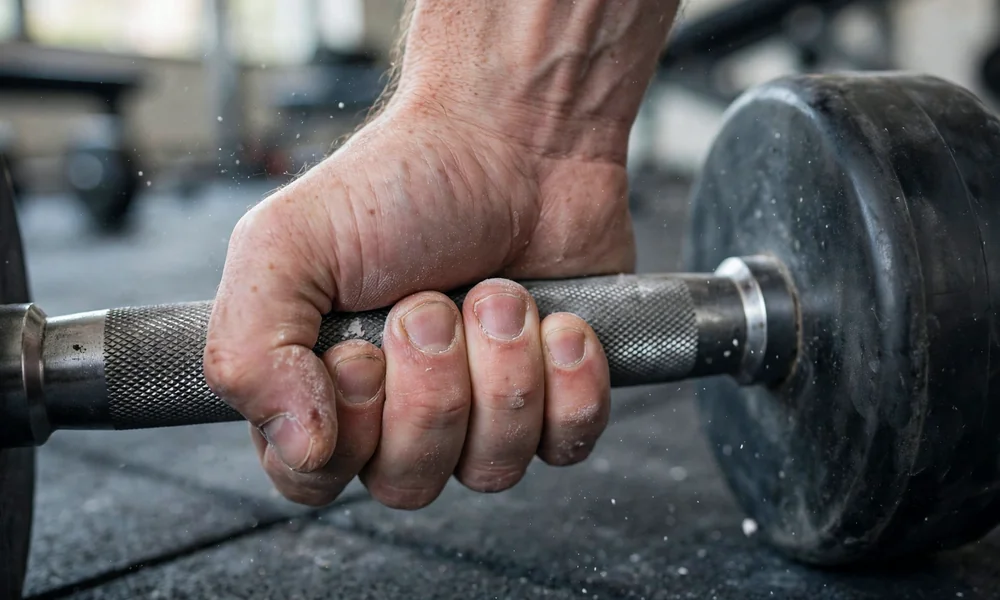
The handle is the part of the dumbbell you actually touch, and it decides whether a set feels like a tool or a chore. The best handles are knurled, which means the steel is cut with a fine diamond pattern that grips your skin without cutting it. The diameter should let your fingers wrap around and overlap your thumb slightly. Most adults are comfortable with a handle between 32 mm and 35 mm across.
Try the grip before you commit. Hold the dumbbell at your side for thirty seconds. If your fingers open on their own, the handle is too smooth or too thick. If the knurling bites into your palm in that short time, it is too sharp for regular use. Chalk helps, and so do gloves, but neither should be needed to hold a dumbbell safely. If sweaty hands are a regular problem for you, our guide to the best workout gloves of 2026 covers the gloves that actually help without getting in the way.
- Hold the handle for thirty seconds: it should grip without biting or slipping.
- Check the weight is stamped on the end and matches on both dumbbells.
- Shake the dumbbell: nothing should rattle, wobble, or shift.
- Set it on the floor: a hex head should sit still, not roll.
- Test adjustable mechanisms three times: they should lock positively every time.
- Smell the coating: strong chemical odour means cheap vinyl, so walk away.
- Measure your space: a full hex set needs a rack, an adjustable pair needs a corner.
- Buy a weight that challenges you now and a set that can grow with you.
Frequently Asked Questions
What is the best dumbbell weight for a beginner?
Most women should start with 3 kg to 5 kg per hand and most men with 7 kg to 10 kg, choosing a weight you can press overhead for eight to ten good repetitions. If the last two repetitions do not feel hard, the weight is too light. An adjustable set is the best choice for beginners because it covers the whole range in one pair.
Are adjustable dumbbells worth the money?
Yes, for most home gyms. A good adjustable pair costs $150 to $350 but replaces fifteen or more fixed weights, which would cost far more and take up far more space. The only people who should skip them are heavy lifters who drop their weights, because adjustable mechanisms are not made to be dropped.
Are hex dumbbells better than round dumbbells?
For most people, yes. Hex heads stop the dumbbell rolling away between sets, which is safer and more convenient, especially in a small room. Round dumbbells have a place in commercial gyms with racks, but at home the hex shape is the practical choice.
The Bottom Line
The best dumbbells in 2026 are the ones that match how you train and where you train. Adjustable dumbbells win for most home gyms, because one pair replaces a whole rack and grows with your strength. Hex rubber dumbbells win for serious lifters with space to store them, because they are simple, safe, and built to last. Neoprene dumbbells win for beginners, because they are comfortable, affordable, and easy to store.
The worst dumbbells are the ones that fail quietly: sand-filled vinyl that leaks, cheap spinlocks that slip, and novelty weights too light to train with. Avoid those three and you avoid almost every dumbbell regret. The best set is the one you reach for three times a week, every week, for years.


