
The best weight benches in 2026 are the quiet heroes of the home gym. They do not beep, they do not need software updates, and they do not take up a whole room, yet almost every serious strength session runs through one. Whether you are pressing, rowing, stepping up or simply sitting down to curl, a good bench turns a pile of weights into a proper workout space.
Choosing the best weight bench is not just about picking the cheapest flat board you can find. A bench that wobbles under load, sinks at the hinge or slides across the floor will limit every exercise you do on it, and it can put your shoulders and lower back at real risk. The right bench feels solid the moment you lie on it, adjusts smoothly, and stays exactly where you put it.
This guide compares the best weight benches of 2026 by type, build quality, weight capacity, adjustability and value, so you can buy once and train on it for years. It covers flat benches, adjustable benches, Olympic benches and folding benches, and it explains which one suits a small flat, a garage gym or a dedicated training room.
Key Takeaways
- An adjustable bench is the best all-round choice for most home gyms, because it covers flat, incline and decline work in one piece of kit.
- Check the weight capacity first: it should cover your body weight plus the heaviest weight you will ever lift, with room to spare.
- A wide, firm pad with a grippy cover beats a soft, narrow pad every time, especially for heavy pressing.
- Steel frame thickness, welded joints and a wide base are better signs of quality than a long list of extra features.
- Measure your floor space before you buy, and remember you need room to load a barbell and walk around the bench safely.
How to Choose the Best Weight Bench
Start with the training you actually do, not the training you imagine doing one day. If you mainly press with dumbbells and do rows, curls and step-ups, a sturdy adjustable bench will serve you brilliantly. If you bench press heavy barbells every week, you may want a dedicated Olympic bench with uprights and safety catches, or a flat bench paired with a power rack.
Weight capacity is the number that matters most. Manufacturers quote a maximum load, but that figure usually includes your body weight. A bench rated to 300 kg sounds generous until you add a 90 kg lifter and a 140 kg barbell, which already leaves far less headroom than the headline suggests. Look for a bench rated to at least 300 kg if you lift seriously, and treat anything under 200 kg as light-duty kit for beginners only.
Pad Width, Length and Firmness
The pad is where your body meets the bench, so its size and feel matter more than most buyers expect. A pad around 28 to 30 cm wide suits most lifters: wide enough to support your shoulder blades, narrow enough to let your arms move freely. Shorter lifters may prefer a pad closer to 110 cm long, while taller lifters should look for 120 cm or more so their head and hips are both supported during a press.
Firmness is a balance. A pad that is too soft lets your shoulders sink and your back arch unevenly, which makes heavy pressing feel unstable. A pad that is too hard becomes uncomfortable on long sessions. The best weight benches use dense, high-quality foam that feels firm at first touch but gives just enough to be comfortable, covered in a grippy vinyl or leather-like material that stops you sliding when you sweat.
Frame, Stability and Adjustment Mechanism
A good bench frame is made from thick steel, usually 50 mm box section or larger, with welded joints rather than bolts alone. Pick the bench up and try to twist it: a quality frame barely flexes, while a cheap one racks and creaks. Wide feet with rubber caps spread the load, protect your floor and stop the bench creeping during a set.
The adjustment mechanism is where adjustable benches succeed or fail. A ladder-style backrest with a solid steel pin is simple, strong and easy to trust. A pop-pin system is faster to change but must lock positively at every angle, with no play once it clicks home. Avoid benches whose backrest wobbles side to side, or whose seat and back move independently in a way that leaves a gap under your lower back.
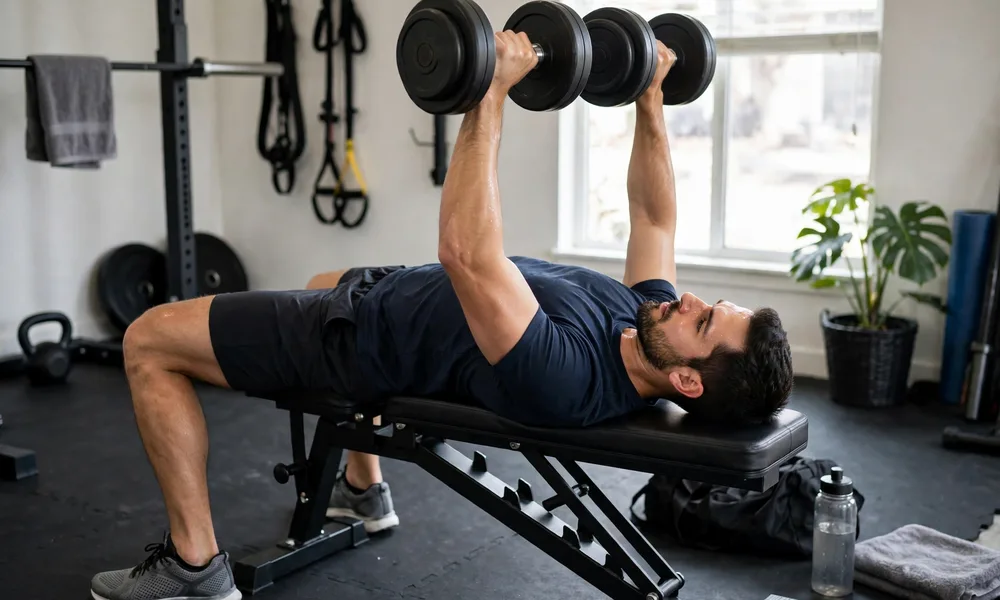
Best Flat Weight Benches 2026
A flat bench is the simplest, strongest and usually cheapest type of weight bench, and for many lifters it is all they will ever need. With no moving parts, there is nothing to wear out, nothing to wobble and nothing to fail under a heavy barbell. Flat benches are the standard in powerlifting gyms for exactly that reason.
Best Adjustable Weight Benches 2026
Adjustable benches are the best weight benches for most home gyms, because one bench replaces three or four. A good adjustable bench moves from flat to incline in steps of around 15 degrees, up to 75 or 85 degrees for seated pressing, and many also offer a decline setting for decline presses and sit-ups.
Adjustable benches cost more than flat benches and weigh more, so they are harder to move around the room. That is a fair trade for the extra exercises they unlock: incline dumbbell press, seated overhead press, incline curls, chest-supported rows and step-ups all become comfortable and safe. If you can only buy one bench, buy a good adjustable one. To pair it with the right weights, our guide to the best dumbbells of 2026 compares the strongest options for home training.
Best Olympic Weight Benches 2026
An Olympic bench is a flat or adjustable bench built into a frame with uprights to hold a barbell and safety catches to stop it falling on you. It is the classic bench-press station, and it suits lifters who train alone and want to press heavy without a spotter.
The best Olympic benches in 2026 have uprights that adjust in small steps, so the bar sits at the right height for your arm length, and safety catches that are easy to set and genuinely strong. The bench itself should be wide and firm, and the whole frame should be bolted or welded so it does not shift when you rack a heavy bar. Cheap Olympic benches are a false economy: narrow pads, thin uprights and flimsy catches are a safety risk, not a bargain.

Best Folding Weight Benches 2026
Folding benches are made for small spaces. They fold flat or upright so they can slide under a bed, behind a door or into a cupboard between sessions, which makes them the best weight benches for flats and shared living spaces.
Best Weight Benches Compared
| Bench Type | Best For | Typical Capacity | Typical Price | Key Strength |
|---|---|---|---|---|
| Flat bench | Heavy barbell pressing | 400 kg or more | £80–£250 | Maximum stability, nothing to fail |
| Adjustable bench | Most home gyms | 300–400 kg | £150–£450 | Flat, incline, decline and seated work |
| Olympic bench | Solo bench press | 300–500 kg | £200–£600 | Built-in uprights and safety catches |
| Folding bench | Small flats and shared rooms | 150–250 kg | £70–£200 | Folds away, easy to store |
| Utility bench | General dumbbell work | 250–350 kg | £100–£300 | Light, easy to move, versatile |
What to Avoid When Buying a Weight Bench
The worst weight benches share the same faults, and they are easy to spot once you know what to look for. A bench that is light enough to lift with one hand is almost certainly too light to be stable under load. A pad that feels like a sofa cushion will make heavy pressing feel like balancing on a mattress. And a bench with a weight capacity that is only just above your body weight will not last long as you get stronger.
Be wary of benches sold mainly on their extra features: built-in leg developers, preacher curl attachments and storage racks sound useful, but they often add wobble and take up space without improving the core job of the bench. Buy the best simple bench you can afford first, and add attachments later if you genuinely need them. A solid bench is the foundation of the whole room, as our roundup of the best home gyms of 2026 explains, and everything else you buy should build around it.

Weight Bench Buying Checklist
- Confirm the weight capacity covers your body weight plus your heaviest lift, with at least 50 kg of headroom.
- Measure your floor space, including room to load a barbell and walk around the bench.
- Lie on the bench and check the pad length, width and firmness suit your height and build.
- Test every adjustment angle and make sure the locking pin engages firmly with no wobble.
- Check the frame is thick steel with welded joints, wide feet and rubber caps.
- Read the warranty and returns policy before you order, and keep the box until you have tested it.
Frequently Asked Questions
What is the best weight bench for a home gym?
For most home gyms, a good adjustable bench is the best choice. It handles flat, incline, decline and seated exercises in one piece of kit, and the best models are nearly as stable as a flat bench. Choose one rated to at least 300 kg with a wide, firm pad.
How much weight should a weight bench hold?
Add your body weight to the heaviest weight you will lift, then add at least 50 kg of headroom. A 90 kg lifter pressing 100 kg needs a bench rated to at least 240 kg, and a 300 kg rating is a safer target if you plan to get stronger over time.
Are adjustable benches as stable as flat benches?
The best adjustable benches are very close to flat benches in stability when locked flat, thanks to thicker frames and better locking mechanisms. Cheap adjustable benches do wobble, so spend more on the frame and mechanism rather than on extra features.
Do I need an Olympic bench or a flat bench with a rack?
An Olympic bench is convenient if bench press is your main lift and you train alone, because the uprights and safety catches are built in. A flat bench with a separate power rack is more flexible, because you can also squat and do other barbell work in the same rack. For a full setup, see our guide to the best gym essentials of 2026.
What size weight bench do I need?
Most adults need a pad around 120 cm long and 28 to 30 cm wide. Taller lifters should look for a longer pad so their head stays supported, and broader lifters may prefer a slightly wider pad, as long as it does not restrict arm movement during a press.
Can a weight bench be used for exercises other than bench press?
Yes, a bench is one of the most versatile pieces of gym kit. You can use it for dumbbell rows, step-ups, Bulgarian split squats, seated shoulder presses, incline curls, tricep dips, hip thrusts and core work, which is why it is usually the first large item to buy for a home gym.
The Bottom Line
The best weight benches in 2026 are the ones that disappear into your training: solid, stable and comfortable, so you think about the lift instead of the equipment. For most people that means a well-built adjustable bench with a 300 kg or higher capacity, a wide firm pad and a locking mechanism you can trust. Heavy barbell specialists may prefer a flat or Olympic bench, and anyone short on space should look at a good folding model. Buy the strongest simple bench you can afford, test it properly, and it will support your training for years.


