
The best home gyms in 2026 are not about buying the most machines or spending the most money. They are about building a training space that fits your room, your budget and the way you actually train, so that working out at home becomes easier than skipping it. A good home gym pays for itself in under two years compared with a gym membership, and it is open at midnight and never crowded.
Home gyms have changed fast: adjustable dumbbells replace a whole rack, folding racks disappear against the wall, and compact cable machines fit in a spare bedroom. This guide compares the best home gym setups for 2026, from a single corner of a living room to a full garage gym, with honest advice on space, budgets, flooring and the equipment that earns its place.
Key Takeaways
- A home gym pays for itself in 12 to 24 months versus a typical gym membership, and it saves hours of travel every week.
- Start with strength: adjustable dumbbells, a bench and a mat cover most training before you add machines.
- Measure your space first, including ceiling height, because a rack needs room to load a bar overhead.
- Rubber flooring protects your floor, your equipment and your joints, and it is the best first upgrade.
- Buy for the training you already do, not the training you hope to start, and add one piece at a time.
Why a Home Gym Works in 2026
The strongest argument for a home gym is consistency. People quit the gym because of friction: the drive, the parking, the crowded changing room, the wait for the squat rack. A home gym removes all of it. Your workout starts the moment you walk into the room, and a thirty-minute session fits into a lunch break.
The economics are just as convincing. A gym membership costs roughly £30 to £50 a month, or £360 to £600 a year, every year. A solid home gym costs £500 to £1,500 to set up and lasts a decade or more, with almost no running costs. Even a £2,500 garage gym pays for itself in four to five years. A home gym also suits the whole household: partners, teenagers and parents can all train on the same kit.
How Much Space Do You Really Need?
Space decides everything in a home gym, so measure before you buy anything. A compact corner setup needs about 2 by 2 metres: a mat, dumbbells and a folding bench. A serious strength setup needs 3 by 3 metres, with a rack, a barbell and room to load plates. A full home gym needs a garage or large spare room, roughly 4 by 5 metres.
Ceiling height is the detail people forget. You need at least 2.4 metres for overhead pressing with a barbell, and more if you plan pull-ups on a rack. Measure the lowest point, including light fittings and beams. If your ceiling is low, choose dumbbell training, cable work and floor exercises instead of overhead barbell lifts, and you will never notice the limit.
Home Gym Layouts for Every Space
Three layouts cover almost every home. Pick the one that matches your room, then buy the equipment that fits inside it.
The Corner Gym: 2 by 2 Metres, Under £500
The corner gym is the smallest useful home gym, and it is where most people should start. A thick exercise mat, a pair of adjustable dumbbells, a set of resistance bands and a foam roller fit in the corner of a bedroom or living room, and most of it packs into a cupboard when guests arrive. This setup covers full-body strength, mobility and stretching, and it shows whether home training suits you before you spend more.
The Spare Room Gym: 3 by 3 Metres, £800 to £1,500
A spare room is the sweet spot for a home gym. Add a folding bench and squat rack, a kettlebell and a pull-up bar, and you can train like a commercial gym member without leaving the house. Rubber floor tiles protect the floor, a mirror on one wall helps with form, and this is the setup most people keep for years.
The Garage Gym: 4 by 5 Metres or More, £1,500 to £3,000
A garage gym is the full version: a power rack, a barbell and plates, a bench, a cable machine or functional trainer, a cardio machine, and a dedicated stretching area. It needs insulation and ventilation to be usable year-round. If you train five or more times a week, or you lift heavy, this is the layout to aim for, and you can build it gradually over a year or two.
Choosing Your Home Gym Equipment
Buy in order of training value per square foot: the kit you use every session first, machines later, once you know your routine.
Strength First: Dumbbells, Bench and Rack
Adjustable dumbbells are the single best home gym purchase. A good set replaces ten or more fixed pairs, changes weight in seconds, and fits under a bed. Pair them with a sturdy adjustable bench, and you can press, row, squat, lunge and carry with just those two pieces. If you want the full breakdown, our guide to the best dumbbells of 2026 compares the strongest adjustable and fixed options.
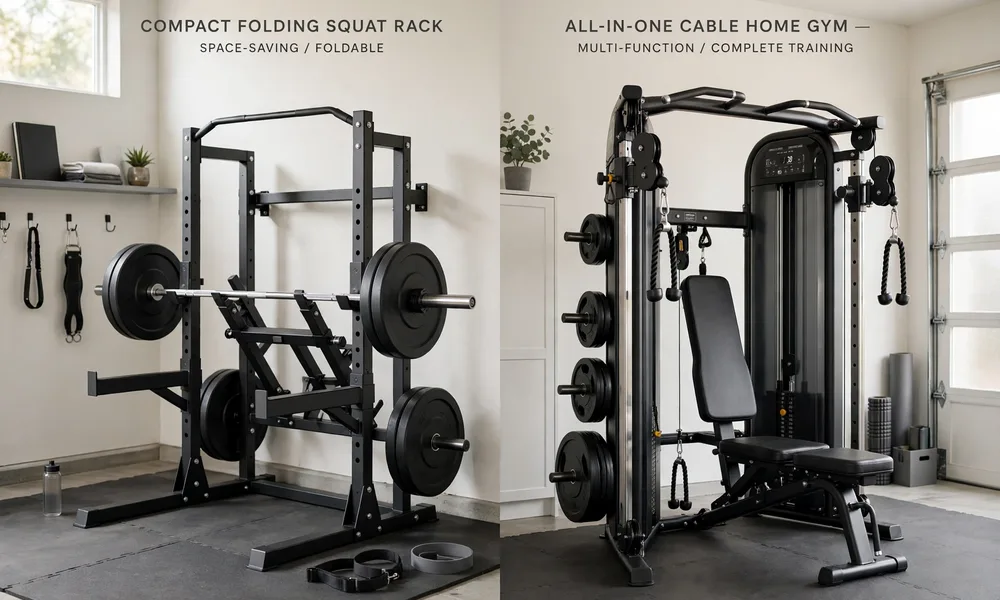
A squat rack is the next step, and the choice is between a folding rack that mounts to the wall and folds flat when not in use, and a full power rack with safety bars. Folding racks suit spare rooms; power racks suit garages, and they are the safest way to lift heavy alone, because the safety bars catch a failed rep.
Cardio: Treadmill, Bike or Rower
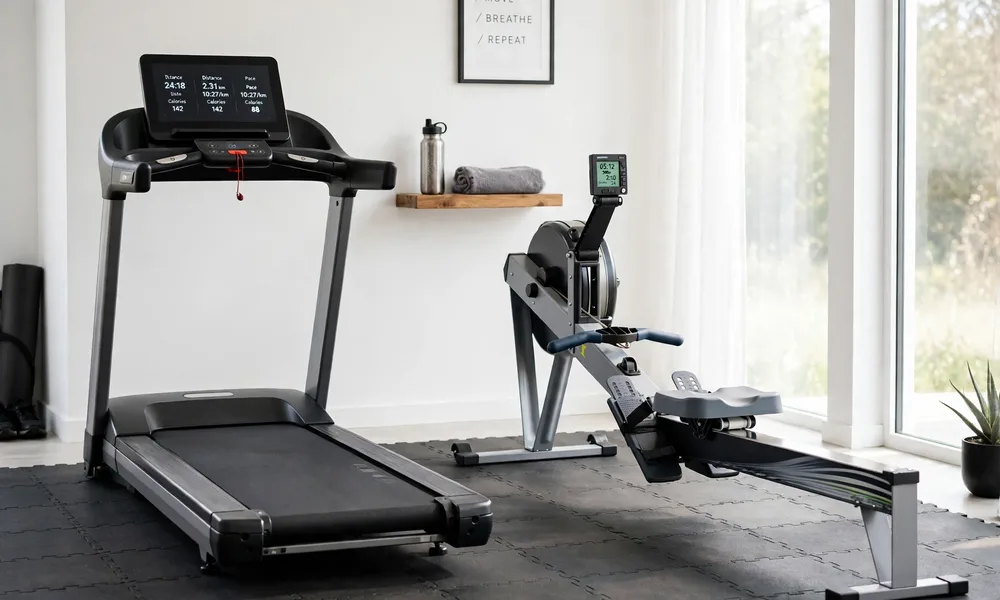
One cardio machine is enough for most home gyms, and the choice depends on your body and your goals. A treadmill suits runners, a bike suits anyone with knee concerns, and a rower gives a full-body workout in a small footprint and folds upright. A rower is the best choice for a small home gym, because it trains legs, back and arms in one movement. For a detailed comparison of running machines, our guide to the best treadmills of 2026 covers the models that survive daily home use.
Flooring, Mirrors and Storage
Rubber flooring is the best first upgrade for any home gym. Interlocking rubber tiles protect your floor from dropped weights, protect your weights from the floor, reduce noise for neighbours, and give you a grippy surface for lifting. Budget about £30 to £50 per square metre for good tiles. A mirror helps you check your form, and wall-mounted storage keeps the floor clear. A tidy gym is a gym you use.

The Best Home Gym Setups in 2026
These four setups cover the full range, from a first corner gym to a complete garage build.
Best Starter Setup: Dumbbells, Bench and Mat
The starter setup is a pair of adjustable dumbbells, an adjustable bench, a thick mat, resistance bands and a foam roller, for around £400 to £500. It covers full-body strength, mobility and recovery, and it fits in a corner. Most people who buy this setup are still using it five years later.
Best Compact Setup: Folding Rack and Cable Machine
The compact setup adds a wall-mounted folding rack and a compact cable machine or functional trainer to the starter kit, for around £1,200 to £1,800. The rack gives you safe barbell squats and bench press, the cable machine adds rows, pulldowns and arm work dumbbells cannot match, and both fold away when you need the room back. This is the best setup for a spare room that still has to be a spare room sometimes.
Best All-Round Setup: Power Rack, Barbell and Rower
The all-round setup is a full power rack, an Olympic barbell and plates, an adjustable bench, a rowing machine and a full set of dumbbells, for around £2,000 to £2,800. It handles heavy strength training, conditioning and mobility in one room, closest to a commercial gym. It needs a dedicated space, ideally a garage, and it is the right choice if you train four or more times a week.
Best Budget Setup: Bands, Kettlebell and Bodyweight
The budget setup proves you do not need much to train well at home. A kettlebell, a set of loop and tube resistance bands, a mat and a door-frame pull-up bar cost under £200 and cover strength, conditioning and mobility. It is the best choice for renters and small flats. Pair it with a good mat, and our guide to the best yoga mats of 2026 covers the thick, grippy mats that make floor work comfortable.
Home Gym Budgets Compared
| Setup | Space Needed | Typical Cost | Best For | Key Kit |
|---|---|---|---|---|
| Budget bands and kettlebell | 2 by 2 metres | £150–£200 | Renters, small flats | Kettlebell, bands, mat |
| Starter dumbbell gym | 2 by 2 metres | £400–£500 | First home gym | Adjustable dumbbells, bench, mat |
| Compact rack and cable gym | 3 by 3 metres | £1,200–£1,800 | Spare rooms | Folding rack, cable machine |
| All-round power rack gym | 4 by 5 metres | £2,000–£2,800 | Serious lifters | Power rack, barbell, rower |
| Full garage gym | Garage or garden room | £2,500–£4,000 | Whole household training | Rack, cables, cardio, dumbbells |
Home Gym Setup Checklist
- Measure your space and ceiling height before buying anything, including light fittings and beams.
- Start with strength kit you will use every session: dumbbells, a bench and a mat.
- Lay rubber flooring first, because it protects your floor, your kit and your joints.
- Buy a rack rated well above the weight you plan to lift, and always use safety bars alone.
- Keep the gym tidy with wall storage, because a clear floor is a gym you will use.
- Add one piece at a time and train on it for a month before buying the next.
Frequently Asked Questions
How much does a good home gym cost?
A useful home gym starts at around £150 to £200 for bands and a kettlebell, £400 to £500 for a solid dumbbell setup, and £1,500 to £3,000 for a full rack, barbell and cardio build.
How much space do I need for a home gym?
A corner gym needs about 2 by 2 metres, a spare room gym needs about 3 by 3 metres, and a full garage gym needs roughly 4 by 5 metres.
Is a home gym cheaper than a gym membership?
Yes, for most people. A £1,000 home gym pays for itself in under three years, lasts a decade or more, and the whole household can use it.
What is the best first piece of home gym equipment?
Adjustable dumbbells. One set replaces a whole rack, fits in a corner, and covers pressing, rowing, squatting, lunging and carrying. Add a bench and a mat next, then a rack.
Do I need a cardio machine in a home gym?
Not to start with. Walking, running outside, skipping and bodyweight circuits cover cardio for most people. Add one later if you train indoors through winter.
How do I keep a home gym safe when training alone?
Use a power rack with safety bars for barbell lifts, never bench press heavy without safeties or a spotter, keep the floor clear, and learn proper form before adding weight.
The Bottom Line
The best home gyms in 2026 are the ones that fit your room, your budget and the training you actually do. Start with adjustable dumbbells, a bench and a mat, lay rubber flooring, and add a rack and a cardio machine only when your routine demands them. A home gym that is easy to walk into is a home gym you will use.


