
The best yoga mats in 2026 are the ones that keep you steady in every pose, protect your knees through long holds, and still feel good after a year of daily practice. A good mat grips when your palms sweat, cushions without wobbling, and rolls up neatly when the session ends. A bad one slips, bunches, and quietly talks you out of practising at all.
What has changed is how good the materials have become. Natural rubber mats now grip better than ever when damp, TPE mats are lighter and easier to clean, and cork-topped mats stay grippy through the sweatiest flows. The best yoga mat for you depends on how you practise, how much cushioning your joints need, and where you use it, and this guide works through all three.
We compared the leading yoga mat styles for grip, cushioning, durability, weight, and ease of care, and ranked the strongest options for beginners, hot yoga, gentle practice, and travel. Whether you flow through vinyasa every morning or stretch gently before bed, there is a mat here that fits your body and your budget.
Key Takeaways
- For most people, a 5 to 6 mm mat in TPE or natural rubber is the sweet spot between cushioning and stability.
- Grip matters more than thickness: a mat that holds your hands in downward dog beats a thick mat that slides.
- Natural rubber grips best when damp, while TPE and PVC are the easiest to clean and the lightest to carry.
- Choose a mat at least 180 cm long and 66 cm wide, or larger if you are tall or broad-shouldered.
- Clean your mat after every sweaty session and roll it loosely; a well-kept mat lasts for years.
How We Picked the Best Yoga Mats
We judged every mat on five things that matter in real practice. First, grip, dry and sweaty: the mat should hold your hands and feet in place through standing balances and fast flows. Second, cushioning: it should protect knees, elbows, and hips without feeling wobbly in standing poses. Third, stability: a mat that stretches, bunches, or slides across the floor is a mat that distracts you from your practice.
Fourth, weight and portability. A mat you carry to class should be light enough to carry comfortably, while a mat that lives at home can be heavier and thicker. Fifth, durability and care: the surface should resist flaking and tearing, and cleaning should take a minute, not a production. We practised on each style for weeks, on hardwood and carpet, in slow yin sessions and fast, sweaty flows.
What Makes a Yoga Mat Worth Buying
The best yoga mats share a few qualities no matter what they cost. The surface grips without feeling sticky, the base stays put on the floor, and the material survives daily use without cracking or peeling. Cheap mats fail on exactly these points: they slide on smooth floors, their surfaces flake after a few months, and their foam compresses into a thin, hard layer. Spend a little more on the mat you will use every day, and it will repay you in comfort and confidence.
Best Yoga Mats by Material
Natural Rubber Mats: Best Grip for Sweaty Practice
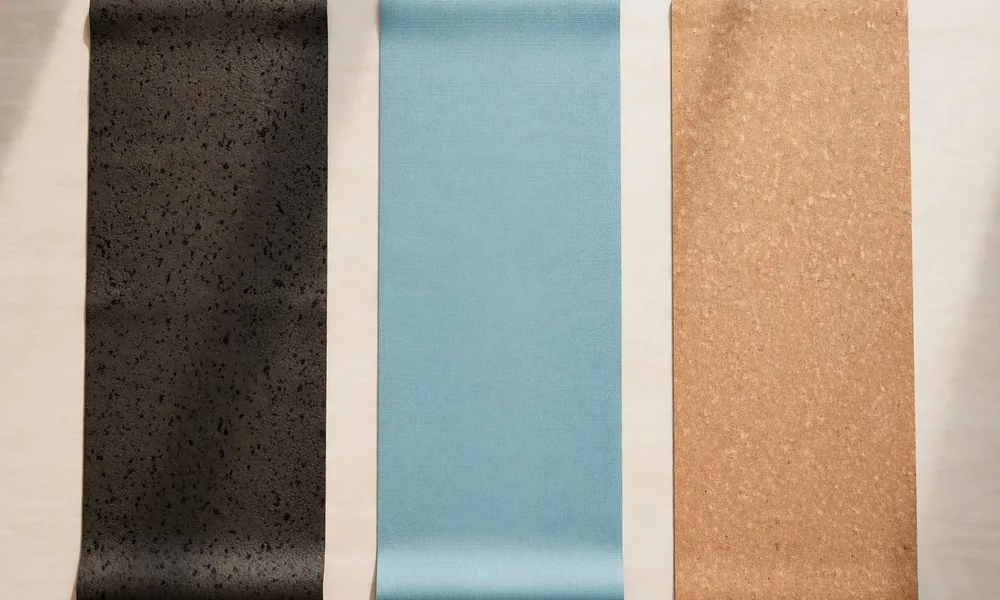
Natural rubber mats are the best choice for hot yoga and for anyone whose hands get sweaty. The open-cell surface absorbs a little moisture and grips harder as you warm up, which is the opposite of most materials. They are usually 4 to 5 mm thick, heavy enough to stay put, and built to last for years of daily use.
The trade-off is weight and care. A natural rubber mat can weigh 3 kg or more, which is a lot to carry to class, and it needs gentle cleaning with water and a mild soap, never harsh chemicals. Some people are sensitive to latex, so check the label if that applies to you. If you practise hot yoga or fast vinyasa at home, this is the material to buy first, and if you are just starting out, our guide to the best yoga blocks for beginners pairs perfectly with a grippy rubber mat.
TPE Mats: Best All-Rounder
TPE, or thermoplastic elastomer, is the best all-round yoga mat material in 2026. It is light, usually under 1 kg, easy to clean with a damp cloth, and available in a wide range of colours and thicknesses. A 6 mm TPE mat gives good knee cushioning while staying stable enough for standing balances, which makes it the safest first mat for most people.
PVC Mats: Best Durability and Value
PVC mats are the toughest and often the cheapest yoga mats you can buy. They resist tearing, they wipe clean in seconds, and they keep their shape for years. A standard 6 mm PVC mat costs little, cushions well, and suits studios, gyms, and anyone who wants a mat that needs no special care at all.
The downside is grip and feel. PVC can be slippery when your hands sweat, and some people dislike its slightly sticky, plastic feel. It is also the heaviest option per millimetre of thickness. If you want a mat that will survive being used by the whole family, stored in a garage, and wiped down after every session, PVC is the practical choice, and our roundup of the best fitness gifts of 2026 includes several durable mats that make great gifts.

How Thick Should Your Yoga Mat Be?
Thickness is a trade-off between comfort and stability. A 3 to 4 mm mat feels stable and connected to the floor, which suits standing balances and experienced practitioners. A 5 to 6 mm mat is the sweet spot for most people, cushioning knees and elbows without wobbling. A 8 to 10 mm mat is the most comfortable for gentle yoga, yin, and anyone with sore knees, but it can feel unstable in one-legged balances.
Size, Length and Width
Most standard mats are 180 cm long and 66 cm wide, which suits most people. If you are taller than 180 cm, look for a 200 cm mat so your head and feet stay on the mat in lying poses. If you are broad-shouldered or you practise wide-legged poses, a 70 cm or 80 cm wide mat gives you room to move. Extra-wide mats are also useful if you practise with a partner nearby or you simply like more space.
Best Yoga Mats Compared
| Mat Type | Best For | Thickness | Typical Price | Downside |
|---|---|---|---|---|
| Natural rubber | Hot yoga, sweaty hands | 4–5 mm | £60–£120 | Heavy, needs gentle cleaning |
| TPE | Beginners, all-round use | 4–6 mm | £25–£60 | Slippery when very sweaty |
| PVC | Durability, value | 4–6 mm | £20–£50 | Can feel sticky, slippery when wet |
| Cork-topped | Sweaty flows, odour control | 4–5 mm | £70–£130 | Heavier, needs time to break in |
| Travel mat | Trips, packing light | 1–2 mm | £30–£70 | Almost no cushioning |
| Extra-thick foam | Gentle yoga, sore knees | 8–10 mm | £25–£55 | Wobbly in standing balances |
Choosing the Right Mat for Your Practice Style
Your practice style should decide your mat, not the other way round. Vinyasa and power yoga need grip above all, so natural rubber or cork is the best choice. Hatha and gentle yoga need cushioning, so a 6 mm TPE or PVC mat suits best. Yin and restorative yoga need comfort for long holds, so an extra-thick mat or a mat plus a blanket works well. Hot yoga needs a mat that grips when wet, plus a towel on top. Pair your mat with comfortable kit, and our guide to the best leggings for women in 2026 covers the pieces that move well through every pose.
Grip, Texture and Sweat
Grip is the most important quality in a yoga mat, and it comes from both material and texture. A textured surface gives your hands and feet something to hold onto, while a smooth surface relies entirely on the material. Natural rubber and cork grip better when damp, which is why they suit sweaty practice. TPE and PVC grip well when dry but need a towel when wet.
Cleaning and Caring for Your Yoga Mat
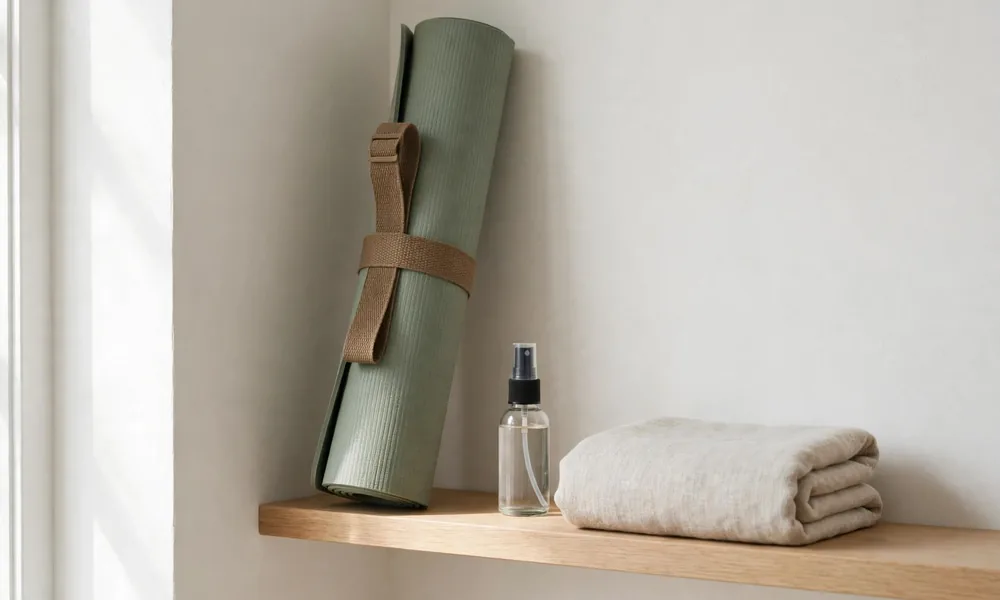
A clean mat lasts longer and smells better, and cleaning it takes less than a minute. After a sweaty session, wipe the surface with a damp cloth and a little mild soap, then leave it unrolled to dry completely before you roll it up. Never soak a natural rubber or cork mat, and never use harsh cleaners, bleach, or alcohol wipes, because they break down the surface.
Yoga Mat Buying Checklist
- Decide your main practice style first: vinyasa, hatha, hot yoga, yin, or a mix of all four.
- Pick a thickness that balances cushioning and stability, usually 5 to 6 mm for most people.
- Choose a material that grips in your conditions, especially if your hands get sweaty.
- Check the length and width, and buy a longer or wider mat if you are tall or broad-shouldered.
- Weigh the mat if you will carry it to class, and look for a carry strap.
- Check the cleaning instructions before you buy, and make sure you are happy with the care it needs.
Frequently Asked Questions
What is the best yoga mat for a beginner?
A 6 mm TPE mat is the best beginner yoga mat. It is affordable, comfortable, easy to clean, and stable enough to learn on. Once you know how you practise, you can upgrade to natural rubber or cork for better grip.
How thick should a yoga mat be?
For most people, 5 to 6 mm is the sweet spot. Thinner mats of 3 to 4 mm suit standing balances, while thicker mats of 8 to 10 mm suit gentle yoga and sore knees. If you practise on a hard floor, go thicker; on carpet, go thinner.
Are natural rubber yoga mats worth the money?
Yes, if you practise hot yoga or your hands get sweaty. Natural rubber grips better when damp than any other material, and a good rubber mat lasts for years. The trade-off is weight and the need for gentle cleaning.
How do I stop slipping on my yoga mat?
Choose a mat with good grip for your conditions, break it in with a few sessions, and use a yoga towel in hot or sweaty practice. Grip socks also help, and wiping the mat with a damp cloth before you start can improve grip on some surfaces.
How often should I clean my yoga mat?
Wipe your mat after every sweaty session and give it a deeper clean once a week. Let it dry fully before rolling it up, and never use harsh cleaners on natural rubber or cork. A clean mat lasts longer and smells far better.
Can I use a yoga mat on carpet?
Yes, but choose a thinner mat of 3 to 4 mm, because the carpet already adds cushioning. A thick mat on carpet feels wobbly in standing poses. Make sure the mat lies flat and does not slide on the carpet pile.
The Bottom Line
The best yoga mats in 2026 are the ones that match how you practise. Natural rubber wins for hot yoga and sweaty hands, because it grips harder as you warm up. TPE wins for most people, because it is light, affordable, comfortable, and easy to clean. PVC wins for durability and value, because it survives years of hard use with almost no care. Cork wins for sweaty flows and odour control, because it stays grippy and fresh. Choose a 5 to 6 mm mat in the material that suits your practice, check that it is long and wide enough for you, and clean it after every session. The best mat is the one that makes you want to unroll it every single day.


