
A good massage gun can turn a stiff, heavy morning after a hard session into a normal day. A bad one is a noisy toy that rattles in your hand, dies halfway through your quads, and ends up in a drawer by February. The difference between the best massage guns of 2026 and the worst is not the logo on the side or the number of speed settings on the box. It is the motor underneath, the depth of each stroke, and how hard you can press before the whole thing gives up. This guide puts the two sides head to head: the guns that genuinely help you recover, and the ones that waste your money, so you can spend once and buy well.
Key Takeaways
- Amplitude matters more than speed: a stroke of 10 to 12 millimetres suits most people, and anything under 8 millimetres barely reaches past the skin.
- Stall force is the honest number: 20 to 40 pounds of pressure before the motor stops covers most users, and cheap guns often stall under their own weight.
- A mini gun is best for travel and light use, while a full-size gun is best for deep work on dense muscle after heavy training.
- Noise is a real test: the best guns stay under about 55 decibels, while the worst rattle loud enough to wake a sleeping house.
- Two to three minutes per muscle group is enough. Pressing harder and longer does not speed recovery, and it can leave you sorer.
How We Judged the Best and the Worst
We judged every type of massage gun on the same five tests, because a fair comparison needs one ruler. First, motor strength: does the gun keep its speed when pressed firmly into a thigh or a glute, or does it stall and whine? Second, amplitude: how deep does each stroke travel? Third, noise: can you use it while watching television, or does it sound like a drill? Fourth, battery life: does it last a full week of short sessions on one charge, and does the battery fade after a few months? Fifth, build and attachments: does the head stay firmly attached, and do the included heads suit different muscles?
A gun earns a place among the best only when it passes all five. A gun lands among the worst when it fails two or more, because one weakness can be worked around but two make the tool unreliable.
The Best Massage Guns of 2026
Best Full-Size Massage Gun
The best full-size gun is the workhorse of the category, and it suits lifters and athletes with dense muscle best. It carries a brushless motor, 12 to 16 millimetres of amplitude, and a stall force of 40 pounds or more, which means it drives deep into glutes, hamstrings and lats without slowing down. It usually ships with five or six attachment heads and a battery that lasts three to six hours of use, so a week of sessions needs only one charge. The trade-off is size and weight: at around a kilo it is not a travel tool. But for deep recovery after heavy training, nothing else here comes close.
Best Mini Massage Gun
The best mini gun proves that small can still be serious. It weighs under half a kilo, slips into a gym bag or a carry-on, and runs quietly enough to use on a train or in an office without drawing stares. The good ones still manage 8 to 10 millimetres of amplitude and a stall force of around 20 pounds, which is plenty for calves, forearms, shoulders and necks. The battery is smaller, usually one to two hours, and it will not replace a full-size gun for deep glute work, but for runners and travellers it is the gun that gets used every day.
Best Mid-Size Massage Gun
The best mid-size gun is the compromise most people should buy. It sits between the full-size and the mini in weight, power and price, with around 10 to 12 millimetres of amplitude, a stall force near 30 pounds, and a battery of two to four hours. It is light enough to hold for a full session without your arm aching, yet strong enough for thighs and backs. If you train three or four times a week and want one gun for everything, this is the sensible pick.
Best Quiet Massage Gun
The best quiet gun is built for people who recover at home around others. It uses a well-damped brushless motor and a balanced head to keep noise under 50 decibels, roughly the level of a quiet conversation, even at mid speed. Quiet does not mean weak here: the best quiet models still deliver 10 millimetres of amplitude and a stall force above 25 pounds. For parents and flat-sharers, that premium is worth paying, because a loud gun is a gun you stop using.
The Worst Massage Guns of 2026
Worst Underpowered Novelty Gun
The worst guns in the shops are the novelty ones: tiny, brightly coloured, and sold for the price of a takeaway. Their amplitude is often under 6 millimetres, which means the head barely moves, and their stall force is so low that pressing against a thigh stops the motor entirely. They vibrate more than they percuss, which feels ticklish rather than therapeutic, and the effect fades the moment you switch them off. A novelty gun is not a bargain; it is a purchase you make twice.
Worst Loud Rattling Gun
The loud rattling gun is the one that sounds like a power tool and feels like one too. Its motor is usually a cheap brushed design, and the head wobbles on its mount, so every stroke sends a buzz through your hand and a rattle through the room. Noise above 65 decibels makes it unusable while anyone else is asleep or working, and the vibration numbs your fingers before it relaxes your muscles. These guns often boast the highest speed settings, but speed without control is just noise.

Worst Short-Battery Gun
A massage gun with a short battery is a recovery tool that cannot finish a recovery session. The worst offenders promise two hours and deliver forty minutes when new, then fade to twenty minutes within a few months as the cheap cells degrade. Battery life is the easiest specification for a maker to exaggerate and the hardest for a buyer to check in a shop, which is why it is where the worst guns cut corners. A gun that dies halfway through your second leg is not a tool you can plan a routine around.
Worst Flimsy Attachment Gun
The worst attachment design is the one where heads pop off mid-session. Cheap guns use loose push-fit mounts with no locking twist, so a head works free under pressure and clatters across the floor, or worse, the mount itself cracks and the gun becomes useless. A good gun locks each head in with a firm click and offers heads in different densities for different muscles. A bad gun treats attachments as decoration, and it shows the first time you press it into a tight shoulder.
Best vs Worst Massage Guns Compared
| Feature | Best guns | Worst guns |
|---|---|---|
| Amplitude | 10 to 16 millimetres | Under 8 millimetres |
| Stall force | 20 to 40 pounds or more | Stalls under light pressure |
| Noise | Under 55 decibels | Over 65 decibels, rattling |
| Battery | Two to six hours, holds charge | Under an hour, fades fast |
| Attachments | Locking mount, varied heads | Loose fit, hard plastic |
| Weight | Balanced for its size | Either too heavy or too light |
The table makes the split plain: the best guns are consistent across every row, while the worst guns fail in several places at once. That is why price alone is a poor guide. A mid-price gun that scores well on amplitude, stall force and battery is a better buy than a premium-looking gun that is loud and weak, and a cheap gun that passes the stall test is better than an expensive one that does not. Judge the numbers, not the packaging, and you will rarely go wrong.
How to Use a Massage Gun Well
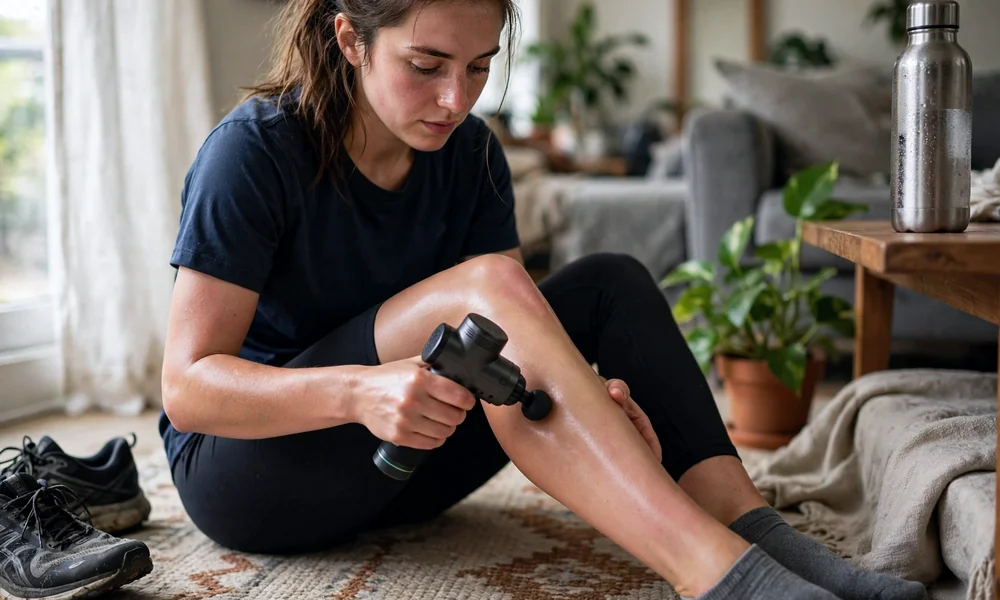
Good technique matters as much as a good gun. Start on the lowest speed, float the head over the muscle, and let the weight of the gun do the work rather than pressing hard. Move slowly, about an inch per second, and spend two to three minutes on each large muscle group. Large muscles such as the quads, glutes and lats take the round or flat head, while tight knots and the feet suit the bullet head used gently. Keep the gun moving and avoid holding it in one spot, because a stationary head can irritate the tissue it is meant to relax.
Before a workout, a short ninety-second pass over the muscles you are about to train can help you feel looser. After training, a slower pass helps with the heavy, stiff feeling that follows. A gun is one part of a recovery routine, not a replacement for one. If you already use a foam roller, our guide to the best vs worst foam rollers explains how the two tools complement each other.
Who Should Skip a Massage Gun
Massage guns are not for everyone, and the honest guides say so. People with a recent injury, a fracture, a blood-clotting condition, or a medical device such as a pacemaker should ask a doctor before buying one. Never use a gun on bones, joints, the front of the neck, the spine, or any area that is bruised, swollen or numb. Pregnant users should also check with a clinician first. If a muscle hurts sharply rather than feeling tight, stop and rest instead of pushing through with the gun, because pain is information and the gun is not a diagnostic tool.
Frequently Asked Questions
Are massage guns worth the money?
Yes, if you buy one that passes the real tests: at least 10 millimetres of amplitude, a stall force above 20 pounds, and a battery that lasts a week of sessions. A gun that meets those marks will earn its place in your routine. A cheaper gun that fails them will not, whatever it cost.
How often should I use a massage gun?
Short daily sessions of two to three minutes per muscle group work well, before training or after. Give any sore area a rest day if it stays sensitive.
Can a massage gun replace stretching?
No. A gun delivers focused pulses that relax tight tissue quickly, while stretching maintains range of motion over time. The best routines use both, along with rest and sleep.
What is the best massage gun for beginners?
A mid-size gun with 10 to 12 millimetres of amplitude and a stall force near 30 pounds is the best starting point for most beginners. Our guide to the best massage guns covers the leading types in more depth.
The Bottom Line
The best massage guns of 2026 are the ones with honest motors: deep amplitude, real stall force, quiet running, and batteries that last the week. The worst are the ones that look the part and fail the moment you press them against a muscle. Buy the mid-size or full-size gun that passes the numbers for your training, keep sessions short and gentle, and treat it as one part of a routine that includes movement, stretching and sleep. If you are building a home recovery setup, our guide to the best home gyms will help you put the rest of the room together.


