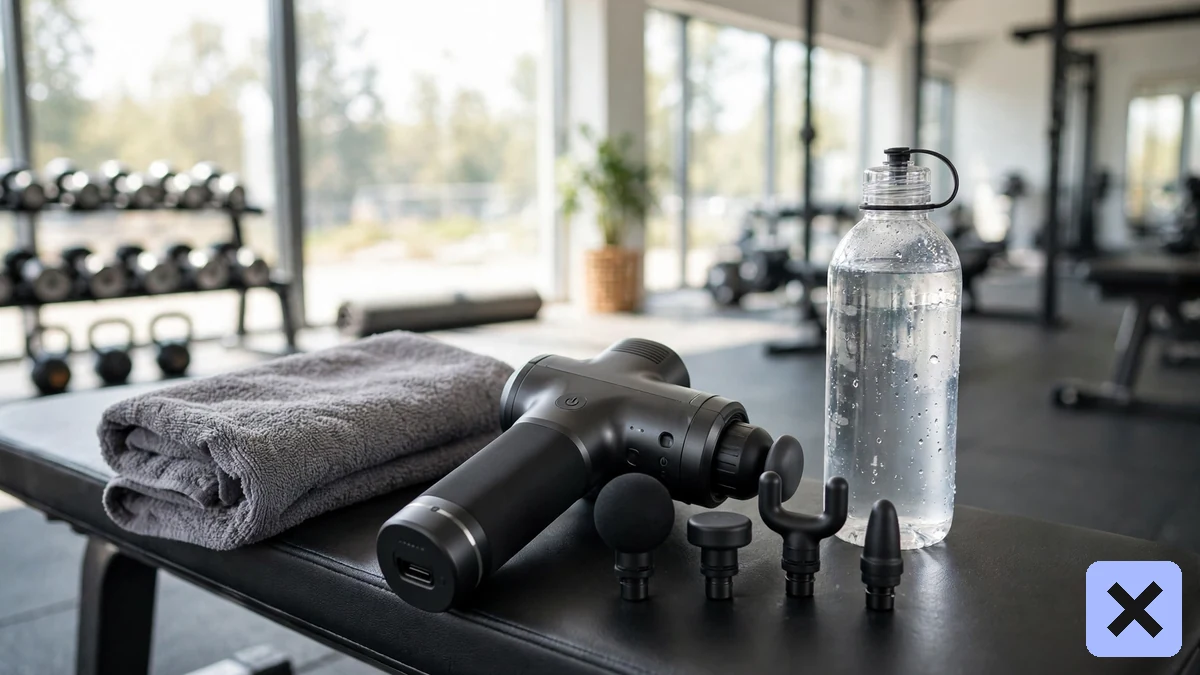
The best massage guns in 2026 are the fastest way to feel human again after a hard workout. A good massage gun delivers rapid, targeted percussion to tight muscles, easing soreness, loosening stiff shoulders and helping you recover in minutes rather than days.
Choosing the best massage gun is not about buying the most powerful one. It is about matching the motor, the amplitude, the stall force and the weight to your body and your training. A heavy gun with a deep stroke suits a lifter with dense muscle; a light, quiet mini gun suits a runner who wants to use it on a plane or in an office. This guide explains the numbers that actually matter, compares the main types honestly, and helps you pick the gun you will still be reaching for in a year.
Key Takeaways
- Amplitude, the depth of each stroke, matters more than raw speed: 10 to 12 millimetres suits most people.
- Stall force tells you how hard you can press before the motor stops: 20 to 40 pounds covers most users.
- A mini massage gun is best for travel and light use; a full-size gun is best for deep muscle work.
- Use the right attachment head for the muscle: round for large groups, bullet for trigger points, flat for general work.
- Two to three minutes per muscle group is enough; more pressure is not better recovery.
What Is Percussion Therapy and How Does It Work?
Percussion therapy is rapid, repeated pressure applied to a muscle by a motor-driven head that moves in and out many times per second. Each pulse briefly compresses the muscle and the tissue around it, then releases, which increases local blood flow and helps the muscle relax.
The evidence is encouraging rather than miraculous. Studies show that percussion massage can reduce muscle soreness after exercise, improve short-term range of motion, and help you feel looser before a workout. It does not repair muscle damage on its own, and it does not replace sleep, food or proper training, but as part of a recovery routine it is genuinely useful. It is also different from the other recovery tool most people own: a foam roller works by pressing your body weight into a muscle, slowly and broadly, while a massage gun works with fast, focused pulses that reach deeper into a specific spot. If you already roll, our guide to the best foam rollers of 2026 explains how the two tools complement each other rather than compete.
Who Should Use a Massage Gun?
Almost anyone who exercises can benefit from a massage gun. Runners use them for calves and thighs, lifters use them for backs, glutes and shoulders, and desk workers use them for stiff necks and forearms. People with a recent injury, a fracture, a blood-clotting condition or a medical device such as a pacemaker should ask a doctor before buying. Never use a massage gun on bones, joints, the front of the neck, or an area that is bruised or swollen.
Best Massage Guns by Type in 2026
There is no single best massage gun for everyone, because the right choice depends on your body, your training and where you plan to use it. The four types below cover almost every user.

Best Full-Size Massage Gun
A full-size gun is the most powerful option, with a strong brushless motor, 12 to 16 millimetres of amplitude and a stall force of 40 pounds or more. It drives deep into dense muscle, which is what lifters and athletes need after heavy sessions. It usually comes with five or six attachment heads and a battery that lasts three to six hours. The trade-off is size and weight: a full-size gun weighs around a kilogram and is loud at high speed.
Buy a full-size gun if you train hard, carry a lot of muscle, or share the gun with a partner who does. Check the noise level at the speed you will actually use, because a gun that sounds like a power drill will not get used at home in the evening.
Best Mini Massage Gun
A mini gun is roughly half the size and weight of a full-size model, usually under 500 grams, and it fits in a gym bag, a suitcase or even a large coat pocket. It is the best choice for travel, for runners, and for anyone who wants a quick session at the office or on a plane, with 8 to 10 millimetres of amplitude.
The limitation is depth. A mini gun cannot match a full-size motor on a thick thigh or a deep glute, and its battery usually lasts one to two hours rather than four.
Best Quiet Massage Gun
Noise is the most underestimated feature of a massage gun. A loud gun is unpleasant to use, it disturbs everyone else in the house, and it makes a gun useless in a shared gym, an office or a hotel room. The quietest guns use brushless motors and careful housing design to stay under 45 decibels at low speed, roughly the volume of a conversation.
Best Budget Massage Gun
A budget gun costs a fraction of the premium models and still delivers useful percussion for most people. The best budget guns offer 10 millimetres of amplitude, three to five speeds, four attachment heads and a battery that lasts two to three hours.
The compromises are real: cheaper motors stall more easily under pressure, batteries degrade faster, and build quality varies.
The Numbers That Actually Matter
Massage gun marketing is full of numbers, and only some of them matter. Amplitude is the most important: it is how far the head travels with each stroke, measured in millimetres. Ten to twelve millimetres is the sweet spot for most people. Less than that feels like a vibration rather than a massage; more than sixteen is only useful for very large athletes.
Stall force is the second number to check. It is how much pressure you can apply before the motor stops, measured in pounds. Twenty to thirty pounds is enough for most users; forty or more suits heavy lifters. Percussions per minute, usually 1,200 to 3,200, tells you the speed range: low speeds are for sensitive areas and warm-ups, high speeds are for dense muscle after a workout. Battery life matters if you share the gun or use it daily: look for at least two hours per charge and a USB-C charging port. Weight matters too, because you hold the gun with one hand for several minutes.

Attachment Heads Explained
Most guns come with four to six heads, and each one has a job. The round ball head is the all-rounder, best for large muscle groups such as thighs, glutes and backs. The flat head spreads pressure evenly and suits general work on sensitive areas. The bullet head concentrates force on a single point, which is ideal for trigger points and the soles of the feet, but it should be used gently. The fork head fits around the spine, the Achilles tendon and the forearm, where a round head cannot reach properly. A cushioned or air-filled head is the gentlest option and suits bony areas such as the shoulders and shins.
Massage Guns Compared
| Gun Type | Best For | Amplitude | Typical Price |
|---|---|---|---|
| Full-size | Deep muscle work, lifters, athletes | 12–16 mm | £150–£400 |
| Mini | Travel, running, light daily use | 8–10 mm | £60–£150 |
| Quiet | Home, office, shared spaces | 10–12 mm | £100–£250 |
| Budget | First-time buyers, casual gym use | 10 mm | £40–£90 |
How to Use a Massage Gun Properly
Good technique matters more than an expensive gun. Start on the lowest speed, float the head over the muscle rather than pressing hard, and move slowly, about one inch per second. Spend two to three minutes per muscle group, and breathe normally. When you find a tender spot, hold the gun there for 20 to 30 seconds, then move on. A full session of ten minutes is enough for most people.
Use the gun before a workout to warm up a stiff muscle, or after a workout to ease soreness, but not both at maximum intensity. Before training, keep it light and brief. After training, you can go deeper and slower. Never use it on a bone, a joint, the front of your neck, or an area that is injured, bruised or numb. If it hurts sharply, stop. A massage gun should feel like firm pressure, not pain, and more pressure is not better recovery. Pair the gun with the rest of your training kit: if you are building a home setup, our guide to the best home gyms of 2026 covers the equipment that makes the biggest difference, and for strength work our guide to the best kettlebells of 2026 picks the bells that pair well with a proper recovery routine.

Massage Gun Shopping Checklist
- Choose amplitude of 10 to 12 millimetres for most users, more only for very dense muscle.
- Check stall force: 20 to 30 pounds is enough for most people, 40 or more for heavy lifters.
- Pick a weight you can hold one-handed for ten minutes without your arm tiring.
- Check battery life of at least two hours and USB-C charging if possible.
- Make sure it comes with the four essential heads: ball, flat, bullet and fork.
- Test the noise level at the speed you will use most, especially if you share your home.
Frequently Asked Questions
Are massage guns worth it?
Yes, if you train regularly. A massage gun reduces soreness, improves short-term flexibility and makes recovery faster and more pleasant. It is not essential for a casual exerciser, but for anyone who trains three or more times a week it is one of the most-used recovery tools you can own.
How long should you use a massage gun on one muscle?
Two to three minutes per muscle group is enough, with 20 to 30 seconds held on any tender spot. A full session of about ten minutes covers the main areas. Longer sessions do not add benefit and can leave muscles sore.
Can you use a massage gun every day?
Yes, daily use is fine at low to moderate intensity, as long as you avoid bones, joints, injuries and bruised areas. Keep sessions short, start on a low speed, and stop if you feel sharp pain.
What is the difference between a massage gun and a foam roller?
A foam roller uses your body weight to press a muscle slowly and broadly, while a massage gun uses fast, focused pulses to reach a specific spot more deeply. The gun is better for targeted work and hard-to-reach areas; the roller is cheaper, silent and better for large areas. Many people use both.
Is a mini massage gun powerful enough?
For most people, yes. A good mini gun delivers 8 to 10 millimetres of amplitude, which is enough for calves, forearms, shoulders and general soreness. It struggles only with very dense muscle such as a heavy lifter’s thighs or glutes, where a full-size gun is better.
Can a massage gun help with back pain?
It can ease muscle tension in the back, but it should never be used directly on the spine, and it is not a treatment for back pain caused by an injury or a medical condition. If your back pain is persistent, severe or new, see a doctor before using a massage gun on it.
The Bottom Line
The best massage guns in 2026 are the ones that match your body and your routine. A full-size gun suits deep muscle work, a mini suits travel and light use, a quiet gun suits shared homes, and a budget gun suits a first-time buyer. Focus on amplitude, stall force and weight rather than the marketing, use the right head for each muscle, and keep sessions short and gentle. Do that, and the gun will earn its place in your gym bag every single week.


