
The best kettlebells in 2026 are the ones you actually swing three times a week, not the heaviest bell you can afford or the prettiest one on a shelf. A kettlebell is simple, honest equipment: it builds strength and power, trains your grip and your hips at the same time, and fits into a living room, a garage or a spare bedroom without taking over your home. What has changed is how much choice there is. Cast-iron bells remain the classic, competition bells have become the standard for serious swing training, adjustable kettlebells now replace a whole rack in a single handle, and vinyl-coated bells have made light weights comfortable for beginners. The best kettlebells for you depend on how you train, how much space you have, and how much you want to spend, and this guide works through all three.
Key Takeaways
- Cast-iron kettlebells are the best value for most home gyms: cheap, durable and available in every weight.
- Competition kettlebells are the best choice for serious swing training, because every weight is the same size and shape.
- Most women should start with an 8 kg bell and most men with a 16 kg bell for two-handed swings.
- Handle quality matters more than brand: a smooth, wide handle beats a rough or narrow one, especially when your hands get sweaty.
- Buy one bell first and learn the swing properly before buying a second, heavier one.
How We Picked the Best Kettlebells
We judged every kettlebell on five things that matter in real training. First, handle: it should be wide enough for two hands, smooth enough not to tear your skin, and grippy enough to stay put when you sweat. Second, durability: the coating should survive drops, the bell should not chip or rust, and an adjustable mechanism should still work smoothly after a year of use. Third, weight accuracy: a bell marked 16 kg should weigh 16 kg, because a bell that is a kilo light cheats your progress. Fourth, balance: the weight should sit evenly under the handle so the bell moves predictably through a swing. And fifth, value: the price per kilogram, and how many years of training the bell will actually deliver.
Best Kettlebells by Type
Each type earns its place for a different reason. The table below compares them at a glance, and the sections that follow go into the detail that decides which one you should buy first.
| Kettlebell Type | Best For | Typical Price | Weight Range | Footprint |
|---|---|---|---|---|
| Cast iron | General training, value | $25–$90 | 4–48 kg | Tiny |
| Competition steel | Serious swing training | $60–$200 | 8–40 kg | Tiny |
| Adjustable | Small spaces, growing strength | $100–$250 | 5–19 kg per bell | Tiny |
| Vinyl / neoprene coated | Beginners, home floors | $20–$70 | 2–16 kg | Tiny |
| Powder-coated cast iron | Grip, heavy lifting | $40–$120 | 8–48 kg | Tiny |
Cast-Iron Kettlebells: The Best Value
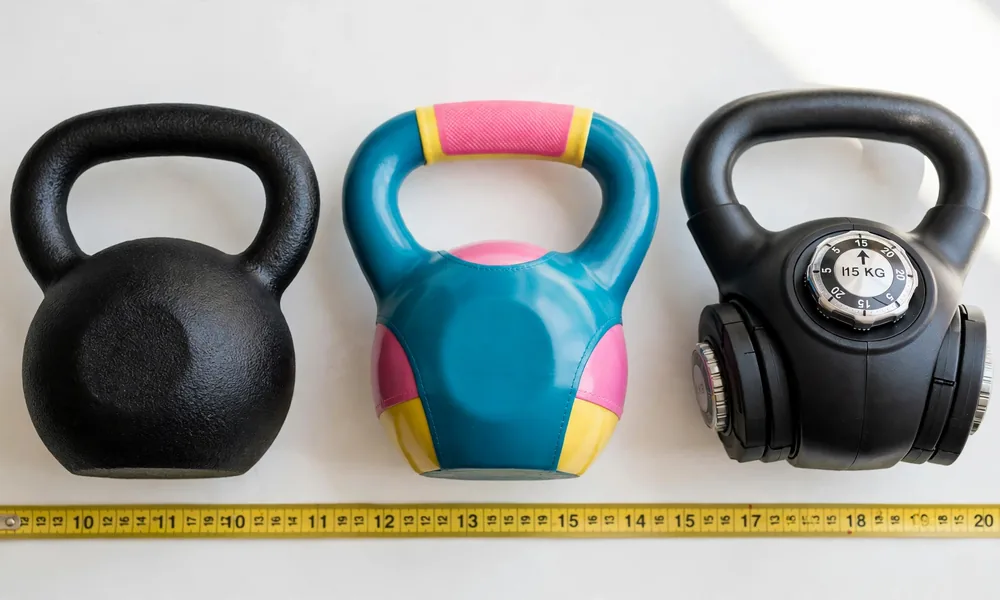
Cast-iron kettlebells are the original, and for most people they are still the right choice. A single piece of cast iron, coated in black paint or powder coating, with the weight stamped on the side. They are cheap, they last forever, and they are available in every weight from 4 kg to 48 kg and beyond. The shape changes as the weight goes up, which is the main drawback: a 12 kg bell is physically bigger than an 8 kg bell, so your technique has to adjust slightly each time you move up. For general training that barely matters, and the price advantage is hard to argue with.
Competition Kettlebells: The Serious Choice
Competition kettlebells are made to a single standard: every weight, from 8 kg to 40 kg, is exactly the same size, 210 millimetres in diameter, with the same 33 millimetre handle. That consistency is the whole point. When you move from a 16 kg bell to a 20 kg bell, nothing changes except the weight, so your technique stays identical and your progress is honest. Competition bells are made of steel rather than iron, colour-coded by weight, and finished with a smooth coating that lets the bell rotate in your hand during cleans and snatches without tearing skin.
Adjustable Kettlebells: The Space Saver
Adjustable kettlebells replace a whole rack with a single handle and a set of plates or a dial mechanism, typically covering 5 to 19 kg in one bell. They are the smartest buy for a small flat, where three fixed bells would eat the only spare corner, and for anyone whose strength is growing fast, because you can add weight in small steps instead of buying a new bell every two months. The best models change weight in seconds with a dial or a pin, lock firmly, and feel balanced at every setting.
Vinyl and Neoprene Kettlebells: The Beginner Pick
Vinyl and neoprene coated kettlebells are cast-iron bells with a soft, colourful shell. They protect wooden floors, they are quiet when you put them down, and they are comfortable to hold, which makes them the friendliest first bell for a beginner training in a living room. They usually top out at 16 kg, which is fine for learning the swing and the goblet squat, but too light for long-term strength work, so treat them as a starter bell rather than a forever bell.
What Weight Kettlebell Should You Start With?
This is the question that decides whether your first month with a kettlebell is fun or frustrating. For two-handed swings, most women should start with 8 kg and most men with 16 kg. Those weights are heavy enough to teach you to use your hips, which is the whole point of the swing, and light enough to learn safely. For goblet squats and presses, go lighter: most women start at 6 to 8 kg and most men at 12 kg. If you are already strong from barbell or dumbbell training, you can start one step heavier, but do not skip the learning phase: a kettlebell swing is a hip hinge, not a squat with a weight in front of you, and the movement is worth learning properly.
The progression rule is simple. When you can swing your bell for ten sets of ten with good form and feel fresh the next day, buy the next weight up, usually 4 kg heavier. That next bell will feel heavy for two weeks and normal by week four, and that is exactly how strength is built. Our guide to the best gym essentials of 2026 shows how a kettlebell fits into a complete home setup, and if you want a second free-weight option, the best dumbbells of 2026 pair well with a bell for a home gym that covers every movement. If you track your training, the best fitness trackers of 2026 will log your swing sessions and your heart rate through them.
The Kettlebell Swing: How to Do It Right
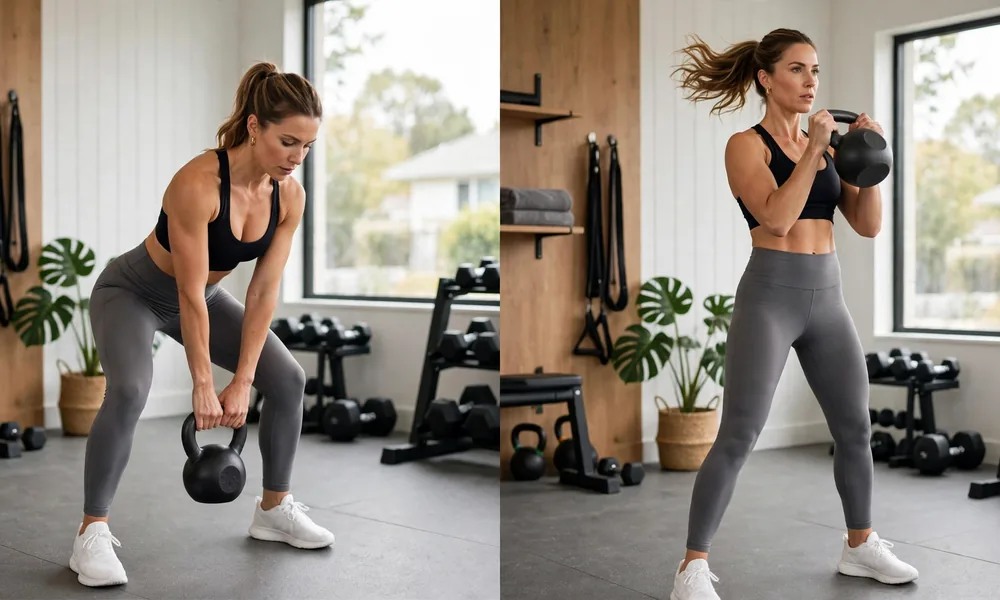
The swing is the kettlebell’s signature move, and it is worth learning properly before anything else. Stand with your feet shoulder-width apart, the bell on the floor a foot in front of you. Hinge at the hips, keeping your back flat, and grip the handle with both hands. Hike the bell back between your legs like a football, then snap your hips forward hard, letting the bell float up to chest height on the power of your hips, not your arms. Your arms are ropes, not motors. At the top, stand tall and squeeze your glutes. Let the bell fall, hinge again as it comes down, and repeat.
Best Kettlebell Workouts for Beginners
A good kettlebell workout needs no other equipment. For a full-body session, try this: two-handed swings, ten sets of ten, with a minute of rest between sets; goblet squats, three sets of eight; single-arm presses, three sets of six per side; bent-over rows, three sets of ten per side; and farmer’s carries, three walks of forty metres. Rest ninety seconds between exercises and the whole session takes about thirty-five minutes. Do it three times a week and you will be noticeably stronger within six weeks.

How to Look After Your Kettlebells
Kettlebells are almost indestructible, which is part of their charm, but a little care keeps them perfect for decades. Keep them indoors and dry, because bare iron rusts in a damp garage. Wipe them down after sweaty sessions, especially powder-coated bells, where chalk and sweat build up in the texture. A light wipe with an oiled cloth once a month keeps the handle smooth and rust-free. Use chalk on your hands rather than on the bell, and re-chalk when your grip starts to slip rather than over-chalking at the start.
Kettlebells Checklist: Before You Buy
- Pick the bell type that matches your goal: cast iron for value, competition for serious swings, adjustable for small spaces.
- Start at the right weight: 8 kg for most women and 16 kg for most men for two-handed swings.
- Check the handle: wide enough for two hands, smooth, with no rough seams or sharp edges.
- Make sure the base is flat so the bell sits stable on the floor between sets.
- Buy one bell first and learn the swing properly before buying a second, heavier one.
- Plan your floor: a rubber mat under your training area protects wood and tile from drops.
Frequently Asked Questions
Is one kettlebell enough for a full workout?
Yes. One bell covers swings, squats, presses, rows, carries and get-ups, which is a complete strength programme. A second, heavier bell adds progression for swings, but you can train productively with a single bell for a year or more.
Are kettlebells good for weight loss?
Yes, because swing sessions burn a lot of calories in a short time and build muscle, which raises your resting metabolism. Combined with walking and a sensible diet, kettlebell training is one of the most time-efficient ways to lose fat while keeping muscle.
Can kettlebells hurt your back?
Done wrong, yes, and done right they protect it. The swing strengthens the glutes and hamstrings that support the lower back, but only if you hinge at the hips with a flat back. Learn the hinge first with a light bell, film yourself, and stop if you feel pain rather than effort.
How heavy should a kettlebell be for a beginner?
For two-handed swings, 8 kg for most women and 16 kg for most men. For presses and goblet squats, go 2 to 4 kg lighter. If you are already strong from other training, start one step heavier, but never skip the technique-learning phase.
Cast iron or competition kettlebells: which is better?
Cast iron is better for most people: cheaper, available everywhere, and perfectly good for general training. Competition bells are better for serious swing athletes who want identical size and handle across every weight. Start with cast iron and upgrade only if your training demands it.
How do I stop my hands tearing during swings?
Use chalk, grip the handle in your fingers rather than your palm, and keep the calluses filed smooth. Torn hands usually mean you are gripping too deep in the palm or over-chalking. A smooth handle and good technique matter more than gloves, which most experienced lifters avoid.
The Bottom Line
The best kettlebells in 2026 are a powder-coated cast-iron bell in the right starting weight: 8 kg for most women, 16 kg for most men. It costs less than a month of gym membership, lasts forever, and carries a complete strength programme in a single lump of iron. Learn the swing properly, progress 4 kg at a time, and add a second bell only when the first feels easy. Do that, and the simplest tool in your gym will quietly become the one that makes you strongest.


