A kettlebell is the simplest strength tool you can own: a lump of iron with a handle, no moving parts, nothing to plug in, and enough exercises in it to carry a whole training programme. It builds strength and power, trains your grip and your hips at the same time, and fits into a living room, a garage, or a spare bedroom without taking over your home. But not every kettlebell is built the same, and the gap between the best and the worst in 2026 is wider than the price tags suggest. A good bell will last forever and feel better every year. A bad one will chip, rust, tear your hands, or weigh something different from what the label claims.
This guide puts both sides on the table. On the best side are the bells that earn their place in a home gym: cast-iron bells that cost little and last for decades, competition bells built for serious swing training, and adjustable bells that replace a whole rack in a single handle. On the worst side are the bells that look like a bargain and turn into a regret: cement-filled plastic shells, vinyl bells with narrow handles and rough seams, and novelty weights too light to train with. If you are building a home gym from scratch, our guide to the best home gyms of 2026 shows where a kettlebell fits alongside the rest of your kit.
Key Takeaways
- Cast-iron kettlebells are the best value for most home gyms: cheap, durable, and available in every weight.
- Competition kettlebells are the best choice for serious swing training, because every weight is the same size and shape.
- Adjustable kettlebells are the best choice for small spaces, because one bell replaces a whole set.
- Cement-filled plastic kettlebells are the worst buy: they crack, their weight is wrong, and they can break apart.
- Vinyl bells with narrow handles and rough seams are the worst for your hands, because they blister skin and force a bad grip.
- Handle quality matters more than brand: a smooth, wide handle beats a rough or narrow one, especially when your hands get sweaty.
How We Judged the Best and the Worst
We judged every kettlebell on five things that matter in real training. First, handle: it should be wide enough for two hands, smooth enough not to tear your skin, and grippy enough to stay put when you sweat. Second, durability: the coating should survive drops, the bell should not chip or rust, and an adjustable mechanism should still work smoothly after a year of use. Third, weight accuracy: a bell marked 16 kg should weigh 16 kg, because a bell that is a kilo light cheats your progress. Fourth, balance: the weight should sit evenly under the handle so the bell moves predictably through a swing. And fifth, value: the price per kilogram, and how many years of training the bell will actually deliver. The worst kettlebells fail on at least two of those five. The best pass all of them.
The Best Kettlebells of 2026
Cast-Iron Kettlebells: The Best Value
Cast-iron kettlebells are the original, and for most people they are still the right choice. A single piece of cast iron, coated in black paint or powder coating, with no parts to break and nothing to adjust. They are cheap, they are available in every weight from 4 kg to 48 kg, and they will outlast every other piece of equipment you own. Drop one on a rubber mat and it will shrug it off. Leave one in a garage for ten years and it will still be exactly the same bell.
The best cast-iron bells have a smooth handle with no rough casting seams, a flat base so the bell sits still on the floor, and a weight stamped clearly on the front. The handle should be wide enough for both hands on a two-handed swing, and the bell should feel balanced rather than nose-heavy. Powder coating grips better than plain paint when your hands sweat, and it resists chipping. For a first kettlebell, this is the default choice, and it is the right one for most people. Our guide to the best kettlebells of 2026 goes deeper on which cast-iron bells lead the field.
Competition Kettlebells: The Serious Choice
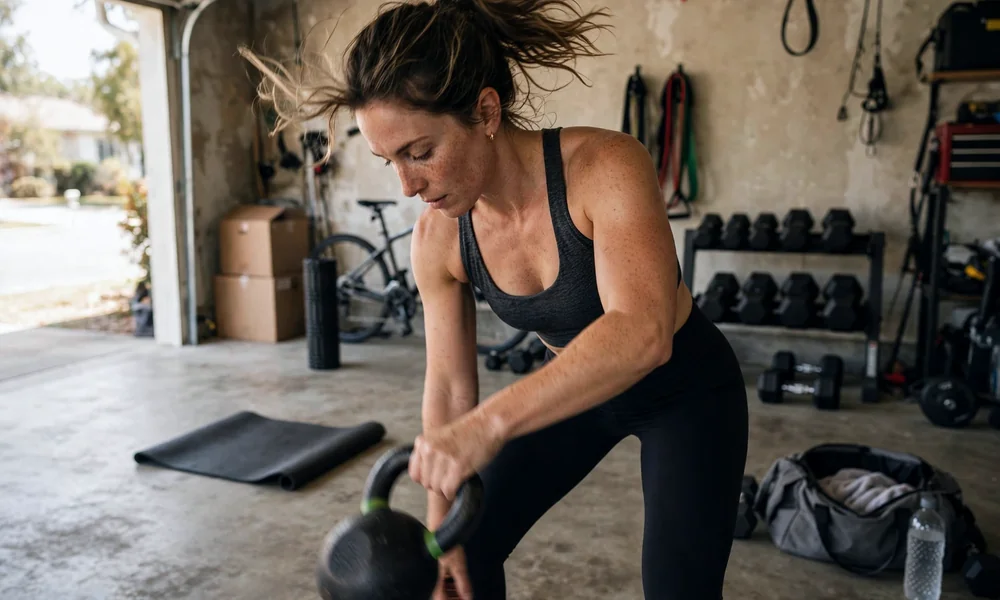
Competition kettlebells are made to a standard: every weight is the same size and the same shape, from 8 kg to 40 kg, with a 33 mm steel handle. That matters when you train seriously, because your technique never has to change when you go heavier. The bell always sits in the same place in your hand, the handle always feels the same, and the swing always moves the same way. For anyone who swings three or more times a week, that consistency is worth paying for.
Adjustable Kettlebells: The Space Saver
An adjustable kettlebell replaces a whole rack with a single handle. Turn a dial or swap plates inside the shell, and the same bell goes from 5 kg to 19 kg in seconds. For a small flat or a shared living room, where five cast-iron bells would eat the whole floor, that is a genuine advantage. You buy once, and the weight grows with your strength instead of forcing you to buy a new bell every few months.
The best adjustable bells have a positive locking mechanism that cannot slip mid-swing, plates that sit tight with no rattle, and a handle shaped like a real kettlebell handle rather than a dumbbell handle with a shell around it. The trade-off is feel: adjustable bells are bulkier than a single cast-iron bell, and the mechanism adds weight in the wrong place for some lifts. They are also not made to be dropped. Treat them gently, set them down rather than throwing them, and they will serve a small-space gym well for years.
The Worst Kettlebells of 2026
Cement-Filled Plastic Kettlebells: The Worst Buy
Cement-filled plastic kettlebells are the worst buy in the category, and it is not close. The shell is thin plastic, the filling is concrete or sand, and the handle is part of the same moulded shell. Drop one and the shell cracks. Swing one hard and the filling shifts, so the bell goes off balance. Leave one in a hot garage and the plastic goes brittle. Worst of all, the weight is often wrong: a bell marked 12 kg can weigh 10 kg or 14 kg, because concrete is not a precision material and the filling process is not a precision job.
Vinyl Bells With Narrow Handles: The Worst for Your Hands
Vinyl-coated kettlebells can be perfectly good when they are well made, with a wide handle and a smooth coating. The cheap versions are a different story. The handle is often too narrow for two hands, which forces you to grip with your fingers curled tight, and the coating has a raised seam running along the handle where the two halves of the mould met. That seam rubs a blister into your palm within a single session, and no amount of chalk fixes it.

Novelty and Ultra-Light Bells: The Worst Value
Then there are the kettlebells that are not really kettlebells at all: pairs in pastel colours sold as a fashion accessory, weights so light they would not challenge a child, and bells bundled with a branded carry bag that costs more than the iron inside it. A 2 kg kettlebell has a place in rehabilitation and in the very first week of learning the swing, but a set that tops out at 4 kg is not a strength tool. It is a prop.
Best vs Worst Kettlebells Compared
| Type | Verdict | Best For | Typical Price | Watch Out For |
|---|---|---|---|---|
| Cast iron | Best | General training, value | $25–$90 | Rough casting seams |
| Competition steel | Best | Serious swing training | $60–$200 | Overkill for beginners |
| Adjustable | Best | Small spaces, growing strength | $100–$250 | Do not drop them |
| Cement-filled plastic | Worst | Nothing | $15–$40 | Cracks, wrong weight |
| Narrow-handle vinyl | Worst | Nothing | $20–$70 | Seams blister hands |
| Novelty ultra-light | Worst | Nothing | $15–$50 | Too light to train with |
What Weight Kettlebell Should You Start With?
Most people start too light, and then wonder why the swing feels like waving a handbag. A useful starting point for two-handed swings is 8 kg for most women and 16 kg for most men. That sounds heavy if you have never swung a bell, but the swing is a hip movement, not an arm movement, and your hips are far stronger than you think. A bell that feels challenging for a press will feel light for a swing, and the swing is where a kettlebell earns its keep.
The Kettlebell Swing: How to Do It Right
The swing is the foundation of kettlebell training, and it is a hip hinge, not a squat and not a shoulder raise. Stand with your feet shoulder-width apart, hinge at the hips, and grip the handle with both hands. Drive your hips forward sharply, let the bell float up to chest height on the momentum, and let it fall back down as you hinge again. Your arms are ropes, not levers: they guide the bell, they do not lift it.
Grip, Hands, and Looking After Your Bells
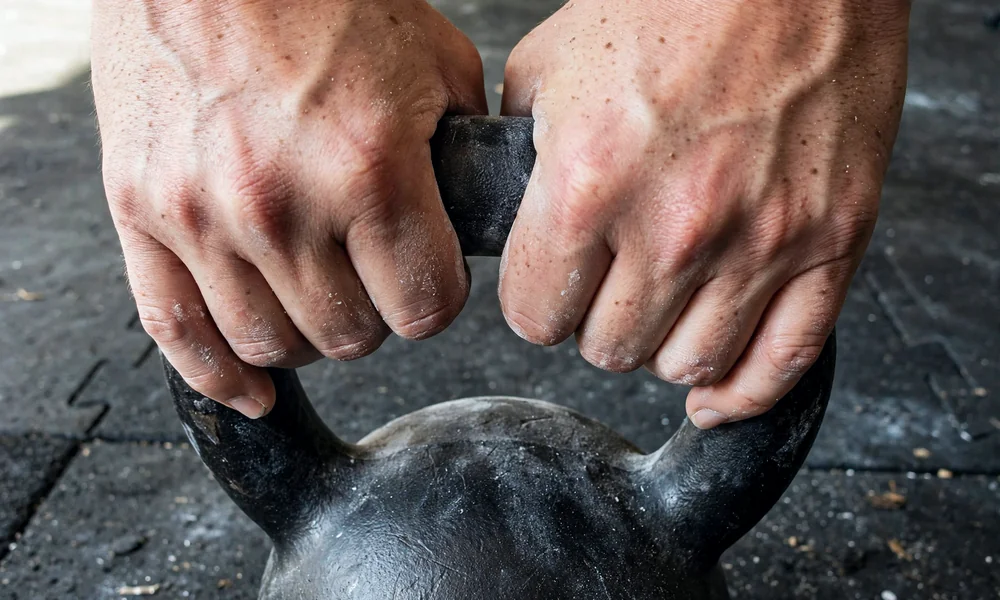
Your hands are the weak link in kettlebell training, and the handle decides how long they last. Grip the handle in your fingers rather than deep in your palm, use chalk to keep the handle dry, and file your calluses smooth so they do not catch and tear. Torn hands usually mean you are gripping too deep or over-chalking, not that you need gloves. Most experienced lifters avoid gloves entirely, because gloves bunch up and create the blisters they are meant to prevent. For the rest of your kit, our guide to the best battle ropes of 2026 covers another grip-heavy tool that pairs well with kettlebell work.
Frequently Asked Questions
Is one kettlebell enough for a full workout?
Yes. A single kettlebell can train your legs, hips, back, shoulders, and grip, and a programme built around swings, goblet squats, presses, and rows is a complete workout. Add a second, heavier bell when the first feels easy, and you have a home gym that fits in a corner.
Cast iron or competition kettlebells: which is better?
Cast iron is better for most people: cheaper, available everywhere, and perfectly good for general training. Competition bells are better for serious swing athletes who want identical size and handle across every weight. Start with cast iron and upgrade only if your training demands it.
The Bottom Line
The best kettlebells in 2026 are a powder-coated cast-iron bell in the right starting weight: 8 kg for most women, 16 kg for most men. It costs less than a month of gym membership, lasts forever, and carries a complete strength programme in a single lump of iron. Learn the swing properly, progress 4 kg at a time, and add a second bell only when the first feels easy.
The worst kettlebells are the ones that fail quietly: cement-filled plastic that cracks, vinyl bells with narrow handles that tear your hands, and novelty weights too light to train with. Avoid those three and you avoid almost every kettlebell regret. Choose a bell with a wide, smooth handle and an honest weight, learn the hinge before you chase the load, and the simplest tool in your gym will quietly become the one that makes you strongest.