
The best battle ropes in 2026 are one of the simplest ways to add serious conditioning to a home gym. Two heavy ropes, an anchor point and a clear stretch of floor are all you need for a workout that builds grip, shoulders, core and cardio at the same time, in sessions as short as ten minutes.
Battle ropes look basic, but buying the wrong pair is an easy mistake. A rope that is too thin feels like a skipping rope, a rope that is too long drags on the floor, and a rope made from cheap material sheds fibres, frays at the handles and falls apart within months. The best battle ropes are thick, heavy, well made and matched to your space and strength.
This guide compares the best battle ropes of 2026 by diameter, length, material, handle quality and value, and explains how to choose the right rope for a garage gym, a garden or a commercial-style home setup. It also covers the best beginner and advanced rope workouts, so you can start training the day your rope arrives.
Key Takeaways
- A 1.5-inch rope is the best starting point for most people; 2-inch ropes suit stronger, more experienced trainers.
- Length matters more than most buyers expect: 30 feet suits a home gym, while 50 feet needs a long, clear space.
- Polyester ropes resist weather and wear better than manila ropes, which shed and weaken when wet.
- Heat-shrunk handles with a firm grip beat taped handles, which loosen and unravel with heavy use.
- You need a solid anchor and at least 3 metres of clear floor in front of it to train safely.
How to Choose the Best Battle Ropes
Start with diameter, because it decides how heavy and how hard the rope feels. A 1.5-inch rope typically weighs around 8 to 10 kg for a 30-foot length, which is challenging but manageable for most adults. A 2-inch rope of the same length can weigh 14 kg or more, and it demands far more grip and shoulder strength. Beginners should start with 1.5 inches and move up only when they can hold good form for full 30-second intervals.
Length is the second decision. A 30-foot rope is the standard home-gym choice: folded in half around an anchor, it gives you about 4.5 metres of working rope per hand, which fits most garages and gardens. A 40-foot rope suits larger spaces and taller trainers, while a 50-foot rope is really for commercial gyms or outdoor areas with plenty of room. A rope that is too long for your space will drag, catch on the floor and wear out faster.
Rope Material: Polyester, Manila or Nylon
Polyester is the best battle rope material for most buyers in 2026. It is strong, it holds its shape, it resists water and sunlight, and it sheds far less than natural fibre ropes. A good polyester rope feels smooth in the hand, keeps its thickness when it gets damp, and lasts for years with basic care.
Manila ropes are the traditional choice, made from natural fibre, and they have a rough, grippy feel that some trainers love. The downside is maintenance: manila sheds fibres, absorbs water, and can rot or weaken if it is left outside in the rain. Nylon ropes sit in between, strong and weather resistant, but they can feel slippery when your hands get sweaty. For a rope that lives in a garage or garden, polyester is the safest bet.
Handles, Anchors and Weight
Handles make a bigger difference than they look. The best battle ropes have handles formed by heat-shrunk sleeving over the rope end, which stays tight, feels comfortable and stops the rope unravelling. Taped handles are cheaper, but the tape peels, bunches and comes loose after a few hard sessions, leaving a messy, uncomfortable grip.
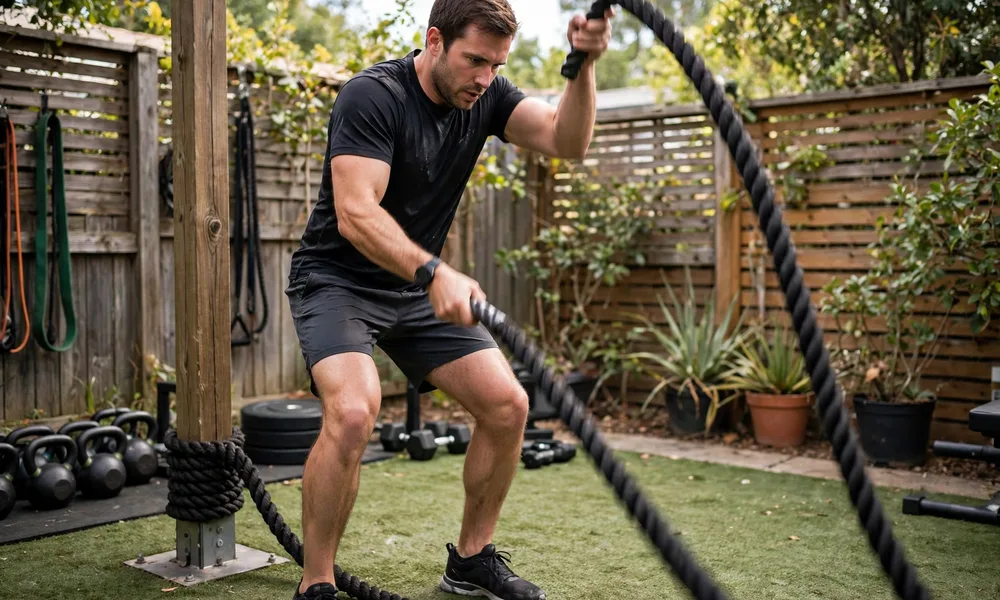
Every battle rope needs a solid anchor. Some ropes come with a strap or sleeve that loops around a post, rack or tree, while others need a separate wall anchor or ground anchor. Whatever you use, test it before your first full workout: pull hard from different angles and make sure nothing moves. A rope that comes loose mid-set is dangerous, especially in a small space.

Best Battle Ropes for Beginners 2026
The best battle ropes for beginners are 1.5 inches in diameter and 30 feet long, made from polyester with heat-shrunk handles. That combination is heavy enough to be a real workout, light enough to learn good technique, and short enough to fit a normal home gym.
Beginners should look for a rope that is easy to grip even with sweaty hands, with a sleeve or anchor strap included in the box so you can start training straight away. A rope that weighs 8 to 10 kg is the sweet spot: you will feel it in your shoulders and grip within 20 seconds, but you will still be able to keep your form for a full interval.
Best Heavy Battle Ropes 2026
Heavy battle ropes, usually 2 inches in diameter and 40 or 50 feet long, are for experienced trainers who want maximum resistance. A 2-inch, 50-foot rope can weigh more than 20 kg, and every wave feels like a serious strength effort as well as a conditioning challenge.
The best heavy ropes in 2026 use dense, tightly braided polyester with reinforced handles that can take the extra load without fraying. They need a very solid anchor and a long, clear space, because the waves travel further and the rope moves more violently than a lighter rope.
Heavy ropes suit athletes, strong lifters and anyone who has already spent months training with a 1.5-inch rope. They are not a beginner purchase, and buying one too early usually means it sits in the corner while you go back to a lighter rope. If you want to build the grip and pulling strength to handle one, our guide to the best kettlebells of 2026 covers another excellent tool for the same job.
Best Battle Ropes for Small Spaces 2026
Not everyone has a garage or a garden to train in, and the best battle ropes for small spaces are shorter, lighter and easier to store. A 20-foot or 30-foot rope in 1.5-inch diameter can work in a space as small as 3 by 2 metres, as long as you have a solid anchor and nothing breakable within reach of the waves.
Short ropes feel faster and lighter than long ropes, so they suit high-intensity intervals and cardio-focused workouts rather than heavy strength work. They also coil neatly for storage, which matters if your gym shares space with a living room or a spare bedroom. Look for a rope with a carry strap or storage bag if you plan to put it away after every session.
Best Battle Ropes Compared
| Rope Type | Best For | Typical Weight | Typical Price | Key Strength |
|---|---|---|---|---|
| 1.5-inch, 30 ft polyester | Most home gyms | 8–10 kg | £40–£80 | Best balance of challenge and control |
| 1.5-inch, 40 ft polyester | Larger spaces | 11–13 kg | £50–£90 | Longer waves, more room to work |
| 2-inch, 30 ft polyester | Stronger trainers | 13–15 kg | £60–£100 | Serious grip and shoulder challenge |
| 2-inch, 50 ft polyester | Athletes, big spaces | 20 kg or more | £80–£140 | Maximum resistance and conditioning |
| Manila, 1.5-inch, 30 ft | Traditional feel | 9–11 kg | £35–£70 | Rough, grippy natural fibre |
Best Battle Rope Workouts
Battle ropes are at their best in short, intense intervals. A simple starter workout is five rounds of 30 seconds of alternating waves followed by 30 seconds of rest, which takes five minutes and leaves most people breathing hard. As you get fitter, extend the work intervals to 40 seconds, shorten the rest, or add more rounds. Pairing rope work with lighter accessory tools also helps: our roundup of the best resistance bands of 2026 covers a cheap, portable option that works well for warm-ups and shoulder care alongside rope training.
Alternating waves are the foundation move: one arm up while the other goes down, creating a smooth, rolling wave down each side of the rope. Double waves, where both arms move together, hit the shoulders and core harder. Slams, where you lift both ropes overhead and drive them into the floor, add power and full-body effort. Side-to-side waves and circles work the core and shoulders from different angles.
What to Avoid When Buying Battle Ropes
The worst battle ropes are easy to spot once you know the signs. A rope that feels light for its size is usually loosely braided, which means it will flatten, fray and lose its shape quickly. Handles wrapped in thin tape that already feels loose in the box will not survive a month of hard training. And a rope with no anchor strap or sleeve means an extra purchase before you can use it at all.

Battle Rope Buying Checklist
- Choose 1.5-inch diameter if you are new to ropes, and 2-inch only when you can hold good form for full intervals.
- Pick a length that fits your space: 30 feet for most home gyms, longer only if you have the room.
- Choose polyester for weather resistance and low maintenance, especially for outdoor or garage training.
- Check the handles are heat-shrunk and firm, not loose tape that will peel and unravel.
- Make sure an anchor strap, sleeve or wall anchor is included, or buy one before your first workout.
- Measure your training space and test the anchor with hard pulls before your first full session.
Frequently Asked Questions
What size battle rope should a beginner buy?
Most beginners should buy a 1.5-inch, 30-foot polyester rope. It is heavy enough to be challenging, short enough to fit a home gym, and light enough to learn good technique. Move up to a thicker or longer rope only after a few months of regular training.
Are battle ropes good for weight loss?
Battle ropes are excellent for conditioning and burning calories in short sessions, because they work the arms, shoulders, core and legs while raising your heart rate quickly. They work best as part of a wider routine with strength training and sensible eating, rather than as a standalone weight-loss tool.
How long should a battle rope workout last?
Ten to fifteen minutes of intervals is enough for most people, especially if you train with ropes after a strength session. Longer sessions are possible, but form usually breaks down after 15 to 20 minutes, so short, intense workouts are more effective than long, sloppy ones.
Can I use battle ropes indoors?
Yes, as long as you have a solid anchor and at least 3 metres of clear floor in front of it. Check the ceiling height if you plan to do overhead slams, and use a mat under the anchor point to protect the floor. For other compact home-gym options, see our guide to the best pull-up bars of 2026.
Do battle ropes build muscle?
Battle ropes build muscular endurance, grip strength and shoulder stability, and they can add size to the forearms and shoulders over time. They are not a replacement for heavy lifting if your main goal is maximum muscle, but they are a superb complement to a strength programme.
How do I anchor battle ropes at home?
Loop the rope around a sturdy post, a power rack, a tree or a dedicated wall anchor rated for the load. Test the anchor with hard pulls from several angles before you train, and never anchor a rope to something that can tip, slide or break under force.
The Bottom Line
The best battle ropes in 2026 are simple, heavy and well made: a 1.5-inch, 30-foot polyester rope with heat-shrunk handles is the right starting point for most home gyms, while stronger trainers with more space can step up to a 2-inch, 40- or 50-foot rope. Choose the size that fits your space and strength, anchor it properly, and train in short, intense intervals with good form. Done that way, a battle rope is one of the cheapest, toughest and most effective pieces of conditioning kit you can own.


