
The best resistance bands in 2026 are the smallest, cheapest and most underrated strength tool you can own. A full set weighs less than a paperback, costs less than a single dinner out, and turns any living room, hotel room or park bench into a working gym. What has changed is how serious the gear has become: fabric loop bands that never roll or pinch, tube bands with clearly graded resistance up to 150 pounds, and pull-up assist bands thick enough to support a full bodyweight. The best resistance bands for you depend on how you train, how much space you have, and whether you want them for strength, mobility, rehab or travel, and this guide works through all of it.
We compared the leading resistance band types for tension accuracy, durability, comfort, grip and value for money, and ranked the strongest options for beginners, home gyms, travellers and serious lifters. Whether you want one loop band for glute work or a complete set that replaces a rack of weights, there is a pick here that fits. Resistance bands are not a compromise or a warm-up toy. Used well, they build real strength, and the research is clear: elastic resistance produces muscle activation comparable to free weights for most exercises, with less joint stress and a smoother strength curve.
Key Takeaways
- Loop bands are the best starting point for most people: cheap, simple and perfect for legs, glutes and mobility work.
- Tube bands with handles are the best all-rounders, because they mimic dumbbell and cable exercises for the upper body.
- Buy a set, not a single band: graded resistance from light to heavy lets you progress instead of plateauing.
- Fabric bands beat latex for hip work because they stay put, while latex bands stretch further and suit pulling exercises.
- Check the stated resistance in pounds or kilograms, not just the colour, because colours are not standardised between brands.
How We Picked the Best Resistance Bands
We judged every resistance band on five things that matter in real training. First, tension accuracy: the stated resistance should match what you feel, and the band should get harder smoothly as it stretches rather than snapping tight halfway through a rep. Second, durability: latex should not crack or go sticky, fabric should not fray, and handles and carabiners should survive hundreds of sessions. Third, comfort: a band that rolls, pinches or digs into your skin will sit in a drawer, no matter how strong it is. Fourth, versatility: the best bands work across strength, mobility, stretching and rehab, not just one exercise. And fifth, value: the cost per band, and how many years of training the set will actually deliver.
Best Resistance Bands by Type
Each type earns its place for a different reason. The table below compares them at a glance, and the sections that follow go into the detail that decides which one you should buy first.
| Band Type | Best For | Typical Resistance | Typical Price | Portability |
|---|---|---|---|---|
| Loop bands (latex) | Legs, glutes, mobility | 5–50 lbs | $10–$25 | Excellent |
| Fabric loop bands | Hip and glute work | Light–heavy | $15–$30 | Excellent |
| Tube bands with handles | Upper body, full-body strength | 10–150 lbs | $20–$60 | Very good |
| Pull-up assist bands | Pull-ups, stretching, powerlifting | 15–175 lbs | $10–$40 each | Good |
| Figure-8 bands | Arms, shoulders, rehab | Light–medium | $8–$20 | Excellent |
| Mini bands | Warm-ups, physio, activation | Very light–medium | $8–$15 | Excellent |
Loop Bands: The Best First Buy
Loop bands are closed circles of latex or fabric, usually 12 inches across when flat, and they are the single most useful band shape for most people. Slip one just above your knees and suddenly a bodyweight squat becomes a glute workout. Put one around your ankles and lateral walks, clamshells and monster walks all become serious strength work. Loop bands are also the best choice for stretching and mobility, because you can loop them around a foot or a post and pull yourself gently into a deeper stretch.
Latex loop bands come in sets of four or five, graded from extra light to extra heavy, and they are the cheapest way into band training. Their weakness is that they roll up your legs during squats and can pinch skin and catch leg hair. Fabric loop bands solve that completely: the woven material grips skin and clothing, stays exactly where you put it, and feels far more comfortable under load. Fabric bands cost a little more and stretch less, which makes them slightly worse for very deep stretches, but for hip and glute training they are the clear winner in 2026. If you buy one thing, buy a set of fabric loop bands in three resistance levels.

Tube Bands With Handles: The Dumbbell Replacement
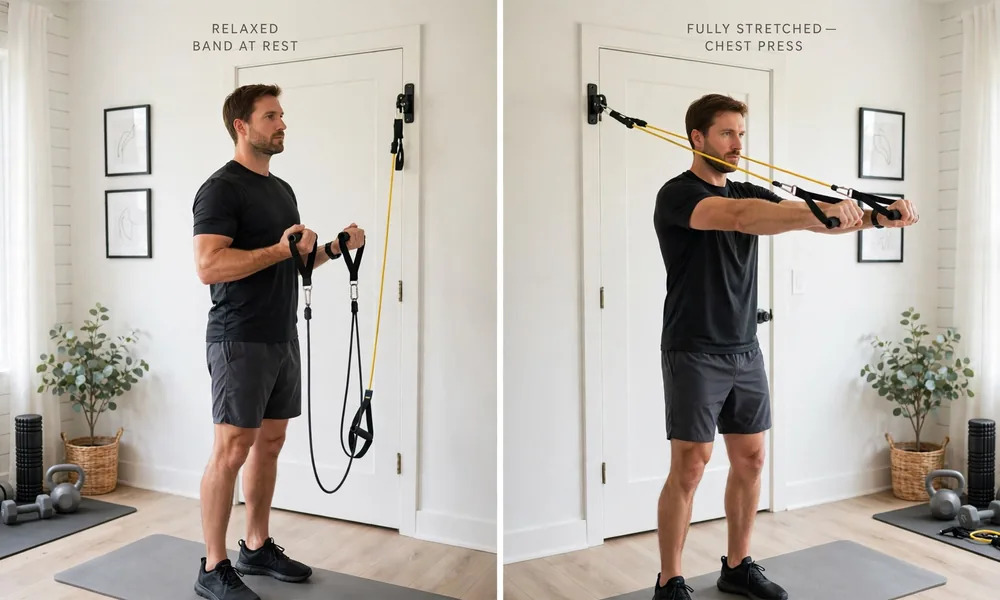
Tube bands are long latex tubes with a handle on each end, and they are the closest thing bands come to a full dumbbell set. Anchor one under your foot and you can press, row, curl and raise with it. Clip two or three together with the carabiner system most sets include, and you can stack resistance up to 150 pounds, which is enough for serious pressing and rowing. Tube bands also come with a door anchor, a small strap that wedges into a door frame and turns any door into a cable machine, plus ankle straps for kickbacks and leg work.
Pull-Up Assist Bands: The Strength Builder
Pull-up assist bands are the thick, heavy loops, often over an inch wide, that hook over a bar and under your knee or foot to take some of your bodyweight during pull-ups and dips. They are the fastest way to go from zero pull-ups to your first unassisted rep, because they let you train the full movement pattern with less load, and you can step down to a thinner band as you get stronger. The same bands double as stretching tools and as added resistance for barbell lifts, where lifters loop them over the bar to make the top of a squat or bench press harder.
How to Choose the Right Resistance Bands
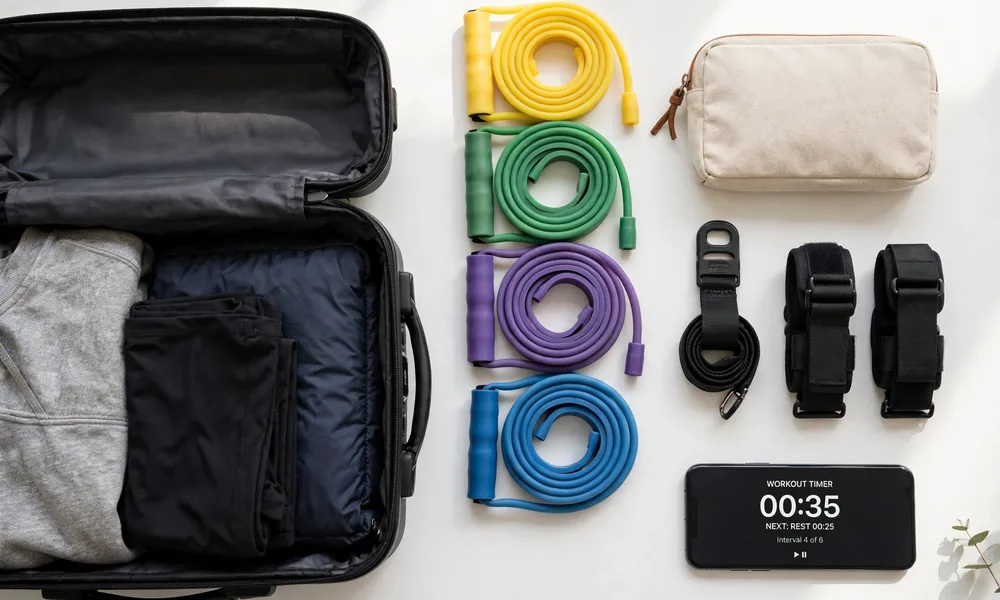
Start with how you will actually train. If your goal is stronger legs and glutes, buy fabric loop bands first. If you want a full-body home workout, buy a tube set with handles, a door anchor and ankle straps. If you want to learn pull-ups, buy one heavy assist band. If you travel constantly, buy a set of mini bands and one medium loop band, which together weigh less than your phone charger and fit in a jacket pocket.
Then look at the material. Natural latex is the stretchiest and most durable option for most bands, but it can trigger latex allergies and it degrades faster in heat and sunlight, so store it in a cool drawer rather than a hot car. Fabric bands are latex-free in most cases, more comfortable and longer lasting for hip work, but they stretch less and cost more. If you have a latex allergy, fabric bands and latex-free synthetic tubes are the safe choice, and you should check the product description rather than assuming.
Best Resistance Band Workouts for Beginners
A good band workout needs no other equipment. For a full-body session, try this: banded squats, three sets of twelve, with a loop band above your knees; tube rows, three sets of twelve, anchored around a sturdy post or through a door anchor; overhead presses, three sets of ten, standing on a tube band; glute bridges, three sets of fifteen, with a fabric band above your knees; and pallof presses, three sets of ten per side, for core strength. Rest sixty seconds between sets and the whole session takes about thirty minutes.
Our guide to the best gym essentials of 2026 shows how resistance bands fit into a complete home setup, and if you want to build out the rest of your kit, the best dumbbells of 2026 pair perfectly with bands for a home gym that covers every movement. Bands also make an excellent present, which is why they feature in our roundup of the best fitness gifts of 2026.
How to Look After Your Resistance Bands
Resistance bands last for years with basic care and for months without it. Keep them out of direct sunlight and away from radiators, because heat and UV break latex down fast. Wipe them down after sweaty sessions with a damp cloth and a little mild soap, then let them air dry before storing them loosely coiled in a drawer or bag. Never store them stretched around something, and never leave them knotted, because both damage the material over time. Fabric bands can go in a laundry bag on a cold wash when they get grubby.
Resistance Bands Checklist: Before You Buy
- Pick the band type that matches your main goal: loops for legs, tubes for full-body, assist bands for pull-ups.
- Check the stated resistance in pounds or kilograms for every band in the set, not just the colour.
- Buy a set with at least three resistance levels so you can progress instead of plateauing.
- Test the handles and carabiners: they should feel solid metal, not hollow plastic.
- If you have a latex allergy, choose fabric bands or a latex-free synthetic set.
- Plan your storage: a cool drawer beats a hot car boot, and loose coils beat tight knots.
Frequently Asked Questions
Are resistance bands as good as weights?
For most people and most exercises, yes. Bands produce similar muscle activation to free weights, with less joint stress and a resistance curve that matches how muscles work. They are less practical for very heavy lower-body strength work, where a barbell still wins, but for general strength, toning and rehab they are genuinely comparable.
How long do resistance bands last?
A good latex band lasts one to two years of regular use, and a fabric band often lasts longer. Sunlight, heat and poor storage shorten that dramatically, while keeping bands cool, dry and loosely coiled extends it. Retire any band with nicks, cracks or a sticky surface.
Can resistance bands help you lose weight?
Bands help by building muscle, and muscle burns more calories at rest than fat does. Combined with walking and a sensible diet, band training is an effective part of a weight-loss plan, but no band on its own burns fat without the rest of the picture.
What resistance should a beginner start with?
Most beginners should start with a light to medium band, roughly 10 to 25 pounds of resistance, and focus on form before adding load. Women often start a little lighter for upper-body work and men a little heavier, but the right band is the one that lets you complete ten good reps with the last two feeling hard.
Can you build muscle with resistance bands alone?
Yes, provided you train progressively: heavier bands, more reps, slower lowering phases, or shorter rests. The limiting factor is not the band but the programme. People who plateau with bands usually need a heavier band or a harder variation, not a different tool.
Are fabric bands better than latex bands?
For hip and glute work, yes: fabric bands stay put, do not roll and feel more comfortable. For stretching, pulling and full-body work, latex bands are better because they stretch further and offer a smoother resistance curve. Most serious band users own both.
The Bottom Line
The best resistance bands in 2026 are a set of fabric loop bands for legs and glutes, plus a tube set with handles and a door anchor for full-body strength. Together they cost less than a month of gym membership, weigh almost nothing, and cover every major movement pattern. Buy by stated resistance, not by colour, look after the latex, and progress steadily to heavier bands. Do that, and the smallest tool in your gym will quietly become the one you reach for most.


