The best foam rollers in 2026 are the cheapest recovery tool that actually works. A good foam roller loosens tight muscles, eases soreness after a hard workout, and improves flexibility, all for the price of a couple of gym visits. It needs no batteries, no app, and no instruction manual.
Choosing the best foam roller is not about buying the hardest or the most expensive one. It is about matching the density, length, and surface to your body and your training. This guide compares the main types honestly and explains how to use a roller properly.
Key Takeaways
- A medium-density roller is the best starting point for most people, firm enough to work and gentle enough to use daily.
- Long rollers suit backs and full-body sessions, while short rollers are better for travel and targeting small muscles.
- Textured rollers give a deeper massage, but smooth rollers are kinder on sensitive muscles and beginners.
- Roll slowly, about one inch per second, and pause for 20 to 30 seconds on tender spots.
- Never roll directly on joints, bones, or your lower back, and stop if you feel sharp pain.
What Is Foam Rolling and Why Does It Work?
Foam rolling is a form of self-massage. You use your body weight to press a muscle against a firm cylinder, and the pressure helps release tension in the muscle and the fascia, the thin layer of tissue that surrounds it. Rolling increases blood flow to the area, which helps the muscle recover faster.
The evidence is encouraging rather than miraculous. Studies show that foam rolling can reduce muscle soreness after exercise, improve short-term flexibility, and help you move more freely before a workout. It does not replace stretching or strength training, but it is a useful addition to both.
Who Should Use a Foam Roller?
Almost anyone who exercises can benefit from a foam roller. Runners use them for calves and thighs, lifters use them for backs and shoulders, and desk workers use them for stiff necks and upper backs. The only people who should be cautious are those with a recent injury or a condition that affects circulation: if you are unsure, ask a doctor first.
Best Foam Rollers by Type in 2026
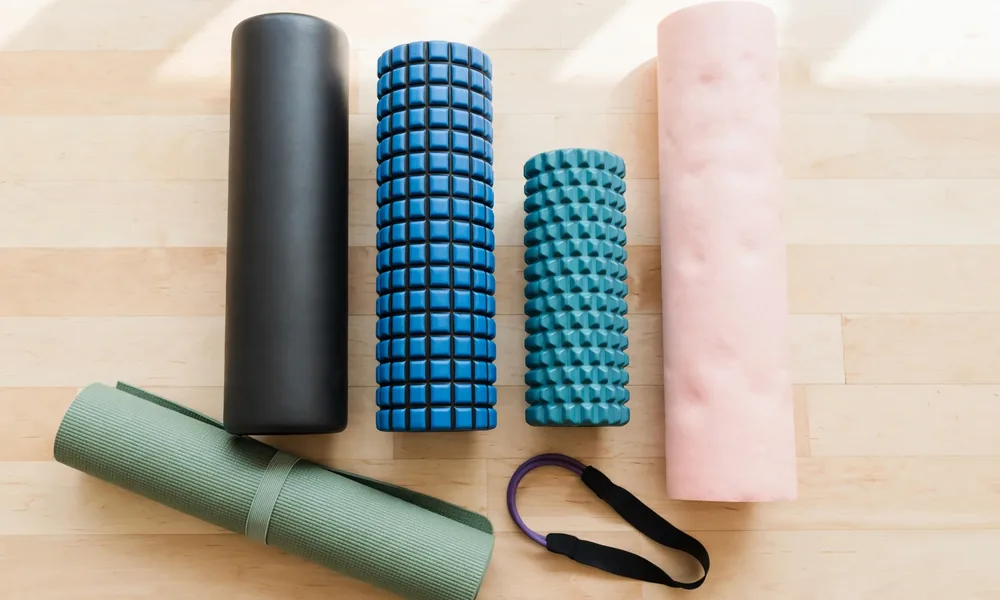
There is no single best foam roller for everyone, because the right choice depends on your body, your training, and your pain tolerance. The five types below cover almost every user.
Best High-Density Foam Roller
A high-density roller is firm, smooth, and unforgiving, and it is the standard choice for regular trainers. It holds its shape under heavy body weight, so the pressure stays consistent, and it does not soften over time the way cheap rollers do. It is the best option for legs, glutes, and backs. The trade-off is comfort: a firm roller can be painful at first, especially on sensitive areas.
Best Textured Foam Roller
A textured roller has ridges, grids, or bumps moulded into its surface, designed to mimic a massage therapist’s fingers and thumbs. The raised areas concentrate pressure on smaller points, which gives a deeper, more targeted massage than a smooth roller. Textured rollers are popular with athletes who want to work on stubborn knots. The downside is that they can be too intense for beginners.
Best Short Travel Foam Roller
A short roller, usually around 30 centimetres long, is made for travel and for targeting small muscles. It fits in a suitcase or a gym bag, and it is easy to use on calves, forearms, and feet. The limitation is obvious: a short roller cannot support your whole back, so it is not the best choice for full-body sessions.
Best Long Foam Roller for Backs
A long roller, usually 90 centimetres, is the best choice for back work and full-body routines. You can lie along it lengthways, which supports the whole spine, or lie across it to roll the upper back and shoulders. Long rollers are also the best option for balance exercises. They take up more space and cost more, but if you roll your back regularly, the extra length is worth it. Pair one with a good mat: our guide to the best yoga mats of 2026 covers the mats that grip best on hard floors.
Best Soft Foam Roller for Beginners
A soft roller is made from lower-density foam, and it is the kindest option for beginners, older users, and anyone with sensitive muscles. It gives enough pressure to be useful without the pain of a firm roller, and it is the best way to learn the technique. The limitation is durability: soft foam flattens over time, so expect to replace it sooner than a high-density roller.
How to Use a Foam Roller Properly
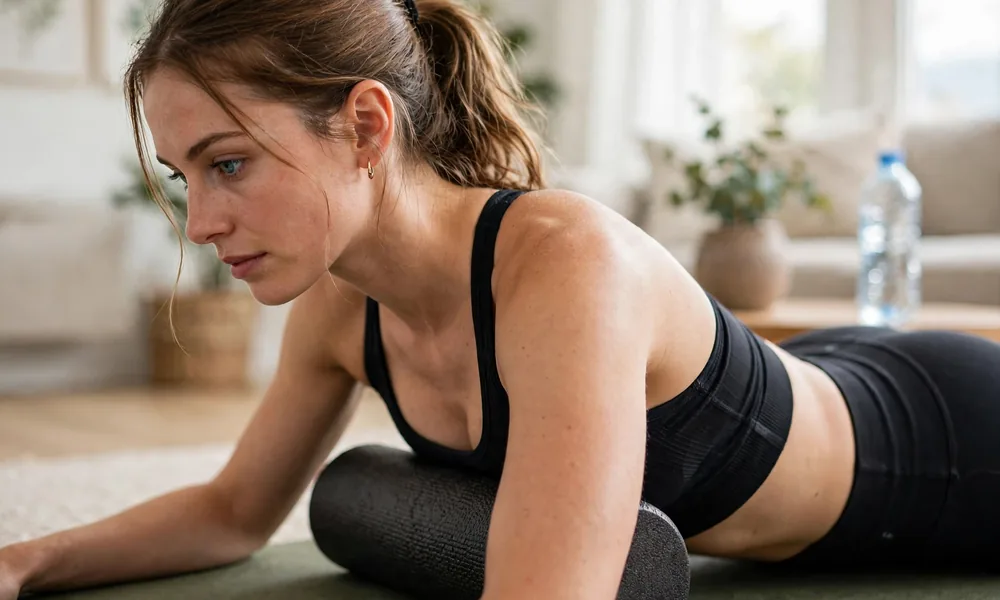
Good technique matters more than an expensive roller. Place the roller under the muscle, and use your hands and the opposite leg to control how much body weight goes onto it. Roll slowly, about one inch per second, and breathe normally. When you find a tender spot, stop and hold the pressure for 20 to 30 seconds. A session of five to ten minutes is enough.
Common Mistakes to Avoid
The most common mistake is rolling too fast. Moving quickly over a muscle does very little, and it is easy to miss the tight spots. The second mistake is rolling directly on a joint, a bone, or the lower back, which has no ribs to protect it. Roll the glutes and upper back instead. The third mistake is holding your breath and tensing up. Stay relaxed, breathe slowly, and let the roller do the work.
When to Roll: Before or After a Workout?
Both work, for different reasons. Rolling before a workout warms up the muscles and improves flexibility, so keep it brief, about five minutes. Rolling after a workout helps with recovery and soreness, and you can take up to ten minutes. Many people also roll on rest days. The best time is the time you will actually do it.
Foam Rollers Compared
| Roller Type | Best For | Typical Price | Firmness | Length |
|---|---|---|---|---|
| High-density | Regular trainers, legs and back | £20–£40 | Firm | 45–60 cm |
| Textured | Athletes, deep knots | £25–£50 | Firm | 45–60 cm |
| Short travel | Travel, calves and feet | £10–£25 | Medium | 30 cm |
| Long roller | Back work, full-body sessions | £30–£60 | Medium–firm | 90 cm |
| Soft beginner | Beginners, sensitive muscles | £10–£20 | Soft | 45 cm |
| Vibrating | Deep recovery, warm-ups | £60–£120 | Firm | 45 cm |
How to Choose the Best Foam Roller for You
Start with your experience. If you have never used a foam roller, choose a medium-density smooth roller, firm enough to work and gentle enough to use daily. If you already roll regularly, move up to a high-density or textured model. Then think about length: 45 centimetres suits most people, 90 suits back work, and 30 suits travel.
Next, consider your body weight and your main use. Heavier users need denser foam, since soft rollers flatten under more weight. Runners should prioritise a roller that works well on calves and thighs, while desk workers should prioritise one for the upper back and shoulders. A good roller should last two to three years.
Foam Roller or Massage Gun: Which Is Better?
A foam roller and a massage gun do different jobs. A foam roller is better for large muscle groups and flexibility, since it works across a wide area and you control the pressure with your body weight. It is also silent, cheap, and never needs charging. A massage gun is better for pinpointing a single knot. If you can only buy one, start with a foam roller. Our roundup of the best gym essentials for 2026 covers the recovery tools that pair well with it.
Caring for Your Foam Roller
A foam roller needs very little care. Wipe it down after each use with a damp cloth and mild soap, and let it air dry fully before storing it. Keep it out of direct sunlight, which can make the foam brittle, and never store it under heavy objects that could flatten it.
Replace your roller when it loses its shape, develops cracks, or no longer gives enough pressure. A high-density roller should last two to three years, while a soft roller may need replacing after a year. A worn roller is not just less effective, it is less safe, since it can slip during use.
Building a Simple Recovery Routine
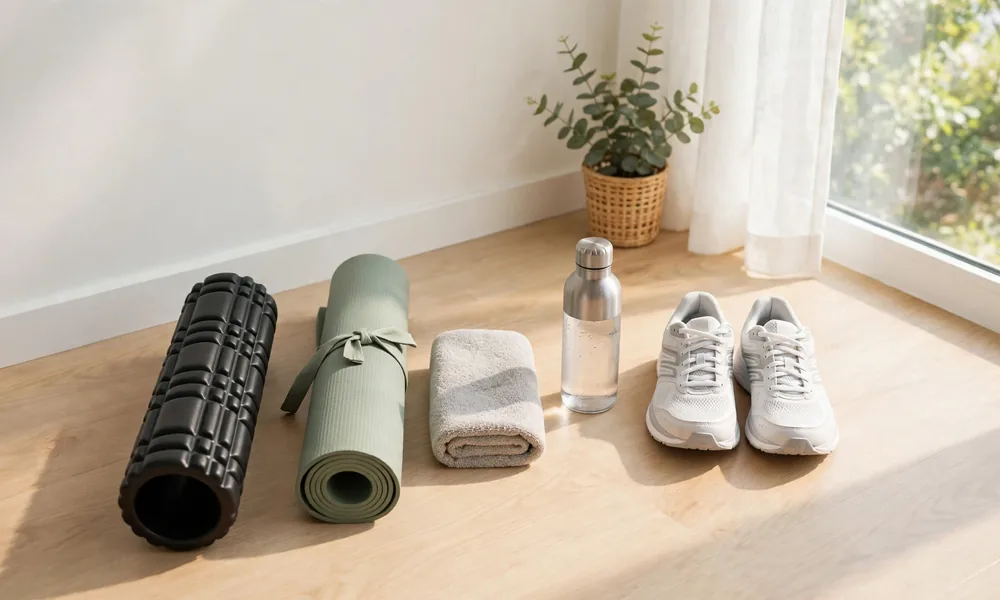
A good recovery routine takes ten minutes and needs nothing more than a roller, a mat, and a floor. Start with your calves, rolling each one for 30 seconds. Move to your thighs, then your glutes, then your upper back, holding each tender spot for 20 to 30 seconds. Do this three to five times a week. If you are building a home gym around recovery, our guide to the best home gyms of 2026 shows how to set up a small space for training and recovery together.
Foam Roller Buying Checklist
- Choose medium density if you are a beginner, firm or textured if you train regularly.
- Pick a 45 cm roller for general use, 90 cm for back work, 30 cm for travel.
- Check the weight limit and choose a solid-core roller, not a hollow one.
- Make sure the surface texture suits your pain tolerance before you buy.
- Check that the roller is easy to clean and store in your space.
- Set a budget: a good roller costs £20 to £40, and more is rarely better.
Frequently Asked Questions
How often should I use a foam roller?
Most people benefit from rolling three to five times a week, for five to ten minutes at a time. Daily use is fine if you keep the pressure moderate and avoid sore or injured areas. Consistency matters more than intensity.
Does foam rolling hurt?
It can be uncomfortable at first, especially on tight muscles, but it should never cause sharp pain. The discomfort should feel like a deep massage, not an injury. If it hurts sharply, reduce the pressure or switch to a softer roller.
Can foam rolling replace stretching?
No, foam rolling and stretching do different jobs. Rolling releases tension in muscles and fascia, while stretching lengthens the muscle. The two work best together: roll first, then stretch, and you will move more freely than with either one alone.
What is the best foam roller for beginners?
A medium-density smooth roller, around 45 centimetres long, is the best choice for beginners. It is firm enough to be effective and gentle enough to use daily, and it suits most muscle groups.
How long does a foam roller last?
A high-density roller lasts two to three years of regular use. Soft rollers wear out sooner, usually within a year. Replace your roller when it flattens, cracks, or stops giving enough pressure.
Can I use a foam roller on my lower back?
No, you should not roll directly on your lower back, since it has no ribs to protect it. Roll the muscles around it instead: your glutes, hips, and upper back. If your lower back hurts, rest it and seek advice from a professional.
The Bottom Line
The best foam rollers in 2026 are simple, cheap, and effective. For most people, a medium-density smooth roller around 45 centimetres long is the right buy. Athletes should consider a textured roller, travellers a short one, and back-pain sufferers a long one. Roll slowly, breathe, avoid joints and your lower back, and use it three to five times a week.