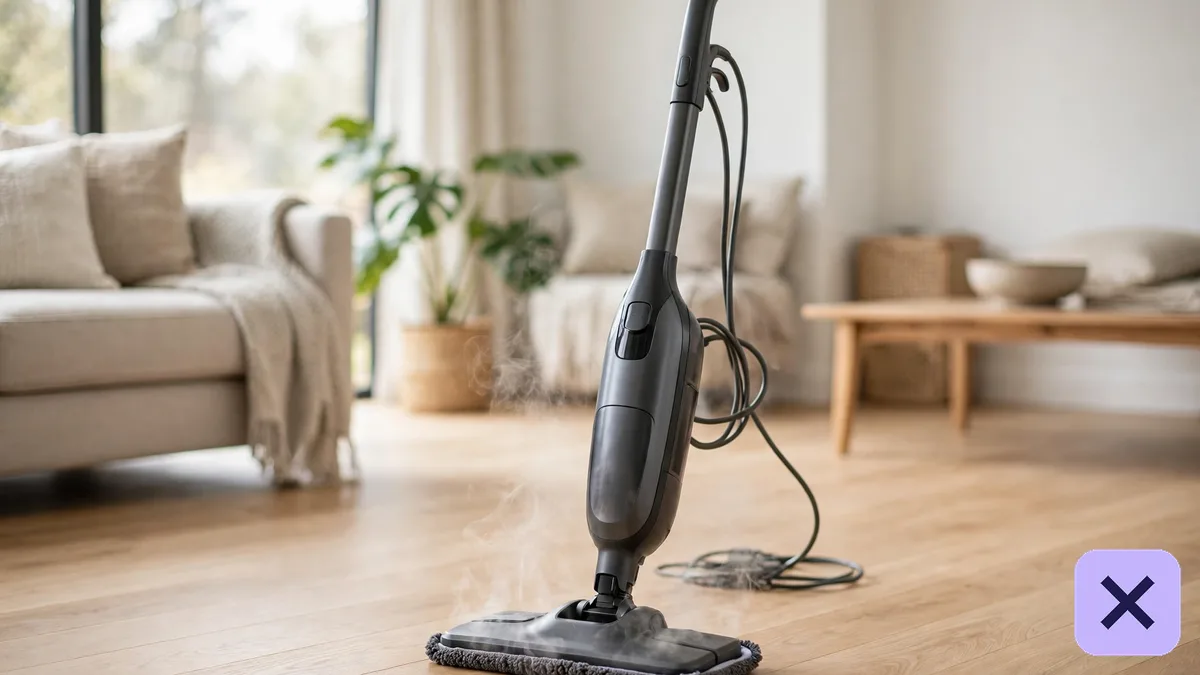
A steam mop promises the easiest clean in the house: hot steam loosens the grime, the pad lifts it away, and the floor dries in minutes with no bucket and no chemical smell. When it works, that promise is real. A good steam mop takes dried sauce off kitchen tiles and muddy footprints off the hallway in a single slow pass, with nothing but tap water. When it does not work, you get a damp floor, a grey pad and the same sticky patch, just warmer.
The difference between those two outcomes is rarely the brand on the handle. It is heat, steam control, the pad under your feet and whether the mop suits your floors at all. This guide explains how to pick a steam mop that actually lifts grime in 2026.
Key Takeaways
- Steam does the work, not pressure: a mop that holds steady heat and lets you control the steam beats a hotter mop you cannot tame.
- Match the mop to sealed floors only: steam and unsealed wood, waxed floors and laminate with open seams do not mix.
- Pads matter more than watts: a thick, washable pad that stays in contact with the floor lifts grime a thin pad only smears.
- Heat-up time decides whether you use it: a mop ready in under a minute gets grabbed daily, while a slow one stays in the cupboard.
- Vacuum first, always: steam loosens dirt but cannot pick it up, so loose dust must be gone before the mop comes out.
The Best Steam Mops of 2026 at a Glance
Use this table to narrow your choice, then read on to see which type suits your floors.
| Pick | Heat-Up | Best For | Typical Price |
|---|---|---|---|
| Best overall | Under 30 seconds | Mixed sealed floors, family homes | $120–$200 |
| Best for tile | Under 45 seconds | Kitchens, bathrooms, grout | $100–$180 |
| Best for wood | Under 30 seconds | Sealed hardwood, gentle steam | $130–$220 |
| Best 2-in-1 | Under 40 seconds | Floors plus worktops and grout | $150–$250 |
| Best value | Under 60 seconds | Small flats, hard floors only | $60–$110 |
What Steam Actually Does to Grime
A steam mop is not a hot wet mop. It heats water past 100 degrees and pushes the steam through a cloth pad pressed against the floor. The heat softens dried food, grease and sticky spills, and the damp pad then wipes the loosened dirt away. Steam is brilliant at dissolving what is stuck to a hard surface, and useless at anything it cannot touch.
It also explains why the first rule of steam mopping is to vacuum first. A steam mop has no suction, so crumbs, dust and pet hair have nowhere to go except into the pad, where they turn into a gritty paste that scratches and smears. Our guide to the best vacuum cleaners of 2026 covers the machines that clear a floor properly before the mop comes out, and five minutes with a vacuum does more for your result than any upgrade to the mop itself.

Heat-Up Time and Steam Control
Heat-up time is the number that decides whether a steam mop becomes a habit or a cupboard ornament. The best steam mops of 2026 are ready in twenty to thirty seconds, so you can grab one for a spilled dinner without it feeling like a project. A mop that takes three minutes to heat up gets used only on cleaning day, and then not at all.
Steam control matters just as much as speed. A single on-off switch leaves you with one setting for every floor, which is too much steam for sealed wood and too little for a greasy kitchen tile. Look for at least two steam levels, controlled from the handle, so wood gets a light pass and tile gets a full blast. A trigger that releases steam only while you hold it is the most useful version, because it stops the pad soaking one spot while you move a chair.
Match the Mop to Your Floors
Steam mops are for sealed hard floors: glazed tile, sealed stone, vinyl and sealed hardwood. The word sealed does all the work in that sentence. Steam will find any gap or unsealed edge and push moisture into it. On unsealed wood, waxed floors, cork and laminate with open or damaged seams, that moisture swells boards, lifts finish and leaves marks that do not buff out. If you are unsure whether your wood floor is sealed, put a few drops of water on it in a hidden corner: if it beads, it is sealed; if it darkens the wood, keep the steam mop away.
Tile is the most forgiving surface a steam mop will ever meet, and where the machines earn their keep. Grout lines hold grease and dried spills that a normal mop only wets, and hot steam softens them so the pad can lift them out. Sealed stone behaves the same way, though natural stone needs a gentler setting and a pad that has not picked up grit. Vinyl copes well with steam, but check the flooring maker’s guidance first, since some vinyl warranties exclude steam cleaning entirely.
Pads: The Part That Actually Touches Your Floor
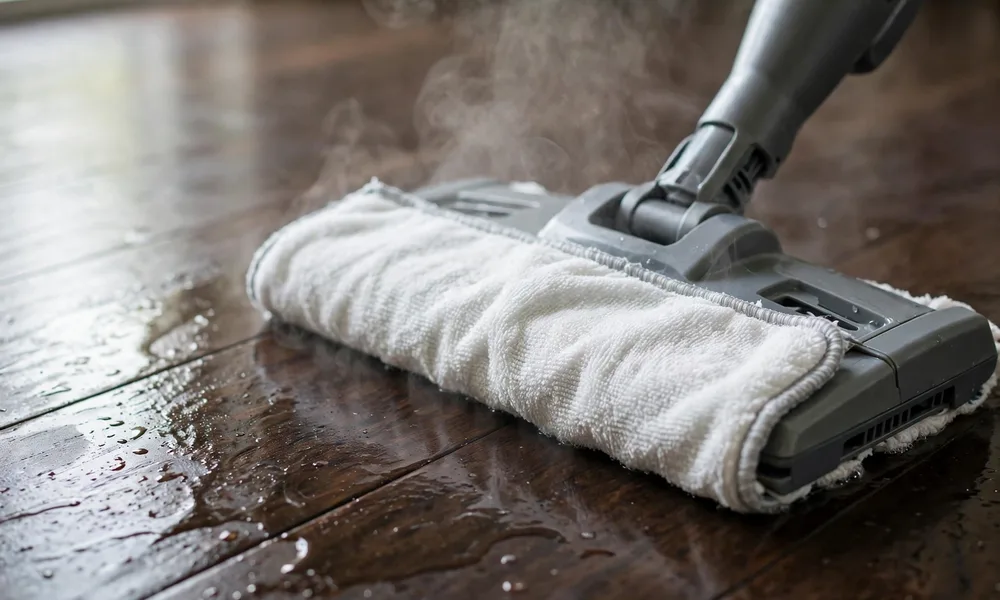
The pad is the cleaning surface, and it matters more than the wattage on the box. A thick microfibre pad holds heat against the floor, absorbs the loosened dirt and keeps the mop head gliding smoothly. A thin pad dries out quickly, drags instead of gliding, and spreads grime around instead of lifting it. Look at the pad first: it should be plush, washable and easy to clip on and off without touching a hot, dirty cloth.
Buy spares on day one. A pad that has cleaned half a kitchen carries the dirt it picked up, and running it over the next room just moves that dirt along. Most homes need two or three pads per clean: one for the kitchen, one for the rest of the floors, and a spare for the hallway. Washable pads that survive dozens of machine washes cost less over a year than disposable ones, and a fresh pad is always more absorbent than a tired one.
Tank, Cord and Run Time
A steam mop runs until its tank is empty, and tank size decides how much floor you cover in one go. A tank of 350 to 450 millilitres covers a kitchen and a hallway; a larger home needs 500 millilitres or more, or a mop you can refill mid-clean. Check whether the tank is removable and whether it can be topped up while the mop is still warm, rather than waiting for a hot tank to cool before you can open it. A removable tank you can fill at the sink is the most practical design, and worth paying a little extra for.
Weight, Steering and Storage
A steam mop should feel light in the hand: you steer it with your wrist and push it in long, slow passes. Most good models weigh two to three kilograms with a full tank, the weight low down near the floor head. A top-heavy mop tires your arm within minutes, while a well-balanced one turns with a flick of the wrist and slides under low furniture.

Manual Steam Mop or Robot Mop?
A robot mop and a steam mop solve different problems, and most homes that love one still need the other. A robot mop keeps hard floors tidy every day with almost no effort, sweeping and damp-mopping on a schedule while you do something else. Our comparison of the best vs worst robot mops of 2026 shows how wide the gap is between a robot that scrubs properly and one that just pushes a dirty pad around.
But a robot mop cannot do what steam does. It cannot heat a dried spill until it softens, it cannot lift grease from grout, and it cannot reach the sticky patch under the bin. A manual steam mop is the targeted tool: you take it to the exact spot, hold the steam on the grime for a few seconds, and lift it away. If your kitchen floor takes a daily beating, a robot mop for maintenance plus a steam mop for the real cleaning is the combination that works, and our guide to the best robot mops for kitchens covers the hands-free half.
Steam Mop Buying Checklist
- Check your floors are sealed first: steam and unsealed wood, wax or open laminate seams do not mix.
- Pick a heat-up time under a minute, so the mop is ready before you lose interest.
- Choose at least two steam levels, with a trigger on the handle: a light pass for wood, a full one for tile.
- Buy two or three thick, washable microfibre pads, and swap to a fresh pad halfway through a clean.
- Confirm the tank covers your space, is removable, and refills without a long cool-down wait.
- Test the weight and swivel head in your hand: two to three kilograms, balanced low, turning easily around chair legs.
Frequently Asked Questions
Do steam mops really clean without chemicals?
Yes, for everyday grime on sealed hard floors. Hot steam softens dried food and grease so the microfibre pad can lift them away, and plain tap water is all the mop needs. For heavy grease, a little detergent on the pad beforehand helps, but the steam itself does most of the work without any cleaning product.
Can I use a steam mop on hardwood floors?
Only on sealed hardwood, on a low steam setting with a clean pad. Put a few drops of water on the floor in a hidden corner first: if it beads, the floor is sealed and a gentle pass is safe. If the water darkens the wood, it is unsealed and steam will push moisture into the boards. Never let the mop sit in one spot on wood, and never use it on waxed or oiled floors.
Why is my floor still dirty after steam mopping?
Almost always because the floor was not vacuumed first, the pad was dirty, or the passes were too fast. Loose dust turns into a gritty paste under a steam mop, a dirty pad spreads grime instead of lifting it, and a quick pass does not give the heat time to soften what is stuck. Vacuum first, swap to a fresh pad, and move slowly.
How often should I replace the mop pads?
A good washable microfibre pad lasts for dozens of machine washes. Replace it when it feels thin, no longer absorbs well, or leaves streaks even when clean, and keep at least three in rotation so you always have a fresh one ready.
Can a steam mop clean grout?
Yes, and grout is one of the best jobs for a steam mop. Hold the mop head over the grout line for a few seconds so the steam softens the trapped grease and dirt, then move slowly along the line with a clean pad. For deep grout, a handheld steamer with a small brush reaches into the line better than a flat mop head.
Is a steam mop better than a robot mop?
They do different jobs. A robot mop wins on daily maintenance, keeping hard floors tidy with no effort from you. A steam mop wins on targeted cleaning: dried spills, greasy grout and sticky patches that need heat to lift. Homes with hard floors that see real use get the best result from both: the robot for the everyday tidy, the steam mop for the weekly deep clean.
The Bottom Line
The best steam mop of 2026 matches your floors, heats up fast, lets you control the steam and comes with pads worth using. Sealed floors and a low setting for wood, a full blast for tile, a fresh pad halfway through the clean and a vacuum first: get those right and a steam mop will lift grime that a normal mop only moves around. Buy for your floors and your habits, not for the wattage on the box.


