
A trash can is the most-used object in the kitchen and the least thought about, until it goes wrong. You open one a dozen times a day, usually with your hands full, and you only notice it when the lid slams, the pedal sticks, the bag slips down, or the whole thing smells like last Tuesday. A good can stays out of your way and does its job quietly. A bad one fights you every single day.
The difference between the best and the worst trash cans in 2026 is not mainly about price or looks. The best cans fit the space you actually have, open easily when your hands are messy, hold the bag in place, keep smells in, and clean up with a quick wipe. The worst are too tall for the cabinet, too wide for the gap beside the fridge, or so light that they slide across the floor every time you step on the pedal. This comparison puts both sides head to head, across kitchens, bathrooms, and gardens, so you can tell them apart before you buy. If you want a guide that focuses only on the kitchen, our guide to kitchen trash cans worth the counter space in 2026 covers the sizes and lids that suit a busy kitchen best.
Key Takeaways
- Measure the space first: height under the counter, width of the gap, and the swing of the lid, before you look at any can.
- A 13-gallon can suits most households, smaller kitchens do better with a 10-gallon slim can, and large families need 16 gallons or a dual-compartment model.
- Pedal lids are the best all-round opening for messy hands, while sensor lids are convenient but need batteries and can open when a pet walks past.
- Stainless steel looks smart and wipes clean, but it shows fingerprints; matte plastic hides marks and costs far less.
- A can with a bag-retention ring or liner pocket is worth paying for, because a slipping bag is the most annoying daily failure of all.
What Makes a Trash Can Good or Bad
The lid is the first thing to check, and it decides whether the can is a pleasure or a nuisance to use. A good lid opens easily with a foot, a hand, or a wave, then closes softly without slamming, which matters when the can is used a dozen times a day. A lid that slams shut startles everyone in the room and eventually cracks its own hinge, while a lid that sticks or jams turns every trip to the bin into a small struggle. The best cans have a soft-close lid and a hinge that feels solid, not flimsy, from the first day.
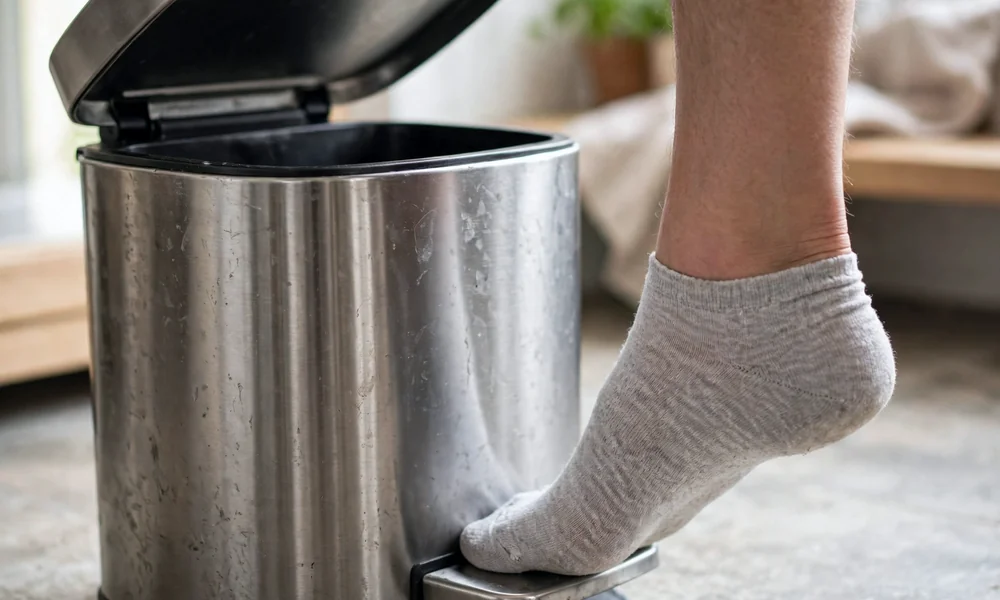
The pedal is the second thing, and it is the part that fails most often. A good pedal is wide, sturdy, and fixed firmly to the body, so it opens the lid smoothly even when you are standing on it with a heavy bag in your hands. A cheap pedal bends, sticks, or snaps, and once it goes the whole can is useless, because the lid will not open without it. When you are choosing a can, press the pedal a few times in the shop if you can, and walk away from any pedal that flexes or wobbles under your foot.
Size and shape are the third thing, and they decide whether the can fits your home or fights it. A can that is too big dominates a small kitchen and gets in the way of every cupboard door, while a can that is too small needs emptying every day, which is fine if you live alone and miserable if you cook for a family. A slim can fits a narrow gap beside the fridge, a round can fits a corner, and a dual-compartment can suits a home that sorts recycling, though it takes up more floor space than a single can of the same capacity.
The Best Side: Trash Cans That Earn Their Place
Stainless steel pedal cans are the best choice for most kitchens, because they do the everyday job well and last for years. The best of them have a soft-close lid, a sturdy pedal that does not flex, and a fingerprint-resistant finish that wipes clean with a damp cloth. They look smart in a modern kitchen, they do not absorb smells the way cheap plastic can, and a 13-gallon model suits most households without dominating the room.
Dual-compartment cans are the best choice for homes that sort recycling, because they keep waste and recycling apart without needing two separate bins. One side takes general waste and the other takes paper, cans, and plastic, which makes sorting a habit instead of a chore. The best models have a bag-retention ring in each compartment, so the bags stay in place, and a lid that opens both sides without catching on the divider in the middle.
Small bathroom cans with a swing lid are the best choice for bathrooms and bedrooms, where a big kitchen can would be absurd. A small can with a lid that swings open with a nudge keeps tissues and cotton pads out of sight, takes up almost no floor space, and empties in seconds. The best ones are made from plastic that wipes clean, with a lid that stays shut when the can is knocked, which matters in a room where the floor is often wet.
Heavy-duty outdoor cans with wheels are the best choice for gardens and kerbside collection, because they hold far more than any indoor can and move easily when they are full. The best outdoor cans have a tight-fitting lid that keeps rain and animals out, sturdy wheels that roll over a rough path, and a body that does not crack in cold weather. A can that survives a winter outside without splitting is worth more than a pretty one that cracks in the first frost.
The Worst Side: Trash Cans to Avoid
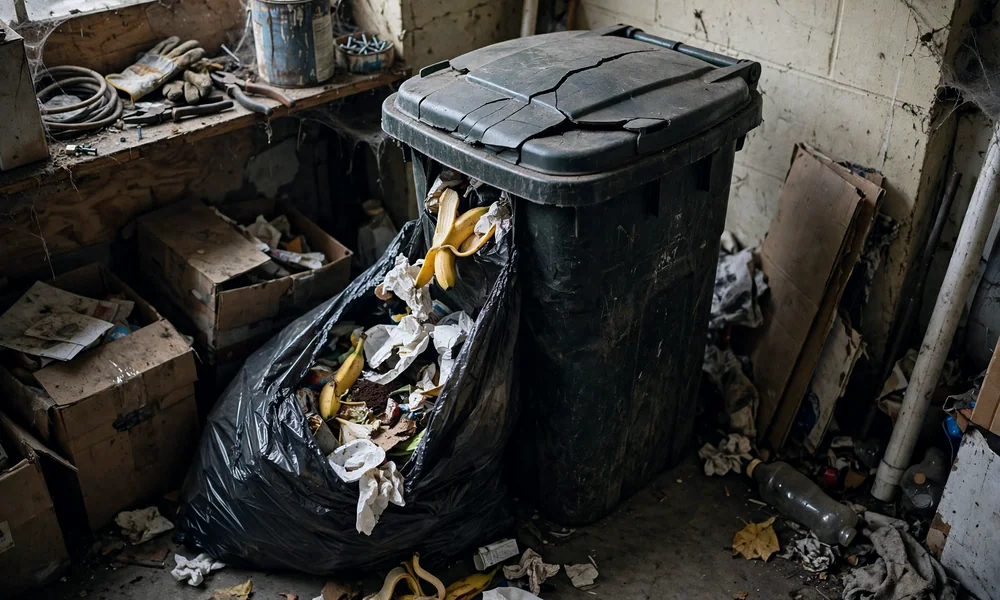
Flimsy plastic cans with a weak pedal are the worst value in the aisle, because they fail in every way that matters. The pedal bends after a few months, the lid starts to stick, and the whole can slides across the floor every time you step on it, because it is too light to stay put. The body scratches easily, absorbs smells that no amount of washing removes, and within a year the can looks old and feels broken, however new it seemed in the shop.
Sensor cans with unreliable sensors are the worst kind of mismatch, because the idea is brilliant and the execution lets it down. A sensor that opens when a pet walks past, or fails to open when your hands are full of peelings, turns a convenience into a daily annoyance, and when the sensor fails completely the can becomes a very expensive open bin. They need batteries, which run out at the worst moment, and they suit a household that loves gadgets, not one that wants a can that simply works every time.
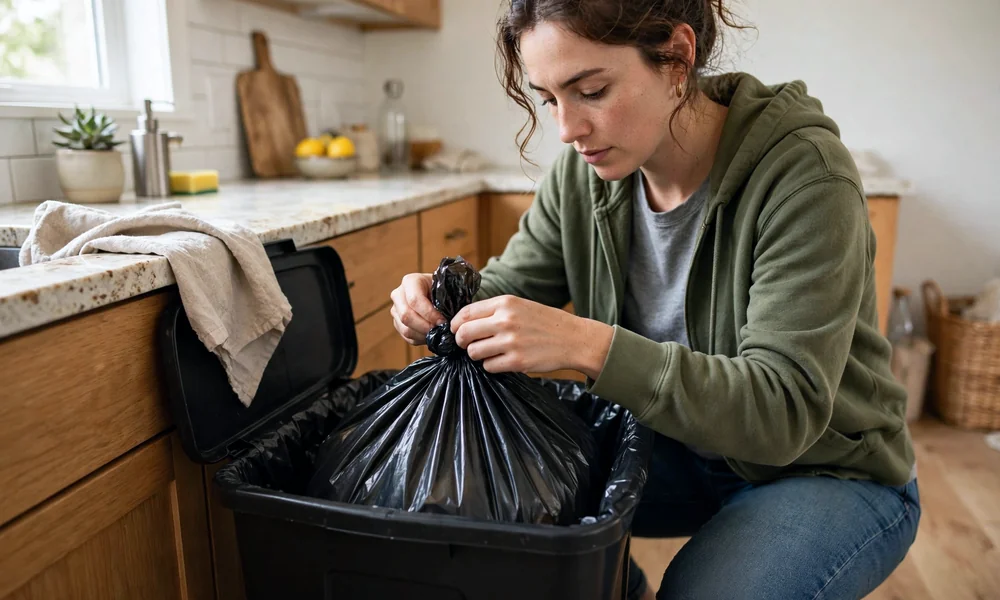
Cans without any way to hold the bag are the worst cans to live with, because a slipping bag ruins every trip to the bin. The bag slides down as it fills, so you end up fishing the rim out of the rubbish, and when you lift the bag out it tears on the rim because there was no slack left to tie it. Some cans solve this with a ring that traps the bag under the rim, others with a liner pocket that hides the excess plastic, and either one is better than nothing at all.
Cans that are the wrong size for the room are the worst choice for anyone who wants a kitchen that works. A can that is too tall will not fit under the counter, a can that is too wide blocks the cupboard door, and a can that is too small fills up before the day is over, so the rubbish piles up beside it instead. Measure the height, the width, and the swing of the lid before you buy, because a can that does not fit the space will annoy you every single day, however good it looked on the shelf.
Matching the Can to Your Home
Large kitchens can handle a 13- or 16-gallon stainless steel pedal can, because there is floor space for it and the capacity suits a family that cooks every day. A dual-compartment model is worth the extra space if you sort recycling, and a can with a bag-retention ring is worth paying for in any size. Small kitchens need the opposite approach: a slim 10-gallon can that fits the gap beside the fridge, with a lid that opens without hitting the counter above it, and a bag that fits it properly.
Bathrooms and bedrooms need a small can with a lid, because an open bin in a bathroom looks untidy and smells worse than a closed one. A swing-top lid is the simplest choice, and a can that wipes clean is more useful than a can that looks smart but stains. Gardens and garages need a heavy-duty outdoor can with wheels and a tight lid, because rain, animals, and cold weather will destroy a light indoor can within a season. The bag matters as much as the can, and our guide to trash bags that do not rip, leak or smell in 2026 explains how to choose a bag that fits your bin and survives the trip to the kerb.
How to Keep a Trash Can Fresh for Years
A good trash can lasts for years when it is cleaned regularly and the bag fits properly, though a cheap can can fail within a single season. Wipe the inside and the lid every week with hot soapy water, dry it fully before you put a new bag in, and sprinkle a little baking soda in the bottom to absorb smells between cleans. Never overfill the bag, because a bag filled past the top of the can has no slack left for tying and will tear when you lift it out. Replace a can when the pedal bends, the lid no longer closes, or the body has cracked, because a can that will not close properly is a can that smells, however often you clean it. Keeping the rest of the home tidy matters too, and our guide to storage bins worth buying for a tidier home in 2026 explains how to keep the clutter that ends up in the bin under control in the first place.
The Verdict
The best trash cans of 2026 are the ones that fit the space, open easily when your hands are full, hold the bag in place, and keep smells in. Stainless steel pedal cans win for most kitchens, dual-compartment cans win for homes that sort recycling, small swing-lid cans win for bathrooms, and heavy-duty wheeled cans win outdoors. The worst are the flimsy plastic cans with a weak pedal, the sensor cans that open for the dog and not for you, and any can without a way to hold the bag. A can that fits your home, your hands, and your rubbish is a small purchase that pays you back every single day.


