
Kitchen trash cans are the most-used object in the kitchen and the least thought about. You open one a dozen times a day, usually with your hands full, and you only notice it when it goes wrong: the lid slams, the pedal sticks, the bag slips down, or the whole thing smells like last Tuesday. The best kitchen trash cans of 2026 are the ones that stay out of your way, and they earn their place by doing a few simple things well.
A good kitchen trash can fits the space you actually have, opens easily when your hands are messy, holds the bag in place, keeps smells in, and cleans up with a quick wipe. A bad one is too tall for the cabinet, too wide for the gap beside the fridge, or so light that it slides across the floor every time you step on the pedal.
Key Takeaways
- Measure the space first: height under the counter, width of the gap, and the swing of the lid, before you look at any can.
- A 13-gallon can suits most households; smaller kitchens do better with a 10-gallon slim can, and large families need 16 gallons or a dual-compartment model.
- Pedal lids are the best all-round opening for messy hands, while sensor lids are convenient but need batteries and can open when you walk past.
- Stainless steel looks smart and wipes clean, but it shows fingerprints; matte plastic hides marks and costs far less.
- A can with a bag-retention ring or liner pocket is worth paying for, because a slipping bag is the most annoying daily failure.
Why Most Kitchen Trash Cans Annoy You
The complaints about kitchen trash cans are always the same, and they are almost never about the size. The lid is the first problem: a lid that slams shut startles everyone in the room and eventually cracks its own hinge, so a soft-close lid is one of the few features worth paying extra for. The second problem is the pedal. A cheap pedal bends, sticks or snaps, and once it goes the whole can is useless, because the lid will not open without it.
The third problem is the bag. A can without any way to hold the bag in place lets the bag slip down as it fills, so you end up fishing the rim out of the rubbish. Some cans solve this with a ring that traps the bag under the rim, others with a liner pocket that hides the excess plastic. Either one works, and either one is better than nothing.
Then there is the footprint. A can that is too big dominates a small kitchen and gets in the way of every cupboard door. A can that is too small needs emptying every day, which is fine if you live alone and miserable if you cook for a family.
Pedal, Sensor, Swing or Touch: Which Lid Actually Works
Pedal lids are the default for a reason. You step on the pedal, the lid opens, you drop the waste in and the lid closes when you lift your foot. Your hands never touch the can, which is exactly what you want when you are handling raw meat or peeling vegetables. The best pedal cans have a soft-close lid and a sturdy pedal that does not flex. The worst have a flimsy pedal that bends after a few months and a lid that slams.
Sensor lids open when they detect a hand above them, which sounds ideal and mostly is. They are brilliant when your hands are full. The downsides are practical: they need batteries, they can open when a pet walks past, and when the sensor fails the can becomes a very expensive open bin. They suit a household that loves gadgets, not one with a curious dog.
Swing-top lids and touch-top lids are simpler and cheaper. A swing-top lid pushes open with a nudge and swings back on its own, which works well for light waste but lets smells out and does not seal. A touch-top lid opens with a light press and stays open until you press it again. For most kitchens, a pedal lid with a soft close is the best balance of hygiene, reliability and price.
The Best Kitchen Trash Cans of 2026
The cans below are grouped by the kitchen they suit, because the best can for a large family kitchen is a poor can for a small flat. There is no single winner here, only the right can for the space and the household.
| Can type | Best for | Size | Lid | Watch out for |
|---|---|---|---|---|
| Stainless pedal, soft-close | Most family kitchens | 13 gallon | Pedal | Shows fingerprints; heavier to move |
| Slim rectangular pedal | Narrow gaps and small kitchens | 10–11 gallon | Pedal | Needs emptying more often |
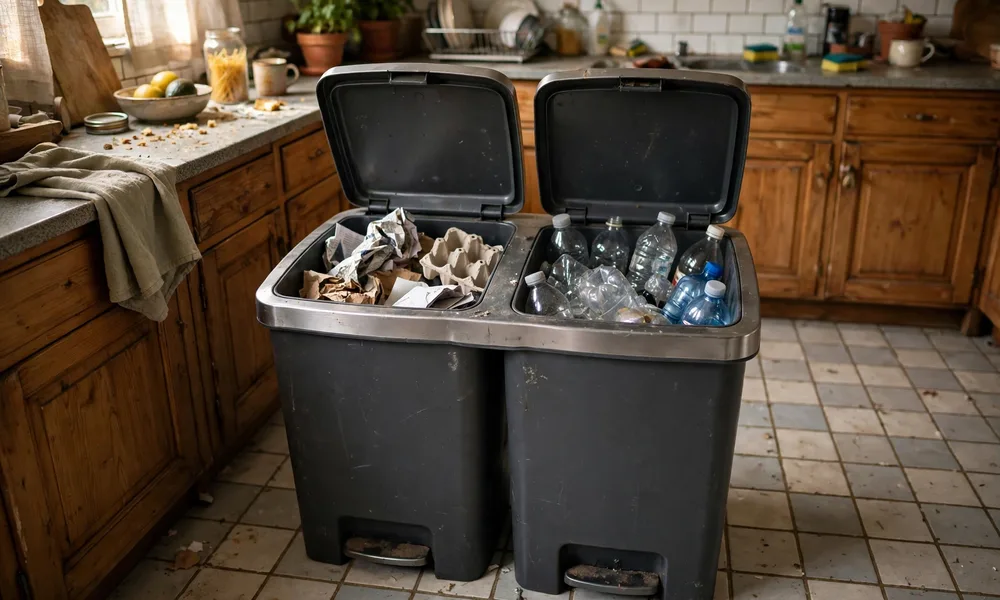
| Dual-compartment recycler | Households that sort recycling | 16 gallon total | Pedal, two lids | Takes up more floor space |
| Sensor lid, stainless | Hands-free convenience | 13 gallon | Sensor | Batteries and false triggers |
| Matte plastic pedal | Budget kitchens and rentals | 13 gallon | Pedal | Stains and scratches show over time |
| Pull-out cabinet bin | Hidden, built-in look | 7–10 gallon | None | Needs a suitable cabinet to fit |
The stainless pedal can with a soft-close lid is the best all-rounder for most kitchens, and it is the type we would buy first. It opens with a foot, closes quietly, wipes clean and looks good in almost any kitchen. The slim rectangular pedal can is the best choice when space is tight: it slides into the gap beside the fridge, and its rectangular shape wastes less space than a round can. The dual-compartment recycler is the best choice for households that sort their waste, because it keeps recycling and rubbish separate without needing two cans on the floor.
The sensor can is the most convenient and the least reliable of the group, which is a fair trade if you love the hands-free opening and do not mind changing batteries. The matte plastic pedal can is the best value: it does the same job as the stainless can for a fraction of the price, and it hides fingerprints and small marks far better, though it will stain and scratch over a few years. The pull-out cabinet bin is the best choice if you hate seeing a bin at all, but the worst if your cabinets are already full, because it needs a dedicated cupboard and a sliding rail.
Size, Shape and Where It Goes
Size is the first decision and the easiest to get wrong. A 13-gallon can suits a household of three or four that empties the bin every two or three days. A 10-gallon slim can suits a couple or a small kitchen, and a 16-gallon can suits a large family or a household that cooks most meals at home. If you are between sizes, go bigger: an overfull can is worse than a can with a little spare room, because an overfull can means bags that will not tie and lids that will not close.
Shape matters more than most people expect. A rectangular can fits against a wall or a cabinet and wastes less floor space than a round can of the same volume. A round can is easier to clean and looks softer in a traditional kitchen, but it needs more room. Before you buy, measure the gap: width, depth, and the height under any overhang. The same measure-first habit that helps with storage bins that keep a home tidy saves a return trip here too.

Keeping a Kitchen Trash Can Clean and Smell-Free
A kitchen trash can smells because waste sits in it, and the only real fix is a good bag, a tight lid and regular cleaning. Use a bag that fits the can properly, so waste does not touch the inside of the can itself.
Clean the can every time you change the bag, or at least once a week. Hot water, a little washing-up liquid and a cloth are enough for the inside, and a wipe over the outside keeps fingerprints and splashes from building up. Stainless steel cleans best with a soft cloth and a little white vinegar. A can that is cleaned weekly never develops the stale smell that people blame on the bin.
For smells that persist, a small open box of bicarbonate of soda in the bottom of the can absorbs odours without adding a perfume smell of its own. The cheapest fix of all is to take the smelly waste out: fish scraps and meat trimmings should go out on the day they are produced. A tidy kitchen routine, like the one behind keeping kitchen floors clean with a steam mop, works the same way here: small regular effort beats an occasional deep clean.
Checklist: Choosing a Kitchen Trash Can in 60 Seconds
- Measure the space: width, depth, height, and the room the lid needs to open.
- Pick 13 gallons for most households, 10 gallons for a small kitchen, 16 gallons for a large family.
- Choose a pedal lid with a soft close for the best mix of hygiene and reliability.
- Check the bag fits: look for a retention ring or liner pocket that stops the bag slipping.
- Pick stainless steel for looks and easy wiping, or matte plastic for value and fingerprint resistance.
- Make sure the can is heavy enough to stay put when you step on the pedal, and easy enough to move when you clean the floor.
Frequently Asked Questions
What size trash can is best for a kitchen?
A 13-gallon can suits most households. Go smaller, around 10 gallons, for a small kitchen or a couple, and larger, around 16 gallons, for a big family or a household that cooks every meal at home.
Are sensor trash cans worth it?
They are worth it if you love hands-free opening and do not mind buying batteries and the occasional false trigger. They are not worth it if you have pets that walk past the sensor, or if you want the most reliable can for the money.
Why does my trash can smell even with a fresh bag?
The smell is usually in the can itself, not the bag. Waste that slipped past a badly fitting bag sticks to the inside and goes stale. Clean the can with hot water and washing-up liquid, dry it fully, and use a bag that fits properly.
How do I stop the bag slipping down inside the can?
Use a can with a bag-retention ring or liner pocket, and make sure the bag is the right size. Fold the excess bag over the rim so it grips, and avoid overfilling, which pulls the bag down as the waste settles.
Stainless steel or plastic: which is better?
Stainless steel looks better, wipes clean easily and lasts longer, but it shows fingerprints and costs more. Plastic is cheaper, lighter and hides marks well, but it stains and scratches over time. Both work; the choice is about budget and how much you care about fingerprints.
Can I hide a trash can inside a cabinet?
Yes, with a pull-out cabinet bin that slides out on a rail. It needs a suitable cabinet, usually at least 12 inches wide, and it holds less than a freestanding can. It is the neatest option if you have the cabinet space to spare.
Bottom Line
The best kitchen trash can of 2026 is the one that fits your space, opens when your hands are full and keeps the bag where it belongs: for most kitchens, that is a 13-gallon stainless pedal can with a soft-close lid and a bag-retention ring. Small kitchens do better with a slim rectangular can, sorting households with a dual-compartment recycler, and budget kitchens with a matte plastic pedal can. Measure the gap, pick the right size, and clean the can weekly. If you are tidying the rest of the room, the guide to closet organizers that double your storage space is a good next read.


