
Trash bags are the one household product nobody thinks about until one fails. A good trash bag disappears into the routine: it fits the bin, holds a week’s worth of kitchen waste, ties shut without a fight and survives the trip to the kerb. A bad one splits halfway down the stairs and drips coffee grounds across the floor. The best trash bags of 2026 are the ones that never make you think about them at all.
The difference between a bag that holds and a bag that rips is rarely the price. It is thickness, seam strength, the way the top closes and whether the bag matches the bin. Most failures come from using the wrong size or style: a 13-gallon drawstring bag is a fine kitchen bag and a terrible garden bag.
Key Takeaways
- Buy the bag by the bin: a 13-gallon bag fits most kitchen bins, and a bag that is too small will tear at the rim before it is even full.
- Drawstring tops are the easiest to tie and carry; flap ties work but need more fiddling, and twist ties are the least reliable.
- Thickness matters more than brand: look for bags around 0.9 mil or thicker for kitchen waste, and 1.2 mil or more for heavy or sharp rubbish.
- Unscented bags are the safer default; scented bags mask smells for a day and then make the kitchen smell like cheap perfume mixed with rubbish.
- Double-bag wet or heavy loads instead of buying the most expensive bag on the shelf; two ordinary bags beat one fancy bag that still splits.
Why Most Trash Bags Fail at the Worst Moment
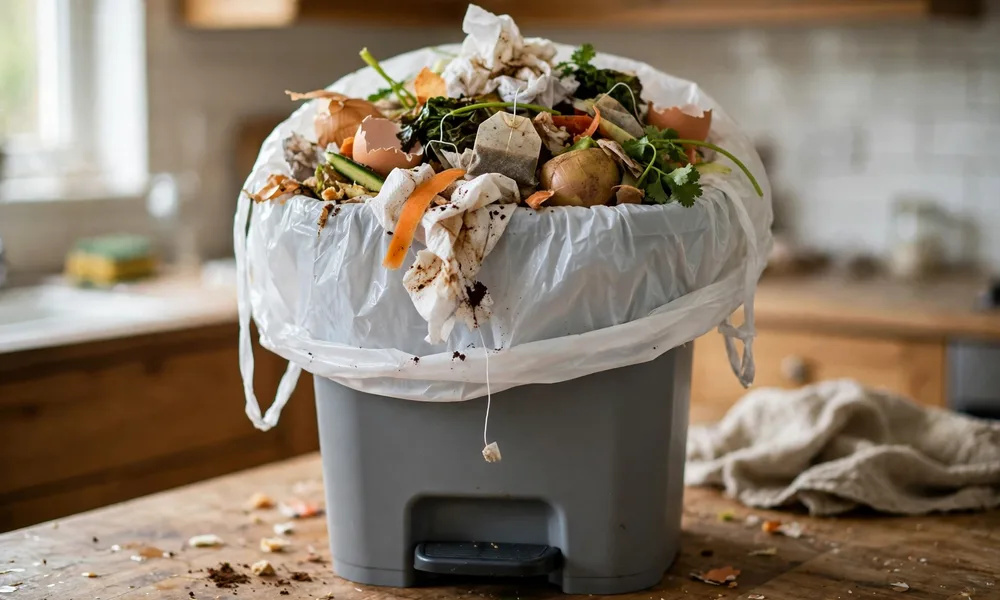
A trash bag fails in three places: the bottom seam, the side seam and the top edge where it stretches over the rim. The bottom seam takes the full weight of everything in the bag, so it is the first to go when a bag is overfilled or when wet waste sits in it for days. Side seams split when a bag is pulled out of a tight-fitting bin, because the plastic catches on the rim and the seam takes the whole pulling force.
Most of these failures are preventable. The biggest cause of a split bag is overfilling: a bag filled past the top of the bin has no slack left for tying, so the plastic is already stretched tight before you lift it. The second is sharp waste. Bones, broken glass and tin lids puncture a thin bag from the inside, and once there is a small hole the tear runs.
Wet waste is the third culprit. Food scraps and coffee grounds soften the plastic and add weight at the same time, so a bag that holds dry paper easily can sag and split under the same volume of wet kitchen waste.
What Makes a Trash Bag Actually Strong
Strength starts with thickness, measured in mils. One mil is a thousandth of an inch, and most kitchen bags sit between 0.7 and 1.2 mil. A 0.7 mil bag is fine for light, dry waste like paper. A 0.9 mil bag handles normal kitchen waste, and anything above 1.1 mil is heavy duty and will cope with wet, dense or sharp loads. Thickness is not the whole story, but it is the most reliable single number on the box.
Seams matter as much as thickness. The best bags use a star-sealed bottom, where the plastic is folded and sealed so the weight spreads across the whole base instead of concentrating on one straight seam. You can spot a star seal by looking at the bottom of the bag: it has a folded, star-shaped pattern instead of a single straight edge.
The closure is the third part of strength. Drawstring bags are the easiest to close and carry, because the string gathers the whole top and gives you a handle. Flap-tie bags work well too, but the flaps can tear if you pull them hard. Twist-tie bags are the weakest option for a full kitchen bag, because the tie is easy to lose and the gathered plastic can slip open.
The Best Trash Bags of 2026
The bags below are grouped by the job they do best, not by brand, because the same factories supply most of the big names and the differences between brands at the same thickness are small. What matters is picking the right type for your bin and your waste.
| Bag type | Best for | Thickness | Closure | Watch out for |
|---|---|---|---|---|
| Heavy-duty drawstring, 13 gallon | Everyday kitchen waste | 0.9–1.1 mil | Drawstring | Costs more per bag than basic types |
| Flex-top tall kitchen, 13 gallon | Overstuffed bins | 0.9 mil | Drawstring | Stretches rather than holds its shape |
| Extra-strong contractor, 30–42 gallon | Garden and clear-out waste | 1.2–2.0 mil | Flap tie | Too stiff and bulky for kitchen bins |
| Unscented tall kitchen, 13 gallon | Smell-sensitive households | 0.8–0.9 mil | Drawstring | No odour masking for very smelly waste |
| Small bathroom, 4 gallon | Bathroom and office bins | 0.7 mil | Flap tie | Tears if used for kitchen waste |
| Compostable kitchen, 13 gallon | Food-scrap collection | Plant-based film | Tie handles | Breaks down fast if left damp for days |
The heavy-duty drawstring bag is the best all-rounder for most kitchens, and it is the type we would buy first. It handles wet food waste, ties shut with one pull, and the star-sealed bottom survives the lift out of the bin. The flex-top tall kitchen bag is the best choice if your household tends to overfill the bin, because the stretchy top gives you extra room to tie it shut. The contractor bag is the worst choice for the kitchen and the best for the garden: too thick and stiff for a kitchen bin, but it will carry branches and a clear-out without splitting.
Unscented bags deserve a mention because they solve a problem scented bags create. A scented bag smells fine for the first day, then the perfume fades and the rubbish smell comes through anyway. Unscented bags do not pretend to fix smells, so they push you towards the real fix: emptying the bin more often and keeping the bin itself clean. Compostable bags are the best option for food-scrap collection where your council accepts them, but they are the worst bag to leave sitting damp for a week, because the plant-based film starts to break down exactly as designed.
Matching the Bag to the Bin
The most common mistake in the whole category is buying the wrong size. A bag that is too small has to stretch over the rim, which thins the plastic at the exact point where it takes the most strain. A bag that is far too big bunches up inside the bin and slips down as it fills. The right size is simple: the bag’s width should be a little wider than the bin’s rim, and its height should reach from the bottom of the bin to a few inches above the rim, so there is enough slack to fold over the edge and tie shut.
Most kitchen bins take a 13-gallon bag, the standard tall kitchen size. Small bathroom bins take a 4-gallon bag, and a large outdoor bin takes a 30-gallon bag or bigger. If you are not sure, measure the bin: wrap a tape measure around the rim for the width, and measure from the bottom to the rim for the height. A bag that matches those two numbers will fit, and a bag that does not will fight you every time you change it. The same measuring habit that helps with storage bins worth buying for a tidier home works just as well here, and it takes less than a minute.
How to Stop Leaks and Smells
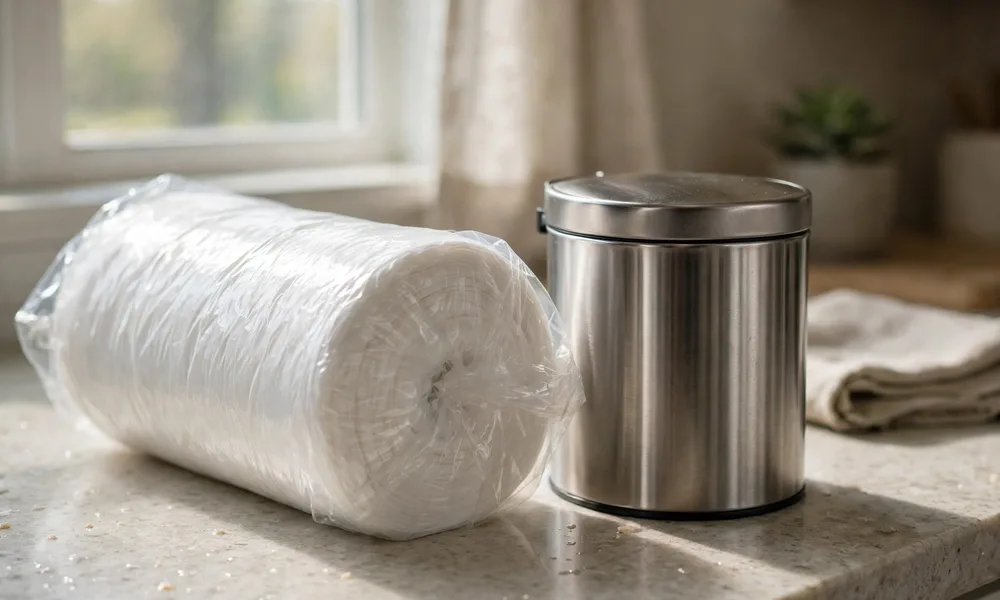
Leaks usually start with liquid pooling at the bottom of the bag. The fix is to keep liquids out of the bin: drain tins and containers before they go in, and put very wet food waste in a smaller tied bag of its own. A sheet of newspaper at the bottom of the bag absorbs drips and gives the base a little extra strength. If a bag does leak, check the bin before blaming the bag: a cracked bin or a rough rim will damage every bag you put in it.
Smells come from waste sitting warm and damp, and no bag fixes that on its own. The best defence is frequency: a kitchen bin emptied every two or three days smells far less than one emptied once a week. The second defence is a clean bin. Rinse it with hot water and a little washing-up liquid every time you change the bag. The same regular-cleaning habit that keeps steam mops working well on kitchen floors applies to the bin: a quick clean now saves a deep clean later.
Checklist: Picking the Right Bag in 60 Seconds
- Measure the bin: rim width and height, then match the bag to those numbers.
- Pick 0.9 mil or thicker for kitchen waste, and 1.2 mil or more for heavy, wet or sharp loads.
- Choose a drawstring top for the kitchen bin; it is the easiest closure to tie and carry.
- Check the bottom of the bag for a star seal rather than a single straight seam.
- Buy unscented unless you have a specific reason to want a scented bag.
- Keep a roll of small bags handy for wrapping sharp or smelly items before they go in the main bag.
Frequently Asked Questions
What size trash bag fits a standard kitchen bin?
Most kitchen bins take a 13-gallon tall kitchen bag. Measure the rim and the height of your bin to be sure, because tall narrow bins and short wide bins can both be called standard and they take different bags.
Are thicker trash bags always better?
Thicker is better for heavy, wet or sharp waste, but it is wasted money for light dry waste. A 0.7 mil bag is fine for paper and packaging, and a 0.9 mil bag covers most kitchen waste. Save the thick bags for the jobs that need them.
Do scented trash bags actually help with smells?
They help for about a day, then the perfume fades and the rubbish smell returns. Emptying the bin more often and cleaning it regularly does far more than any scented bag, and unscented bags are the better default.
Why do my trash bags keep splitting at the bottom?
Usually one of three things: the bag is overfilled, the bottom seam is a flat straight seal rather than a star seal, or sharp waste has punctured the plastic. Wrap sharp items before binning them, do not fill past the rim, and switch to a star-sealed bag.
Are compostable trash bags worth it?
They are worth it for food-scrap collection where your council accepts them, and they are the right choice if you want to cut down on plastic. They are not a good all-purpose kitchen bag, because the plant-based film weakens when it stays damp for several days.
How do I stop the bag slipping down inside the bin?
Fold the top of the bag over the rim so it grips, and use a bag that is the right size. A bag that is too big bunches and slips, while a bag that is too small stretches and tears.

Bottom Line
The best trash bags of 2026 are not the most expensive ones. They are the ones that fit your bin, match your waste and close without a fight: a 0.9 mil drawstring bag with a star-sealed bottom for the kitchen, a thick contractor bag for the garden, and a small plain bag for the bathroom. Measure the bin once, buy the right size, and keep a roll of small bags for the sharp and smelly stuff. If you are sorting out the rest of the house at the same time, the guide to closet organizers that double your storage space is a good next stop.


