A water bottle looks like the simplest thing you own, and it is, until you have spent a day with the wrong one. The wrong one leaks into your bag and soaks your laptop, leaves your water tasting like a coin jar, or grows mould in a lid you cannot take apart, and it will quietly train you to stop carrying water at all.
The best water bottles of 2026 and the worst ones often sit on the same shelf, at similar prices, in similar colours, and the only way to tell them apart is to know what actually fails. A bottle fails at its seal, at its lid, at its material, or at its shape, and each of those failures shows up in daily life in a different way. A leaking seal ruins a bag. A lid that cannot be cleaned grows mould. A material that holds a taste makes every sip unpleasant. A shape that fits no cup holder, bag pocket or bike cage gets left at home. The best bottles get all four right, and they do it so quietly that you forget they exist. The worst get one or more wrong, and you think about them constantly, usually with irritation.
Key Takeaways
- A leakproof lid matters more than insulation, because a bottle that leaks ruins everything else in your bag, however cold it keeps your water.
- Seven hundred millilitres to one litre suits most days; go bigger only if you are out for hours or hate refilling, and smaller only for short trips.
- Stainless steel keeps water cold and survives drops, glass tastes cleanest but breaks, and good plastic is light but can hold a taste and scratch.
- A bottle whose lid does not come apart completely is a bottle you cannot keep clean, and mould will find the parts you cannot reach.
- Test the seal before you trust it: fill the bottle, close it, turn it upside down in the sink, and shake it hard for ten seconds.
How This Comparison Was Judged
We judged water bottles the way they are actually used, not the way they are photographed. So the tests were practical and deliberately unkind: fill the bottle, seal it, tip it upside down, shake it, drop it on a hard floor, leave it in a hot car, and leave water in it overnight to see what it tastes like in the morning. Leak testing came first: we filled each bottle, closed it normally, turned it upside down, squeezed it gently, and shook it for ten seconds over a sink. Taste and cleaning were tested over weeks of daily use, and we took every lid apart to check whether it could be cleaned properly.
The Best Water Bottles: What the Good Ones Get Right
The best water bottles start with a seal you can trust. The lid closes with a firm, definite action, the thread runs smoothly without cross-threading, and the rubber seal sits flat and even all the way around. When you turn the bottle upside down, nothing comes out, not a drop, not a slow weep, not a damp patch that appears ten minutes later. That sounds like a low bar, but it is the bar that a surprising number of bottles fail, and it is the one that matters most, because everything else a bottle does is irrelevant if it cannot be trusted inside a bag.
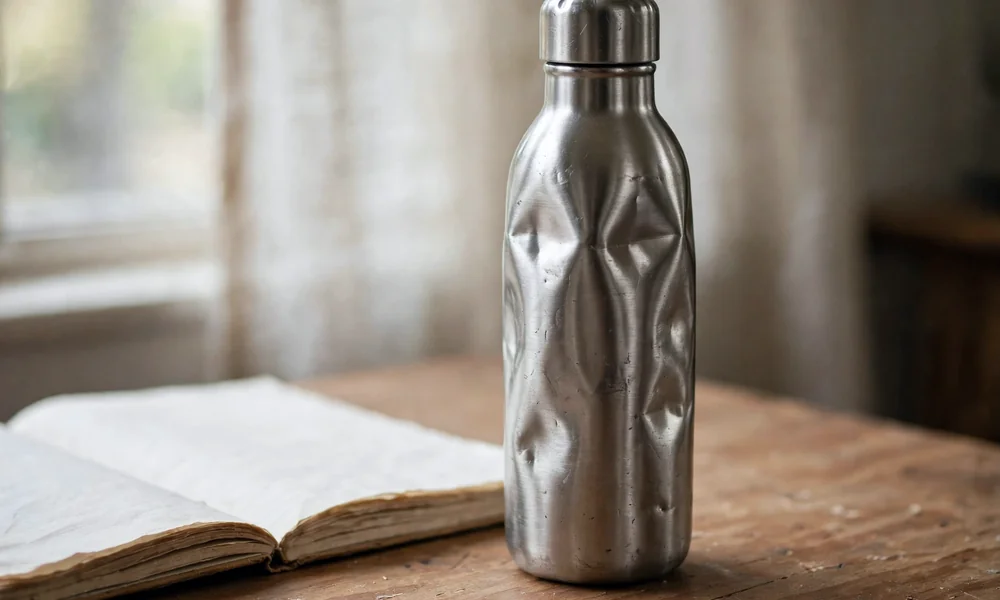
Material is where the good bottles separate themselves. Double-walled stainless steel is the workhorse of the best bottles: it keeps water cold for hours, it does not hold a taste, it survives drops that would shatter glass, and it can be washed properly. Glass tastes the cleanest of all and never holds a flavour, but it breaks, and it is heavy, so it suits a desk better than a gym bag. Good plastic is light and cheap and perfectly fine for short use, but it scratches, it can hold a taste over time, and it does not keep water cold.
The lid is the third thing the best bottles get right, and it is the part most people underestimate. A good lid comes apart completely, so every part can be washed and dried, and it opens with one hand, because you will often be holding something else, or driving, or walking. The best bottles pick one of these jobs and do it well, rather than trying to do all three badly with a complicated lid that has too many moving parts. If you want a bottle built specifically for training, our guide to the best water bottles for the gym covers the lids and sizes that work hardest between sets.
The Worst Water Bottles: The Patterns That Fail
The worst water bottles fail in the same places, over and over, and once you know the pattern you can spot it before you pay. The first warning sign is a lid that feels vague. If the lid does not close with a firm, definite action, if the thread feels gritty or loose, or if the seal looks thin and uneven, the bottle will leak. It may not leak on the first day, but it will leak the first time it tips over in a bag, or the first time it gets squeezed between a laptop and a book, and by then it will be too late to save whatever it was sitting next to.

The second failure is taste. Cheap plastic and cheap metal both hold a taste, and the taste does not improve with use. Metallic tang, plastic aftertaste, and stale smells are all signs of poor materials or of a bottle that cannot be cleaned properly, and they are the reason so many bottles end up abandoned at the back of a cupboard. A bottle that makes water taste unpleasant is worse than no bottle at all, because it trains you to buy single-use bottles instead, which is exactly the habit a reusable bottle is supposed to break.
Then there is the mould. The worst bottles have lids that do not come apart, straws that cannot be brushed, flip spouts with hidden corners, and rubber seals that trap moisture. Within weeks, black spots appear in the parts you cannot reach, and no amount of soaking fixes them, because you cannot scrub what you cannot touch. This is the failure that most people discover too late, usually when they take the lid apart for the first time and find something growing inside it.
Head-to-Head: The Four Things That Decide It
Leakproofing is the first and most decisive test, and the two sides could not be further apart. The best bottles seal completely, under pressure, upside down, and after being knocked around, because their seals are thick, even, and seated properly, and their threads are machined cleanly. The worst weep at the seal, dribble from the spout, or leak when squeezed, because their seals are thin, their threads are rough, or their lids simply do not fit properly. Test any bottle before you trust it: fill it, close it, turn it upside down in the sink, and shake it hard for ten seconds.
Material decides taste, weight, and durability all at once. Stainless steel is the best all-rounder: it keeps water cold, it does not hold a taste, and it survives drops. Glass tastes the cleanest and is the easiest to keep truly clean, but it is heavy and it breaks, so it belongs on a desk rather than in a gym bag or a backpack. Good plastic is light, cheap, and unbreakable, which makes it excellent for children, for cycling, and for travel, but it scratches, it can hold a taste, and it does not insulate. The worst bottles use the cheapest version of each material: thin steel that dents and tastes metallic, thin plastic that scratches and smells, and glass so thin it feels fragile in the hand.
Size and shape decide whether the bottle fits your life. Seven hundred millilitres to one litre suits most people on most days: enough water for a few hours without being too heavy or too tall for a bag pocket. Go bigger only if you are out for a long time or you hate refilling, and go smaller only for short trips or for a child. Shape matters just as much: a bottle that is too wide will not fit a cup holder or a bike cage, a bottle that is too tall will not fit under a bag flap, and a bottle with an awkward handle will be annoying to carry every single day.
Lids and drinking styles are the last test, and the right answer depends on how you drink. A straw lid is best for sipping while walking or driving, because you do not have to tip the bottle. A chug lid is best for big gulps after exercise, because it delivers a lot of water fast. A wide-mouth lid is best for ice cubes, for filling, and for cleaning. The worst bottles try to do everything with a complicated lid that has a straw, a chug spout, and a handle all at once, and they do none of it well, because every extra moving part is another place to leak and another place for mould to hide. If you carry water outdoors, our guide to the best hydration packs covers the hands-free alternatives worth considering for long walks and rides.
Which Bottle Suits Which Day
Different days need different bottles, and the right choice depends on where you are going and what you are doing. For a desk day, a glass bottle or a wide-mouth steel bottle is ideal: it tastes clean, it sits neatly on a desk, and it does not need to survive being dropped. For the gym, you want a steel bottle with a straw or chug lid, a size that fits your bag pocket, and a seal that can survive being knocked off a bench.

For children, a small, light plastic bottle with a simple lid is the sensible choice, because it will be dropped, and it needs to survive that. For a car, a bottle that fits the cup holder is worth more than any other feature, because a bottle that rolls around the footwell is a bottle you will not use. The common mistake is buying one bottle and expecting it to do every job, or buying the most impressive-looking bottle on the shelf without checking whether it fits your bag, your car, or your hand. For the full picture on the bottles to avoid, our guide to the worst water bottles of 2026 names the failure patterns in more detail.
The Verdict
The best water bottles of 2026 are the ones that respect the job: a seal that holds upside down, a material that tastes clean, a lid that comes apart completely, and a shape that fits your bag, your car, and your hand. They are not the flashiest bottles, and they are not always the most expensive, but they are the ones still working after a year of daily use, still keeping water cold, and still sealing tight. The worst water bottles look fine on the shelf and then leak, taste of plastic, or grow mould in a lid you cannot clean, usually within a few weeks, and they take your bag, your laptop, or your habit of drinking water down with them. Buy for the seal and the lid, not the colour.