Open the cupboard under your kitchen sink and you will probably find the same scene most homes have: spray bottles tipped on their sides, a sponge balanced on a pipe, and half-used bottles pushed to the back where you cannot reach them. Learning how to organize under your sink in 2026 is not about buying the prettiest baskets. It is about measuring the space around the pipes, choosing organizers that pull out, and giving every bottle a fixed home.
The fix is cheap and quick. A two-tier sliding rack, a couple of stackable shelves and one good caddy can turn a chaotic under-sink cupboard into a space where you can see everything at a glance. This guide covers the sink organizers that actually work in 2026, how to measure around the pipes, and what belongs under each sink.
Key Takeaways
- Measure the pipes, the waste trap and the door opening before you buy anything.
- Pull-out drawers and sliding racks beat fixed shelves, since they bring the bottles at the back out to you.
- Keep daily cleaning products at the front and low, and move spares and rarely used items to the back or a higher shelf.
- Choose materials that cope with damp, such as coated metal or sturdy plastic, and avoid untreated wood and cardboard.
- Put a waterproof mat on the cabinet floor first, so a small leak is caught before it soaks into the wood.
Sink Organizers at a Glance
| Best for | Organizer type | Where it lives | Standout strength |
|---|---|---|---|
| Best overall | Two-tier sliding rack | Under the kitchen sink | Fits around pipes and pulls out like a drawer |
| Best for small spaces | Stackable shelves | Under any sink | Adds a second level without any fitting |
| Best for cleaning days | Carry caddy with handle | Inside the cupboard | Carries everything in one trip |
| Best for deep cupboards | Pull-out drawers | Under the kitchen sink | Nothing gets lost at the back |
| Best for renters | Door-mounted rack | Inside the cabinet door | No drilling and no damage |
| Best for leaks | Waterproof under-sink mat | Cabinet floor | Catches drips before they damage the wood |
Why the Space Under a Sink Is So Hard to Organize
The cupboard under a sink was never designed as storage. It was designed to hide plumbing. A waste trap sits in the middle of the space, supply pipes run down the back wall, and the cabinet floor often has a lip at the door that catches anything you try to slide out. The result is a deep, dark box with a large obstacle in the centre and a narrow opening, which is exactly the wrong shape for ordinary shelves.
That shape explains why so many under-sink cupboards end up as dumping grounds. Bottles go in at the front because that is where your hand reaches, and the back fills up with things you bought, used once and forgot. Damp makes it worse: a slow drip or condensation on cold pipes leaves the floor musty, and damp cardboard simply collapses. Good sink organizers are built around the plumbing, with cut-outs that sit either side of the trap, and a pull-out mechanism means you no longer have to kneel and reach blindly past it.
The Six Types of Sink Organizer Worth Buying
Most under-sink products are variations on six basic types. Pick the type that matches your cupboard shape and the things you store.
Two-tier sliding racks
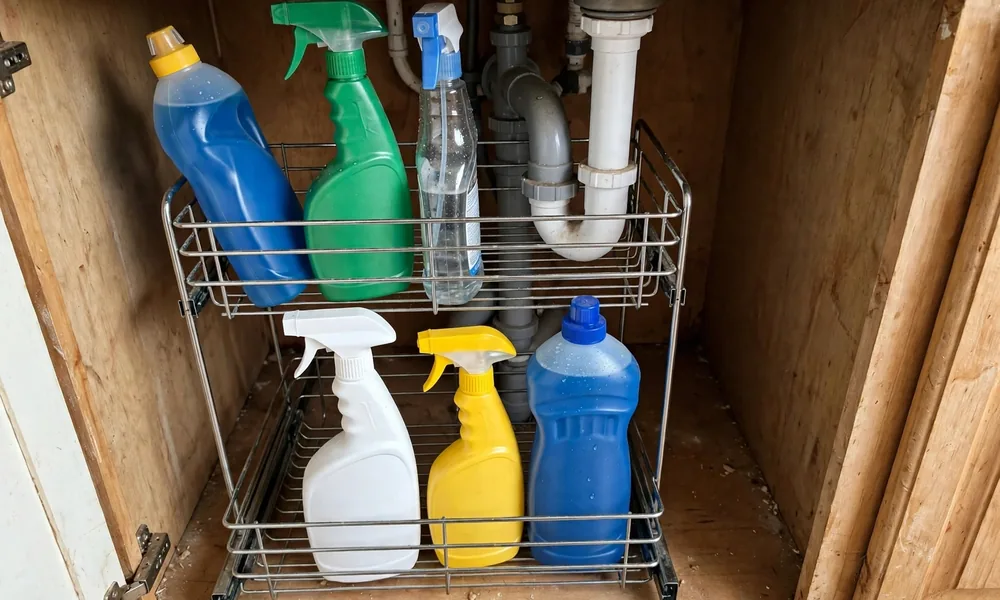
A two-tier sliding rack is the single best buy for most under-sink cupboards. It is a metal frame with two baskets that slide out on runners, usually with a gap in the middle so it fits around the waste trap. The top tier holds tall spray bottles, the lower tier holds shorter items, and when you pull the rack out, everything at the back comes with it. Look for smooth runners and coated steel that will not rust if it gets splashed.
Pull-out drawers
Pull-out drawers are the premium version of the same idea. Instead of open baskets, you get solid-sided drawers that slide out fully, so nothing falls off the back and small items stay contained. They suit deep kitchen cupboards and are the best choice for small items such as dishwasher tablets, bin bags and sponges. The drawback is price: good drawers cost more than a rack, and some need screws into the cabinet floor, which renters should avoid.
Stackable shelves
Stackable shelves are the simplest and cheapest way to add storage under a sink. They are small freestanding shelf units, usually plastic or coated metal, that you place on the cabinet floor to create a second level. One shelf holds tall bottles on the floor, the other holds shorter items above them. They do not slide, so they suit items you reach for less often. Choose a sturdy frame and keep heavier bottles low.
Cleaning-product caddies
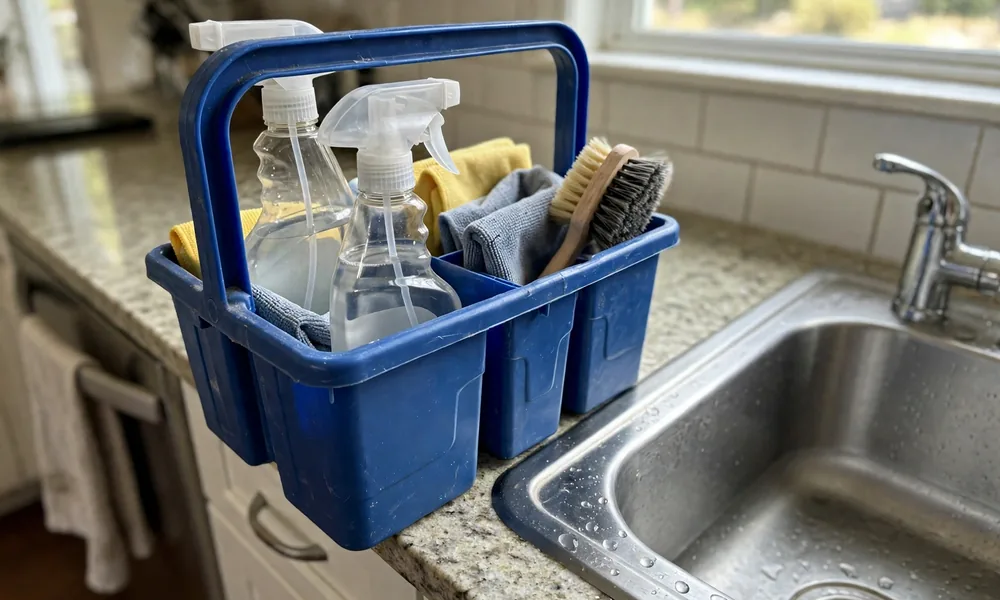
A caddy is a portable carrier with a handle and divided compartments, and it is the best organizer for anyone who cleans more than one room. Instead of keeping every spray in a different cupboard, you keep the daily cleaning kit in one caddy under the kitchen sink, lift it out when you clean, and put it back when you finish. Our guide to the best cleaning caddies covers the portable styles in detail, but for under-sink use, choose a caddy short enough to fit under the basin and narrow enough to slide past the trap.
Door-mounted racks
The inside of the cabinet door is free storage that most people never use. A door-mounted rack, usually held on with hooks over the top of the door or with adhesive pads, holds spray bottles, sponges and cloths in space that would otherwise be wasted. It is the best option for renters, because the over-door style needs no drilling and leaves no marks. Check the weight rating before you load it up, and keep heavier items on the cabinet floor.
Under-sink mats and trays
A mat is not an organizer in the usual sense, but it is the foundation every under-sink cupboard needs. A waterproof mat or a shallow tray on the cabinet floor catches drips from a leaking bottle or a slow joint before they soak into the wood, and it gives you a wipe-clean surface instead of a stained chipboard base. Put the mat down first, before any rack or shelf, and check under it every few months for damp.
Measure First, Then Buy
Almost every under-sink organizer failure starts with a measurement that was never taken. The cupboard looks bigger empty than it is once the pipes, the trap and the door hinges are taken into account, and a rack that is a centimetre too wide will not slide past the trap no matter how hard you push it. Start by emptying the cupboard completely and cleaning the floor. Then measure the width, depth and height of the clear space, twice: once at the front and once at the back, because the trap usually narrows the space in the middle.
Measure the trap, the door opening and the height from the cabinet floor to the underside of the basin, because tall bottles need to stand upright to avoid leaking. Then sort what you keep under the sink into daily items, weekly items and spares. Daily items go at the front in a pull-out rack or caddy, weekly items go on the second tier, and spares go at the back. Anything you have not used in a year should leave the cupboard altogether.
Kitchen Sink vs Bathroom Sink: What Goes Where
Kitchen and bathroom sinks look similar from the outside, but the cupboards underneath them hold very different things. Under the kitchen sink, the main residents are cleaning products: washing-up liquid, surface sprays, dishwasher tablets, bin bags, sponges and cloths. These are bulky, often heavy, and some of them leak, so the kitchen cupboard needs sturdy racks, a waterproof mat and a caddy you can lift out for cleaning day.
Under the bathroom sink, the contents are smaller and more numerous: spare toilet rolls, cleaning sprays, hair tools and medicines. The cupboard is usually narrower, the trap sits closer to the front, and damp is a bigger problem because of steam. Here a narrow two-tier rack and a door-mounted organizer work better than a large kitchen rack. Our guide to the best bathroom organizers covers the wider bathroom in detail. Food should never be stored under a sink. Keep pantry storage in the pantry itself, and our guide to the best pantry organizers shows how to make that space work harder instead.
Mistakes That Undo a Good Under-Sink Setup
The most common mistake is overfilling. An organizer packed to the brim looks tidy for a week, then becomes impossible to use, because you cannot pull a bottle out without knocking others over. Leave a little air around each item. The second mistake is mixing chemicals without thinking. Bleach and ammonia-based cleaners should never be stored where they can leak onto each other, and they should be kept upright with their caps on, away from children and pets.
The third mistake is ignoring a damp smell. If the cupboard smells musty, something is wet, usually a slow leak or a damp sponge. Find the source before you reorganize, because no organizer will fix a leak. The fourth mistake is choosing the wrong material: untreated wood swells and goes mouldy, thin wire racks bend under heavy bottles, and cheap plastic cracks when it gets cold. Spend a little more on coated metal or sturdy plastic.
Under-Sink Checklist
- Empty the cupboard completely and clean the floor before you buy anything.
- Measure width, depth and height at the front and the back, plus the trap and the door opening.
- Put a waterproof mat or tray on the cabinet floor first.
- Sort items into daily, weekly and spares, and remove anything unused for a year.
- Choose a pull-out rack or drawers that fit around the pipes, not a fixed shelf that fights them.
- Check the setup after a month, and move anything you never reach for to a different cupboard.
Frequently Asked Questions
What is the best organizer for under a kitchen sink?
A two-tier sliding rack is the best choice for most kitchen sinks, because it fits around the waste trap, pulls out so you can reach the back, and holds tall bottles on top with shorter items below.
How do I organize under a sink with pipes in the way?
Measure the trap and pipes first, then choose an organizer with a cut-out that sits either side of the plumbing. Narrow pull-out drawers and U-shaped racks are designed for this, and a door-mounted rack uses space the pipes never touch.
Can I put a shelf under my sink?
Yes, if the shelf is stackable and freestanding rather than fixed, and if it clears the trap. Keep daily items in a pull-out rack or caddy at the front instead.
What should not be stored under the sink?
Do not store food, cardboard boxes or anything that suffers in damp under a sink. Keep strong chemicals upright in a tray, away from children and pets.
How do I stop the cupboard under my sink smelling damp?
Find the source first: check for a slow leak at the trap and the pipe joints, dry the cabinet floor, and replace damp sponges. A musty smell that returns usually means water is getting in somewhere.
Are under-sink organizers worth it for renters?
Yes, as long as you choose freestanding or over-door styles that need no drilling or screws. A stackable shelf, a sliding rack and a door-mounted rack can all move with you.
The Bottom Line
Organizing under your sink comes down to three moves: measure around the pipes, put a waterproof mat down first, and choose a pull-out rack or drawers that bring the back of the cupboard out to you. Do those three things, and the messiest cupboard in the house becomes one of the most useful.