Cleaning Caddies That Carry Everything in One Trip in 2026
The best cleaning caddy turns a chore into a single trip. Instead of ferrying spray bottles from under the sink, cloths from the airing cupboard and the scrub brush from the bathroom, you grab one handle and carry the whole kit with you. A good cleaning caddy holds everything you actually use and keeps tall bottles upright. The bad ones tip over on the stairs, crack at the handle, or hold so little that you are back for a second load anyway.
Key Takeaways
- A cleaning caddy earns its place only if it carries your full everyday kit in one trip.
- Divided compartments beat one big open tub: tall bottles stay upright and cloths stay dry and separate from sprays.
- A handle that runs through the body of the caddy, not just across the top, carries heavy loads without flexing or snapping.
- Hard plastic with a flat base is the safest all-round choice; soft fabric totes sag and wire baskets snag cloths.
- Measure your tallest bottle and your storage shelf before you buy — most caddies fail on height, not on width.
Cleaning Caddies at a Glance
The trade-off in one place:
| Type | Best for | Capacity | Stability | Carry comfort | Storage |
|---|---|---|---|---|---|
| Divided plastic caddy | Everyday whole-home cleaning | 4–6 bottles plus cloths | Excellent, flat base | Good, central handle | Under sink or shelf |
| Open tote caddy | Quick tidy-ups, light kits | 3–4 bottles | Good | Good, soft handles | Folds flat when empty |
| Bucket caddy | Mopping, floors, big jobs | Large, plus water | Good when full | Heavy when full | Needs floor space |
| Wire basket caddy | Air-drying cloths and brushes | 3–5 bottles | Fair, narrow base | Fair, thin handle | Hangs on a hook |
| Stackable caddy | Small flats, shared homes | 2–3 bottles | Good | Good, short handle | Stacks neatly |
| Tool-belt caddy | Deep cleans, room by room | Pockets, not bottles | Worn, not carried | Excellent, hands free | Rolls up small |
What Makes a Good Cleaning Caddy
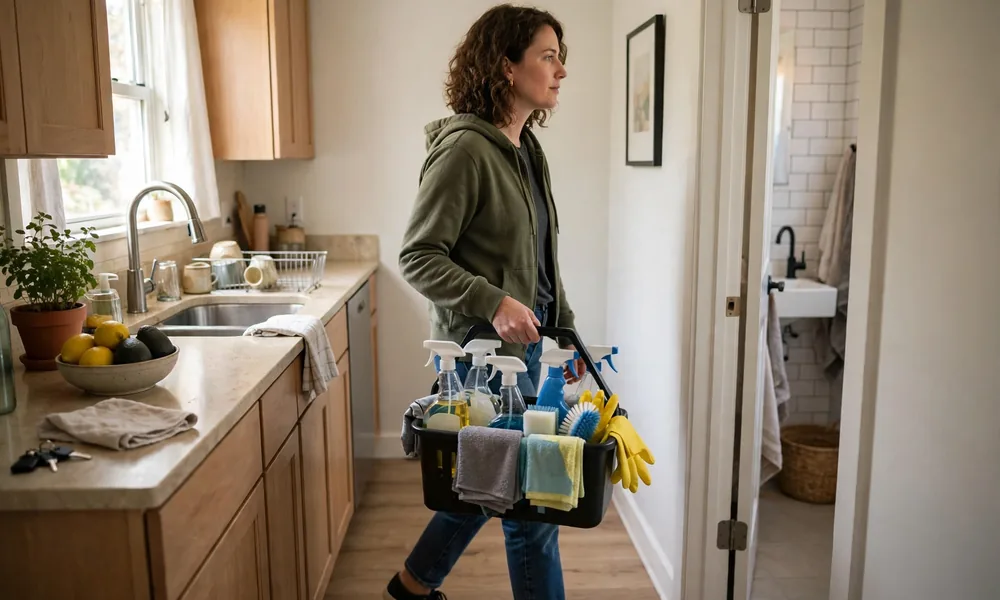
Capacity comes first: the caddy must hold your real kit, not an idealised one. Count what you reach for on a normal clean — usually an all-purpose spray, a bathroom spray, glass cleaner, cloths, a sponge, gloves and a brush. If it cannot hold all of that at once, it is not a one-trip caddy, whatever the packaging claims.
Stability comes second. A caddy that tips over on the stairs spreads cleaning products everywhere, and a bottle of bleach rolling loose is a genuine hazard. Look for a wide, flat base and a low centre of gravity. Tall, narrow caddies look neat on a shelf but are the first to topple when a bottle is pulled out one-handed.
The handle is the third test, and the one most caddies fail. A handle moulded as part of the body, running down both sides, spreads the load and survives years of heavy bottles. A handle simply screwed or clipped across the top flexes under weight and eventually cracks — usually when the caddy is full and you are halfway up the stairs.
Care is the fourth. A caddy lives with leaks and drips, so it must be easy to rinse out. Hard plastic wins: tip it upside down, rinse, and it is dry in minutes. Fabric totes absorb spills and start to smell, and wire baskets trap cloth fibres in every joint. Cheap thin plastic can go brittle where bleach has dripped.
Divided Caddies: The Best All-Round Choice
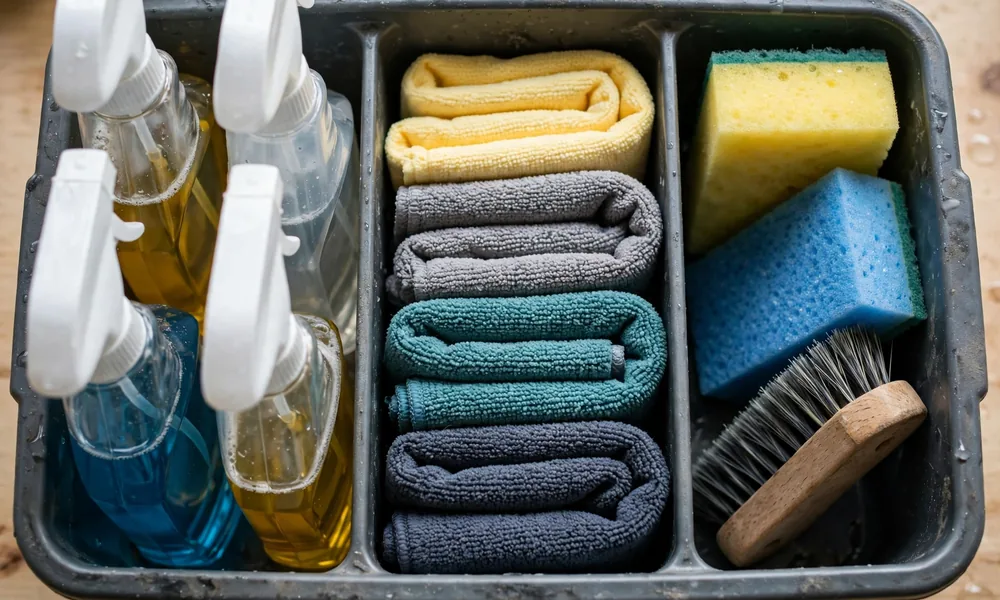
For most homes, a divided hard-plastic caddy is the right answer. Tall bottles stand in the deep sections, cloths and sponges sit in a shallow one where they stay dry, and gloves drape over a side. Nothing migrates while you walk, and you can see at a glance what is running low.
Size matters more than it looks. A caddy around 35 to 40 centimetres long and 25 centimetres wide holds a full everyday kit without becoming unwieldy. Go much bigger and it stops fitting under the sink, which is where most people store it; go much smaller and you are back to two trips. Measure the shelf where it will live and your tallest bottle first — most spray bottles are 28 to 30 centimetres tall, and plenty of caddies are just a centimetre too short.
When a Different Type Wins
An open tote caddy suits a light kit and a small home. Soft-sided totes are easy to carry and fold flat when empty — but they sag under heavy bottles, and a leaking spray soaks straight through fabric. They are best for a duster, a couple of cloths and one or two sprays, not a full deep-clean kit.
A bucket caddy is the right tool for floors: it carries the mop water as well as the products, and the wide opening makes it easy to reach in with a cloth. The trade-off is weight, since a bucket of water is heavy to carry upstairs. Keep the bucket for ground-floor mopping and use a lighter divided caddy for everything else.
Wire baskets look tidy and let cloths air-dry, which stops the musty smell sealed plastic can trap. But thin wire handles are uncomfortable under load, narrow bases tip easily, and cloth corners snag on the mesh, so they work best as a second caddy for bathroom essentials. Note that a shower caddy is a different product: it hangs in the shower and holds shampoo and soap. Our guide to the best shower caddies for small bathrooms covers that separate job.
Size, Weight and the One-Trip Test
The honest test is simple: load the caddy with everything you use on a normal clean, pick it up with one hand, and walk up a flight of stairs. If anything falls out or the handle bends, the caddy has failed. Do this at home within the return window.
Weight adds up faster than people expect. Four full spray bottles, a bottle of floor cleaner, cloths, gloves and a brush easily reach three or four kilos. A caddy that feels light empty can feel like a brick loaded. A wide handle and a balanced layout pay off here: bottles spread evenly on both sides keep the caddy level.
Materials Compared
Hard polypropylene plastic is the standard: light, cheap, easy to rinse, and resistant to most household cleaners. Look for thick walls that do not flex when you squeeze the sides, and a base that sits flat without rocking.
Stainless steel caddies look smart and last for years, but they are heavier, pricier, and dent if dropped. Avoid chrome-plated steel: once the plating chips, rust follows. Fabric caddies are the lightest and fold flat, but a leaking bottle soaks the fabric, and damp fabric in a dark cupboard grows mould.
Organising What Goes Inside
Organise the caddy by job, not by bottle size. Keep the products you use together in the same section: glass cleaner with the glass cloth, bathroom spray with the scrub brush, all-purpose spray with the general cloths. That way you can pull out one section’s worth of tools without emptying the whole caddy. Colour-coding cloths helps too — one colour for kitchen, one for bathroom, one for glass.
Keep the heaviest bottles low and at the sides, the lightest items on top, and gloves draped over the handle. Small items — a toothbrush for grout, spare sponges — belong in a shallow tray, not loose at the bottom where they vanish. Storage at home deserves the same thought: the most useful caddy is the one you can reach without moving five other things. Our guide to the best pantry organisers makes the same point about kitchens — the system you can reach is the system you actually use.
What to Put in a Cleaning Caddy
A good everyday kit is smaller than most people think. Start with an all-purpose spray, a bathroom cleaner, and a glass cleaner. Add three microfibre cloths, a sponge, a scrub brush, and a pair of rubber gloves. That is the core kit, and it fits in a medium divided caddy. Floor cleaner and oven cleaner are occasional: keep them in the cupboard and add them only on deep-clean days.
Leave out what does not belong. Heavy floor-cleaner bottles, mop buckets and vacuum attachments do not need to travel with you, and neither do products you use once a month — they add weight and crowd out the things you reach for daily. Check expiry as you pack, too: products lose strength over time, spray triggers clog, and cloths wear thin.

Keeping the Caddy Clean and Making It Last
Empty the caddy once a month, rinse it under a tap, and let it dry upside down. Wipe the bottles as you put them back, and check for drips around caps — a sticky ring is usually the first sign of a slow leak.
Replace the caddy when the handle flexes, the base rocks, or a crack appears. A cracked caddy can split under load and drop a bottle of cleaner on a hard floor. In a small home, a slim stackable caddy holding two or three bottles may serve better than a full-size one. And if storage is the wider problem, our guide to bathroom shelves that add storage without the clutter shows how a little well-placed storage changes a small room.
Cleaning Caddy Checklist
- Load it with your real everyday kit and carry it upstairs one-handed — nothing should fall out or tip.
- Check the handle runs through the body of the caddy and feels wide and comfortable under a full load.
- Measure your tallest spray bottle against the caddy and measure the shelf where it will live.
- Look for divided compartments: tall bottles upright, cloths dry and separate, small tools in a tray.
- Press the walls and rock the base — thick rigid plastic that sits flat will outlast thin, flexible walls.
- Rinse it out monthly and replace it when the handle flexes, the base rocks, or a crack appears.
Frequently Asked Questions
What size cleaning caddy should I buy?
For most homes, 35 to 40 centimetres long and 25 wide is right. It holds four to six bottles plus cloths and a brush, and it still fits under a standard kitchen sink.
Are divided caddies better than open ones?
Yes, for everyday cleaning. Dividers keep tall bottles upright, stop them knocking together, and keep cloths dry and separate from sprays. An open tub is fine for a light kit, but with four or more bottles, dividers make the load stable and easy to search.
Can I put bleach in a cleaning caddy?
You can carry bleach in a hard plastic caddy, but keep it upright in its own compartment and away from anything containing ammonia. Wipe up drips straight away, and keep it out of reach of children and pets.
How do I stop my cleaning caddy tipping over?
Choose a wide, flat base, keep heavy bottles low and evenly spread on both sides of the handle, and avoid tall narrow designs. Do not overload one side — an unbalanced caddy tips the moment you pull a bottle out.
What is the best material for a cleaning caddy?
Thick hard plastic, usually polypropylene, is the best all-round choice: light, cheap, easy to rinse, and resistant to most household cleaners. Avoid thin brittle plastic, chrome-plated steel that rusts once chipped, and fabric that absorbs spills.
How often should I replace a cleaning caddy?
Most good caddies last two to five years. Replace it as soon as the handle flexes, the base rocks, or a crack appears — a split caddy can drop a full bottle of cleaner without warning.
The Bottom Line
The best cleaning caddy in 2026 is a divided hard-plastic carrier, around 35 to 40 centimetres long, with a handle that runs through the body, a flat stable base, and room for your full everyday kit in one trip. Buy it by the one-trip test, not by the picture on the box: load it, carry it upstairs one-handed, and check nothing falls out.